Owning property in the beautiful Pocono Mountains brings incredible views, dense forests, and a peaceful escape from busy city life. However, building or maintaining a home here comes with a unique set of regional challenges hidden right beneath your feet. The very geographic features that make the Poconos stunning—rocky terrain, steep slopes, high water tables, and clay-heavy soils—create a difficult environment for standard waste management.
A traditional, basic septic system simply cannot function properly in most parts of this region. Homeowners in places like Lackawaxen, Pennsylvania, must look to advanced engineering to protect their properties and the surrounding environment. Triple J Services specializes in navigating these exact subterranean challenges with precision and local expertise. This guide explains why the geography of the Poconos demands specialized septic designs and how the right system keeps your home safe.
The Rock and Ridge Challenge: Glacial Till and Bedrock
The geological history of Northeastern Pennsylvania is defined by ancient glacial movements. When these massive glaciers receded thousands of years ago, they left behind a messy mixture of dense clay, large boulders, and fractured bedrock known as glacial till.
This presents a major obstacle for standard excavation and utility trenching. Striking solid sandstone or shale just two feet below the surface is incredibly common here. A standard septic system requires deep, uniform soil to naturally filter wastewater before it reaches the groundwater. When bedrock is too close to the surface, untreated effluent can seep through rock fractures, traveling directly into local drinking wells and pristine mountain streams without being cleaned.
Overcoming this shallow bedrock obstacle requires highly specialized excavation strategies and shallow-depth system designs. Contractors must utilize heavy-duty machinery to navigate the rocky layers safely, ensuring that municipal guidelines regarding vertical separation distances are strictly met.
Decoding Poconos Soil: Low Perc Rates and Heavy Clay
In the septic industry, everything revolves around soil texture and how well it handles liquid. Before installing any waste system, a certified tester must perform a percolation test, commonly called a “perc test.” This test measures how fast water drains through the soil on your specific parcel of land.
Ideally, soil should act like a structured sponge. It needs to hold wastewater long enough for beneficial soil bacteria to destroy harmful pathogens, but it must drain fast enough to prevent surface flooding. Unfortunately, Poconos geography frequently serves up heavy, dense clay soils or highly compacted glacial silt.
Clay expands when wet, creating a nearly waterproof barrier. This causes exceptionally slow percolation rates. If you install a standard gravity-fed drain field in heavy clay, the wastewater has nowhere to go. It will quickly back up into your home’s plumbing pipes or pool into a smelly, hazardous swamp directly on top of your lawn.
Navigating the Steep Slopes of Mountain Terrain
Flat, level ground is a rare luxury in the Pocono Mountains. Most residential properties are carved directly into hillsides, severe ridges, or rolling valleys. This steep topography completely changes how wastewater moves across a property.
A traditional septic configuration relies entirely on gravity. Liquid flows from the home into a buried septic tank, settles, and then flows downward into flat underground trenches. On a steep mountain slope, gravity becomes an enemy rather than a tool. If wastewater enters a sloped drain field too fast, it rushes to the lowest point of the trench system. This overloads the bottom section while leaving the upper portions dry, causing rapid system failure.
Furthermore, effluent can break through the side of a steep hill, daylighting onto the surface of your property or running down onto a neighbor’s land. Specialized designs alter the path of the water, utilizing advanced distribution methods to spread the fluid evenly across uneven landscapes.
Protecting Pristine Water Tables and Mountain Watersheds
The Poconos region is home to incredibly fragile ecosystems, vibrant watersheds, and clean mountain lakes. Because many rural mountain homes rely entirely on private water wells dug on their own land, protecting local groundwater is a matter of basic public safety.
A major geographical hazard in our valleys and lakeside communities is a seasonal high water table. During spring thaws or heavy autumn rainstorms, the underground water level rises significantly, sometimes sitting just inches below the topsoil layer. If a drain field is buried too deep in these areas, it sits directly in the active groundwater table. This completely bypasses the natural soil filtration process, flushing raw bacteria, nitrates, and household chemicals straight into the shared aquifer.
Property owners must strictly adhere to the environmental protective standards established by organizations like the Pennsylvania Department of Environmental Protection (DEP). These regulations mandate a permanent physical separation between the bottom of your treatment zone and the highest point of the local water table.
Alternative Designs: The Rise of the Turkey Mound
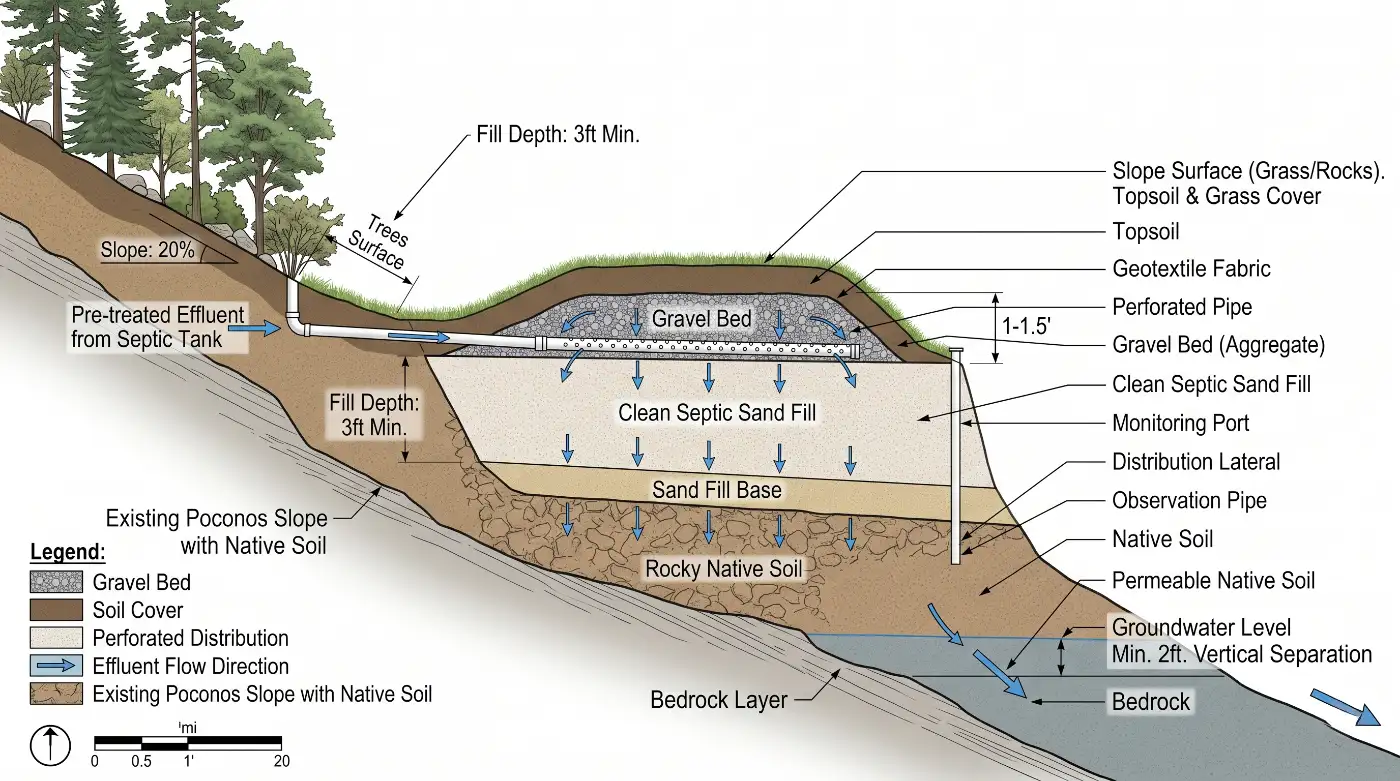
Because traditional inground drain fields fail in shallow, rocky, or wet soil, engineers developed advanced alternative options. The most famous and widely utilized specialized septic design in the Poconos is the elevated sand mound system, locally referred to as a “Turkey Mound.”
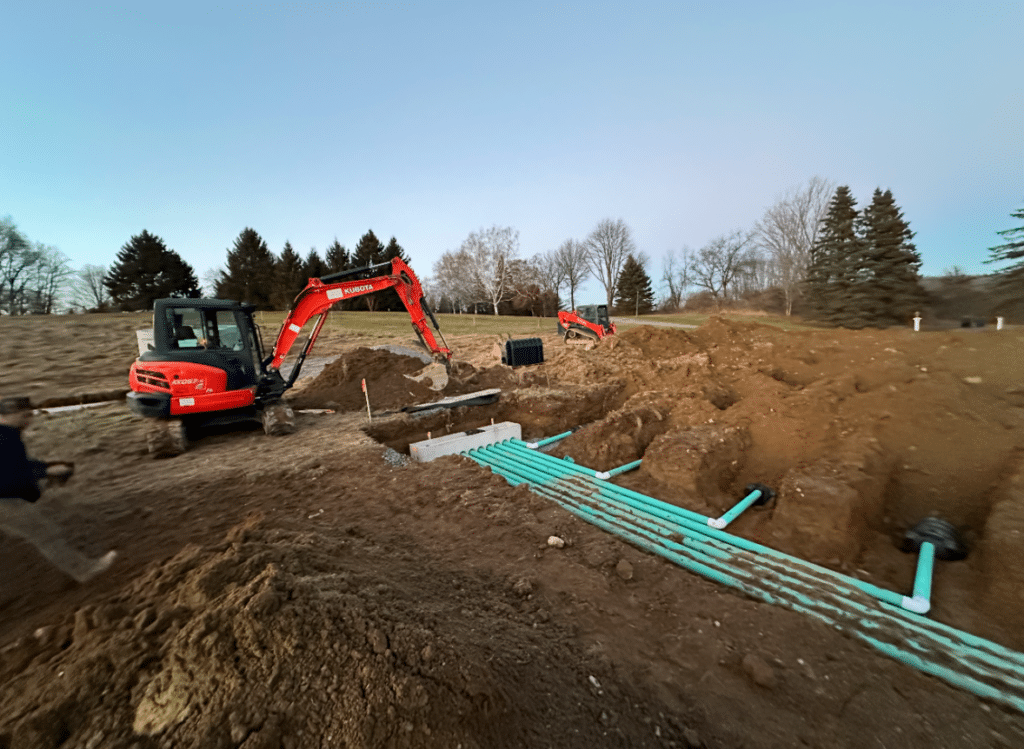
Instead of digging deep trenches down into poor native soil, an excavation team builds a custom sand filtration system upward on top of the natural ground level. The process begins by lightly prepping the surface of the soil, ensuring that the natural vegetation paths are preserved. Next, a precise layer of clean, coarse septic sand is brought in to create an elevated platform.
Perforated distribution pipes are laid inside a gravel bed right on top of this sand layer. The entire structure is then covered with topsoil, graded carefully to prevent rainwater erosion, and planted with grass. As wastewater is pumped into the mound, it filters slowly through the clean sand layer first, receiving comprehensive biological treatment before it ever touches the problematic native mountain soil beneath.
Moving Water Uphill: Grinder Pumps and Effluent Pumps
On a perfectly flat piece of land, household waste moves naturally through pipes via basic gravity. Mountain geography routinely shatters this simple design, forcing waste to travel uphill against the landscape.
When your home sits lower than your specialized sand mound or the municipal sewer tie-in line, you must deploy mechanical help. This is where specialized heavy-duty pumps become absolutely essential to daily property operations.
Effluent Pumps
An effluent pump handles clarified liquid waste. After solids settle to the bottom of your primary septic tank, the clear liquid flows into a secondary chamber called a pump tank. The effluent pump uses high-pressure bursts to push this treated water uphill through a solid force main pipe, delivering it directly to an elevated sand mound or a distant absorption field.
Grinder Pumps
A grinder pump handles raw, solid sewage. If a bathroom or an entire living space is located in a basement below the level of your main exit plumbing line, gravity cannot help you.
A grinder pump works much like a powerful household garbage disposal. It shreds solid waste, toilet paper, and wastewater into a fine, liquid slurry. Once pulverized, it pumps that slurry under high pressure up through small-diameter pipes to your main septic tank or public sewer line. Because these pumps operate under extreme physical stress, they require professional selection and regular maintenance to avoid catastrophic household backups.
Advanced Drainage: French Drains and Hydro-Jetting
Managing water outside your septic tank is just as critical as managing what goes inside it. Because mountain slopes shed immense amounts of stormwater runoff during heavy downpours, a lot of water can rush toward your property, threatening to wash out your septic infrastructure.
Excessive surface water rushing over an underground drain field can saturate the soil from above, leaving no room for household wastewater to escape. Homeowners combat this by installing comprehensive French drains and modern exterior drainage networks. These subterranean gravel trenches divert heavy mountain runoff safely around your septic field, preserving the soil’s natural absorbing capacity.
Furthermore, the high mineral content found in Poconos groundwater, combined with household greases, can form tough crusts inside your distribution pipes over time. When these lines clog, traditional mechanical plumbing snakes can damage fragile, perforated pipes.
Specialists resolve this by using high-pressure drain jetting, also known as hydro-jetting. This method uses targeted, high-velocity streams of water to safely scour away scale, roots, and sludge, instantly restoring optimal flow through your specialized lines.
Why Local Septic Inspections and Local Knowledge Matter
You cannot treat a mountain septic system like a city sewer line. It is a living, mechanical biological system that requires careful, experienced monitoring. Purchasing a home or building a new structure in the Poconos without an exhaustive, region-specific septic system inspection is a major financial risk.
A generalized home inspector rarely possesses the specialized tools or deep geological insight required to evaluate an alternative mountain system. A true local expert understands how local climate changes, winter freezes, and soil pressure affect underground infrastructure over decades.
They know how to check the functional health of your electronic pump floats, measure sludge accumulation levels accurately, and use specialized camera tech to verify the interior structure of a sand mound. Regular inspections catch minor mechanical issues before they turn into incredibly expensive structural replacements. For additional scientific data on how soil types impact local waste management across the state, explore the historical resources available through the United States Department of Agriculture (USDA) Natural Resources Conservation Service.
Partnering with Lackawaxen’s Trusted Septic Specialists
Navigating the complex world of mountain septic engineering requires heavy machinery, proper licensing, and deep regional experience. Trying to cut corners with uncertified contractors can lead to devastating property damage and heavy environmental fines.
Triple J Services provides premium, precision-engineered septic and excavation solutions tailored directly to the unique challenges of the Poconos terrain. Based out of Lackawaxen, Pennsylvania, our team brings local geographical knowledge to every project site. We handle the heavy lifting, the technical calculations, and the precise installations required to keep your property functional and fully compliant for years to come. Our comprehensive range of specialized regional services includes:
-
Precision Septic System Installation & Replacement
-
Elevated Sand Mound (“Turkey Mound”) Repair & Installation
-
Heavy-Duty Grinder Pump Repair & Installation
-
Effluent Pump Service, Diagnostic, & Replacement
-
Rapid Emergency Septic Pumping
-
High-Pressure Drain Jetting (Hydro-Jetting) Lines
-
Comprehensive, Certified Septic System Inspections
-
Custom French Drains & Advanced Drainage Solutions
-
Professional Excavation & Clean Utility Trenching
Do not wait for a major system backup or an environmental failure to address your underground infrastructure. Whether you need an emergency pump replacement, a complex sand mound installation, or a thorough site inspection, our team is equipped to handle the job safely and efficiently.
Quick Recap: Poconos Septic Essentials
-
Glacial Topography: Shallow bedrock and heavy glacial till make traditional deep excavation highly problematic.
-
Clay Barriers: High clay content causes exceptionally slow soil percolation rates, ruling out standard gravity drain fields.
-
Slope Management: Steep mountain hillsides require advanced distribution setups to prevent surface breakouts and soil erosion.
-
Water Table Protection: High seasonal water tables demand elevated infrastructure to keep untreated waste out of the drinking water supply.
-
Mound Solutions: Elevated sand mounds (“Turkey Mounds”) build a clean filtration environment upward on top of poor native soils.
-
Mechanical Assistance: Grinder pumps and effluent pumps are essential tools for moving solid and liquid waste uphill.
-
Runoff Control: French drains divert heavy mountain stormwater away from sensitive treatment fields to prevent premature system failure.
Secure Your Poconos Property Infrastructure Today
Ready to ensure your mountain home’s septic system is built to survive the local geography? Trust the local experts who understand Northeastern Pennsylvania’s unique soil and slopes inside and out. Contact Triple J Services today to discuss your next project, request a system diagnostic, or get an accurate project estimate.
Visit Triple J Services to schedule your professional site consultation today.
Disclaimer
This article is provided exclusively for general informational and educational purposes. Septic system requirements, soil testing protocols, and environmental regulations vary significantly across municipal townships and county lines throughout Pennsylvania. Implementing structural modifications, deep excavations, or septic installations without verified soil permits, professional engineering plans, and approved local regulatory oversight is strictly prohibited by law. Always consult with a licensed local sewage enforcement officer (SEO) and certified contractors before initiating any septic or excavation work on your property.