Living in the Pocono Mountains offers beautiful views, peaceful forests, and a connection to nature. Properties in Lackawaxen, Pennsylvania, feature rolling hills, tall trees, and unique terrain. However, mountain living comes with specific challenges for homeowners.
One major issue that plagues property owners in Wayne County and Pike County is poor exterior water management. Homeowners often step out onto their lawns only to find spongy turf, standing water, or eroding hillsides.
If your lawn feels like a swamp after a heavy storm, you are not alone. Mountain terrain reacts differently to rain and snowmelt than flat suburban lots. Understanding the mechanics of local earth and weather patterns is the first step toward fixing your property.
Understanding the Unique Terrain of Lackawaxen Pennsylvania
The geography of Northeast Pennsylvania is breathtaking, but it creates a perfect storm for water accumulation. Properties here are built on sloped landscapes, filled with dense tree roots, and sit on top of highly unyielding ground layers.
When rain falls or snow melts, gravity forces that water downward. If your home sits at the base of a slope or on a terraced lot, you become the recipient of runoff from higher elevations.
The Problem With Rocky and Clay Heavy Soil
Local earth composition is a major factor in structural water issues. Northeast Pennsylvania features a mix of Hazleton soils, dense clay, and heavy glacial till. Glacial till consists of packed rocks, boulders, and tightly compressed sediment left behind by ancient glaciers.
Clay and rocky sediment do not absorb water quickly. When a heavy storm hits Lackawaxen, the top layer of earth satisfies its minimal absorption capacity almost instantly. The remaining water has nowhere to go, so it pools on the surface of your lawn or runs rapidly across the ground, cutting deep channels into your landscape.
The Impact of Severe Seasonal Weather Patterns on the Pocono Area
Our regional weather patterns put incredible stress on residential properties. The Poconos experience high annual precipitation, including sudden summer downpours and heavy winter snowfall.
Springtime bridgs a massive influx of water as deep snowpacks melt rapidly over the course of just a few days. This sudden volume of water completely overwhelms standard natural grading.
Additionally, our area experiences intense freeze-thaw cycles. Water gets trapped in the upper layers of dirt, freezes and expands during cold snaps, and then thaws into a muddy slurry. This constant shifting destabilizes the earth and destroys weak, unengineered trenches.
Top Reasons Your Mountain Property Has Standing Water
Many homeowners assume that a sloping yard naturally sheds water. While gravity moves runoff, it does not guarantee that your property will stay dry. In fact, specific layout and building factors cause modern property grading to fail over time.
Poor Grading and Natural Low Spots
During initial home construction, operators clear the lot and grade the earth to route water around the foundation. Over the years, the ground settles. Foot traffic, heavy lawn equipment, and tree root decay create shallow depressions across your grass.
When a yard has low spots surrounded by unyielding clay, these pockets act like tiny, unlined backyard ponds. Water sits in these low areas for days, drowning your grass roots and creating breeding grounds for mosquitoes.
Insufficient or Clogged French Drains
A French drain is a classic tool used to manage subsurface water. It consists of a gravel-filled trench containing a perforated pipe that redirects groundwater away from structures. However, many systems installed by previous owners or general builders fail prematurely.
Mountain landscapes are filled with mature trees and dense brush. Over time, aggressive root systems find the tiny perforations in drainage pipes, breaking through the plastic and completely blocking water flow.
Furthermore, silt, sand, and organic debris wash down from higher slopes, filling the gaps between the gravel stones. Without a professional geotextile fabric wrap, the entire trench fills with mud and ceases to function.
Gutters and Downspouts Terminating Too Close to the House
Your roof acts like a giant funnel. During a routine rainstorm, thousands of gallons of water cascade off your shingles. Gutters collect this water, but the point of discharge determines whether your basement stays dry.
Many properties feature short downspout extensions that dump water right next to the concrete foundation. Because mountain soil contains rocks and structural gaps close to the foundation walls, this water sinks straight down. This creates hydrostatic pressure against your crawlspace or basement, causing leaks, mold, and structural shifting.
Soil Compaction From Heavy Equipment or Vehicles
Lawn care and property renovations require heavy machinery. Skid steers, excavators, and delivery trucks exert immense pressure on the ground.
When heavy equipment drives over wet, clay-heavy earth, it destroys the natural pore spaces within the dirt. This creates a highly compacted, concrete-like surface just inches below your grass. Rainwater cannot penetrate this compacted layer, resulting in sheets of water flowing across your yard.
The Costly Consequences of Ignoring Water Issues
Allowing water to sit on your property causes much more than just a muddy yard. Water is a destructive force that slowly compromises the value, safety, and structural integrity of your entire investment.
Foundation Damage and Basement Flooding
When surface water pools against foundation walls, it finds every microscopic crack in the masonry. Hydrostatic pressure forces moisture through solid concrete, leading to damp crawlspaces, ruined basements, and fungal growth. Over time, saturated earth loses its bearing capacity, causing foundations to crack, sink, or bow inward.
Severe Soil Erosion and Loss of Usable Land
Runoff moving down a slope gains speed and energy. If your property lacks proper channels or retaining structures, this water washes away fertile topsoil.
Erosion carves deep gullies through beautiful lawns and exposes structural tree roots. Left unchecked, it can undermine the stability of walkways, driveways, and parking pads.
Hardscape Shifts and Pavement Cracking
Moisture is the primary enemy of patios, retaining walls, and driveways. When water accumulates beneath pavers or poured concrete, it saturates the aggregate base.
During local winter freeze-thaw cycles, this trapped moisture turns to ice and expands. This upward force, known as frost heave, cracks solid concrete, tilts retaining blocks, and creates dangerous tripping hazards on walkways.
Professional Solutions That Actually Work in the Poconos
Fixing mountain drainage requires moving beyond basic DIY remedies. You cannot simply shovel dirt into a puddle and expect the issue to disappear. Successful remediation requires evaluating the entire topography of your land and installing heavy-duty, commercial-grade systems.
Professional Grading and Strategic Swale Construction
Grading is the practice of reshaping the slope of your land. Experienced professionals use specialized earthmoving machinery to smooth out depressions and establish a gentle, consistent slope away from your home.
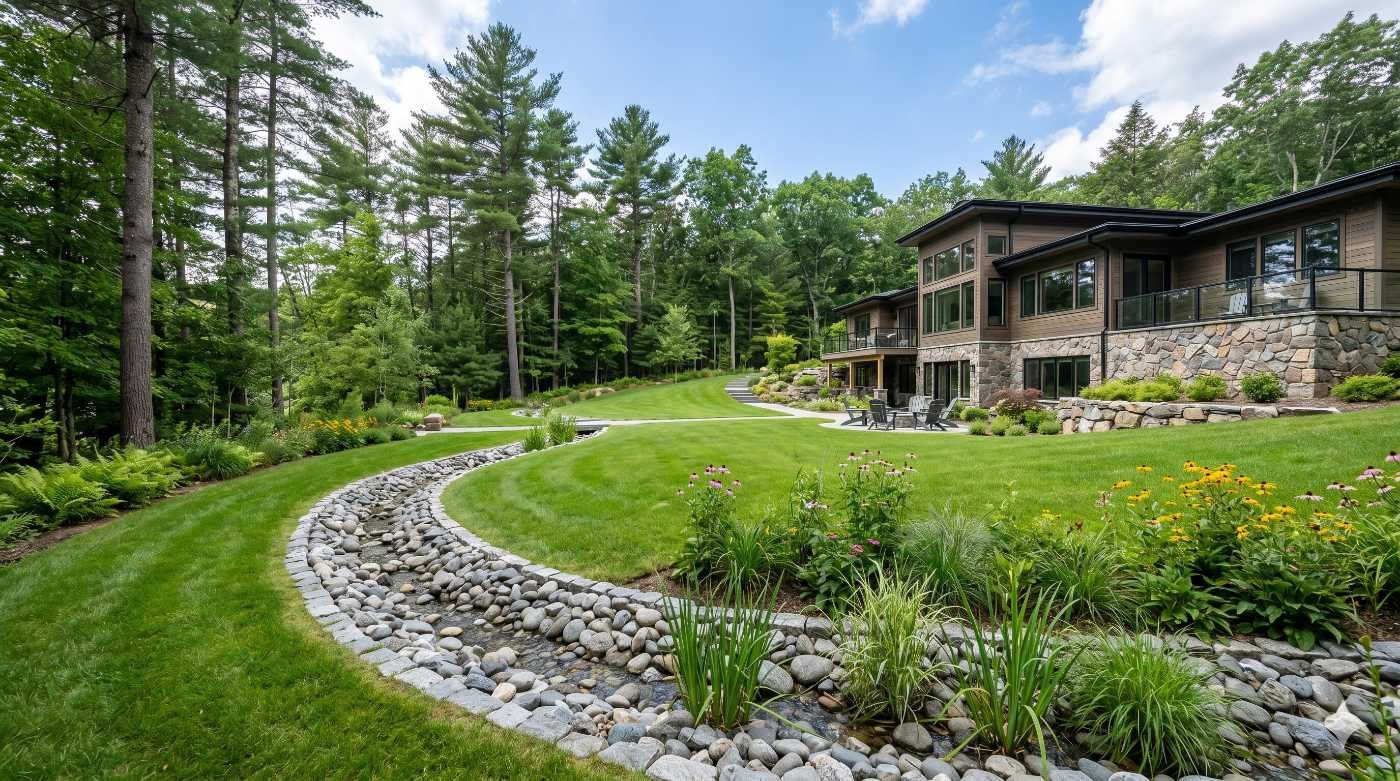
A highly effective way to manage heavy mountain runoff is by carving out a drainage swale. A swale is a wide, shallow, gently sloped ditch designed to intercept water moving down a hillside.
Swales are often lined with thick turf grass or filled with decorative river rock and riprap. The rock slows down fast-moving water, prevents soil erosion, and safely routes the volume toward a safe discharge point, like a culvert or storm basin.
Heavy Duty French Drain Systems Done Right
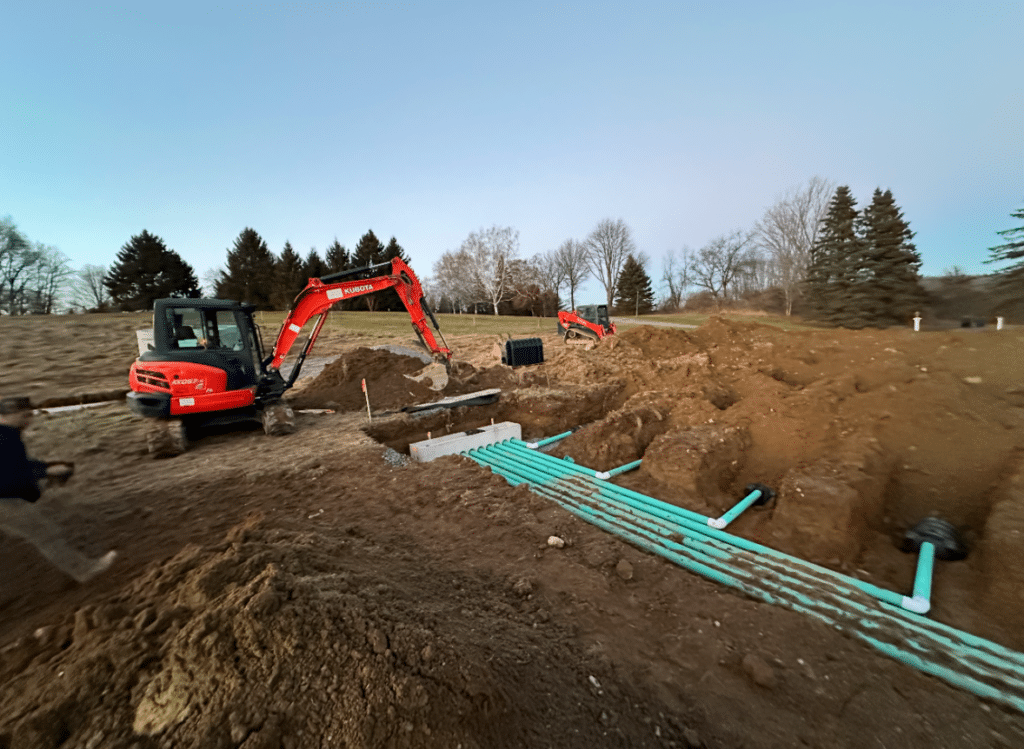
To fix underground water accumulation, technicians install advanced French drains. The process begins by excavating a deep trench along the problematic zone of the property.
To ensure longevity, professionals line the raw trench with heavy-duty non-woven geotextile filter fabric. This fabric allows water to enter but keeps fine dirt and silt out.
Next, workers place a rigid, smooth-wall perforated pipe at the bottom, rather than cheap corrugated plastic which catches debris and crushes easily. The trench is then filled to the surface with washed round stone, creating a permanent, highly porous highway for water relocation.
Underground Downspout Extensions and Bubbler Pots
To protect your foundation, downspouts must discharge water far away from your living space. Professionals excavate narrow trenches and attach your downspouts to solid PVC pipes buried underground.
These underground lines run down the natural slope of your yard, terminating dozens of feet away from your home. The pipe exits into a pop-up emitter, also known as a bubbler pot, installed flush with your lawn.
When it rains, water pressure lifts the green lid of the emitter, allowing water to flow harmlessly onto your grass. When the rain stops, the lid snaps shut to keep out leaves, debris, and small pests.
Structural Retaining Walls With Integrated Weep Holes
If your home is built on a steep slope, creating flat, usable yard space requires a retaining wall. However, retaining walls act like dams unless they are built with water management in mind.
Professional builders install thick layers of clean, angular gravel directly behind the block wall to prevent dirt from pressing against the structure. Perforated drain pipes sit at the base of the wall, and small openings called weep holes are built into the face of the blocks. This allows water trapped behind the wall to escape freely, eliminating the pressure that causes walls to bulge and collapse.
Choosing a Local Specialist for Your Earthwork Needs
Every piece of land in Wayne and Pike County features a unique blueprint of slopes, rocks, and water pathways. A solution that works for a flat property will fail on a mountain lot. Fixing these issues requires deep familiarity with local earth patterns and access to professional excavation machinery.
Hiring a local excavation and property services contractor ensures that your site preparation is handled correctly the first time. Professionals possess the heavy equipment required to cut through rocky glacial till and the engineering knowledge to calculate proper slopes. Investing in proper outdoor management protects your foundation, preserves your landscape, and maximizes the long-term value of your property.
Article Summary Guide: Pocono Drainage
-
Unique Regional Factors: Mountain terrain, steep slopes, and high precipitation create severe runoff issues in Lackawaxen, Pennsylvania.
-
Soil Challenges: Local Hazleton soil contains heavy clay and glacial boulders, which resist water absorption and cause rapid surface pooling.
-
Common Failure Points: Settling yards create low spots, DIY French drains clog with silt or roots, and short downspouts dump water against foundations.
-
Destructive Results: Neglected water issues lead to cracked foundations, flooded crawlspaces, severe topsoil erosion, and ruined hardscapes.
-
Professional Remedies: Permanent solutions include mechanical yard grading, rock-lined swales, heavy-duty fabric-wrapped French drains, and underground downspout pipes.
Take Control of Your Property Today
Stop dealing with a soggy, unusable yard and protect your home from water damage. The professional team at Triple J Services specializes in solving complex mountain drainage, grading, and excavation issues throughout Lackawaxen, PA, and the surrounding areas. Let our experienced crew transform your landscape into a dry, functional, and beautiful space.
Visit our website at Triple J Services to learn more about our comprehensive solutions. Explore our background on our About Us Page and view our full list of earthmoving capabilities on our Services Page. Contact Triple J Services today to schedule your on-site consultation.
External Resources
-
United States Department of Agriculture (USDA) Soil Survey: Link to the USDA Natural Resources Conservation Service when discussing the specific characteristics of Hazleton soils, clay content, and regional soil behavior. This establishes scientific credibility for soil types.
-
PennState Extension: Link to the PennState Extension Water Resources Page when explaining how freeze-thaw cycles, heavy precipitation, and stormwater management impact homeowners in Pennsylvania.