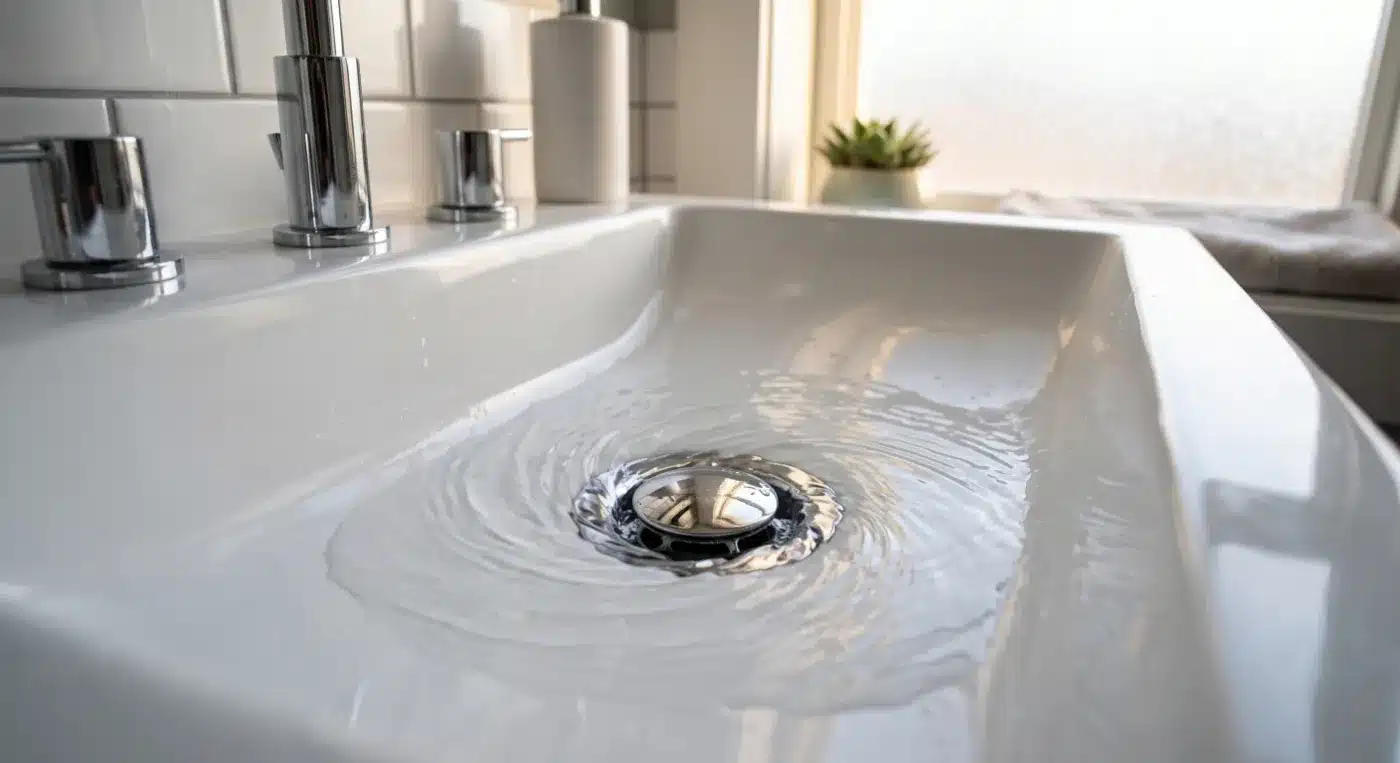
You are sitting in your kitchen enjoying a quiet evening, and suddenly you hear it. A strange, deep bubbling sound echoes from the kitchen sink. It sounds like someone is blowing bubbles through a straw under the drain.
A gurgling sink might seem like a minor plumbing quirk. You might figure it is just an air bubble passing through the pipes. But if your home relies on a private waste system, that noise is often an early warning signal from the underground infrastructure.
When you live in rural or mountainous areas like Lackawaxen, PA, your drains operate under a delicate balance of pressure, airflow, and gravity. A gurgling sound means air is trapped where it should not be.
If you ignore that noise, the underlying issue can quickly escalate from an annoying sound into a massive, messy sewage backup right into your home. Recognizing the true signs of a main line blockage allows you to address the problem before your plumbing stops working entirely.
What Causes the Gurgling Sound?
To understand why your sink makes noises, you have to look at how waste lines breathe. Plumbing systems rely on a network of vent pipes that extend up through your roof. These vents pull fresh air into the lines, allowing wastewater to flow smoothly down toward your tank without creating a vacuum.
When a blockage starts forming in your main sewer lateral line, it restricts the flow of both water and air. As water fights its way past the obstruction, it creates a pocket of high pressure.
The trapped air has to escape somewhere. It pushes backward through the easiest exit, which is usually the water trap under your sink, shower, or toilet.
The sound you hear is that trapped air forcing its way through the standing water in your plumbing fixtures. It is a literal cry for help from your main waste line.
1. Multiple Drains Are Gurgling or Slow
A single slow drain usually points to a local problem. If your bathroom sink is clogged with hair or soap scum, the kitchen sink will still drain perfectly.
The narrative changes completely when the issue spreads to multiple rooms. If you notice that your kitchen sink gurgles when the washing machine drains, or your toilet bubbles when you take a shower, you are dealing with a systemic bottleneck.
All the drains in your home eventually meet up at a single exit point called the main sewer lateral line. This pipe carries the combined waste out of your house and into your yard.
When a blockage develops inside this primary artery, every fixture in your home feels the effects. The water has nowhere to go, so the air pressure backs up throughout the entire house.
2. Water Backs Up Into the Lowest Fixtures
Water naturally seeks the path of least resistance. When a main line is choked off by debris, tree roots, or thick grease, wastewater cannot flow out to your tank. Instead, it starts filling up the main lateral line like a long, underground bucket.
As you continue to use water upstairs, the volume rises. Eventually, the water will overflow out of the lowest plumbing fixtures in your home.
You will typically notice this in a basement shower drain, a first-floor utility sink, or a downstairs toilet.
If you run your washing machine and suddenly notice soapy, murky water bubbling up through your basement shower drain, your main line is completely compromised.
Continuing to run appliances or flush toilets will only accelerate the backup, leading to extensive property damage and a hazardous clean-up job.
3. Your Toilet Flushes Differently
Toilets are the largest direct conduits to your waste system. They require a significant, sudden volume of water to create the siphon effect needed for a clean flush. Because of this, they are often the first fixtures to show signs of distress when your main line is blocked.
Pay close attention to how your toilet behaves. A weak, sluggish flush that leaves waste behind is a classic symptom of poor airflow or downstream restriction.
Similarly, if the water level in the bowl rises unusually high before slowly draining away over several minutes, the pipe is struggling to pass the volume.
The most definitive warning sign is a toilet bowl that bubbles or gurgles spontaneously when you run water in a nearby sink. That means the air pushed ahead of the sink water is escaping through the toilet trap because the main pathway out to the yard is blocked.
4. Foul Sewage Odors Near Drains or the Yard
A healthy waste system is entirely self-contained and sealed. The water traps under your sinks act as physical barriers that keep sewer gases from creeping into your living spaces.
When a main line block forces air backward through those traps, it brings foul odors along with it.
If you notice a distinct, persistent smell of rotten eggs or sewer gas near your drains, your system is failing to vent properly.
The smell can also manifest outside. When a main line suffers a severe structural break or a complete clog, wastewater can leak directly into the surrounding soil. According to environmental guidelines from organizations like the Environmental Protection Agency (EPA), unmanaged wastewater can easily contaminate local groundwater.
If you notice a patch of bright green, spongy grass over your buried line, or a strong sewer odor when you walk across the lawn, the pipe is actively discharging waste into the ground.
5. Your Grinder Pump or Effluent Pump Runs Constantly
Many properties across the Poconos sit on uneven, rocky terrain. Because gravity cannot always move waste effectively over hills and ridges, many homes rely on mechanical pumps.
A grinder pump pulverizes solid waste and pushes it uphill to a main line, while an effluent pump moves clarified liquids up into an engineered sand mound, commonly known as a “Turkey Mound.”
These pumps sit inside an underground basin in your yard. Under normal conditions, the pump turns on, empties the basin in a few minutes, and shuts off.
However, if a blockage forms in the pipe right outside the pump discharge, the unit will struggle to push the liquid out.
The pump motor will run continuously, humming loudly for hours as it fights against the blockage. This constant strain quickly overheats the motor, trips your household electrical breakers, and will eventually burn out the pump entirely.
If you hear your yard pump running non-stop, or if the red high-water alarm light flashes on your exterior control panel, you have an immediate main line or pump crisis.
Common Culprits Behind Main Line Blockages
Main lines don’t just clog out of nowhere. They usually succumb to a combination of household habits, environmental factors, and aging infrastructure. Understanding what is happening inside the pipe helps you take the right corrective action.
-
Tree Root Intrusion: Tree roots love moisture and nutrients. The tiny joints in underground pipes release warmth and trace amounts of water. Roots will slip into these minuscule cracks, growing into massive, woody nests that completely catch passing waste.
-
Grease Accumulation: Pouring cooking oils and bacon grease down the kitchen sink is a recipe for disaster. The grease cools down inside the cold underground pipes, solidifying into a hard, waxy lining that narrows the pipe diameter over time.
-
Flushable Wipes and Trash: Items labeled as “flushable” wipes do not dissolve like standard toilet paper. They stay fully intact, catching on pipe imperfections and forming dense, impenetrable dams inside the line.
-
Pipe Sag or Collapse: Over decades, shifting mountain soil, heavy vehicle traffic, or poor initial installation can cause a section of the pipe to belly or collapse entirely, blocking all flow.
Clearing the Blockage: Hydro-Jetting vs. Snaking
When you have a verified main line blockage, a standard retail drain cleaner will not solve the problem. These chemicals are highly corrosive, terrible for the beneficial bacteria inside your septic tank, and rarely reach the deep blockage effectively. You need professional intervention.
Traditional drain snaking uses a steel cable with a cutting tip to punch a hole through clogs. While this works well for clearing out immediate blockages like tree roots, it often leaves behind a thick residue of grease and scale along the pipe walls. The clog will simply reform a few months later.
High-pressure drain jetting, commonly called hydro-jetting, is a far superior solution. This process uses a specialized nozzle that blasts highly pressurized water in all directions inside the pipe.
The intense water streams scour the inner walls completely clean, slicing through stubborn tree roots and emulsifying years of accumulated grease. It restores the pipe to its original diameter, ensuring long-term reliability.
The Importance of Regular Septic System Inspections
The absolute best way to handle a main line blockage is to catch it before it turns into an emergency. Regular septic system inspections should be a standard part of your property maintenance routine.
Professional technicians use advanced sewer cameras attached to flexible rods to look directly inside your main lateral line.
These cameras allow them to see exact blockages, structural cracks, or low spots without digging up your yard. They can also check the accumulation levels inside your main tank, verify that your float switches move freely, and ensure your pumps are pulling the correct electrical current.
An inspection gives you total clarity, allowing you to plan repairs on your own schedule instead of dealing with a midnight plumbing disaster.
Excavation, Trenching, and Drainage Solutions
Sometimes, a gurgling sink is the symptom of a structural failure that cannot be cleared with water pressure alone. If an older line has collapsed under the weight of the soil, or if shifting earth has broken a pipe section, the only permanent solution is physical repair.
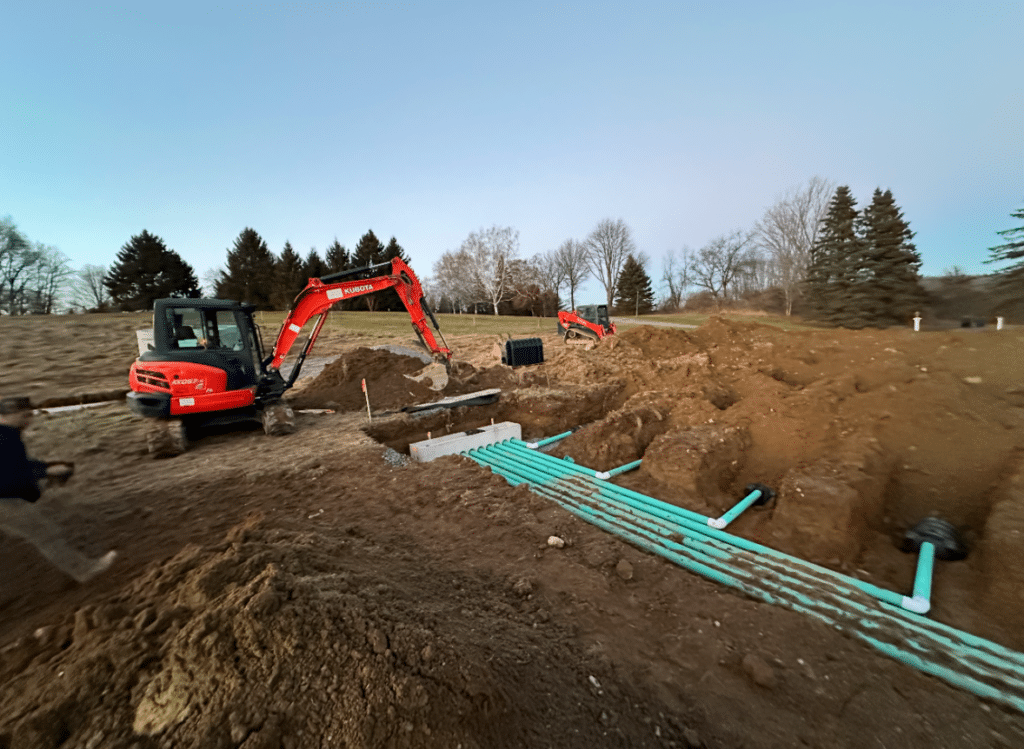
Professional excavation and utility trenching are required to dig down safely, remove the damaged pipe section, and install modern, durable PVC lines. This work must be done with precision to ensure the pipe maintains the correct slope so waste moves efficiently without relying on excessive water pressure.
Additionally, if your yard suffers from poor surface drainage, heavy rain and melting snow can saturate the soil around your main line and filtration mound. This excess water puts physical pressure on the pipes and can leak into unsealed joints.
Installing targeted French drains and customized drainage solutions around your yard redirects surface water away from your infrastructure, keeping the ground dry and stable.
Honest, Dedicated Service in Lackawaxen
When your plumbing starts backing up, you do not want to deal with a national corporate chain that treats you like a number on a spreadsheet. You need a team that understands the local terrain, the specific quirks of mountain septic setups, and the value of honest labor.
Triple J Services is located right here in Lackawaxen, PA. We are your Pike County neighbors, and we treat every single property like it belongs to our own family.
Our owner, John Dreizler, built this business on strong family values, humility, and hard work. We do not take shortcuts, and we do not inflate our promises.
We focus our training, tools, and heavy equipment entirely on essential infrastructure like septic care, pump repairs, and specialized excavation. We don’t try to do everything; we simply strive to be the absolute best at what we do.
Whether you need emergency septic pumping to stop an active backup, high-pressure hydro-jetting to clear out a stubborn clog, or a complete septic system installation and replacement, we bring the expertise and integrity required to get the job done right the first time.
Article Recap: Gurgling
-
A gurgling sink is caused by trapped air forcing its way backward through your plumbing traps due to downstream restriction.
-
When multiple drains throughout the house gurgle or run slowly at the same time, the problem lies in the main lateral line.
-
Main line blockages eventually force raw sewage to back up into the lowest fixtures in the home, such as basement showers.
-
A sluggish toilet flush or a bowl that bubbles when nearby sinks run is a major indicator of a downstream clog.
-
Persistent sewer gas odors or unusually soggy patches on your lawn indicate a structural leak or total line failure.
-
Constant humming from your grinder or effluent pump means the motor is fighting a severe discharge blockage.
-
High-pressure hydro-jetting scrubs the inside of your pipes completely clean, offering a longer-lasting solution than traditional snaking.
Do not ignore that gurgling sound until it turns into a major property disaster. If your drains are slow, your toilets are bubbling, or your pump alarm is sounding, reach out to the local experts at Triple J Services today.
We have the advanced diagnostic tools, heavy excavation equipment, and specialized septic experience to find the root cause of your problem and fix it fast.
Call our team at (845) 750-5222 or visit our Services Page to request your free estimate. Let us take care of your essential infrastructure so you can enjoy total peace of mind.