Moving to the Poconos sounds like a dream. You get beautiful mountain views, quiet wooded lots, and a slower pace of life. Many people buy a home here intending to use it as a seasonal cabin, a weekend escape, or a short-term rental. It is a fantastic investment, but rural property ownership comes with a few hidden surprises.
The biggest surprise usually hides right under your lawn. If you are moving from a city or a standard suburb, you are likely used to municipal sewer lines. You flush the toilet, pay a monthly utility bill, and never think about where the waste goes.
Out here in Pike County, things are different. Most homes rely on independent, on-site waste management.
Owning a seasonal property changes how these systems behave. Leaving a home empty for months, followed by sudden bursts of heavy use when guests arrive, creates unique mechanical and biological strain. If you do not know how to manage these fluctuations, you could face an incredibly messy, expensive plumbing disaster.
The Reality of Mountain Soil and Topography
Poconos geology is beautiful, but it is notoriously tough on underground infrastructure. Our soil is full of dense clay, hard shale, and massive glacial rocks.
Standard, old-fashioned gravity systems require deep, highly absorbent soil to filter wastewater naturally. Because our local soil layers are often thin or sit over shallow bedrock, traditional drain fields frequently fail or cannot be legally installed.
To get around these environmental limits, many properties use advanced engineering. You will frequently see raised sand mounds on local lawns. Poconos residents commonly call these “Turkey Mounds.”
These mounds sit above the natural grade of the yard, using specific layers of sand and gravel to treat wastewater safely before it reaches the local water table.
Because these systems rely on precise elevation and specialized construction, they require careful monitoring. They are highly sensitive to surface pressure, heavy rains, and shifting earth.
What Happens When a Septic System Goes Dormant
A healthy waste tank is not just a storage box; it is a living biological ecosystem. Millions of naturally occurring bacteria live inside the tank. These microbes break down solids, liquefying human waste and toilet paper so the resulting fluid can drain away safely.
These bacteria need a steady diet to stay alive and active. When you lock up your summer cabin in October and do not return until April, you cut off their food supply.
Over a long, cold winter, the bacterial population drops significantly. The tank goes completely dormant.
When you return in the spring and suddenly host a massive weekend party, the dormant system gets overwhelmed. The small, sluggish bacterial population cannot break down the sudden influx of waste fast enough. Solids fail to liquefy, floating scum layers thicken rapidly, and the risk of a major backup skyrockets during your first few weeks of springtime use.
The Shock Loading Effect of Weekend Guests
The opposite of dormancy is a phenomenon experts call shock loading. This is the absolute biggest threat to seasonal cabins and short-term rentals.
During the week, a cabin might sit completely empty. The system rests, and water flows stop entirely.
Then, Friday evening arrives. A family of eight checks in. Over the next forty-eight hours, the home sees constant toilet flushes, back-to-back showers, multiple loads of laundry, and heavy dishwasher use.
This sudden, massive volume of water rushes into the tank all at once. It creates a violent current inside a space that is supposed to stay calm.
Instead of allowing solids to settle peacefully to the bottom, the rushing water stirs up the sludge. It forces solid waste, grease, and unliquefied paper directly out of the tank and into your delicate filtration field.
Once solids enter your Turkey Mound or leach field, they clog the tiny gaps between the sand and gravel. Over time, this ruins the soil’s ability to absorb water, leading to spongy spots in your yard, foul odors, and eventual system failure.
Grinder Pumps and Effluent Pumps Demand Attention
Because the Poconos landscape features steep hills, rocky ridges, and low-lying lake areas, gravity cannot always move waste where it needs to go. Many homes rely on mechanical assistance.
A grinder pump functions like a heavy-duty garbage disposal. It sits in a well, grinds up solids, and pushes the slurry uphill to a main line. An effluent pump moves clarified liquid up into an elevated sand mound.
Mechanical pumps do not like sitting idle in damp, underground environments. When a pump sits unused for six months, the moving parts can seize up. Float switches, which act as the mechanical brain telling the pump when to turn on, can become stuck due to dried grease or mineral deposits.
If you arrive for your first vacation weekend of the year and turn on the water without checking the pump, you could easily fill the basin past its limit. If the float switch is stuck or the motor is seized, the system will fail to activate.
Suddenly, your first warning of a problem is a screaming electrical alarm panel or raw sewage bubbling up through your downstairs shower drain.
The Winter Freeze Threat for Empty Cabins
If you do not plan to use your cabin during the winter, you must take active steps to protect the buried lines from freezing.
In a primary residence, a steady stream of warm water from showers, washing machines, and dishwashers keeps the underground pipes relatively warm. The frost line stays higher in the soil.
In an unheated, empty cabin, that thermal protection disappears entirely. The bitter Pennsylvania cold pushes deep into the rocky earth.
If your water lines or waste pipes sit too shallow, any trapped water will freeze solid. According to engineering guidelines from the American Society of Civil Engineers (ASCE), frost depth can vary wildly based on soil composition and moisture levels. In our region, a bad winter can push the frost line down several feet.
If you have shallow pipes due to rocky bedrock, that ice will expand and split the PVC lines wide open.
Furthermore, if you leave a main tank completely full of liquid over the winter without any building heat nearby, a deep freeze can crack the concrete or fiberglass walls. Fixing a cracked tank or digging up broken utility lines in freezing weather requires extensive excavation and costs thousands of dollars.
Smart Rules for Seasonal Residents
Managing a seasonal system does not have to be stressful. It simply requires changing a few daily habits and setting clear rules for your family and guests.
-
Spread Out the Laundry: Never wash five loads of laundry on Sunday afternoon before you leave. Spread your water usage out across the entire weekend to give the tank time to settle.
-
Watch the Water Fixtures: A single leaking toilet flap or a dripping faucet can dump hundreds of gallons of water into your tank over a week of absence. Check every fixture before you leave the property.
-
Use Bacterial Additives Wisely: If your cabin has been empty for months, introducing a high-quality, professional-grade bacterial treatment in the spring can help kickstart the biological breakdown process.
-
Educate Your Guests: If you rent your cabin out, place clear signs in the bathrooms. Guests must know that nothing goes down the toilet except human waste and regular toilet paper. No wipes, no trash, and no feminine products.
The Critical Role of Drainage and French Drains
Seasonal issues are not always caused by what happens inside the house. External rainwater and melting snow play a huge role in how well your yard processes waste.
When heavy spring rains hit the Poconos, saturated ground struggles to absorb any more moisture. If your yard has poor surface grading, rainwater will pool directly over your leach field or Turkey Mound.
A flooded filtration field cannot accept wastewater from the house. The liquid has nowhere to go, causing it to back up into your home’s main drain line.
Installing specialized French drains and custom drainage solutions around the perimeter of your yard redirects surface runoff away from your waste infrastructure. Keeping the yard dry ensures your filtration field can do its job, even during heavy Poconos downpours.
Professional Inspections Before and After the Season
If you are buying a new property or opening an existing cabin for the year, you should never rely on guesswork. A system that seems fine during a quick weekend visit might be on the verge of a catastrophic breakdown.
Scheduling professional septic system inspections gives you a clear picture of what is happening underground. Technicians use advanced sewer cameras to check internal lines for structural sags, cracks, or invasive tree roots. They measure the exact depth of the scum and sludge layers to tell you if a pump-out is needed.
For homes with mechanical components, professionals can test the electrical amp draw of your grinder or effluent pump, clean off the float switches, and ensure your high-water alarms work correctly. Catching a weak motor or a stuck switch in the autumn allows you to fix the problem calmly before the ground freezes solid.
Excavation, Trenching, and Long-Term Upgrades
Sometimes, older Poconos cabins have systems that simply were not built to modern standards. Over decades, shallow utility lines shift, older tanks degrade, and filtration fields become completely spent.
If your property suffers from frequent backups or persistent odors despite regular pumping, it may be time to look at a comprehensive septic system installation and replacement.
Modern waste engineering uses highly durable materials and smart designs built to handle the unique challenges of mountain soil and seasonal use.
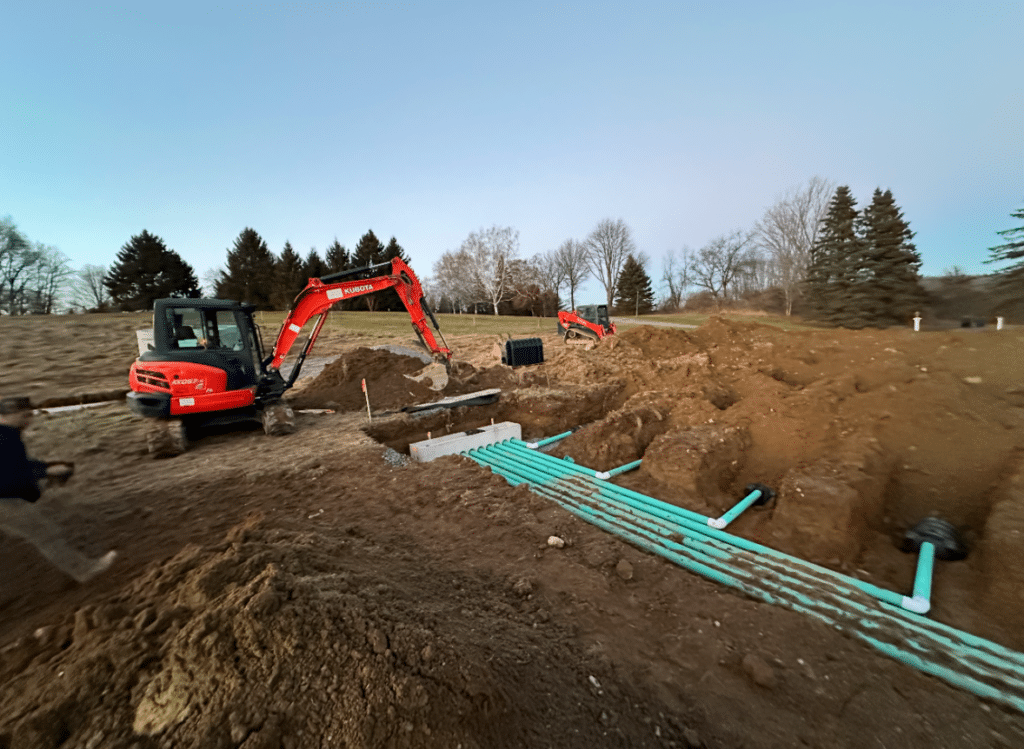
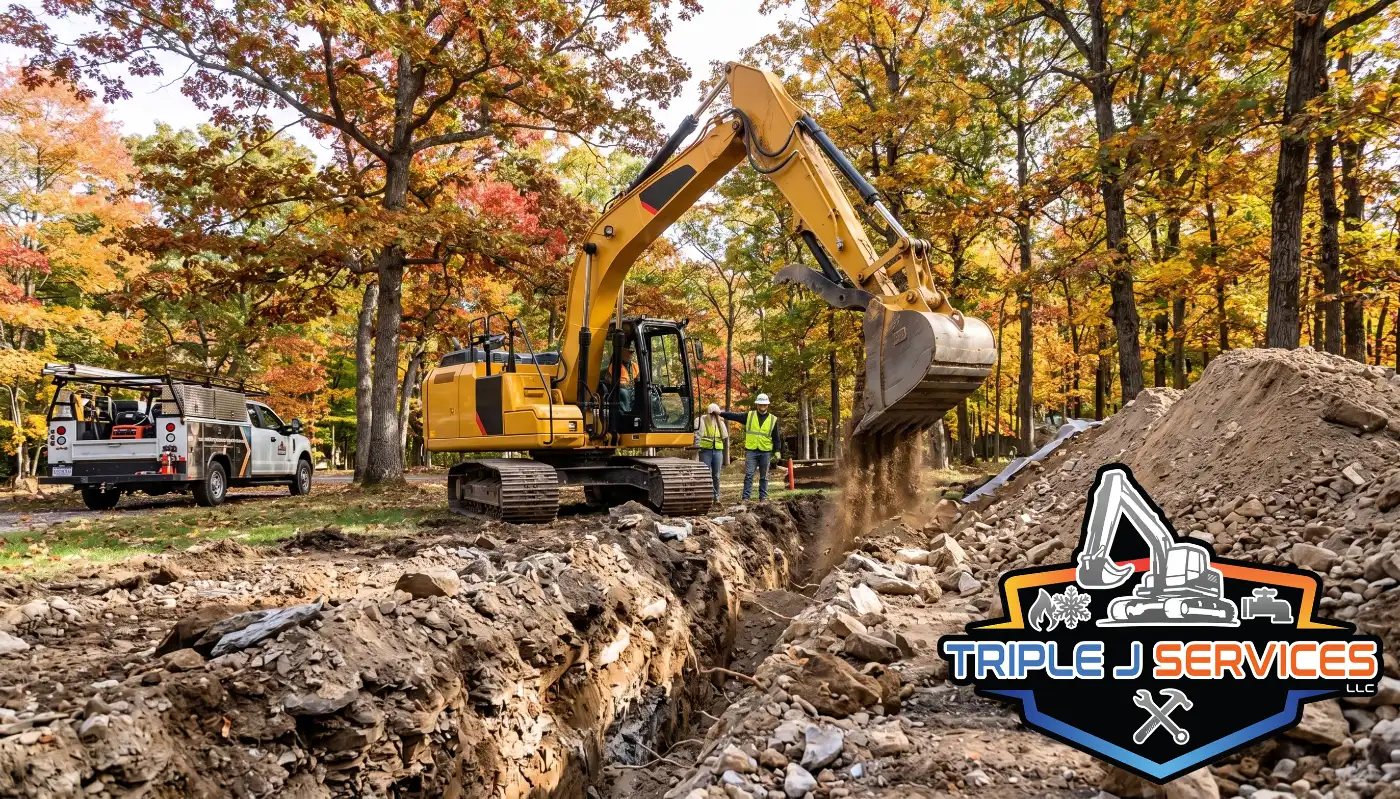
If your lines are shallow, professional excavation and utility trenching can bury your water and waste lines deep beneath the local frost line. This provides permanent protection against the elements and significantly raises your property value.
Why Local Specialized Expertise Matters
When you run into infrastructure problems in a rural area, general handymen or national corporate plumbing chains often lack the right tools or regional knowledge. They might try to treat a complex mountain system like a standard city sewer line.
Triple J Services is located right here in Lackawaxen, PA. We are your Pike County neighbors, and we treat every single property with genuine care, pride, and total accountability.
Our owner, John Dreizler, built this business on strong family values, grit, and a simple commitment to doing things the right way the first time.
We do not try to do everything. We focus our training, equipment, and daily energy strictly on essential infrastructure like septic care, pump repair, and professional excavation.
We understand the local soils, we know exactly how the regional climate affects seasonal properties, and we are available 24/7 for high-anxiety sewage emergencies. When you call us, you are getting honest answers, transparent pricing, and dependable local expertise.
Article Recap: Pocono Cabin
-
Seasonal properties face unique waste management challenges due to long periods of dormancy followed by sudden bursts of heavy water use.
-
Thin mountain soil and complex terrain often require specialized engineered mounds (Turkey Mounds) rather than standard gravity systems.
-
Extended absence starves out the beneficial tank bacteria, lowering the system’s ability to process solid waste in the spring.
-
Shock loading occurs when large groups of weekend guests overwhelm the system, flushing solid sludge directly into the filtration field.
-
Idle grinder and effluent pumps can seize up, and their float switches can stick, leading to immediate overflows upon your return.
-
Empty, unheated cabins face a high risk of freezing pipes if utility lines are buried too shallow or contain standing water.
-
Regular professional inspections and targeted perimeter drainage solutions protect your long-term property investment.
If you are opening up your Poconos cabin for the season, planning a system upgrade, or dealing with a sudden pump alarm that won’t stop buzzing, do not try to tackle it alone.
The dedicated team at Triple J Services is ready to assist. We bring the proper heavy equipment, diagnostic tools, and specialized knowledge required to keep your property safe and dry.
Call us today at (845) 750-5222 or visit our Services Page to request your free estimate. Let us handle the dirty work so you can fully enjoy your mountain retreat.