
Switching from a city sewer line to a private home septic system is a massive transition. When you live in a city or a standard suburban neighborhood, municipal infrastructure takes care of everything. You flush your toilet, wash your dishes, and take long showers without a second thought. Waste simply disappears down a public pipe. You pay a monthly utility bill, and the city manages the maintenance, mechanics, and environmental regulations.
Moving out to a more rural or mountainous area changes the game entirely. If you have recently purchased a home in a beautiful area like Lackawaxen, PA, you are likely now the proud owner of an independent wastewater treatment plant. That plant sits right underneath your lawn.
Suddenly, you are entirely responsible for managing, maintaining, and protecting your waste infrastructure.
Adapting to this change does not have to be stressful. However, it does require a fundamental shift in how you view your daily water consumption, household habits, and property maintenance.
Understanding the differences early saves you from dealing with unexpected plumbing disasters and incredibly expensive repair bills.
The Core Difference: Infrastructure vs. Autonomy
City sewers are massive networks designed to handle enormous volumes of waste and fluid. They are highly forgiving of household mistakes. If someone flushes a handful of wipes or dumps grease down the kitchen sink, the city’s heavy-duty industrial processing pumps usually take care of it downstream before it backs up into the house.
A home waste setup is a self-contained biological ecosystem. It has a strict maximum capacity.
Everything that leaves your drains flows directly into a buried holding tank in your yard. The solids drop down to the bottom, while clarified liquid flows out to a designated filtration zone.
Because the system is small and localized, it is highly sensitive to what you put down your pipes.
Mistakes that would go completely unnoticed in a city apartment can easily ruin a residential septic tank or cause raw sewage to bubble up through your downstairs shower drain within a matter of days.
Understanding the Poconos Landscape and Soil
The local geography around Pike County complicates how residential systems behave. Our region is famous for its rocky terrain, clay-heavy soils, and hard shale layers.
Traditional waste setups require deep, permeable dirt to filter out impurities naturally as water sinks into the ground. Because our local soil layers are frequently thin or sit directly over solid mountain bedrock, standard gravity fields are often impossible to install safely.
To manage these environmental challenges, engineers design advanced alternative options. If you walk around local properties, you will frequently notice large, raised mounds of earth on the lawns.
Locals commonly call these “Turkey Mounds.” These engineered sand mound configurations use specific layers of sand, gravel, and fabric built above the natural grade to treat water safely before it reaches the local water table.
Knowing what type of setup sits on your property is the first step toward managing it correctly.
Changing Your Household Flushing Habits
The absolute biggest adjustment you must make concerns what you put down the toilet. In a city home, many people treat the bathroom toilet like a secondary trash can. If you carry that habit over to a private waste system, you will destroy the tank’s delicate ecosystem.
A standard tank relies on naturally occurring bacteria to break down organic human waste and regular toilet paper. The bacteria turn those solids into a liquid slurry so fluid can exit safely.
Non-biodegradable items do not dissolve. They float around in the tank, accumulate rapidly, and block the inlet and outlet pipes.
You must establish strict household rules. Never flush paper towels, facial tissues, napkins, or feminine hygiene products.
You must also avoid “flushable” wipes. The plumbing industry has fought a long battle against these items because they do not disintegrate like toilet paper. According to consumer safety investigations by organizations like the National Association of Clean Water Agencies (NACWA), these wipes retain their tough, fibrous structure for months, quickly creating dense blocks inside residential lateral lines.
The Danger of Kitchen Garbage Disposals
If your new home has a garbage disposal in the kitchen sink, use it with extreme caution, or stop using it entirely. City sewers handle ground-up food scraps easily because the constant flow of municipal water flushes the organic debris away.
In a private system, a garbage disposal is a major hazard. Food scraps do not break down the same way human waste does.
When you grind up leftover dinner scraps, meat fats, or vegetable peels, they settle at the bottom of your holding tank as a thick layer of heavy sludge.
This rapidly doubles the rate at which solids accumulate inside the tank. It fills up the holding chamber twice as fast, requiring you to pay for professional pumping services much more frequently.
Furthermore, cooking oils, bacon grease, and fats should never go down the drain. They cool off inside the underground pipes, solidifying into a hard, waxy coating that narrows the pipe diameter and triggers severe blockages.
Managing Your Daily Water Volume
In a city apartment, you can run the washing machine, the dishwasher, and take a long bath simultaneously without affecting your plumbing. The system can handle unlimited immediate volume.
A private system is limited by physical space and time. If you dump too much water into the tank all at once, you cause a dangerous phenomenon called shock loading.
Think of your holding tank as a calm settling basin. It needs time to let solids sink to the bottom and grease float to the top.
If you wash five consecutive loads of laundry on a Sunday afternoon, you dump hundreds of gallons of rushing water into the tank in a very short window. This sudden torrent stirs up the settled sludge, lifting solid particles and forcing them out into your delicate leach field or Turkey Mound.
Once solid debris enters your filtration field, it chokes off the tiny spaces between the sand and soil particles. The ground loses its ability to absorb liquid, leading to foul odors, spongy grass, and an eventual total failure of your drain field. Space out your water-heavy chores across the entire week to give the tank ample time to settle.
Caring for Grinder and Effluent Pumps
Because our mountainous landscape features steep hills and rolling ridges, gravity cannot always move wastewater where it needs to go. Many properties require mechanical assistance to keep things flowing.
A grinder pump functions like a heavy-duty industrial disposal unit. It sits inside an underground well, pulverizes solid waste, and pushes the resulting slurry uphill to a main line. An effluent pump moves clarified wastewater from a secondary chamber up into an elevated sand mound.
Mechanical pumps require regular monitoring and careful use. They are highly vulnerable to damage from solid trash.
If a stray wipe, a piece of dental floss, or a feminine product wraps around the spinning blades, it can bind the motor completely. The unit will overheat, trip your home’s main electrical breakers, and trigger a loud, screaming high-water alarm on your exterior control box.
Knowing the exact location of your pump chamber ensures you can arrange a fast grinder pump repair or effluent pump replacement before sewage backs up into your living room.
The Critical Role of Yard Drainage
When you own a municipal sewer home, you do not have to worry about how rain affects your plumbing. With a private system, your yard’s surface water plays a massive role in operational success.
During heavy spring rains or rapid winter snowmelts, saturated ground struggles to handle extra liquid. If your yard features poor grading or low spots directly over your leach field or Turkey Mound, rainwater will pool on the surface.
A flooded filtration field cannot accept any wastewater from your home. The liquid has nowhere to go, causing it to back up through your main lateral line.
To protect this area, you must keep all heavy traffic completely off the zone. Driving cars, trucks, or heavy ATVs over your field will compact the sand layers and crush the buried plastic distribution lines.
If your yard naturally holds onto rainwater, installing targeted French drains and custom drainage solutions around the perimeter redirects surface runoff safely away from your infrastructure, keeping your filtration field functional and dry.
The Importance of Routine Septic Inspections
The absolute best way to manage your new autonomy is to replace guesswork with data. In a city sewer home, you wait until something breaks to call a plumber. With a private system, preventative monitoring is the key to avoiding catastrophic costs.
Scheduling a regular professional septic system inspection provides a complete health report for your property. Technicians use specialized sewer cameras to look directly inside your main lateral line, identifying structural cracks, sagging pipe sections, or invasive tree roots early.
They measure the exact depth of the scum and sludge layers inside your tank to tell you precisely when a pump-out is required.
According to public health guidelines from the Environmental Protection Agency (EPA), a standard residential tank should be inspected every few years and pumped out regularly to prevent long-term environmental contamination. Catching a small issue in the fall allows you to fix it calmly before the ground freezes solid.
Clearing Stubborn Clogs with Hydro-Jetting
If you notice your sinks are gurgling or your toilets are flushing sluggishly, do not pour harsh chemical drain cleaners down the pipe. These chemical mixtures are highly toxic, ruin your pipes, and kill off the beneficial tank bacteria that keep your system alive.
Traditional drain snaking can punch a temporary hole through a major clog, but it often leaves behind a thick lining of grease and soap residue along the inner walls.
High-pressure drain jetting, commonly known as hydro-jetting, is a far superior modern alternative. This process utilizes a specialized nozzle that blasts highly pressurized water in all directions inside the line.
The intense water streams scour the inside of the pipe completely clean, emulsifying years of grease and slicing through stubborn tree roots. It restores your main line to its original diameter, ensuring smooth flow out to your tank.
Excavation, Trenching, and System Upgrades
Sometimes, buying an older rural home means inheriting an outdated or failing waste setup. Over decades of shifting mountain soil and freezing winters, older concrete or steel tanks can degrade, crack, or cave in entirely.
If your current setup is simply too old or small to handle your family’s needs, you will want to look into a modern septic system installation and replacement.
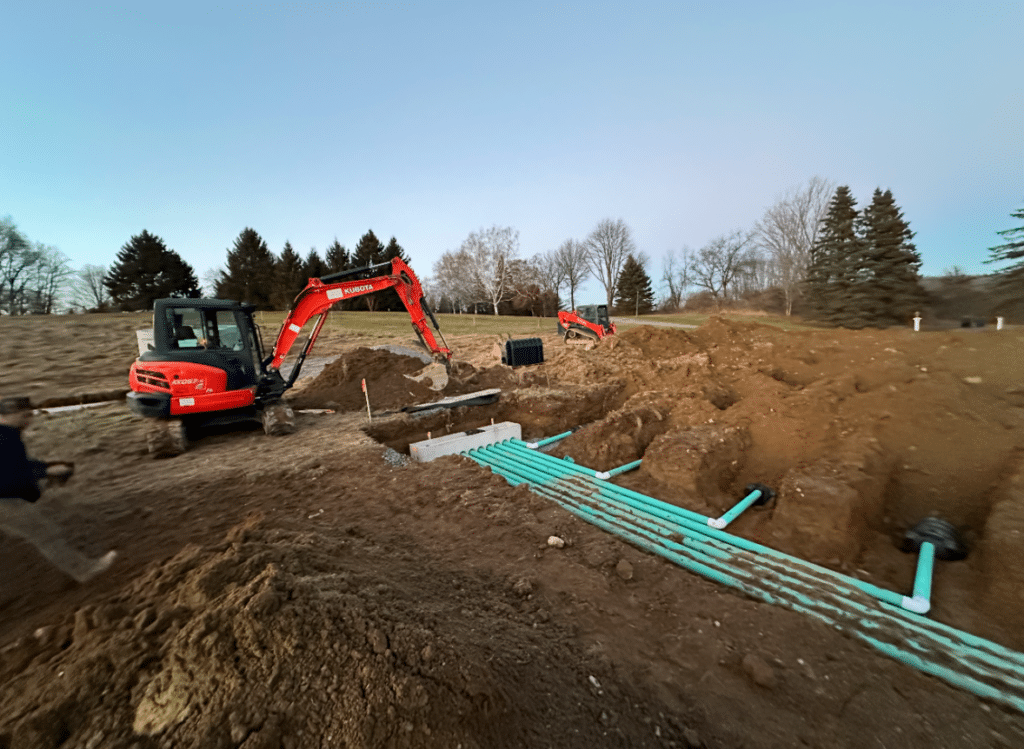
Upgrading your setup involves professional excavation and utility trenching to place new, highly durable PVC lines and advanced structural tanks deep beneath the regional frost line.
Modern engineering offers vastly superior reliability, protects your local groundwater, and significantly raises your overall property value. It turns a vulnerable piece of old infrastructure into a highly dependable asset.
Trusting Local Specialized Neighbors
Navigating the shift from city utilities to private home ownership is a lot easier when you work with experienced professionals who understand our local environment. General handymen and national corporate plumbing chains often lack the specialized heavy machinery and regional knowledge required to manage mountain subsurface utilities safely.
Triple J Services is located right here in Lackawaxen, PA. We are your proud Pike County neighbors, and we treat every single property with the exact same care, pride, and integrity we bring to our own homes.
Our owner, John Dreizler, built this company on strong family values, humility, and an unshakeable work ethic. We do not believe in cutting corners, and we never make inflated promises just to drive up profits.
We specialize strictly in vital subsurface infrastructure—focusing our training, tools, and daily energy entirely on septic systems, pump mechanics, and expert excavation.
Whether you need a routine location inspection, high-pressure hydro-jetting to clear a slow line, an emergency septic pumping, or a complete system installation, we are here to provide transparent pricing, dependable support, and expert local solutions you can rely on for years to come.
Article Recap
-
Moving from a city sewer to a home septic system requires taking full responsibility for an independent wastewater treatment plant.
-
Mountain geography and rocky soil often require specialized elevated sand mounds (Turkey Mounds) instead of traditional gravity fields.
-
You must strictly avoid flushing non-biodegradable items like paper towels, feminine products, and “flushable” wipes.
-
Kitchen garbage disposals introduce heavy organic solids that rapidly increase sludge levels and fill the tank prematurely.
-
Pouring excessive water into the system all at once causes shock loading, which stirs up sludge and clogs your filtration field.
-
Mechanical grinder and effluent pumps require careful use to prevent solid items from jamming the spinning blades and burning out the motor.
-
Routine professional inspections and hydro-jetting keep your lines clean and help you avoid unexpected, expensive property damage.
If you are adjusting to your new septic system, noticing slow drains throughout the house, or dealing with a loud grinder pump alarm that won’t stop buzzing, do not try to tackle it alone.
The local specialists at Triple J Services are ready to help guide you through every step of property ownership.
Call our team today at (845) 750-5222 or visit our Services Page to request your free estimate. Let us handle the hard work so you can enjoy total peace of mind in your new home.