Most homeowners don’t spend a lot of time thinking about their plumbing. You push the handle, the water swirls, and the waste vanishes. It feels like magic. But if your home relies on a grinder pump, that magic requires a little more care than a standard gravity sewer setup.
Living in the Poconos, especially around hilly terrain like Lackawaxen, PA, means gravity doesn’t always work in your favor. Many properties sit below the main sewer line or have unique topographical challenges. That is where a grinder pump comes into play. It acts like a heavy-duty garbage disposal for your waste, grinding up solids and pumping the slurry uphill to the municipal sewer or your septic tank.
Because a grinder pump uses spinning blades and a high-powered motor, it is highly sensitive to what goes down the drain. Treating your toilet like a trash can will eventually burn out the motor, shatter the blades, or cause a raw sewage backup into your home.
To keep your system running without a hitch, you must protect the mechanical parts hidden right below your property.
1. “Flushable” Wipes and Baby Wipes
The plumbing industry has fought a quiet war against “flushable” wipes for years, but the problem is magnified tenfold when you have a grinder pump.
Standard toilet paper breaks down into a soft pulp within seconds of hitting water. Wipes do not. They are manufactured using synthetic fibers or highly reinforced materials designed to hold up under moisture. Because they don’t dissolve, they float around in the pump chamber as tough, fibrous sheets.
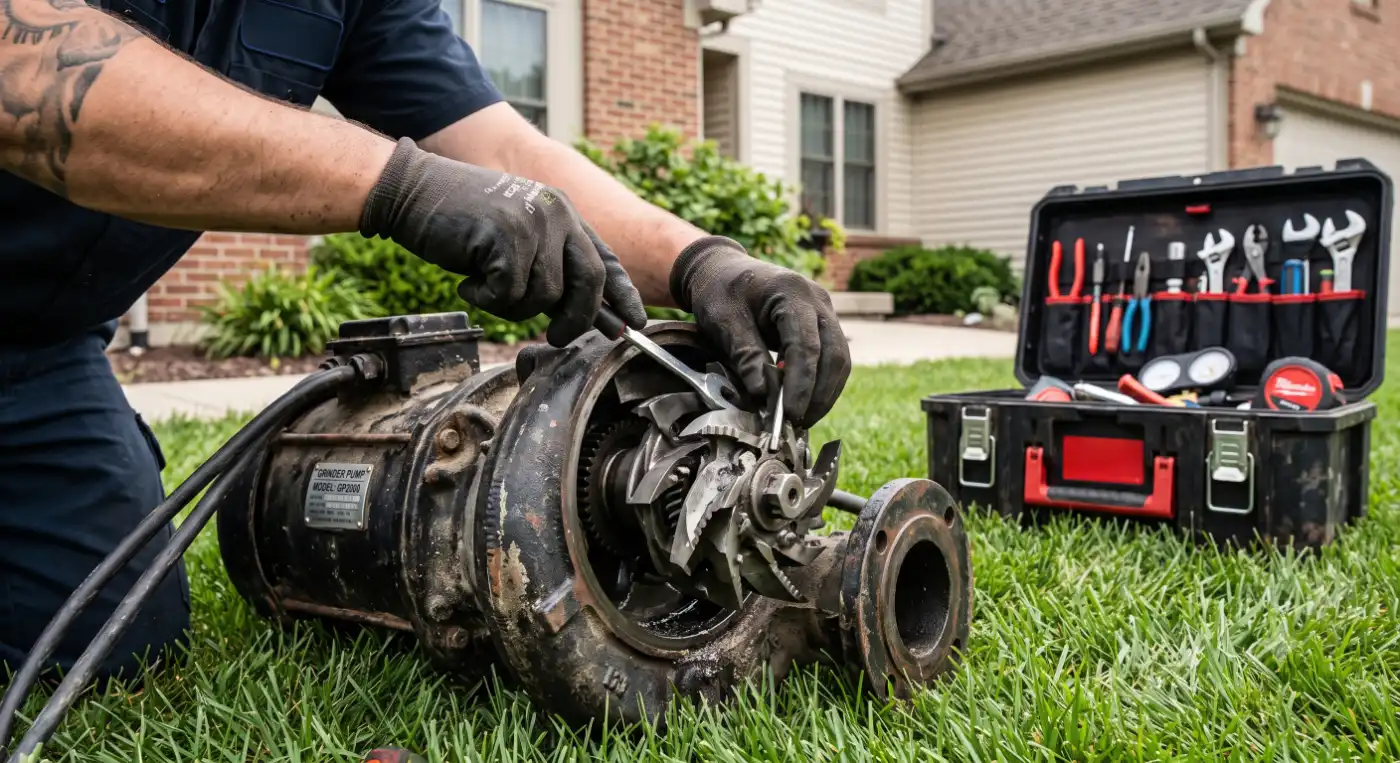
When the pump turns on, these wipes don’t get ground into tiny particles. Instead, they catch on the impeller blades. They wrap around the shaft like wet cloth, slowly tightening with every spin. Eventually, the wipes create a thick, tangled nest that binds the motor completely.
Once the motor is jammed, it will pull high electrical currents trying to force its way through the tangle. This overheats the unit, trips your electrical breaker, and triggers your high-water alarm.
If you are lucky, a technician can pull the pump and cut the wipes away. If you are unlucky, the motor burns out completely, leaving you with an expensive replacement bill.
2. Cooking Oil, Grease, and Fats
It is easy to pour warm bacon grease or cooking oil down the kitchen sink, especially when it is in liquid form. You run some hot water behind it and assume it is gone for good.
The trouble starts when that grease hits the cool underground environment of your pump chamber.
As soon as the grease drops down into the tank, it cools off rapidly and solidifies. It turns into thick, waxy chunks that float on top of the wastewater. Over time, these fats mix with other debris to form what plumbers call a “fatberg.”
This waxy layer coats everything inside the tank. It binds to the float switches that tell the pump when to turn on and off. If a float switch gets caked in grease, it gets stuck in either the up or down position.
If it gets stuck down, the pump won’t turn on, causing your tank to overflow. If it gets stuck up, the pump will run dry continuously until the motor destroys itself.
Regular maintenance, including high-pressure drain jetting (hydro-jetting), can scrub these greasy coatings off your pipe walls and tank interior before they cause a total system shutdown.
3. Feminine Hygiene Products and Cotton Swabs
Tampons, sanitary pads, and cotton swabs are designed to do one specific job: absorb liquid and maintain their structural integrity. They do not dissolve in water, and they certainly do not belong in a waste management system.
When a tampon or pad enters the pump chamber, it swells up to several times its original size. The cotton and synthetic materials are incredibly tough. When the grinder blades attempt to chop through them, the fibrous structure resists the cutting edges.
Instead of being sliced, the cotton fibers shred into long, stringy threads that clog the narrow discharge ports of the pump.
Cotton swabs are equally dangerous for a different reason. The plastic or rigid paper sticks don’t bend easily. They can lodge themselves sideways inside the pump housing, wedging the impeller so it cannot spin.
Keep a small trash can next to every toilet in your house. It is a simple, cheap way to remind family members and house guests that these items belong in the garbage, not the plumbing.
4. Condoms, Dental Floss, and Hair
Small items often seem harmless because they look tiny compared to the size of your pipes. However, dental floss, hair, and latex products are incredibly destructive to spinning machinery.
Think about what happens when hair wraps around the brush roll of a vacuum cleaner. It binds tight, slows down the spin, and smells like burning rubber. The exact same thing happens to your grinder pump.
Hair from the shower drain and dental floss flushed down the toilet migrate down to the pump chamber. Because they don’t degrade, they form long, incredibly strong ropes.
These strings wrap tightly around the seals protecting the pump motor. As the pump spins at high speeds, the tight friction of the floss or hair slices right through the rubber seals.
Once those seals fail, water leaks directly into the electric motor housing. Water and electricity don’t mix; the motor shorts out instantly, killing the pump entirely.
5. Kitty Litter and Construction Debris
Cat litter, even the varieties labeled as biodegradable or flushable, should never be introduced to a pump-based system. The same rule applies to household dirt, sand, or construction materials like drywall mud and grout.
Most cat litters are made from bentonite clay, which is engineered to clump together when it touches moisture. When you flush it, it settles to the bottom of your pump tank as a heavy, dense sludge.
Grinder pumps are designed to push liquid and finely ground organic waste. They are not designed to dredge up heavy clay mud or sand.
As the clay builds up in the bottom of the basin, it buries the pump intake. The motor has to work twice as hard to draw in liquid, putting massive strain on the internal components.
Furthermore, sand and clay act like sandpaper. As the abrasive particles flow past the grinder blades and impellers, they erode the sharp cutting edges. Within a few months, your blades become dull and useless, leaving the pump unable to grind up normal waste.
How a Grinder Pump Works
To appreciate why these items cause so much trouble, it helps to understand what is happening inside the basin.
Wastewater from your toilets, sinks, and showers flows down a main lateral line and drops into a buried tank in your yard. Inside this tank sits the grinder pump unit.
As the tank fills up with water, a float switch rises. Once the liquid reaches a specific level, the switch turns the pump motor on.
The grinder mechanism, which sits at the very bottom of the pump, features sharp blades that spin at thousands of revolutions per minute. These blades masticate solid waste into a fine slurry.
Once the solids are liquefied, the impeller pushes the mixture out through a small discharge line. This line is often only an inch or two wide.
Because the exit pipe is so narrow, any solid object that escapes the blades or wraps around the mechanism will choke the flow instantly.
Recognizing the Warning Signs of Grinder Pump Failure
Grinder pumps rarely quit without dropping a few hints first. Catching these signs early allows you to schedule a standard repair visit before you find yourself dealing with an active sewage emergency.
-
The Alarm Light Is On: Most systems feature a control panel mounted on the outside of your house or garage. If the red light flashes or a loud buzzer sounds, the water level in the tank has risen past the safe threshold.
-
Slow Drains Throughout the House: If a single sink drains slowly, it is a local clog. If every toilet, shower, and sink in the house struggles to empty, the pump isn’t evacuating the main basin fast enough.
-
Frequent Tripping Breakers: If the electrical breaker dedicated to your pump trips repeatedly, the motor is drawing too much power. This usually indicates the blades are jammed or the motor bearings are failing.
-
Unusual Noises: A healthy pump hums consistently when running. If you hear loud rattling, grinding, or vibrating noises from the tank area, a foreign object is likely stuck inside the blades.
The Cost of Neglect vs. Proactive Maintenance
Ignoring your waste system is an expensive gamble. A total pump replacement can cost thousands of dollars between the price of the new unit, electrical work, and specialized labor.
If the pump fails while you are away or asleep, the resulting property damage from a sewage backup can easily multiply those costs.
Proactive care is significantly cheaper. Scheduling routine septic system inspections keeps you ahead of mechanical wear. A professional technician can check the electrical amp draw of the motor, clear out minor grease accumulations, and verify that your float switches move freely.
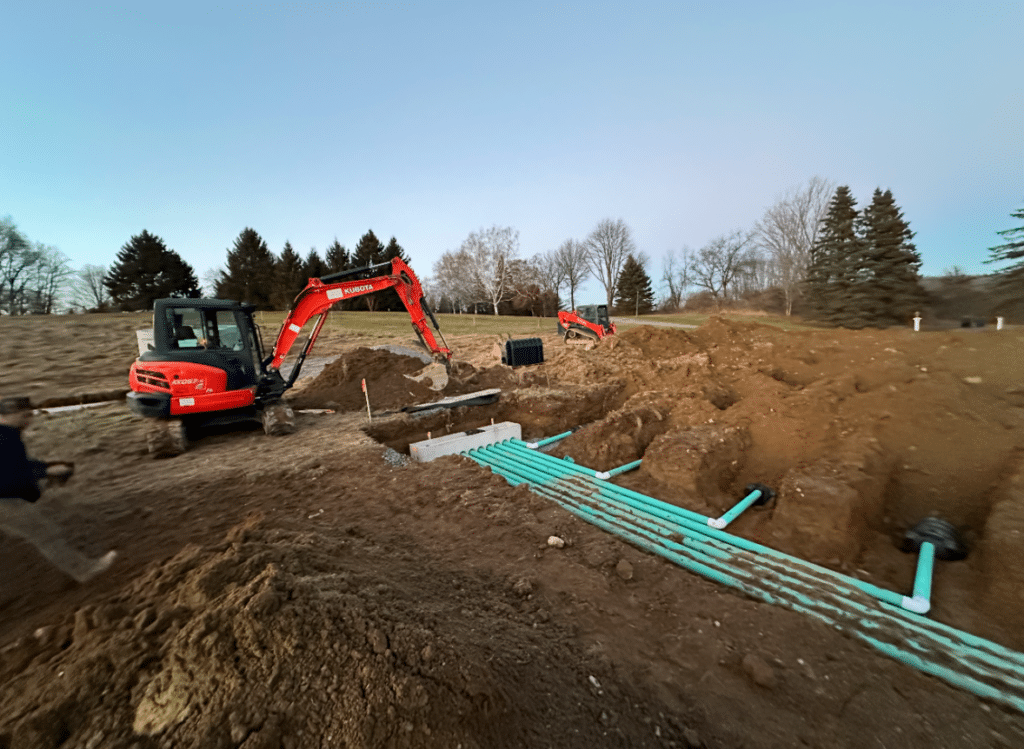
If your property uses an advanced setup, such as an engineered mound system (often called a “Turkey Mound”), maintaining your pump is even more critical.
An effluent pump moves clarified liquid up to the mound for final filtration. If the pump fails or gets clogged by debris, the entire mound system loses its supply, leading to saturated spots in your yard and potential environmental contamination.
Expert Excavation and Drainage Support
Sometimes, pump issues aren’t caused by what you flush, but by how the system was installed or handled over time. Ground shifting, soil erosion, or poor yard drainage can damage the underground lines connecting your home to the pump basin.
If rainwater pools directly over your pump tank or utility trenches, that surface water can leak into the basin through unsealed lids or small structural cracks. This extra water overloads the pump, forcing it to run constantly even when no one is using water inside the house.
Installing targeted French drains and customized drainage solutions diverts heavy surface runoff away from your infrastructure.
Additionally, if your buried utility lines were placed too shallow or suffered damage from invasive tree roots, professional excavation and utility trenching are necessary to dig down, repair the pipe section, and secure the system below the regional frost line.
Proudly Serving Lackawaxen and Pike County
When you experience a plumbing breakdown, you don’t want to deal with a distant corporate chain or a general contractor who treats septic work as a side hustle. You need a dedicated specialist who understands the local geography, soil conditions, and specific mechanical systems of our region.
Triple J Services is rooted right here in Lackawaxen, PA. We treat every single project with personal pride, backed by strong family values and an unshakeable commitment to doing things the right way.
Our owner, John Dreizler, built this business on grit, integrity, and absolute honesty. We specialize strictly in essential infrastructure—focusing our training, tools, and expertise entirely on septic, pump, and excavation care.
We show up to every job site with the proper diagnostic gear to pinpoint the root cause of your problem quickly.
Whether you need an emergency pumping to prevent a backup, a high-pressure hydro-jetting to clear out heavy grease, or a full septic system installation and replacement, our team delivers reliable workmanship that lasts.
We stand by our work, and we are always accountable to our neighbors across the Pike County community.
Article Recap: Grinder Pump
-
Grinder pumps act like heavy-duty garbage disposals, meaning they are highly vulnerable to mechanical clogs from improper waste.
-
“Flushable” wipes do not dissolve in water; they wrap around the pump impeller shaft and bind the motor.
-
Cooking grease and cooking oils cool down inside the tank, solidifying into thick layers that jam critical float switches.
-
Feminine products and cotton swabs possess tough fibers that resist grinder blades and choke narrow discharge pipes.
-
Dental floss, hair, and latex products wrap around mechanical components and slice right through internal motor seals.
-
Cat litter and construction debris form abrasive, heavy muds that bury the intake and dull sharp cutting edges.
-
Regular professional inspections and hydro-jetting prevent expensive mechanical burnouts and emergency backups.
If your grinder pump alarm is flashing, your drains are backing up, or you want to schedule a preventative checkup before a small issue turns into a major disaster, give us a call today.
The local specialists at Triple J Services are ready to help keep your home clean and functional.
Reach out to our team at (845) 750-5222 or visit our Services Page to request your free estimate. Let us take care of the hard work so you can enjoy total peace of mind.