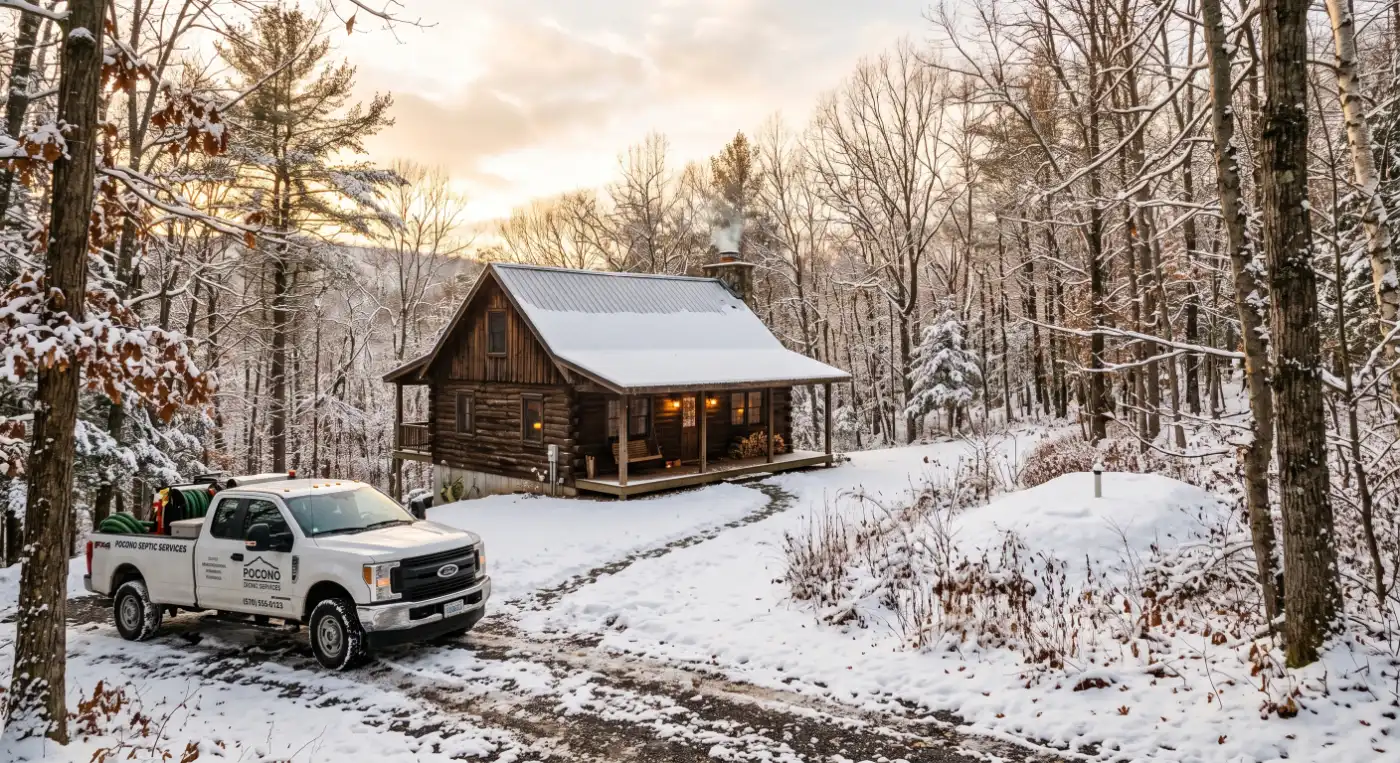
Owning a summer cabin in the Poconos is a dream come true. You get to spend your warmer months surrounded by beautiful woods, quiet lakes, and crisp mountain air. But when the leaves drop and the Pennsylvania winter sets in, those sub-zero temperatures present a real challenge for your property.
If your cabin sits empty from November through April, you cannot just lock the front door and drive away. You have to think about the infrastructure hidden right beneath your feet.
Freezing weather can cause massive damage to an unprotected waste system. When water freezes, it expands. That expansion can crack heavy concrete tanks, snap underground PVC lines, and ruin expensive electrical pumps. Fixing these issues in the spring is incredibly messy and highly expensive.
Taking the time to protect your system in the fall saves you thousands of dollars in emergency repairs. It ensures your mountain retreat is ready for relaxation the moment the warm weather returns.
Understanding the Poconos Freeze Threat
The geology of Pike County complicates how waste systems handle freezing weather. Our region features rocky terrain, uneven clay soils, and incredibly cold winters.
Unlike homes that stay warm all winter, an unheated seasonal cabin does not send a steady stream of warm wastewater into the ground. Without that regular warmth, frost pushes deep into the dirt.
If your underground lines or tanks contain standing water, that water turns to solid ice. This blocks the natural flow of waste and puts intense physical pressure on your pipes. The result is often ruptured lines, failed pumps, and flooded yards.
Pumping the Tank Before Winter Hits
The absolute best way to start your winter preparation is to empty the main tank. If you plan to leave the cabin completely empty with the heat turned off, leaving a tank full of liquid is a major gamble.
When a tank is completely full, a deep freeze can solidify the top layer of scum and liquid. This exerts outward pressure on the concrete or fiberglass walls, which can lead to structural cracks.
Scheduling an emergency septic pumping service right before you close up for the season eliminates this risk entirely. An empty tank simply cannot freeze, crack, or overflow while you are gone.
If you use your cabin occasionally during the winter weekends, you might choose to leave the tank active. If you do this, you must make sure the solid waste layers are low. High levels of solids freeze much faster than liquid, creating immediate blockages.
A quick fall inspection by a local professional will tell you if your system can handle a few winter visits or if it needs to be cleared out immediately.
Protecting Your Grinder and Effluent Pumps in your Septic System
Many modern Poconos properties do not rely on simple gravity to move wastewater. Because of our hilly landscape and varying elevations, many cabins use specialized mechanical units.
A grinder pump grinds up solid waste and pushes it uphill to a main sewer line or tank. An effluent pump moves clarified liquid out to a high-demand filtration zone.
These pumps are vulnerable to winter damage. If you turn off the electricity to your cabin during the off-season, you also turn off these pumps. Any water trapped inside the pump chamber or the check valves will freeze solid.
When water freezes inside a pump, it cracks the plastic housing and destroys the internal motor seals. When you flip the power back on in the spring, the unit will fail instantly, triggering loud alarms and immediate sewage backups.
To prevent this, the pump chambers must be completely cleared of water before the hard freeze sets in. The check valves need to be drained so no water sits inside the pipes.
If you keep the power on to run a small heater in the pump house, you must confirm that the electrical circuits are completely stable. A single winter power failure can shut down your heat source and ruin your equipment.
Securing Leach Fields and Turkey Mounds
Your filtration zone is the most sensitive part of the entire setup. In areas with thin soil or high water tables, engineers often build elevated sand mounds. Locals call these “Turkey Mounds.”
These mounds sit higher than the natural grade of your yard. This elevation makes them highly exposed to freezing winter winds.
A healthy layer of dead grass and thick snow actually acts as an insulator for your Turkey Mound. Snow traps pockets of air and keeps the ground below slightly warmer.
However, if you drive vehicles, ATVs, or heavy equipment over your filtration field in the fall, you ruin this natural defense. Compacting the soil or the snow pushes the frost line much deeper into the ground. This compaction can crush the internal distribution pipes or freeze the sand layer solid.
Keep all traffic entirely off your drain field. If your yard suffers from poor surface drainage, heavy fall rains can flood the soil right before a freeze.
Installing specialized French drains and drainage solutions around the perimeter of your yard redirects rainwater away from your system. This keeps the soil dry and significantly less likely to freeze solid.
Clearing Your Lines with Hydro-Jetting
Before you shut the water valves off for the winter, take a close look at how your interior drains are running. Small clogs, accumulated grease, and slow-moving debris inside your main waste line are prime targets for winter freezing.
A small trickle of water caught behind a clog will quickly freeze into a solid ice dam. This completely seals the pipe shut.
Traditional drain snakes can puncture holes through clogs, but they leave behind greasy residue along the pipe walls. High-pressure drain jetting, also known as hydro-jetting, uses specialized water streams to scrub the inside of your pipes completely clean.
Removing every trace of grease and debris ensures that no moisture gets trapped inside the lines over the winter. The pipes stay empty, clean, and perfectly safe from ice damage.
The Right Way to Shut Down Indoor Plumbing
Winterizing the outdoor components is only half the battle. You also have to handle the lines inside the cabin correctly.
Start by turning off the main water supply valve to the house. Next, open every single faucet in the cabin, including the lowest valves in the basement or crawlspace. Let all the standing water drain out completely.
Do not forget to flush the toilets to empty the water out of the upper tanks. Keep in mind that standard plumbing traps are specifically designed to hold water to block sewer gases from entering your living spaces.
If you leave that water in the traps, it will freeze and shatter your porcelain toilets and plastic sink drains.
Once the water is fully drained, pour non-toxic, marine-grade RV antifreeze into every sink drain, shower drain, and toilet bowl. This displaced water will not freeze, keeping your fixtures safe while still sealing out foul odors.
Managing Utility Trenches and Hidden Leaks
Water lines running from your well to your cabin must be buried deep below the regional frost line. In our area, that means digging down at least four feet.
If your lines were buried years ago, soil erosion or shifting ground may have exposed sections of the pipe.
Professional excavation and utility trenching services can identify these shallow points. Digging down and adding thick exterior insulation protects these vulnerable areas.
It is also highly beneficial to check for minor structural leaks before the ground freezes. A small crack in a pipe allows water to slowly drip out into the surrounding soil. This creates a pocket of saturated mud that freezes rapidly, accelerating damage to the pipe.
Catching these issues early keeps your utility lines functional through the coldest months of the year.
Professional Inspections Prior to Closing
Guesswork is your biggest enemy when it comes to seasonal maintenance. A system can seem like it is working perfectly fine in September, only to fail completely by January.
A professional inspection provides total clarity on the health of your system before the snow arrives.
Technicians use advanced cameras to inspect internal lines for structural cracks, sagging sections, or invasive tree roots. They measure the exact accumulation of scum and sludge inside your tank.
They also test your pump controls, check valves, and electrical alarms to ensure everything works flawlessly. Catching a weak component in October allows you to fix it on your own schedule. This saves you from dealing with a catastrophic failure in the middle of a blizzard.
Planning for Long-Term System Upgrades
If your cabin uses an old, outdated system, winterizing might just be a temporary fix for a larger problem. Old steel or thin plastic tanks degrade over decades of winter freezing and summer thawing.
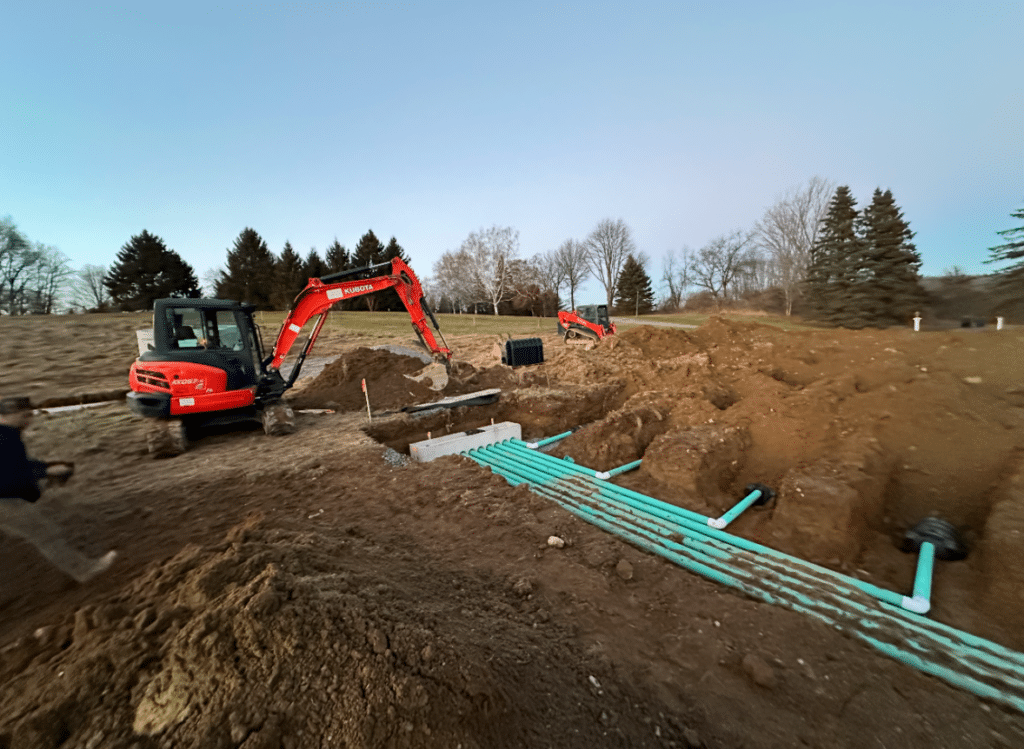
If your system struggles to drain every autumn, it may be time to discuss a modern septic system installation and replacement.
Newer systems use highly durable materials and advanced engineering designs specifically tailored to handle tough mountain environments. Upgrading your setup increases your property value and provides complete peace of mind, no matter how harsh the weather gets.
Relying on Local pike County Neighbors
For dependable home care, working with a team that truly understands our local climate makes all the difference. General contractors often take shortcuts because they do not specialize in subsurface infrastructure.
Triple J Services focuses entirely on septic and excavation care. We are located right here in Lackawaxen, PA, and we treat every single property like it belongs to our next-door neighbor.
Our owner, John Dreizler, built this business on family values, hard work, and complete honesty. We do not cut corners, and we do not make inflated promises.
We simply provide the high-quality, dedicated service you need to keep your cabin safe. Whether you need a routine inspection, a full Turkey Mound installation, or fast support when a pump alarm goes off, we are here to help.
Article Recap: Winterizing Septic Systems
-
Winter weather poses a significant structural risk to unheated seasonal cabins in the Poconos.
-
Emptying your tank through a professional pumping service prevents fluid expansion from cracking the tank walls.
-
Disconnecting power without draining your grinder and effluent pumps leads to trapped water freezing and ruining the internal motors.
-
Driving vehicles over leach fields and Turkey Mounds compacts the protective snow cover, allowing frost to penetrate deeper into the system.
-
Hydro-jetting removes debris and grease blockages that can trap water and form solid ice dams inside your main lines.
-
Pouring non-toxic antifreeze into indoor plumbing traps protects porcelain fixtures from breaking.
-
Professional inspections identify hidden vulnerabilities before the ground freezes solid.
Do not wait for the first hard frost to find out if your summer cabin can handle a Poconos winter. Protect your property today by reaching out to the dedicated experts at Triple J Services.
Whether you need to schedule a fall pumping, clear your lines with high-pressure hydro-jetting, or plan a complete system replacement, our team brings the specialized tools and local expertise required to get the job done right.
Give us a call at (845) 750-5222 or visit our Services Page to request your free estimate. Let us give you the total peace of mind you deserve this winter.