Fast Track Summary
-
The Baseline Rule: Most homes in PA need a septic pump every 3 to 5 years, but usage overrides standard timelines.
-
Household Math: More people mean faster solid accumulation; a family of five cannot follow a single person’s schedule.
-
Vacation Homes vs. Full-Time: Intermittent weekend use delays pumping needs, but sitting empty brings its own mechanical risks.
-
Party Preparation: Large gatherings overwhelm drain fields quickly; pumping before a major event prevents backup disasters.
The Reality of Septic Systems in the Poconos
Out of sight, out of mind is how most homeowners treat their waste systems. You flush the toilet, run the dishwasher, or empty the bath, and the water just disappears. But if you live in Lackawaxen, Pennsylvania, or the surrounding Pike County region, that water goes straight into a backyard ecosystem.
Septic systems are not magical black holes. They are living, biological structures with finite limits. When you ignore them, they stop working, and a failed system is one of the dirtiest, most expensive headaches a homeowner can face.
The Pennsylvania Department of Environmental Protection (DEP) keeps a close eye on on-lot sewage disposal systems because our regional geology matters. Our soils, freezing winters, and proximity to pristine water resources mean proper maintenance isn’t just a recommendation; it is an environmental necessity.
Understanding your tank’s operational limits keeps your yard clean and protects your wallet. Let’s look at the actual factors that dictate your maintenance schedule.
The Basic Science Inside Your Underground Tank
Every drop of wastewater from your home travels through a main sewer line into a buried, watertight container. This tank has a simple but vital job: it separates solids from liquids and begins the breakdown process.
Inside the tank, three distinct layers form naturally:
-
The Scum Layer: Lightweight waste like grease, fats, oils, and floating debris rises to the very top.
-
The Effluent Layer: Clear liquid wastewater stays in the middle, ready to push out to the absorption field.
-
The Sludge Layer: Heavy organic solids sink to the absolute bottom, where anaerobic bacteria slowly break them down.
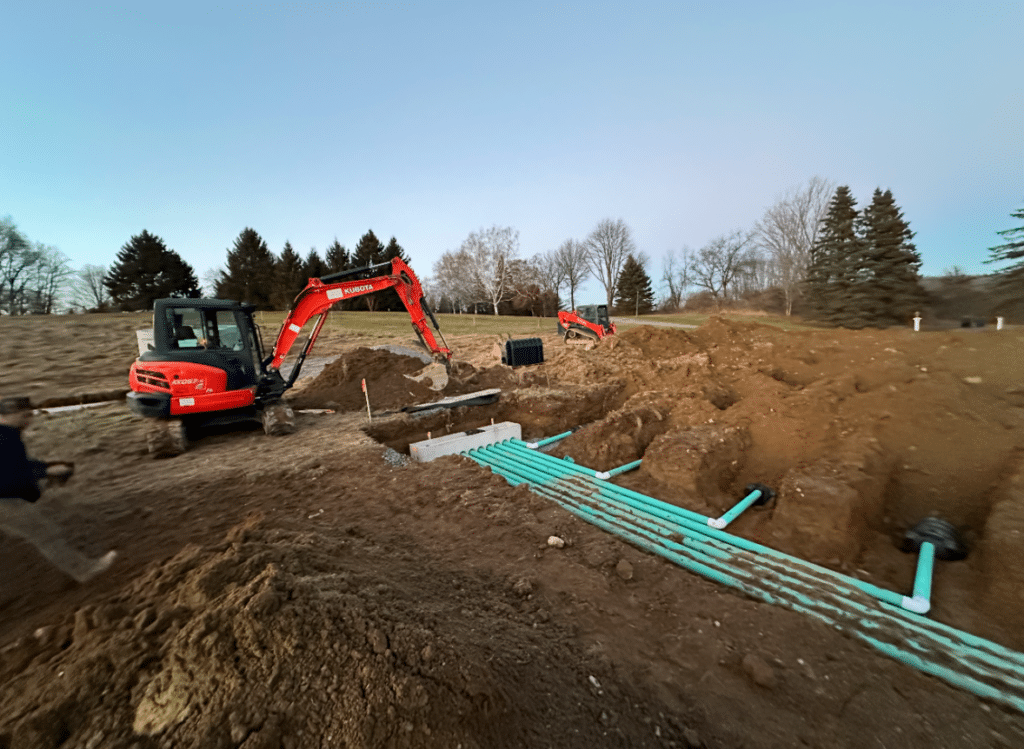
The clear liquid in the middle exits the tank through an outlet pipe, moving toward your drain field or a specialized alternative like a leach field, often referred to locally as a “Turkey Mound.”
The heavy sludge at the bottom stays behind. While bacteria consume a portion of these solids, they cannot dissolve everything. Over months and years, that sludge layer rises. If it gets too high, solids escape into the drain field, clogging the soil pores and destroying the system’s ability to filter water.
Household Size: The Ultimate Factor in Your Pumping Schedule
Many homeowners believe that a standard three-year rule applies to everyone equally. This is a myth. The frequency of your septic maintenance depends directly on how much water and solid waste you push down the pipes every single day.
A single person living alone in a house with a 1,000-gallon tank can easily go five years between professional service appointments. The bacterial colony has plenty of time to break down small amounts of waste, and the sludge builds up at a snail’s pace.
Introduce a family of four or five into that same house, and the math changes completely. More people mean more laundry loads, longer showers, and constant toilet flushes. The sheer volume of water leaves less time for solids to settle correctly.
A busy household will fill the sludge and scum layers much faster. For larger families, scheduling a professional pump every 2 to 3 years is the safest strategy to prevent early system fatigue.
Year-Round Homes versus Poconos Vacation Rentals
Property usage profiles vary wildly throughout PA. A primary residence sees continuous, predictable stress. The system experiences a steady daily routine of water inflow and biological breakdown. This predictability allows the tank’s natural bacteria to maintain a stable environment.
Vacation homes and short-term rentals along the Lackawaxen River or in local mountain communities operate under entirely different rules. These systems experience wild swings in usage.
A rental property might sit completely empty from Monday through Thursday, causing the resident bacteria population to starve down due to a lack of incoming organic material. On Friday night, eight or ten guests arrive. Suddenly, the system faces an absolute deluge of water, soap, and human waste over a 48-hour period.
This sudden surge creates a hydraulic overload. Water moves through the tank so fast that solids don’t have time to settle to the bottom. Instead, they get pushed straight out into the effluent pump or the drainage field.
If you own a vacation home that sees heavy weekend use, do not assume you can wait ten years just because the house is empty half the time. The shock loads mean you should still pump the system every 3 years to protect your components from unexpected failures.
Why Big Parties Require Septic Pre-Planning
Planning a graduation party, a family reunion, or a big backyard barbecue in PA is exciting, but it puts incredible stress on your plumbing. If you have fifty people coming to your home for a weekend, your septic system is about to process weeks’ worth of waste in a single afternoon.
Standard residential systems cannot handle that kind of rapid volumetric shock. If your sludge layer is already sitting close to the limit, that massive influx of water will stir up the bottom of the tank, sending solid debris directly into your lines.
Even worse, constant toilet use can cause the water level to rise faster than the soil can absorb it, leading to slow drains, gurgling pipes, or raw sewage backing up into your basement middle of the festivities.
If you know a major event is coming and you haven’t had your tank serviced in over two years, call for a defensive pump beforehand. Emptying the tank right before the party creates a massive containment buffer. It gives your system the physical capacity to store the temporary influx of wastewater without risking an embarrassing and costly backup during your event.
The Danger of Mechanical and Component Failures
A septic system is more than just a hollow concrete box; it relies on specific mechanical and structural elements to function cleanly. When these parts break down, pumping schedules become secondary to immediate repair needs.
Managing Grinder Pumps and Effluent Systems
If your home sits lower than your main sewer line or your drainage field is located uphill, your property utilizes a grinder pump or an effluent pump. A grinder pump chops up solid waste and pushes it under pressure to the tank, while an effluent pump moves clear liquid up to an elevated mound system.
These pumps work around the clock in harsh underground conditions. Grease buildups, flushed wet wipes, and feminine hygiene products can easily jam the impellers or burn out the pump motors.
Routine septic inspections catch these mechanical failures early. If an effluent pump fails completely, the liquid inside your system has nowhere to go, causing an immediate backup into the lowest drains of your home.
The Problem with Clogged Fields and Drainage Solutions
When a leach field stops accepting water due to age or solid compaction, the entire system grinds to a halt. In areas with high water tables or heavy clay soils, standard gravel trenches often struggle to process water cleanly.
If your yard has soft, soggy spots or smells like sewage after a heavy PA rainstorm, your field is failing. Resolving these issues requires specialized intervention, ranging from high-pressure drain jetting to blast open clogged lateral lines, to installing French drains to redirect surface water away from your treatment area.
Professional Local Septic Care in Lackawaxen
Maintaining your property’s waste infrastructure requires heavy equipment, deep local expertise, and a thorough understanding of regional soil dynamics. Triple J Services provides complete, reliable support for residential and commercial systems throughout the Lackawaxen, PA area. From emergency pumping to complex new system designs, our team keeps your infrastructure working cleanly.
Explore our complete capabilities on our Services Page or learn more about our commitment to quality on our About Us Page. Our technicians handle the dirty work so you don’t have to worry about what happens when you flush.
Our core local offerings include:
-
Septic System Installation & Replacement: Custom engineered system layouts built perfectly for Pike County soils.
-
Leach Field (“Turkey Mound”) Repair: Diagnosing and restoring compressed or waterlogged absorption zones.
-
High-Pressure Drain Jetting: Utilizing targeted hydro-jetting technology to clear stubborn grease and root intrusions from main lines.
-
Septic System Inspections: Certified, thorough evaluations for home sales, regulatory compliance, and peace of mind.
-
Excavation & Utility Trenching: Precise digging and line placement for water, electric, and septic routing.
External References
Key Takeaways
-
Track Household Volume: More occupants mean faster solid accumulation; adjust your pumping cycles around actual headcount.
-
Account for Surge Use: Vacation rentals experience intense usage spikes that require regular preventive maintenance.
-
Pump Before Big Events: Protect your property from sudden failures by emptying your tank before hosting large parties.
-
Monitor Mechanical Components: Keep a close eye on grinder and effluent pumps to avoid sudden residential backups.
-
Protect Your Soil Investment: Regular maintenance keeps solid waste out of your leach field, saving you thousands in replacement costs.
Schedule Your Septic Service with Triple J Services
Don’t wait for an expensive backup or a soggy yard to tell you that your septic tank is completely full. Whether you need a routine pump, a comprehensive system inspection, or emergency line clearing, the local experts at Triple J Services are ready to help. We understand the specific terrain and environmental needs of Lackawaxen and the surrounding PA communities. Keep your system running flawlessly year-round. Call Triple J Services today at (845) 750-5222 or visit our Services Page to book your appointment.