Living in a beautiful area like Lackawaxen, Pennsylvania, gives you a great sense of independence. You get to enjoy peace, privacy, and the beauty of nature. But with that country lifestyle comes extra responsibility. For many homeowners out here, you are completely responsible for your own utility infrastructure. You don’t have a city water main or a municipal sewer line running to your house. Instead, you rely on a private well for drinking water and an on-site septic system to handle waste.
These two systems sit buried in the exact same yard. They operate right next to each other, day after day. When everything works perfectly, it is a flawless, natural cycle. Your septic system treats wastewater, filters it through the earth, and safely returns it to the environment.
But what happens when that cycle breaks down?
If your septic system fails, it can turn into a direct threat to your household. Instead of treating your waste, a malfunctioning system can release raw sewage, bacteria, and chemicals straight into the ground. From there, it is a short trip through the soil into your aquifer. If that happens, your own well water can become highly contaminated.
Understanding how your septic system affects your drinking water is essential for your family’s health. Let’s look closely at how these systems interact, the warning signs of a dangerous failure, and what you can do to keep your drinking water pure.
The Hidden Link Between Your Septic Tank and Your Well
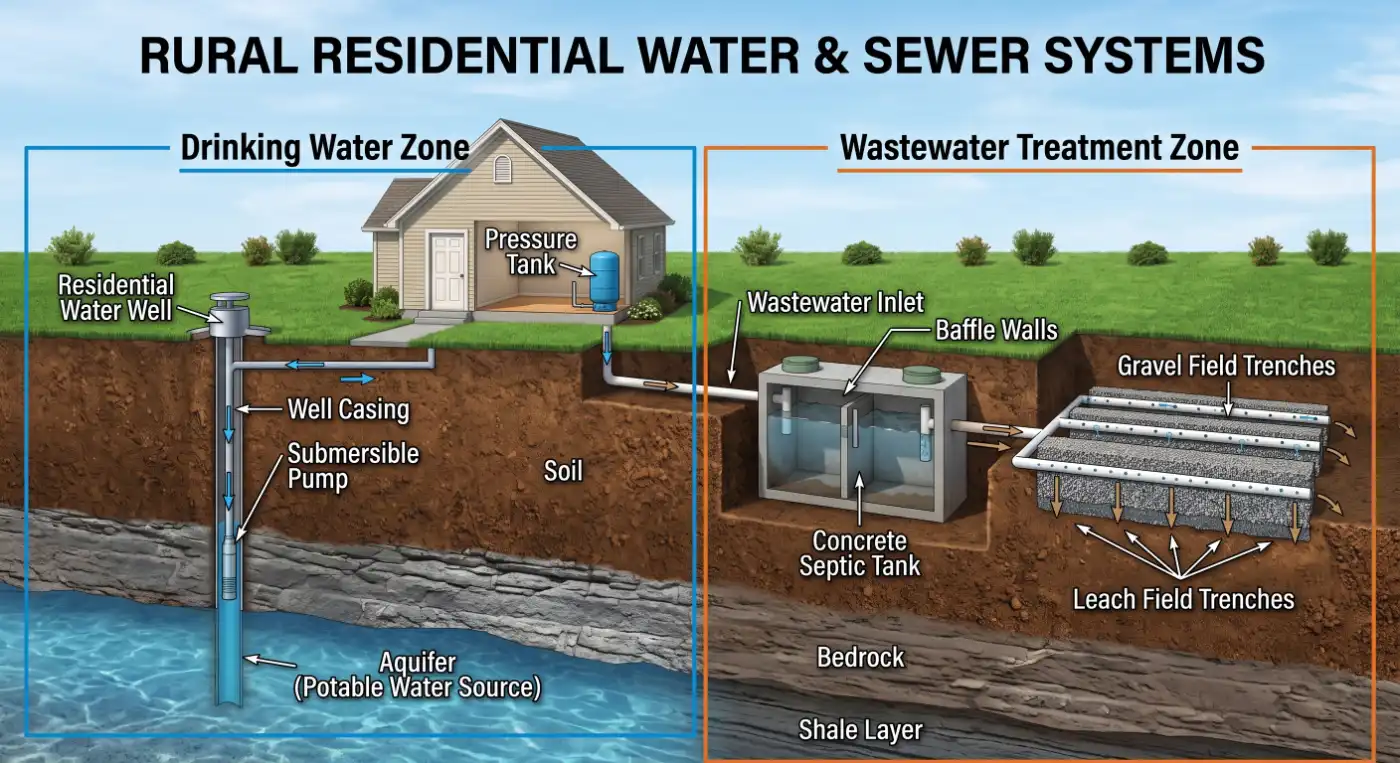
To understand how contamination happens, you have to look at what is happening beneath your lawn. Your well and your septic system are part of a shared underground water cycle.
A standard septic system uses a buried, watertight container to catch everything that washes down your drains. Inside the tank, solids settle to the bottom as sludge. Grease and oil float to the tops as scum. The liquid in the middle, known as effluent, flows out of the tank and into your leach field.
Your leach field is where the real water purification happens. The effluent trickles through a network of perforated pipes embedded in gravel and soil. As the liquid filters downward, natural soil microbes break down dangerous pathogens and nutrients. By the time that water travels deep enough to reach the groundwater table, it should be clean.
But this system depends entirely on the soil’s ability to filter out impurities. If your septic tank overflows, or if the soil becomes oversaturated, untreated waste bypasses this natural filtering process. It flows directly down into the groundwater table.
Your well pump pulls drinking water from this exact same underground supply. If a failing septic system pollutes the local water table, your well will eventually pull those pollutants straight into your home.
The Health Hazards in Failing Septic Systems
When a septic system stops working, it releases a long list of pollutants into the surrounding earth. These contaminants are not just gross; they are dangerous to your health.
Disease-Causing Pathogens
Human waste is packed with bacteria, viruses, and parasites. If your septic system fails to treat wastewater properly, organisms like E. coli, Salmonella, and Giardia can enter your drinking water supply. Drinking water fouled by these pathogens causes severe gastrointestinal issues, cramping, and dehydration. For young children, the elderly, or anyone with a weakened immune system, these infections can be life-threatening.
Dangerous Nitrate Levels
Wastewater is rich in nitrogen from household cleaning chemicals and organic waste. As this waste breaks down, it converts into nitrates. While plants love nitrates, human bodies do not. High nitrate levels in drinking water are incredibly dangerous for infants. It can lead to a condition called methemoglobinemia, commonly known as “blue baby syndrome.” This condition blocks an infant’s blood from carrying oxygen properly. According to the US EPA, private wells should be tested annually for nitrates to ensure they stay within safe limits.
Emerging Chemical Threats
Your septic tank cannot break down modern chemical compounds. When you flush leftover prescriptions, over-the-counter pain relievers, or harsh industrial cleaners down the drain, they pass through your septic tank completely unchanged. A study by Penn State Extension discovered that rural Pennsylvania wells often contain trace amounts of pharmaceuticals, which frequently trace back to poorly maintained or improperly installed local septic systems.
Clear Signs Your Septic System Is Jeopardizing Your Water
Septic systems rarely fail without warning. Usually, your system will send out clear distress signals before it completely floods your well water with contaminants. You just have to know what to look for.
Unusually Green, Lush Lawns
We all want a beautiful yard, but a single patch of bright green grass over your leach field is bad news. If the grass above your drainage trenches is growing much faster and greener than the rest of your lawn, your soil is likely overwhelmed. It means wastewater is rising to the surface instead of filtering downward, bringing raw nutrients right to the grass roots.
Spongy Soil and Pooling Water
Walk out over your leach field. If the ground feels like a wet sponge or if you notice puddles of standing water when it hasn’t rained, your system is failing. This happens when the soil is too compacted or clogged to absorb any more liquid. The wastewater has nowhere to go but up, pooling on top of the ground where it can easily wash down your well casing during the next storm.
Slow Drains and Gurgling Pipes
Are your toilets flushing sluggishly? Do your sinks and tubs take forever to drain? If you hear strange gurgling sounds coming from your pipes when you run the wash or take a shower, your system is backing up. This is a classic sign that your septic tank is completely full or that a critical pipe is blocked.
Foul Odors Near the Tank or Wells
A properly functioning septic system should never smell. If you catch a whiff of rotten eggs or raw sewage while sitting on your porch or walking near your wellhead, you have a major issue. Gases are escaping from your system because things aren’t venting or draining correctly.
Sudden Changes in Well Water Quality
Pay attention to the water coming out of your kitchen faucet. Does it look slightly cloudy? Has it taken on a strange, metallic, or musty taste? Does it smell unusual when you turn on the hot water? Any sudden shift in the color, taste, or odor of your well water means you need an immediate inspection.
Comprehensive Septic Services to Keep Your Home Safe
Protecting your drinking water requires a mix of regular maintenance, timely repairs, and proper infrastructure design. At Triple J Services, we handle every aspect of septic care for families across Lackawaxen and the surrounding region. We know exactly how local soils behave and what it takes to keep your water completely isolated from your waste.
Septic System Inspections
You can’t fix a problem if you don’t know it exists. A professional septic system inspection is your primary defense against water contamination. We use specialized tools to check your tank’s sludge levels, test your baffles, and evaluate your leach field’s absorption rate. Regular inspections catch minor wear and tear before it escalates into an environmental emergency.
Emergency Septic Pumping
When a septic tank fills up completely, solids escape into your drain field and clog the soil pores. Once that happens, total system failure is right around the corner. Regular pumping removes these accumulated solids, preserving your system’s filtering power. If you are already dealing with backing-up drains or pooling water, our emergency septic pumping services can relieve the pressure on your system immediately, preventing raw waste from migrating toward your well.
Leach Field and Turkey Mound Repair
Your leach field does the heavy lifting when it comes to purifying wastewater. If your field becomes clogged by solids or compacted by heavy machinery, it stops treating effluent. In areas with high water tables or shallow bedrock, a traditional leach field won’t work. That is where a sand mound system, often called a “Turkey Mound,” comes in. We specialize in diagnosing leach field failures, repairing broken lateral lines, and installing new Turkey Mounds to guarantee your effluent gets fully treated before it ever touches the local groundwater.
Grinder Pump Repair & Installation
If your home has bathrooms located in a basement or sits lower than your septic tank, gravity alone won’t move your waste. You need a grinder pump to shred solids and pump the slurry up to your main septic tank. If a grinder pump fails, waste quickly backs up into your home or pools around your foundation. We provide fast, reliable grinder pump repair and installation to keep your wastewater moving exactly where it belongs.
Effluent Pump Service & Replacement
Many advanced septic systems, including Turkey Mounds, rely on an effluent pump to push clarified liquid out to the elevated drainage area in controlled doses. If this pump dies, the liquid will back up into your tank, causing a total system stall. We service, test, and replace malfunctioning effluent pumps to ensure your drainage system receives the steady, metered doses of water it needs to function safely.
High-Pressure Hydro-Jetting
Over time, pipes gather a thick buildup of grease, hair, sludge, and mineral scale. This buildup slows down water flow and causes stubborn blockages. Traditional pipe snakes often just punch a temporary hole through a clog. We use high-pressure drain jetting (hydro-jetting) to blast away all internal buildup, scouring your septic lines clean with hyper-pressurized streams of water. It is a safe, chemical-free way to restore your system’s capacity.
French Drains & Drainage Solutions
Too much water is the ultimate enemy of a healthy septic system. If heavy rain or surface runoff from your roof floods your yard, the soil over your leach field becomes totally saturated. Oversaturated soil cannot absorb or treat your household effluent, which drastically raises the risk of groundwater contamination. We design and install custom French drains and surface drainage solutions to channel storm runoff safely away from your septic system and wellhead.
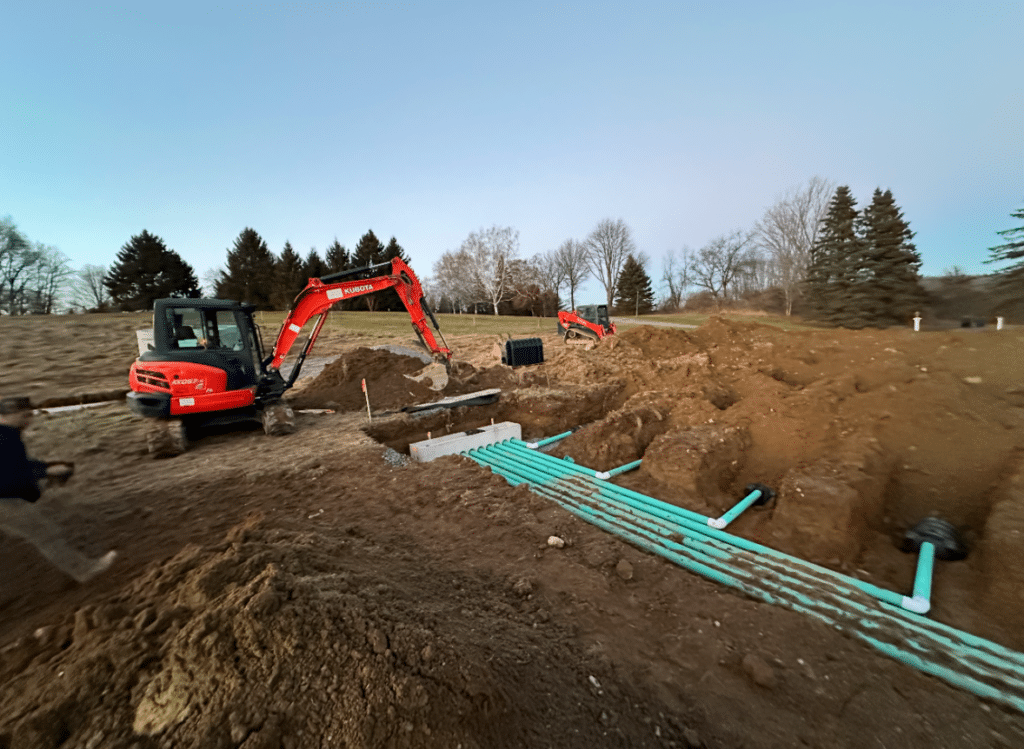
Excavation & Utility Trenching
Repairing underground infrastructure always requires precise earthmoving. Whether you need a broken sewer line replaced, a new water line run from your well, or a complete excavation for a system upgrade, we handle the job with extreme care. We dig precise utility trenches that respect safe setback distances, ensuring your water lines and septic components stay completely separated.
Septic System Installation & Replacement
If your old septic system has reached the end of its lifespan or was poorly engineered from the start, a full replacement is the only way to safeguard your property. We handle the entire process from start to finish. We evaluate your soil profile, calculate your home’s water loads, and install a brand-new, durable septic system that meets all local regulations and keeps your drinking water perfectly safe for decades to come.
Practical Steps to Shield Your Well Water
Beyond hiring a professional for major repairs, your daily habits play a massive role in protecting your groundwater supply.
-
Watch What You Flush: Your septic tank is a living ecosystem powered by beneficial bacteria. Never flush baby wipes, paper towels, feminine hygiene products, or cigarette butts down your toilets. Avoid pouring grease, cooking oils, paints, or harsh chemical solvents down your sinks. These items destroy your system’s biological balance and cause physical blockages.
-
Space Out Your Water Use: Flooding your system with too much water at once doesn’t give solids enough time to settle out. Spread out your laundry loads across the week instead of doing five loads on Saturday morning. Fix leaky faucets and running toilets immediately.
-
Protect Your Drain Field: Keep heavy vehicles, trucks, and heavy equipment completely off your leach field.The weight will compact the soil and crush your buried pipes. Never plant trees or large shrubs near your septic lines; aggressive roots will seek out the water, breaking into your pipes and clogging your entire system.
-
Maintain Proper Clearances: Make sure your wellhead sits uphill from your septic system whenever possible.Keep a close eye on the physical integrity of your well casing. Ensure the ground slopes away from your wellhead so surface water can’t pool around the pipe and run down into your drinking supply.
Ensure Your Property is Secure
Do not wait for a strange smell or an unexpected illness to force your hand. Keeping your septic system in peak condition is the absolute best way to ensure the water coming out of your kitchen tap is pure, safe, and clean.
If you have concerns about your system, notice any changes in your plumbing, or simply realize it has been years since your tank was last serviced, take action today. Contact Triple J Services to schedule your comprehensive septic system inspection and protect your Lackawaxen home.
Key Takeaways
-
Direct Underground Connection: Failing septic systems leak untreated sewage into the local groundwater table, which your private well pulls into your home.
-
Serious Health Implications: Contaminated well water carries dangerous bacteria, viruses, and elevated nitrate levels that pose severe health risks.
-
Clear Warning Signals: Watch out for spongy lawns, bright green grass over your leach field, slow indoor drains, and foul sewage odors around your yard.
-
Preventative Care Matters: Regular septic pumping, high-pressure hydro-jetting, and proper surface drainage keep your filtering soil from becoming overwhelmed.
-
Professional Support: Expert inspections identify hidden system wear before it leads to a catastrophic water contamination crisis.
Ready to Protect Your Family’s Water?
Keep your drinking water pristine and your waste systems running perfectly. Get in touch with the local experts at Triple J Services for an accurate, professional evaluation of your home infrastructure.
Call Triple J Services at (845) 750-5222 today to schedule your comprehensive septic system inspection in Lackawaxen, PA!