
That piercing high-pitched buzz or flashing red alarm light coming from your yard can instantly make your heart sink. If you rely on a grinder pump to transport wastewater away from your home, that warning sign means your wastewater level in the outdoor basin is higher than it should be.
Before panic sets in, know that your control panel is doing its job. It is alerting you to an issue so you can fix it before sewage backs up into your home.
Many homeowners wonder if pressing the reset button will fix the problem immediately. Sometimes a simple thermal overload trip occurs, and a safe manual reset gets everything moving again. Other times, resetting the panel without understanding the underlying issue can damage the pump motor or trigger a major sewage backup.
This guide walks you through the exact steps to reset a grinder pump control panel safely, explains why pumps trip in the first place, and outlines when you can handle it yourself versus when you need to call a professional.
What Does a Grinder Pump Control Panel Do?
A grinder pump sits inside a buried basin outside your home. It receives raw wastewater from toilets, sinks, showers, and washing machines. Powerful rotating blades grind solid waste into a fine slurry, which is then pumped under pressure uphill or across long distances to a septic tank or municipal sewer main.
Because the pump operates underwater in a harsh environment, it relies on an exterior electrical control panel mounted on a nearby wall or post. This control panel acts as the brain of the system. It houses:
-
Circuit breakers and motor starters that supply high-voltage power.
-
Float switch connections that detect liquid levels in the basin.
-
Thermal overload protection devices that shut off the motor if it gets too hot.
-
Visual lights and audible horns that sound when liquid levels reach emergency height.
When everything operates smoothly, float switches turn the pump on as wastewater fills the basin and shut it off once the level drops. If the pump fails to start, the incoming water level keeps rising until it trips the high-water float, activating the panel’s red alarm light and buzzer.
Why Grinder Pump Control Panels Trip or Sound Alarms
Understanding why your panel tripped helps you avoid costly repairs. A tripped breaker or overload button is rarely a random event; it is a defensive reaction designed to prevent the motor from burning out.
Heavy Power Surges or Outages
Sudden power interruptions, lightning strikes, or brownouts frequently trigger electrical protection devices. When power restores after an outage, a voltage spike can trip the panel’s internal breaker or thermal switch.
Foreign Objects and Clogs
Grinder pumps handle human waste and toilet paper easily. However, modern households often introduce items that wrap around cutter blades. Wet wipes (even those labeled flushable), feminine hygiene products, shop towels, dental floss, and grease create massive mechanical resistance. When blades bind, the electric motor draws excess current, overheats, and trips the thermal overload button.
Frozen Discharge Lines
In colder climates like Pike County, winter temperatures can freeze water inside above-ground or shallow discharge piping. If effluent cannot push through a frozen pipe, backpressure builds immediately. The motor works against a solid ice wall until thermal protection cuts power.
Faulty Float Switches
Float switches dangle inside the wet basin and move up and down with liquid levels. Over time, grease coating, debris buildup, or electrical wear can cause floats to stick in the “off” position. The pump stays asleep while wastewater rises, triggering the high-water alarm.
Component Wear or Mechanical Age
Capacitors, relays, and motor windings degrade over years of continuous use. As components age, the pump requires more electrical current to start, frequently tripping circuit breakers.
How to Silence the Alarm Without Hiding the Problem
The first thing most homeowners want to do when the alarm goes off is stop the noise.
Look at the bottom or side of your exterior control panel enclosure. You will see a small toggle switch or push button labeled Silence or Audio Silence. Flip this switch to turn off the horn.
Silencing the horn does not fix the underlying issue. The red alarm light will stay lit as long as high water remains in the tank. Turning off the audio simply buys you peace and quiet while you troubleshoot safely.
Step-by-Step Guide: Resetting Your Grinder Pump Panel Safely
Safety comes first whenever you deal with water and electricity. Never open an electrical enclosure while standing in water or during active rain without proper shelter.
Step 1: Limit Household Water Use Immediately
Stop running water inside your home right away. Do not flush toilets, run the dishwasher, do laundry, or take showers. Every gallon of water you put down the drain goes directly into an already full grinder basin.
Step 2: Inspect the Main Electrical Panel
Go to your home’s main breaker box inside the house or garage. Locate the dedicated breaker marked for the grinder pump or sewage pump.
If the breaker tripped to the center or “Off” position, flip it firmly to “Off” and then back to “On.” If it trips again instantly, stop immediately. A breaker that resets instantly indicates a direct electrical short circuit or severe pump lockup. Continuing to flip it can cause electrical fires or further damage.
Step 3: Inspect the Exterior Control Panel Box
Walk outside to the control box. Ensure you are standing on dry ground with rubber-soled shoes. Do not touch metal enclosures if water is pooling around your feet.
Look at the outside cover first. Many modern control panels feature an external rubberized reset button on the bottom of the enclosure.
If your panel requires opening the latch:
-
Open the door carefully.
-
Look for internal push buttons marked Reset or thermal overload switches near the contactor/relay.
-
Push the reset button firmly once.
If the motor attempts to start, you will hear a humming or pumping sound.
Step 4: Monitor the Basin Level
If the pump turns on after pressing reset, listen closely. You should hear the steady hum of liquid being pumped out. Within 3 to 10 minutes, the liquid level inside the basin should drop enough for the high-water float to disengage, turning off the red alarm light.
Step 5: What to Do If the Panel Trips Again
If the panel trips the moment you press reset, or if it runs for a few seconds before shutting down again, do not press the reset button repeatedly.
Repeatedly forcing power into a jammed or shorted motor will burn out the stator windings, turning an inexpensive repair or simple clog removal into a complete pump replacement.
When to Stop and Call a Septic Specialist
Resetting a control panel is a basic troubleshooting step, not a permanent repair for mechanical issues. You should call a professional technician right away if:
-
The reset button or breaker trips repeatedly.
-
The pump hums loudly but wastewater levels inside the basin never drop.
-
You smell strong burning odors coming from the control box or pump basin.
-
Sewage backs up into basement floor drains, showers, or lowest-level toilets.
-
The alarm turns on frequently without any obvious surge or power loss event.
Working with high-voltage electricity next to liquid waste requires specialized testing tools like ammeters and insulation testers. A professional technician can test capacitor microfarads, check voltage drops, pull the pump safely to clear blade obstructions, or replace damaged float switches.
Preventing Future Grinder Pump and Septic Failures
Taking preventive measures protects your entire system and avoids emergency service calls.
Mind What Goes Down the Drain
Educate everyone in your household about proper disposal. The only items that should go down your drains are human waste and basic toilet paper.
Keep these items out of your system:
-
Flushable wipes, baby wipes, and cleaning rags
-
Feminine hygiene products and cotton swabs
-
Cooking grease, fats, and oils
-
Paper towels and heavy napkins
-
Cat litter and dental floss
Schedule Periodic System Inspections
Having a technician inspect your control panel voltage, check float alignment, and test pump amperage every 1 to 2 years catches failing capacitors and worn cutters before they cause a middle-of-the-night emergency.
Keep Site Drainage Away from the Basin
Ensure surface rainwater flows away from your grinder pit lid. Heavy groundwater or surface flooding can enter the basin lid through unsealed grommets, forcing your pump to work overtime pumping clean rainwater.
Comprehensive Septic Services by Triple J Services
Triple J Services provides expert, local septic support tailored to property owners across Pike County and surrounding areas. As specialized subsurface infrastructure experts, the team handles everything from routine maintenance to complex system replacements.
Grinder Pump Repair & Installation
Specializing in 24/7 emergency response for high-water alarms, control panel failures, stuck floats, and jammed cutter blades. The team restores proper flow quickly to keep your household running.
Effluent Pump Service & Replacement
Dosing tanks and pressure distribution systems require reliable effluent pumps to deliver treated wastewater evenly across drain fields. Complete service, float calibration, and pump replacement keep advanced septic setups functioning smoothly.
Emergency Septic Pumping
When tanks reach capacity or backups occur, rapid emergency pumping relieves pressure, empties accumulated solids, and protects indoor plumbing fixtures from overflowing.
Septic System Installation & Replacement
From site evaluations to full excavation and tank placement, custom septic installations are designed to match local soil conditions, water tables, and property layouts in full compliance with local regulations.
Leach Field (“Turkey Mound”) Repair & Installation
When native soils or shallow bedrock prevent traditional gravity absorption, elevated mound systems provide effective wastewater filtration. Expert design and specialized excavation ensure long-term leach field performance.
High-Pressure Drain Jetting (Hydro-Jetting)
Thorough hydro-jetting uses pressurized water up to 4,000 PSI to clear heavy grease buildup, tree roots, scale, and stubborn blockages from main sewer and septic lines.
Septic System Inspections
Detailed inspections evaluate tank structural integrity, pump performance, float switch operation, and leach field health. Ideal for real estate transactions or routine maintenance.
French Drains & Drainage Solutions
Diverting surface runoff and high groundwater away from leach fields and foundations prevents soil saturation and extends the lifespan of your septic system.
Excavation & Utility Trenching
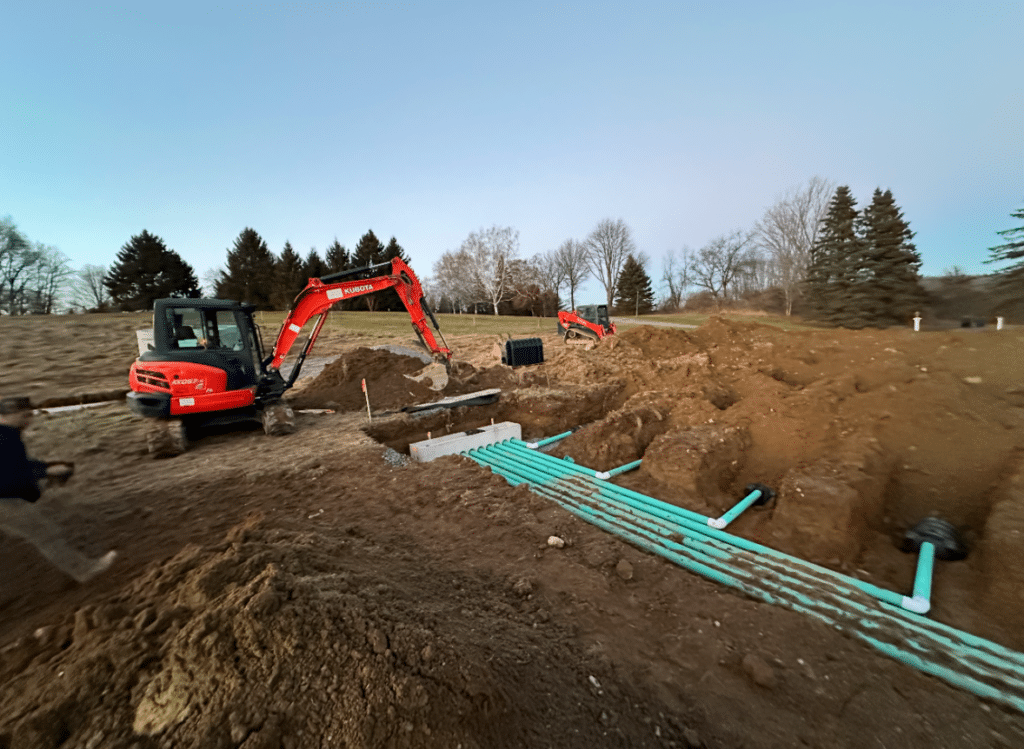
In-house excavation services handle precise trenching for water lines, sewer connections, electrical conduits, and site preparation for complete septic installations.
High-Authority Reference Resources
To learn more about residential wastewater guidelines and proper system management, consult these trusted regulatory and educational resources:
-
US EPA: Septic Systems Overview – Official guidance on residential septic operation, maintenance schedules, and environmental protection standards.
-
Penn State Extension: Septic System Basics – Detailed research and educational guides on managing on-site wastewater systems and elevated mounds in Pennsylvania.
Article Recap
-
Grinder pump control panel alarms signal high wastewater levels in your outdoor basin.
-
Common causes of panel trips include power surges, foreign object clogs (wipes, grease), frozen pipes, stuck float switches, and aged components.
-
The silence button turns off the horn, but it does not resolve high water in the basin.
-
To safely reset: limit water use, check the main breaker box first, then press the panel thermal reset button once.
-
Never repeatedly press the reset button if it trips again immediately, as this burns out the motor.
-
Call a professional septic technician for repeated trips, burning odors, or indoor sewage backups.
-
Preventive care involves keeping wipes and grease out of drains and scheduling regular inspections.
Ready to Fix Your Septic Issues Fast?
Don’t let a sounding alarm or backed-up drain disrupt your day. Triple J Services provides 24/7 emergency response, specialized grinder pump repairs, and complete septic solutions across Pike County and Lackawaxen, PA.
Call John and the team right now at (845) 750-5222 or visit Triple J Services to request your service!