Storms in the Poconos are beautiful, but they often leave us in the dark. When a heavy storm rolls through Lackawaxen, Pennsylvania, your first thought might be about your refrigerator, your internet connection, or keeping your house warm.
There is another critical system in your home that depends heavily on electricity: your septic system.
Many homeowners assume that because a septic system relies on gravity to move waste, it will function normally during a power outage. This is true for some basic systems, but many modern homes in our region require electricity to keep things flowing safely.
If you use the wrong appliances or flush too much water during a blackout, you could face a messy, costly backup.
Triple J Services handles septic emergencies throughout Lackawaxen and the surrounding Poconos area. We know how stressful a power outage can be.
This guide will help you understand exactly what happens to your septic system when the power goes out, how to determine what kind of system you have, and what steps you must take to protect your property.
Understanding Gravity vs. Electrical Septic Systems
To know if your septic system will work without power, you need to understand how it moves wastewater. Septic systems generally fall into two categories: gravity-fed systems and electrically powered systems.
Gravity-Fed Septic Systems
If your home sits on a hill and your drain field is located downhill from your septic tank, you likely have a traditional gravity system. Wastewater leaves your home, flows into the septic tank, and then flows naturally downward into the leach field.
These systems do not require electricity to operate. If the power goes out, a gravity system will continue to work. You still need to be mindful of water usage, as local municipal water pumps or your own well pump might be affected, but the septic tank itself will not overflow due to a lack of power.
Electrically Powered Septic Systems
Many properties in the Poconos have flat yards, rocky terrain, or steep inclines that force the leach field to be higher than the septic tank. In these situations, gravity cannot do the work alone. These systems rely on electric pumps to move wastewater.
Advanced systems may also use electronic control panels, alarms, and aeration units to treat the waste. When the power cuts out, these pumps stop working immediately.
The Anatomy of an Electric Septic System
If your system relies on electricity, it likely uses one of two types of pumps to keep wastewater moving.
Grinder Pumps
A grinder pump takes the wastewater from your home’s drains, grinds up solid waste into a fine slurry, and pumps it under high pressure to either a central sewer main or a distant septic tank. Grinder pumps are common in homes where the plumbing sits lower than the main sewer line or septic tank. Without electricity, the grinder pump cannot grind or move anything. Waste will quickly collect in the pump’s small holding tank and back up into your lowest drains.
Effluent Pumps
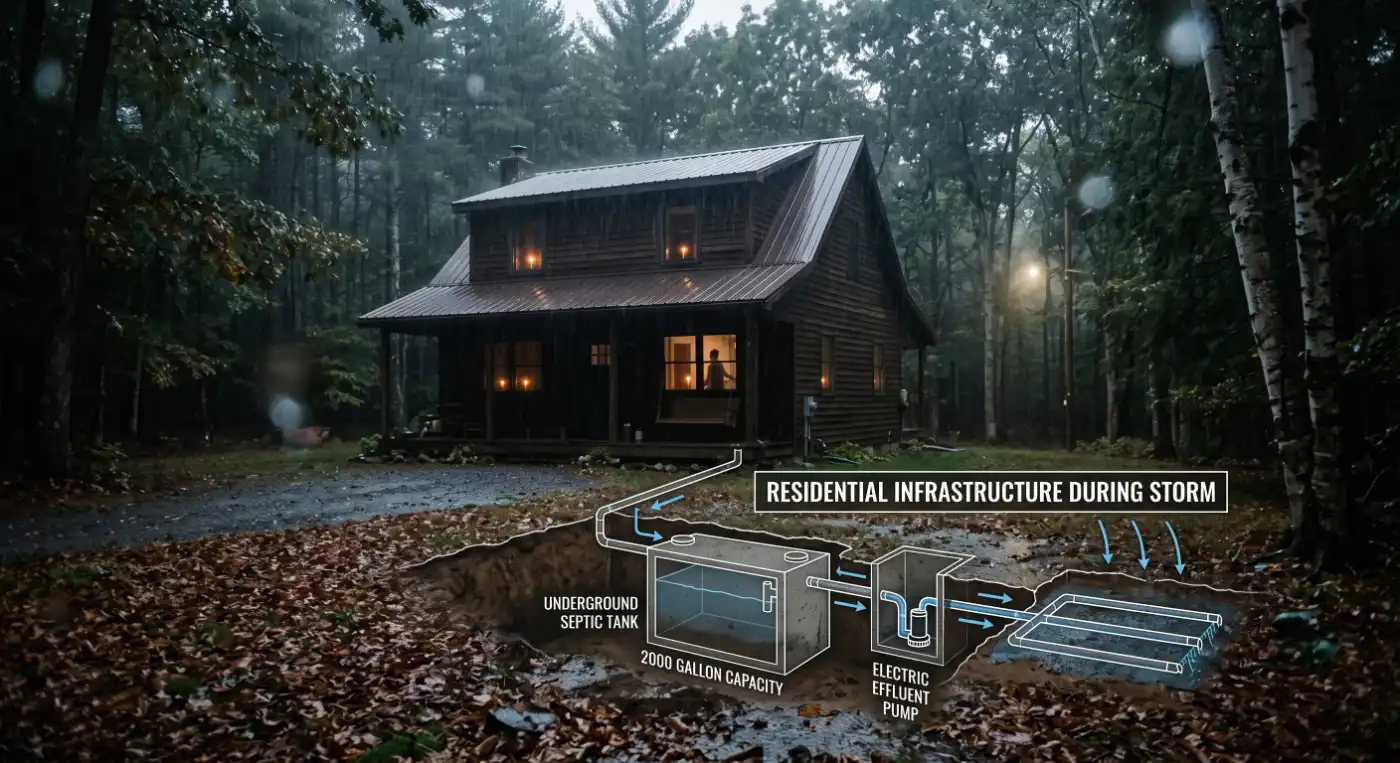
Effluent pumps live inside a separate chamber of your septic tank or in a dosing tank. After solids settle to the bottom of your primary tank, the relatively clear liquid—called effluent—flows into the pump chamber. The electric effluent pump then pushes this liquid upward or outward into your leach field or a specialized turkey mound. When the electricity goes out, the liquid accumulates in the tank. It cannot reach the drain field without the pump running.
What Happens When the Power Goes Out?
When the power fails, an electric septic system effectively becomes a closed container with a strict limit on its capacity.
The septic tank and pump chambers have a small amount of reserve space. This extra room is designed to hold a few gallons of water in case of an emergency, buying you a little bit of time. This capacity is very limited.
If your family continues to take showers, flush toilets, and wash dishes, that reserve space will fill up quickly.
Once the tank reaches its maximum capacity, the wastewater has nowhere to go but backward. It will follow the path of least resistance, which usually means backing up through your basement floor drains, showers, or lowest toilets.
Even if the water does not back up into your home immediately, an overfilled tank can flood the surrounding soil, damage your control panels, or cause your leach field to fail when the power finally returns.
How to Check Your System During a Blackout
You can look for a few specific clues to determine if your septic system is vulnerable during a power outage:
-
Look for an alarm box: Most pump-based septic systems have an indoor or outdoor control panel with warning lights and an audible alarm. If you have one of these boxes, your system uses electricity. During an outage, the box will be dark because it lacks power, though some have battery-backed alarms that will beep to warn you of high water levels.
-
Locate your well pump: If your home uses a private well, your well pump requires electricity to bring water into your home. When the power goes out, you will lose water pressure quickly. While this is inconvenient, it actually protects your septic system because you cannot physically run enough water to overflow the tank. If you have a backup generator that powers your well pump but not your septic pump, you are at a very high risk of flooding your septic tank.
-
Check your yard for mounds: If your yard features a prominent, raised hill known as a leach field or “turkey mound,” your system almost certainly uses an effluent pump to push wastewater up into that mound.
Crucial Steps to Take During a Power Outage
If you lose electricity and know or suspect that you have a pump-based septic system, you must act immediately to prevent a backup.
1. Drastically Limit Water Usage
This is the most important rule. Stop using water for anything non-essential. Do not run the washing machine or dishwasher, even if you have a generator that can power them. Avoid taking long showers or baths.
2. Flush Only When Essential
Every flush sends several gallons of water directly into your septic tank. Only flush the toilets when it is absolutely necessary. Instruct your family to follow the classic rule: “If it’s yellow, let it mellow.”
3. Manage Your Generator Wisely
Portable and whole-house generators are excellent for keeping your lights and refrigerators running. You must be careful about what circuits they power. If your generator supplies power to your well pump but does not supply power to your septic grinder or effluent pump, you can easily pump water into your house without any way for it to leave. Ensure your septic pumps are tied into your backup power system, or shut off your well pump entirely during the outage.
4. Do Not Open the Septic Tank
Never attempt to open the septic tank lids or pump chambers yourself during a power outage to check the levels. Dangerous, toxic gases accumulate inside septic tanks. Without proper safety equipment, opening a tank can lead to asphyxiation or serious injury. Leave the physical inspections to certified professionals.
What to Do When the Power Comes Back On
When the electricity finally returns, your septic system needs a little time to recover. Do not immediately rush to do three loads of laundry and take a long, hot shower.
Your septic tank pump chamber is likely filled to its maximum capacity. When the power returns, the pump will turn on and begin sending a massive volume of water out to your leach field or turkey mound.
If you add even more water to the system by running heavy appliances right away, you risk overloading the pump or saturating your leach field.
Give your system at least 24 hours to normalize. Let the pump cycle through the built-up wastewater naturally.
Listen for your septic alarm. Sometimes, when the power returns, the high-water alarm will sound because the liquid level rose while the power was off. This is normal. The alarm should turn off on its own within an hour or two as the pump lowers the water level. If the alarm continues to sound for more than a few hours, shut off your water and call a professional.
Long-Term Solutions and Preventative Care
The best way to handle a power outage is to prepare for it well in advance. You can take several preventative steps to ensure your septic system survives the next Poconos storm without issue.
Install a High-Water Alarm with Battery Backup
Standard septic alarms run on your home’s main electrical grid. If the power goes out, the alarm goes out too. By installing a high-water alarm equipped with a battery backup, the alarm will still sound if the water level inside your tank reaches a dangerous height during a storm. This gives you an early warning to stop using water immediately before a backup occurs.
Regular Septic System Inspections
Routine maintenance is vital for homes in Lackawaxen. Having your system inspected every few years ensures that your pumps, floats, and electrical components are in excellent working condition. A worn-out pump might survive normal daily use but fail completely under the strain of restarting after a prolonged power outage.
According to the Environmental Protection Agency (EPA), regular inspections and pumping are the single best ways to protect your property and prolong the lifespan of your septic components.
High-Pressure Drain Jetting (Hydro-Jetting)
Over time, sludge, grease, and debris accumulate inside your main sewer lines and pipes. If your pipes are already partially clogged, a power outage makes a backup happen much faster. Regular high-pressure drain jetting clears out these stubborn blockages, keeping your pipes wide open and giving you maximum storage capacity when your pumps go offline.
Protect Your Leach Field and French Drains
Heavy storms bring massive amounts of rainwater alongside power outages. If your yard has poor drainage, stormwater can oversaturate your leach field. A soaked leach field cannot absorb wastewater from your house, regardless of whether your pumps have power.
Installing French drains and professional drainage solutions around your property routes stormwater away from your septic components, keeping the soil dry enough to handle your home’s wastewater during an emergency.
When to Call Triple J Services
Sometimes, despite your best efforts, a power outage can trigger a septic crisis. You should contact a professional immediately if you notice any of the following signs during or after a blackout:
-
Water backing up into your basement drains, sinks, or tubs.
-
Toilets that bubble, gurgle, or refuse to flush properly.
-
A septic alarm that rings continuously for more than two hours after power is restored.
-
Foul odors resembling sewage inside your home or around your yard.
-
Saturated, soggy soil or pooling water directly over your septic tank or leach field.
Triple J Services provides reliable septic solutions across Lackawaxen, Pennsylvania. We offer comprehensive septic services to keep your home safe, functional, and clean, including:
-
Septic System Installation & Replacement: Complete design and installation for new builds or failing systems.
-
Leach Field & Turkey Mound Repair: Restoring proper absorption to saturated or damaged drain fields.
-
Grinder & Effluent Pump Service: Repairing and replacing the electric pumps that keep your waste moving.
-
Emergency Septic Pumping: Rapid response pumping to empty overfilled tanks and prevent property damage.
-
Septic System Inspections: Detailed evaluations for peace of mind or real estate transactions.
-
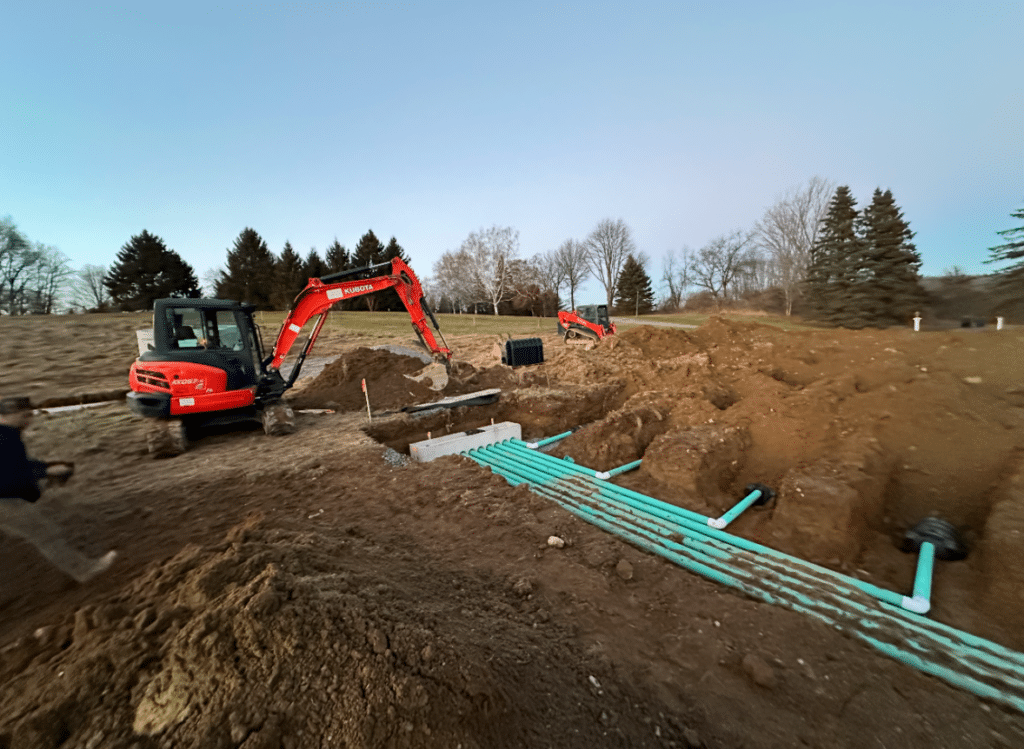
Excavation & Utility Trenching: Safe digging for septic lines, water lines, and utility repairs.
Do not wait for a major storm to find out if your septic system can handle a power outage. Routine maintenance and proactive upgrades can save you thousands of dollars in emergency repairs. For expert advice or to schedule your next inspection, consult the guidelines provided by the National Environmental Services Center to understand the importance of keeping your wastewater infrastructure secure.
Article Recap
-
System Types: Gravity systems do not need power to operate, but electric systems (using grinder or effluent pumps) stop instantly during an outage.
-
The Risk: Continuing to run water during a blackout fills up the tank’s limited reserve space, leading to sewage backups into your home.
-
Generator Hazards: If a generator runs your well pump but not your septic pump, you risk quickly flooding your system.
-
Post-Outage Care: Give your system 24 hours to pump down accumulated wastewater before returning to heavy water use.
-
Prevention: Battery-backed alarms, routine inspections, and proper yard drainage keep your system resilient against storms.
Need Septic Help in Lackawaxen?
If your septic system is acting up after a storm, or if you want to inspect your pumps before the next blackout hits, Triple J Services is here to help. Visit our About Us page to learn more about our local team, or browse our full list of offerings on our Services page. Call us today at (845) 750-5222 to schedule an appointment.