Fast Track Summary
-
Pennsylvania Regulations: All septic installations and replacements in PA must comply with DEP regulations and require a permit issued by a local Sewage Enforcement Officer (SEO).
-
Average Replacement Costs: Standard conventional systems usually range from $6,000 to $12,000, while engineered systems like sand mounds often cost between $15,000 and $25,000+.
-
Site-Specific Pricing: Final costs depend heavily on soil type, water table height, and yard topography, meaning every property requires a custom, site-specific estimate.
A wet, foul-smelling patch of grass in the backyard is every homeowner’s nightmare. It usually means your septic system has failed. If you live in Pennsylvania, resolving this issue is not as simple as digging a hole and dropping in a new tank.
Navigating state environmental regulations, securing local permits, and choosing the right system for your specific property can feel overwhelming. The rocky terrain and high water tables across regions like Pike and Wayne counties introduce unique engineering challenges.
Understanding what lies ahead helps you regain control of your property. Replacing a failed septic system requires balancing local municipal rules with the physical realities of your land. This guide breaks down the actual steps, regulations, and financial expectations for Pennsylvania homeowners facing a septic replacement.
The Regulatory Landscape: Navigating PA Permits and Testing
Section Overview: Title 25, Chapter 73 of the Pennsylvania Code governs all individual residential sewage systems. Homeowners must obtain a sewage permit from their local municipality’s Sewage Enforcement Officer (SEO) before starting any excavation or installation. The process mandates a professional soil morphological test and a percolation test to determine if the site can support a conventional system or requires an engineered alternative.
The Critical Role of the Sewage Enforcement Officer (SEO)
In Pennsylvania, you cannot hire a contractor to replace a septic system without municipal oversight. Every township employs or contracts a licensed Sewage Enforcement Officer. The SEO is a certified official responsible for reviewing applications, witnessing soil tests, and issuing permits.
They act as the regulatory gatekeeper for your project. The process begins by contacting your local municipality to request a permit application. The SEO will then schedule a site visit to evaluate your property.
They ensure your new system will not contaminate local groundwater, nearby wells, or adjacent properties. You must receive an approved permit signed by the SEO before any heavy machinery touches your yard.
Soil Testing: Deep Pit Probing and Percolation Tests
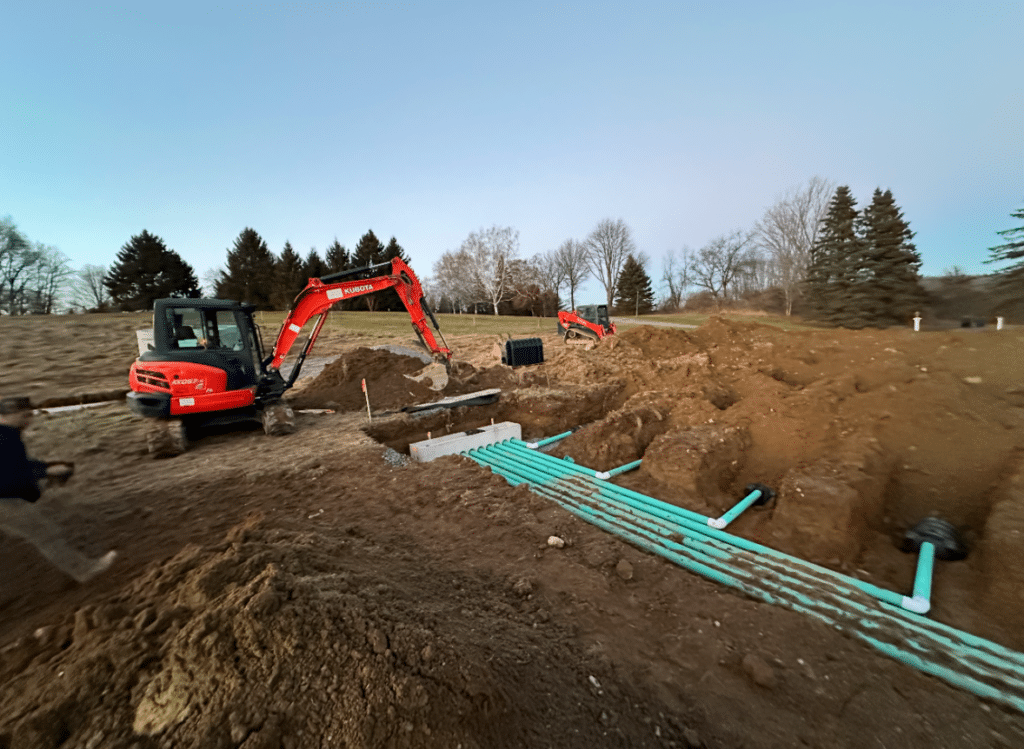
Your soil determines the type of septic system you are allowed to install. The SEO will require two primary tests: a deep pit probe and a percolation test. The deep pit probe involves digging a hole roughly six to eight feet deep with an excavator.
The SEO climbs into this pit to examine the soil layers, looking for signs of a high water table, bedrock, or limiting zones that block water flow. If your soil has a shallow limiting zone, a standard system is legally out of the question.
The second step is the percolation test, often called a perc test. This test measures how fast water drains through your soil. Holes are dug in the proposed absorption area, filled with water, and monitored over a specific period.
If the water drains too quickly, the effluent will pollute the groundwater without proper treatment. If it drains too slowly, the system will back up into your yard. The exact rate determines the overall square footage required for your new drain field.
Navigating the Phased Approach to System Replacement
Replacing a septic system often mirrors infrastructure strategies used in complex engineering projects. You cannot simply shut down your household plumbing for weeks at a time while a new system is built.
Instead, contractors frequently use a phased approach. They keep the old system limping along or utilize temporary holding tanks while constructing the new infrastructure adjacent to the failed components.
Once the new tank, distribution box, and absorption area are fully installed and approved by the SEO, the final hookup happens quickly. The main waste line is disconnected from the old tank and diverted to the new system.
This minimized downtime ensures your family maintains basic sanitation throughout the construction window. The old concrete tank is then pumped dry, crushed, and safely backfilled with clean soil to prevent future structural collapses in your yard.
Property owners frequently consult with our experienced strategic IT planning and mission alignment specialists to map out complex, multi-phased projects. Applying this same level of rigorous logistical planning ensures your physical infrastructure transitions seamlessly without disrupting daily life.
System Types and Breakdown of Average Pennsylvania Costs
Section Overview: The cost of replacing a septic system in Pennsylvania varies significantly based on the technology required by your soil profile. Conventional gravity-fed systems represent the baseline option, while properties with high water tables or shallow bedrock require complex, engineered absorption fields. Because every landscape features distinct soil compositions, slope variations, and structural clearing needs, all final project costs must be calculated through a custom, site-specific evaluation.
Disclaimer: Every Yard is Distinct
Before examining general industry data, you must understand a fundamental rule of excavation. All septic pricing figures are broad regional averages. It is impossible to give a generic, one-size-fits-all price for a septic replacement.
One yard might feature deep, perfectly draining sandy loam. The property next door could be sitting on solid shale with a natural spring running through the middle of the lawn.
Your final investment is completely custom and depends on your specific soil tests, property topography, and utility locations.
Conventional Septic Systems
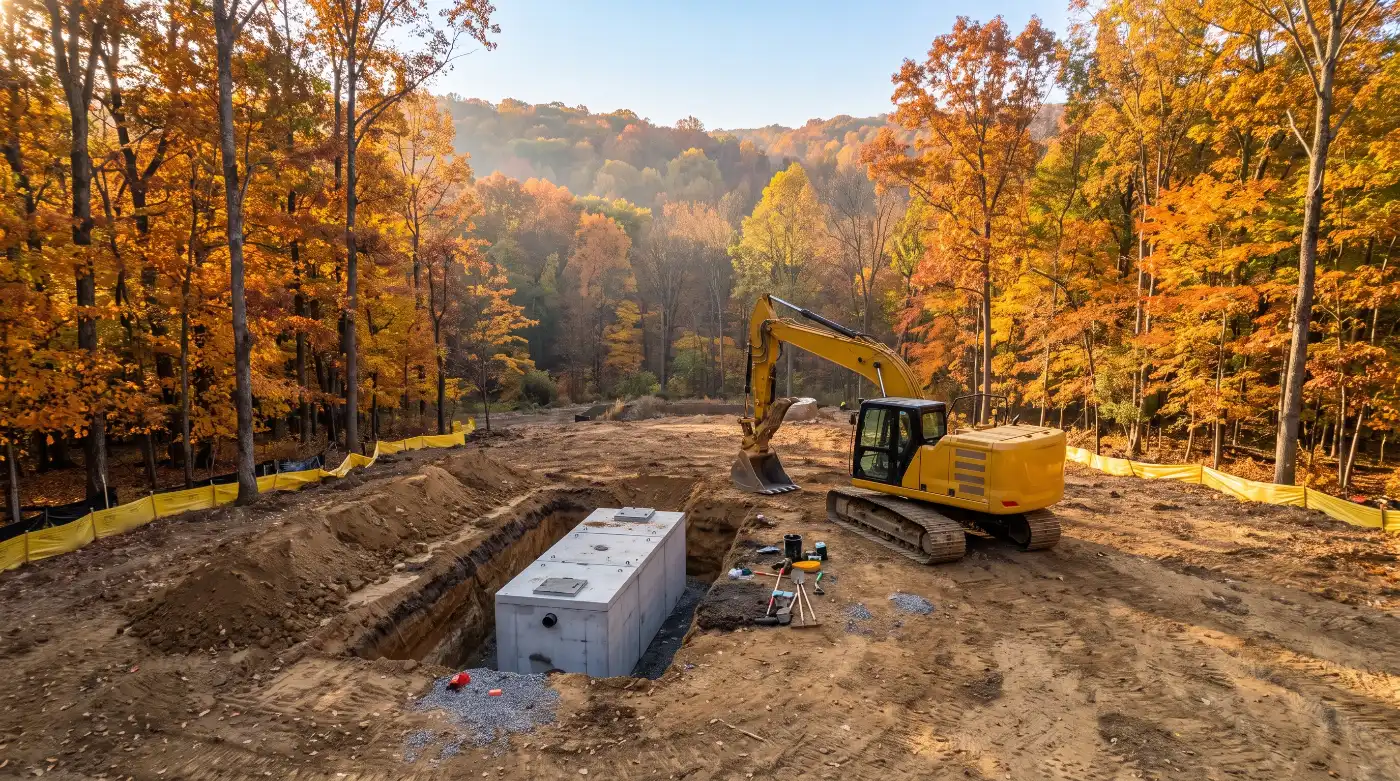
A conventional gravity-fed system is the most straightforward option available. It consists of a concrete or plastic septic tank buried underground, connected to a series of perforated pipes buried in gravel trenches.
Wastewater flows from the house into the tank, where solids settle to the bottom. The remaining liquid flows by gravity into the trenches and seeps into the soil.
In Pennsylvania, a conventional system replacement generally averages between $6,000 and $12,000. This estimate assumes easy equipment access, minimal tree clearing, and soil that passes a standard perc test.
These systems are highly reliable because they do not rely on electrical pumps or complex mechanical components to move waste.
Leach Field and “Turkey Mound” Systems
When a property has a shallow limiting zone—such as bedrock or a high water table within three feet of the surface—a conventional system cannot be legally installed. In these scenarios, the SEO will mandate an elevated sand mound, commonly referred to in Pennsylvania as a “Turkey Mound.”
This system moves the absorption field above the natural ground level to create a safe filtering barrier.
An engineered sand mound relies on a specific sequence of layers to treat wastewater safely before it reaches the restricted natural soil. This structured profile includes:
-
Topsoil and Grass Cover: The uppermost layer protects the mound from erosion and blends the system naturally into your surrounding lawn landscape.
-
Geotextile Fabric Separation: This specialized barrier prevents fine topsoil particles from washing down and clogging the underlying treatment components.
-
Perforated Lateral Pipes and Gravel Bed: The distribution network that receives pressurized effluent and spreads it evenly across the treatment zone.
-
Engineered Clean Sand Layer: A thick, highly specified layer of certified sand that filters out pathogens and impurities before the liquid reaches the natural ground level.
-
Natural Plowed Soil Surface: The baseline ground layer, prepared by careful plowing to receive the filtered effluent without compacting the natural earth.
Because gravity cannot push water uphill into an elevated mound, these systems require an additional pump tank equipped with an effluent pump. The average cost for a Turkey Mound system in PA ranges from $15,000 to $25,000, and can go higher if your site requires extensive clearing or significant amounts of imported, certified sand.
Maintaining these systems requires consistent oversight. Our team provides specialized 24/7 operations monitoring and technical support to help residential and commercial clients keep their critical utility pumps running smoothly.
Grinder Pumps and Effluent Pump Upgrades
Not all septic issues stem from a failing absorption field. Sometimes the primary point of failure is the mechanical system responsible for moving waste out of the structure. If your home sits lower than the main septic tank or municipal sewer hookup, you likely rely on a specialized pump.
A standard effluent pump handles cleared liquids, pushing them up to an elevated sand mound. A grinder pump works like an industrial garbage disposal, macerating solid waste into a slurry so it can be pumped through narrow, pressurized lines over long distances or up steep hillsides.
Replacing a failed pump mechanism generally costs between $1,500 and $4,500. This variance depends on the horsepower required, the distance the waste must travel, and whether your existing electrical control panel needs to be upgraded to meet modern safety codes.
Hidden Factors That Influence Your Final Replacement Invoice
Section Overview: Secondary cost drivers during a septic system replacement extend far beyond the tank and pipe materials. Heavy equipment access requirements, structural site clearing, and specialized water management systems heavily influence the final operational scope. Homeowners must account for landscaping remediation, utility line protection, and integrated drainage designs to ensure the new installation remains structurally stable and compliant with environmental regulations.
Site Access, Clearing, and Excavation Realities
Getting massive tri-axle dump trucks and heavy excavators into a mature, landscaped backyard is a major variable in any project. If your property is heavily wooded, you will face additional charges for tree clearing, stump removal, and grading.
Narrow driveways, low-hanging power lines, or steep mountain terrain can prevent standard equipment from accessing the site. This forces contractors to use smaller machines, which extends the project timeline and increases labor costs.
Furthermore, excavation work frequently crosses other underground infrastructure. You must carefully locate and protect existing water lines, electrical conduits, and propane connections.
If your property requires utility trenching to run new electrical lines out to a pump tank, those extra feet of digging add up on the final bill.
High-Pressure Hydro-Jetting vs. Full Field Replacement
Sometimes, home renovators assume their entire drain field must be torn out when the system backs up. However, a blockage might simply be caused by sludge accumulation or invasive tree roots inside the lateral pipes.
Before committing to a full replacement, ask if your system is a candidate for high-pressure drain jetting, also known as hydro-jetting.
This process introduces specialized nozzles that blast pressurized water through the lines to clear away grease, scale, and debris without destroying your lawn. If the underlying soil isn’t completely compacted or saturated, hydro-jetting can restore proper flow for a fraction of the cost of a full replacement.
Evaluating these options requires specialized diagnostic tools. Our comprehensive information management advisory services help property managers analyze data from structural inspections to make cost-effective maintenance decisions.
Integrating French Drains and Advanced Drainage Solutions
Surface water is a major threat to a newly installed septic system. If heavy rain runs off your roof or driveway and pools directly over your absorption field, the soil will saturate quickly, preventing the system from treating wastewater.
To protect your investment, your contractor may need to install curtain drains or French drains around the perimeter of the septic area.
A French drain uses a gravel-filled trench containing a perforated pipe to redirect surface water and shallow groundwater away from vulnerable infrastructure. Integrating these drainage solutions adds to the initial project cost, but prevents premature system failure caused by soil washing out or flooding.
Understanding typical regional benchmarks helps clarify the scale of these adjustments. For instance, a basic conventional system installation typically requires an investment between $6,000 and $12,000 when working with standard, well-draining soil profiles.
In contrast, an engineered elevated sand mound ranges from $15,000 to over $25,000 due to the extensive need for certified sand delivery, continuous slope adjustments, and specialized pump mechanisms. Mechanical repairs, such as replacing an individual effluent or grinder pump, introduce smaller capital expenses normally scaling from $1,500 to $4,500 based on the electrical controls and horsepower needs of the home.
External References
-
Pennsylvania Department of Environmental Protection: Act 537 Sewage Facilities Program
-
PennState Extension: Managing and Maintaining Your Septic System
Key Takeaways
-
Local SEO Approval is Mandatory: You cannot legally install or modify a septic system in Pennsylvania without a formal permit issued by a municipal Sewage Enforcement Officer.
-
Soil Dictates Design: Deep probe tests and percolation rates determine whether your property can use a standard gravity line or requires an engineered sand mound.
-
Turkey Mounds Cost More: Expect to pay a premium if your property has a shallow water table, as elevated sand mounds require specialized materials and electrical pump tanks.
-
No Two Properties Are Identical: General cost estimates are helpful guideposts, but your final investment is driven entirely by your specific soil composition and landscape topography.
-
Protect the Field from Water: Installing surface management systems like French drains is often necessary to prevent surface runoff from flooding your new absorption area.
Secure Your Property’s Infrastructure
Navigating a major septic project requires precise planning, expert excavation, and total regulatory compliance. Triple J Services provides expert septic system installations, custom excavation, and emergency pump services throughout northeastern Pennsylvania. Our team manages the technical details, from initial soil testing support to final grading and site remediation. Look over our full capabilities on the Triple J Services main page, learn more about our local roots on our about us page, or explore our complete options on the Triple J Services options page to request your site-specific consultation today.