Owning a home in a beautiful, rural area like Lackawaxen, Pennsylvania, offers incredible perks. You get spacious yards, beautiful natural views, and the freedom to build your own backyard oasis. For many local homeowners, adding a relaxing hot tub or a refreshing swimming pool is the ultimate dream.
However, rural and semi-rural properties come with unique infrastructure responsibilities. The most important of these is your septic system.
Homeowners frequently ask how adding heavy water features impacts their underground plumbing. Can you drain a hot tub into a tank? Is it safe to install an above-ground pool over your absorption field?
Mismanaging these additions can lead to catastrophic system failures, thousands of dollars in property damage, and messy environmental hazards.
Triple J Services is your premier, locally owned excavating and septic specialist based right here in Lackawaxen, PA. We believe that protecting your property starts with clear education.
Let’s look at what happens when backyard luxury meets underground utility infrastructure.
The Basics of How Your Septic System Processes Waste
To make smart decisions about hot tubs and pools, you first need to understand how a standard septic system works. It is not just a holding tank; it is a live, highly sensitive biological wastewater treatment facility buried right under your lawn.
Your system consists of two primary components. The first part is a watertight septic tank buried close to your home. When wastewater leaves your sinks, showers, toilets, and washing machines, it flows directly into this tank.
Inside the tank, solids settle to the bottom as sludge, while oils and grease float to the top as scum. A central layer of relatively clear liquid, known as effluent, remains in the middle. Naturally occurring anaerobic bacteria live inside the tank, working constantly to break down the solid organic waste.
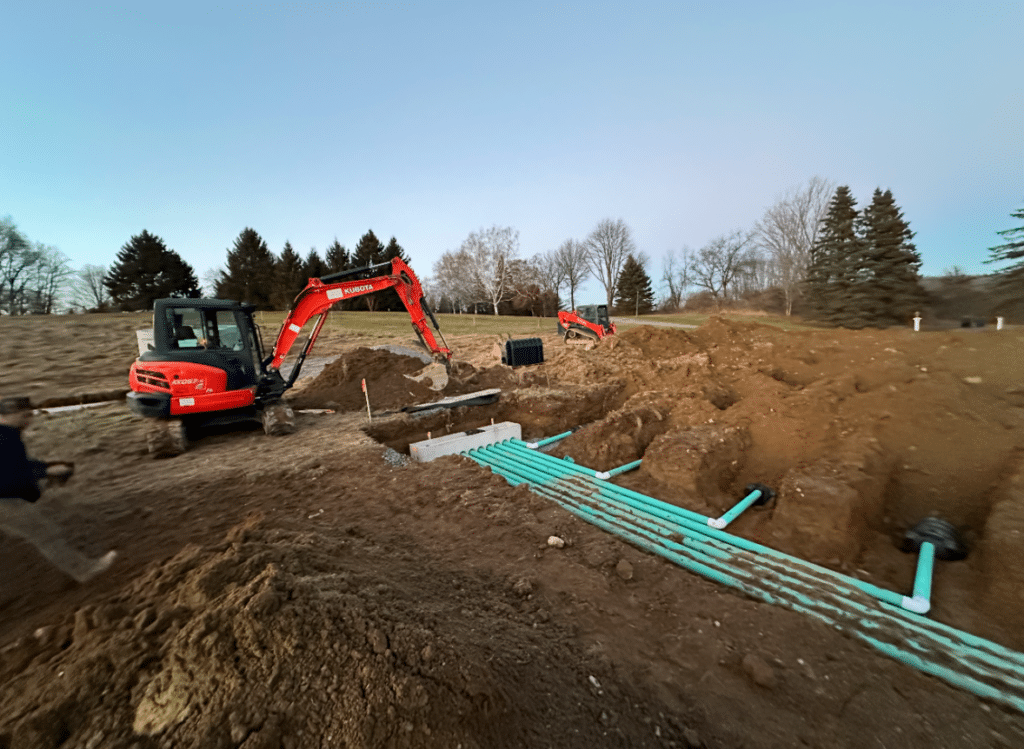
The second part of the system is the absorption field, also called a drainfield or leach field. As new wastewater enters the septic tank, an equal amount of clear effluent flows out of the tank through a series of perforated underground pipes.
These pipes rest in gravel-filled trenches buried in your yard. The liquid slowly trickles out of the pipes and filters down through the native soil. The soil acts as a natural purifier, filtering out harmful viruses, bacteria, and nutrients before the water eventually recharges the local groundwater supply.
Using a Hot Tub on a Septic System: The Real Risks
A standard residential hot tub holds anywhere from 300 to 500 gallons of water. When you consider that a typical person uses about 60 to 70 gallons of water per day, a single hot tub contains more water than an entire family uses in a standard 24-hour period.
If you hook up your hot tub drainage line directly to your home plumbing, or if you dump that water down a cleanout cap, you introduce severe risks to your septic ecosystem.
Hydraulic Overloading Destroys the System Balance
The most immediate danger of draining a hot tub into your septic system is a phenomenon known as hydraulic overloading. Your septic tank is designed to handle slow, staggered daily water inputs. It requires a specific amount of retention time for solids to separate from liquids properly.
When you suddenly dump 400 gallons of rushing water into the tank all at once, you create an internal tidal wave. The rapid influx of water stirs up the settled sludge at the bottom and the scum at the top.
Instead of clean effluent exiting into your absorption field, this turbulent water forces raw, solid waste out through the pipes. These solids quickly clog the small perforations in your drainfield pipes and seal off the surrounding soil. Once your soil is clogged with solids, it can no longer absorb liquid, leading to backed-up toilets, slow drains, and soggy, foul-smelling puddles forming on your lawn.
Sanitizing Chemicals Kill Vital Bacteria
The secondary risk involves the chemical makeup of hot tub water. To keep a spa safe for human skin, you must treat it with heavy doses of sanitizers like chlorine, bromine, shock treatments, and algaecides.
As mentioned, your septic tank relies entirely on a delicate ecosystem of live, beneficial bacteria to consume organic solids. When you dump hundreds of gallons of heavily chlorinated water into your tank, these harsh chemicals act as a sterilizer.
The chemicals wipe out the beneficial bacteria population instantly. Without these microscopic workers, solids cannot break down. The sludge level inside your tank will skyrocket at an alarming rate, forcing you to pay for frequent emergency pump-outs and increasing the risk of solids escaping into your drainfield.
Best Practices for Managing Hot Tub Water Safely
You do not have to give up your dreams of soaking in a warm hot tub just because your home uses a septic system. You simply need to alter how you handle maintenance and water disposal.
By adjusting your habits, you can enjoy your spa without ever compromising your home infrastructure.
-
Never Drain Into the Septic System: Under no circumstances should you ever connect a hot tub drain line to your home drains, toilets, or septic tank access ports.
-
Practice Chemically Responsible Dechlorination: Before you plan to empty your hot tub for seasonal cleaning, stop adding chlorine or bromine to the water. Leave the hot tub cover open and let the water circulate for a full seven to ten days. Sunlight and air exposure will naturally dissipate the chemicals, leaving the water safe for natural soil absorption.
-
Test the Water Before Discharge: Use standard pool test strips to ensure the chlorine or bromine levels hit absolute zero before you empty the spa. The pH level should measure between 6.5 and 8.5 to prevent harming local grass and plants.
-
Drain Slowly Onto Your Open Lawn: Once the water is completely free of chemicals, attach a long hose to the drain valve and direct the water away from your house, your septic tank, and your absorption field. Pump the water slowly into an open, grassy area or wooded section of your property that can easily handle the moisture.
-
Keep Hot Tub Placement Away From Infrastructure: When choosing a spot for your new hot tub or its concrete pad, make sure it sits at least ten feet away from your septic tank and absorption field. The immense physical weight of a filled hot tub can crush buried PVC pipes and compact the soil.
Can I Install a Pool Above My Septic Lines?
Let’s shift focus to the bigger backyard addition: swimming pools. Whether you are looking at a permanent in-ground pool or a temporary above-ground pool, the rule regarding your septic system remains clear and unyielding.
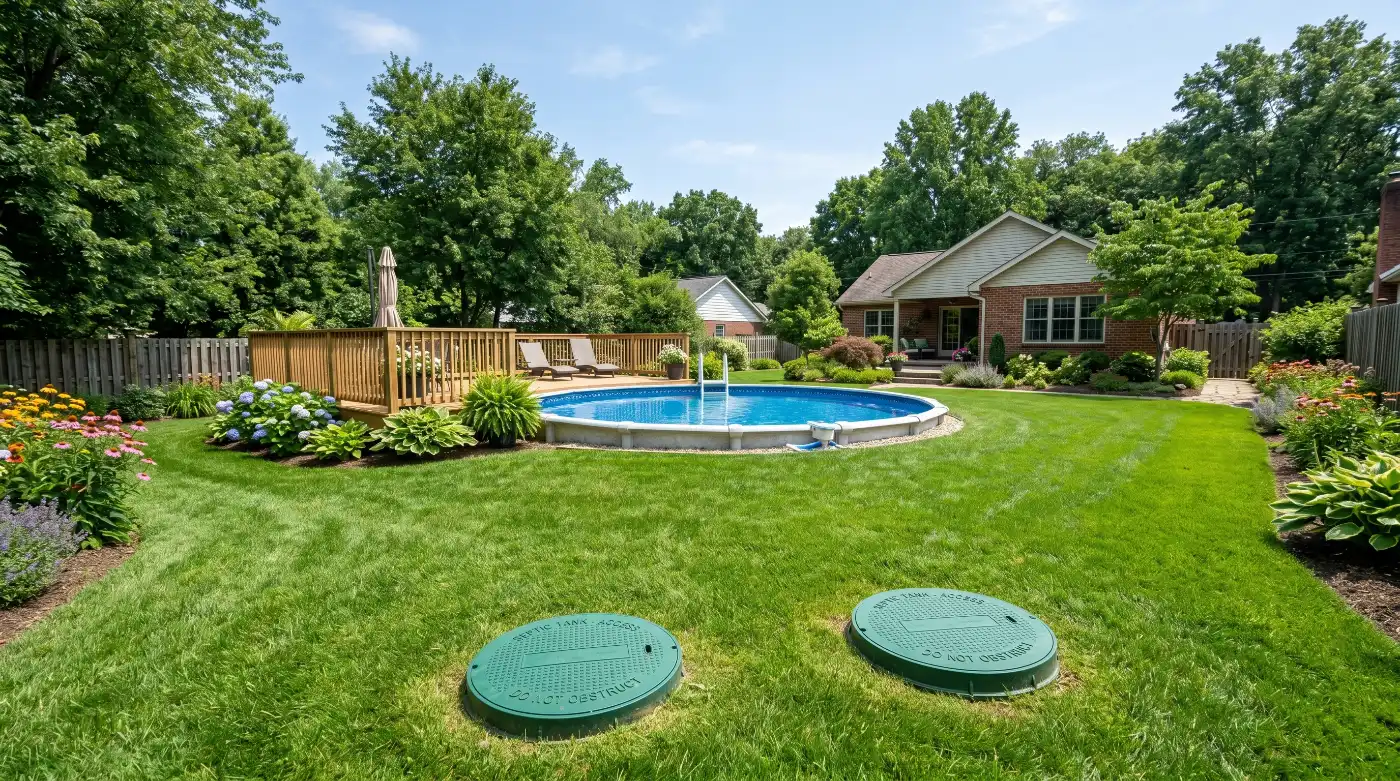
No, you can never install a swimming pool over any part of your septic lines or absorption field.
This restriction applies to both above-ground and in-ground structures. Building a pool directly over your septic infrastructure is a guaranteed path to system destruction and code violations.
Understanding the physical mechanics of your yard helps explain why this boundary is completely non-negotiable.
The Hidden Dangers of Pools Near Septic Infrastructure
Placing a massive structure over your septic system compromises the integrity of your underground plumbing from multiple angles. It damages the physical components while stopping the biological processes needed to clean your wastewater.
Catastrophic Structural Weight and Soil Compaction
Water is incredibly heavy. A single gallon of water weighs roughly 8.34 pounds. A modest 15-foot above-ground pool can easily hold over 5,000 gallons of water, translating to more than 40,000 pounds of downward pressure resting on your lawn.
[Image cross-section diagram showing a heavy above-ground pool compacting soil layers and crushing modern PVC perforated septic lines beneath it]
Your absorption field consists of shallow trenches filled with gravel and lightweight PVC pipes buried just a few feet below the surface. This infrastructure cannot support heavy structural loads.
Placing a pool over these lines will instantly crush the PVC pipes, snap the joints, and cave in the trenches. Furthermore, the extreme weight compacts the surrounding soil particles, stripping away the oxygen pockets necessary for the earth to absorb and filter wastewater.
Evaporation Barriers Block Vital Air Exchange
Your absorption field requires continuous air exchange to function. The bacteria that live in the drainfield soil are aerobic, meaning they need a steady supply of oxygen to survive and efficiently consume pathogens in the effluent.
When you place a massive, solid vinyl pool liner or a poured concrete deck directly over your absorption field, you create an airtight seal. You choke off the oxygen supply to the underlying soil.
Without oxygen, the beneficial aerobic bacteria die off rapidly, and anaerobic bacteria take over. Anaerobic bacteria produce a thick, black, slimy biomat layer that seals the soil trenches completely. This prevents water from draining down, causing your septic effluent to back up into your home or bubble up onto your grass around the edges of the pool.
Blocking Critical System Access for Maintenance
Septic systems require regular monitoring, inspections, and maintenance to operate smoothly over the decades. Your septic tank must be pumped out every three to five years to remove accumulated solids. To perform this service, large vacuum trucks need clear line-of-sight access to your tank lids.
If you construct a pool or deck over your tank or drainfield lines, you make it impossible for technicians to locate, dig up, or service your system. If an underground pipe breaks or clogs, you would have to drain and dismantle your entire pool just to reach the broken pipe for a standard repair.
Smart Planning: Safe Distance Clearances for Swimming Pools
You can absolutely build a gorgeous swimming pool on a property that uses a septic system. The secret lies in early planning and respecting proper setback distances.
Every municipality and state enforces specific zoning codes and health department mandates regarding clearances. In Pennsylvania, these regulations ensure your pool construction does not disturb your utilities.
While you should always check with your local zoning office, the general industry standards for pool placement are clear:
-
Distance from the Septic Tank: Keep your pool structure at least 10 to 15 feet away from the outer walls of your septic tank. This prevents heavy excavating equipment from damaging the tank walls during construction.
-
Distance from the Absorption Field: Maintain a minimum safety clearance of 15 to 20 feet from the outermost edge of your drainfield lines. This preserves natural groundwater flow and protects the soil from compaction.
-
Account for Slopes and Drainage: Always position your pool down-slope from your absorption field if your yard is uneven. You must ensure that any pool overflow, splash-out water, or seasonal backwash drainage runs away from your septic field, not toward it.
Before you buy a pool or hire a contractor, you need to know exactly where your septic components live. If you do not have a copy of your home original plot plan or septic blueprint, call a professional septic team. Specialists can locate your lines, map your yard, and help you find a safe location for your new pool.
How Professional Excavators and Septic Specialists Protect Your Investment
Taking on a backyard transformation is an exciting venture, but it is not a project for DIY guesswork. Hiring an experienced, licensed team like Triple J Services guarantees that your home vital infrastructure remains completely protected throughout the construction process.
Experienced excavators understand how to manage heavy machinery on a residential lot. They know that driving a heavy dump truck or a multi-ton excavator directly across your absorption field can instantly ruin your system. Professionals map out dedicated travel lanes, utilize specialized low-pressure equipment, and verify utility locations before moving a single bucket of dirt.
Furthermore, combining expert septic knowledge with precision excavation allows for creative yard design. If your current septic layout blocks your pool plans, an expert team can evaluate your soil to see if relocating your drainfield to a different part of your property is a viable option. Professional planning saves you from accidental damage and ensures your new backyard oasis complies fully with local health codes.
Choosing Triple J Services for Your Property Needs
At Triple J Services, we treat your property with the absolute highest level of care, respect, and technical accuracy. Based proudly in Lackawaxen, PA, we understand the unique soil types, terrain challenges, and local environmental codes that define the Pike County region.
We provide a comprehensive range of professional site-prep, septic, and excavation solutions:
-
Complete septic system installation, site inspections, and structural repairs
-
Precision site clearing, grading, and foundation excavation
-
Professional land clearing and trenching for underground utility lines
-
Safe drainage management and rock-solid gravel driveway construction
Our experienced crew combines top-tier equipment with local expertise to deliver flawless results on schedule. We take the guesswork out of property development by keeping your vital home utility systems safe. Let us handle the heavy lifting to ensure your next home project is a complete success.
Article Recap
-
Septic System Function: Septic systems rely on a sensitive biological balance inside a settling tank and an open, airy absorption field to safely filter home wastewater into the ground.
-
Hot Tub Drainage Risks: Dumping hundreds of gallons of treated hot tub water into a septic tank triggers hydraulic overloading and introduces harsh chemicals that kill off beneficial waste-consuming bacteria.
-
Hot Tub Best Practices: Always empty a spa slowly onto an open grassy area away from your plumbing after allowing the chlorine or bromine to dissipate naturally for seven to ten days.
-
No Pools Over Septic Lines: Building an above-ground or in-ground pool over your septic field is prohibited; the massive weight crushes underlying PVC lines and seals the soil off from vital air exchange.
-
Mandatory Safety Setbacks: Pools should sit at least 10 to 15 feet away from septic tanks and 15 to 20 feet away from absorption fields to ensure safety and system access.
-
The Professional Advantage: Partnering with local specialists guarantees safe equipment operation, proper utility locating, and full compliance with local health department codes.
Ready to Update Your Backyard Safely?
Do not guess when it comes to the safety of your underground utilities. Whether you are ready to map out your property for a new swimming pool, install a new hot tub, or upgrade your home septic system, the team at Triple J Services is here to help. Explore our complete array of professional excavation and utility solutions on the Triple J Services Services Page. Learn more about our commitment to local homeowners on our About Us Page. Contact Triple J Services today to schedule a site assessment and keep your home infrastructure running smoothly!