
A small piece of slotted plastic inside your septic tank sits quietly between a smooth-running plumbing system and a $15,000 yard nightmare.
That small piece is your septic effluent filter.
Most homeowners in Lackawaxen and across Pike County never see this filter. They don’t know where it is, what it does, or that it even exists. Yet cleaning it takes less than ten minutes, costs almost nothing, and extends the life of your entire wastewater system by years.
When you ignore this little component, solids slip past your tank and clog your drain field. Once a drain field fails, simple maintenance turns into full excavation.
Here is everything you need to know about effluent filter maintenance, how your septic system works, and when to bring in local professionals to protect your home.
What Is an Effluent Filter and How Does It Work?
Your septic tank handles everything that goes down your drains: toilet paper, soap scum, food particles, hair, and organic waste. Inside the tank, heavy solids sink to the bottom to form sludge. Oils, grease, and scum float to the top.
In the middle sits a layer of relatively clear wastewater known as effluent.
The effluent filter sits inside the outlet pipe baffle tee on the discharge side of your tank. As wastewater travels out of the tank toward your leach field or pump chamber, it must pass through tiny slots in this plastic cylinder.
The filter acts as a physical barrier. It catches hair, lint, undigested food bits, and floating debris before those solids can leave the tank.
Without an effluent filter, those suspended solids travel directly into your absorption field. Over time, those tiny particles accumulate in the soil pipes, forming an impenetrable barrier called a biomat. Once the soil clogs, water can no longer drain away. That is when sewage backs up into your home or pools on your lawn.
The 10-Minute Cleaning Process: Step by Step
Cleaning an effluent filter is straightforward, but it requires caution. You are dealing with untreated wastewater, so personal protective equipment is non-negotiable. Always wear heavy-duty rubber gloves, eye protection, and clothes you can wash in hot water immediately afterward.
Step 1: Locate the Access Riser
Modern septic tanks feature access risers flush with or slightly above the ground surface. If your tank has an outlet riser over the discharge side, unscrew the lid. If your tank is buried, you will need to excavate the soil over the outlet baffle.
Step 2: Carefully Pull the Filter
Look down into the outlet baffle tee. You will see a plastic handle attached to the filter cartridge. Grab the handle and slowly pull the filter straight up out of the tee. Pulling it slowly allows excess liquid to drain back into the tank rather than splashing.
Step 3: Spray Clean Over the Tank
Hold the filter cartridge directly over the open septic tank inlet or outlet compartment. Never hose off an effluent filter over your lawn, driveway, or garden. Use a standard garden hose with a spray nozzle to blast away trapped solids, grease, and hair back down into the septic tank. Spray from the top down and from the inside out until the plastic slots are clear.
Step 4: Reinstall and Secure
Inspect the filter casing for cracks or damaged rubber seals. Reinsert the filter cartridge firmly into the outlet tee. Make sure it seats fully so wastewater cannot bypass the filter mesh. Re-secure your heavy riser lid immediately to eliminate fall hazards for children and pets.
If this process sounds messy or if your tank lacks safe access risers, contact the local specialists at Triple J Services to handle the inspection and servicing safely.
Why Skipping Filter Care Destroys Your Leach Field
Think of your effluent filter like the oil filter in your truck. If you never change your oil filter, dirty oil bypasses the mesh and destroys the engine core.
When an effluent filter gets packed solid with waste, two things happen:
-
Water backs up into the house: The water has nowhere else to go. Toilets gurgle, shower drains run slow, and basement drains overflow.
-
Effluent bypasses the system: On tanks equipped with automatic bypass valves, untreated effluent spills over into the drain field, pushing heavy suspended solids into your delicate gravel trenches or sand mounds.
Replacing a clogged effluent filter costs very little. Replacing a ruined leach field or elevated sand mound costs tens of thousands of dollars and involves massive heavy machinery tearing up your landscape. Spending ten minutes every 6 to 12 months to pull and rinse your filter is the single best investment you can make in your property’s infrastructure.
Understanding Your Complete Septic System Ecosystem
Your effluent filter is your system’s final line of defense, but it works as part of a larger network. Understanding each component helps you spot issues early and take corrective action.
[ House Drains ] ➔ [ Septic Tank ] ➔
[ Effluent Filter ] ➔ [ Pump Chamber / Drain Field ]
The Primary Septic Tank
The tank is a watertight concrete or polyethylene container buried underground. It provides retention time for solids to settle out and for beneficial anaerobic bacteria to break down organic waste. Regular pumping every 3 to 5 years removes accumulated bottom sludge that bacteria cannot digest. You can learn more about official state guidelines on septic care from the Pennsylvania Department of Environmental Protection.
Effluent Pumps and Grinder Pumps
If your home sits lower than your absorption field or relies on a pressurized distribution network, gravity alone cannot move wastewater.
-
Effluent Pumps: These sit inside a pump chamber past the septic tank. They pump clarified liquid up to an elevated leach field or sand mound.
-
Grinder Pumps: Installed in basement sump pits or low-lying exterior basins, grinder pumps shred raw sewage solids into a fine slurry before pushing it uphill through small-diameter pipe into the main septic tank or municipal sewer connection.
When pumps fail, alarms sound, and water backs up quickly. Mechanical failures require specialized electrical diagnostics and rapid pump repair or replacement.
Absorption Fields and “Turkey Mounds”
In the rocky, clay-heavy soils common across Northeast Pennsylvania, traditional deep trench drain fields often do not meet environmental codes due to high water tables or shallow bedrock.
Engineers frequently specify elevated sand mounds—locally referred to as “turkey mounds.” These raised beds use layers of clean sand and aggregate stone to filter effluent naturally before it re-enters the groundwater supply. According to guidelines provided by the U.S. Environmental Protection Agency (EPA), proper soil absorption treatment protects local rivers, lakes, and drinking wells from biological contamination.
Key Signs Your Septic System Needs Immediate Attention
Septic problems rarely fix themselves. Ignoring small symptoms leads to major structural failures. Watch for these red flags around your home and yard:
-
Slow Drains Across Multiple Fixtures: If just one sink drains slowly, it is likely a localized pipe clog. If your kitchen sink, shower, and washing machine all slow down together, your tank is full or your effluent filter is plugged.
-
Gurgling Sounds in Plumbing Lines: Air trapped by rising sewage forces its way up through p-traps, creating distinctive gurgling noises in toilets and shower basins.
-
Unpleasant Odors Indoors or Outdoors: A healthy septic system is sealed. Strong sewage odors near your buried tank, pump tank, or leach field indicate gas leaks, saturated soil, or backed-up lines.
-
Lush, Spongy Green Grass Above the Field: If the grass over your leach field looks vibrant and extra green during dry summer months, wastewater is surfacing prematurely instead of filtering deep underground.
-
Soggy Ground or Standing Water: Wet patches or pooling water near the tank or turkey mound indicate severe soil saturation or line blockages requiring immediate intervention.
Professional Services Provided by Triple J Services
Maintaining a healthy septic system requires the right equipment, mechanical knowledge, and heavy-duty machinery. Based right here in Lackawaxen, PA, the crew at Triple J Services provides comprehensive wastewater solutions tailored to Pike County terrain.
Here is a breakdown of how our team keeps your system operating smoothly:
Septic System Installation & Replacement
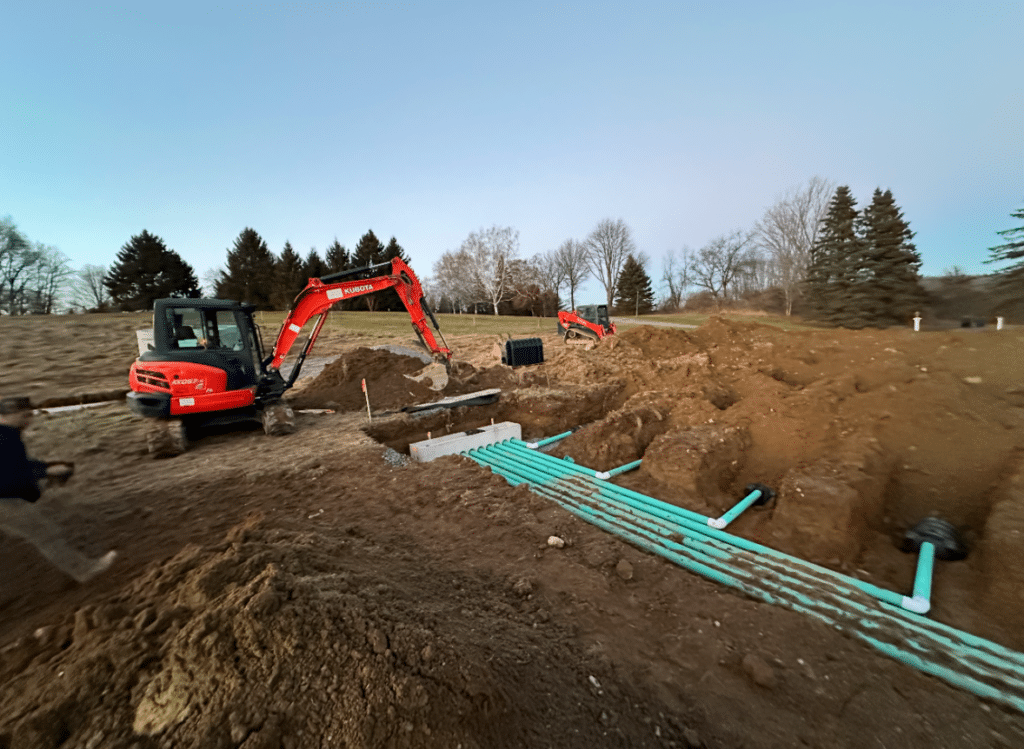
Whether building a new mountain home or replacing an obsolete, failed system, proper engineering and execution matter. We handle site evaluation support, tank setting, pipe installation, and complete system assembly built to meet local municipal codes.
Leach Field & Turkey Mound Repair & Installation
When soil clogs or pipe runs break down, distribution fields fail. We clear out damaged soil layers, repair broken header pipes, and construct fully compliant elevated sand mounds (turkey mounds) and aggregate trenches designed for longevity.
Grinder Pump Repair & Installation
Grinder pumps contain heavy-duty impellers and electrical controls that require expert handling. We diagnose electrical panel failures, replace worn float switches, unclog jammed impellers, and install high-torque replacement pumps built for continuous residential service.
Effluent Pump Service & Replacement
A burned-out effluent pump leaves your home vulnerable to sudden back-ups. We inspect pump chambers, test control panels, adjust float configurations, and swap out failing pumps with high-efficiency units.
Emergency Septic Pumping
When water rises and your home is at risk of flooding, fast response is essential. Emergency pumping removes liquid volume from overloaded tanks, giving you breathing room while our technicians locate and resolve the underlying mechanical or filter blockage.
High-Pressure Drain Jetting (Hydro-Jetting)
Standard drain snakes often just poke small holes through heavy grease and sludge buildup. Hydro-jetting uses high-pressure water streams to scrub interior pipe walls completely clean, restoring full flow to clogged main sewer lines and clogged distribution lateral pipes.
Comprehensive Septic System Inspections
Buying or selling a property in the Poconos? Real estate transactions require detailed evaluations. Our thorough inspections assess tank structural integrity, baffle conditions, sludge levels, pump operation, and drain field absorption performance.
French Drains & Drainage Solutions
Excess surface water running toward your septic field can flood the soil, causing premature system failure. We install outdoor French drains, curtain drains, and surface water diversion channels to keep rain runoff away from your septic infrastructure.
Excavation & Utility Trenching
Septic repairs and water line upgrades require precise digging around underground utilities. Our specialized excavation equipment handles trenching for new inlet lines, water main replacements, electrical conduit, and complete field re-grading with minimal footprint disruption.
Learn more about our team and operational roots by visiting the Triple J Services About Us page.
DIY Maintenance vs. Professional Service: What You Should Handle
Homeowners can easily manage simple tasks like monitoring water usage, keeping garbage disposal waste out of drains, and clearing leaves off access lids.
However, mechanical repairs, electrical pump wiring, deep line jetting, and structural tank work carry serious health and safety risks.
Septic tanks contain hazardous gases, including methane and hydrogen sulfide, which can cause asphyxiation within seconds. Never reach into a tank or enter a buried pit.
When an effluent filter cannot be pulled easily, or when water levels inside the tank remain high above the outlet pipe, call experienced professionals equipped with proper safety gear and diagnostic equipment.
Preventive Habits to Keep Your Septic System Clean
Beyond cleaning your effluent filter, daily habits determine how long your system lasts.
-
Watch What Goes Down the Drain: Never flush non-biodegradable items like baby wipes, paper towels, feminine hygiene products, dental floss, or cat litter. Even products labeled “flushable” do not break down in septic tanks and will clog your filter instantly.
-
Keep Grease Out of the Kitchen Sink: Cooking fats, oils, and grease solidify when cool. They form a thick layer that coats effluent filters and seals off soil pores in your leach field.
-
Stagger Water Usage: Running the dishwasher, washing machine, and multiple showers simultaneously overloads your tank with a sudden surge of water. This hydraulic overload stirs up bottom sludge and forces solids right into your filter.
-
Schedule Regular Pumping: Cleaning your filter helps, but it does not remove accumulated bottom sludge. Schedule professional tank pumping every 3 to 5 years based on household size.
Quick Article Recap
-
Small Component, Big Impact: The effluent filter traps suspended solids before wastewater leaves your tank, protecting your absorption field from costly clogs.
-
Quick & Easy Care: Rinsing your filter cartridge every 6 to 12 months over an open tank inlet takes ten minutes and saves thousands in repairs.
-
Watch for Warning Signs: Slow drains, gurgling toilets, foul odors, and soggy green patches over your turkey mound mean your system needs attention.
-
Complete System Care: From grinder pumps and effluent pumps to hydro-jetting and excavation, maintaining every layer of your setup extends system lifespan.
-
Local Expertise: Triple J Services in Lackawaxen, PA provides full-service septic installations, repairs, pumping, and site drainage across the region.
Keep Your Septic Running Smoothly with Triple J Services
Don’t wait for a slow drain to turn into an expensive emergency backup. Whether you need an effluent filter check, pump repair, high-pressure line jetting, or a full system replacement, the local team at Triple J Services is ready to help.
We deliver dependable, honest, and expert septic care to homeowners in Lackawaxen, PA, and surrounding communities.
Call Triple J Services today at (845) 750-5222 or visit our website