Buying a home is exciting. If you are moving to a rural or suburban area like Lackawaxen, Pennsylvania, your new home might not connect to a city sewer line. Instead, it probably relies on an underground wastewater treatment system.
Many buyers look at the roof, the heating system, and the kitchen appliances. They rarely think about what happens when they flush the toilet.
A septic system is quiet and invisible until it stops working. When it fails, the consequences are messy, stressful, and highly expensive. Understanding how these systems work and what they cost to maintain will save you thousands of dollars down the road.
The Reality of Private Wastewater Infrastructure
When you buy a house with a septic system, you become the manager of your own private wastewater utility company. City dwellers pay a monthly sewer bill, and the city handles the infrastructure. You do not have that luxury.
Everything you wash down the drain stays on your property. Your system must process every gallon of water, every piece of toilet paper, and every bit of food waste.
Many homeowners assume a septic system lasts forever without attention. That assumption is a financial trap. Components wear out, pipes clog, and soil fills with solids over time. If you do not budget for these realities, you will face major financial surprises.
The Core System: Tank Pumping and Inspections
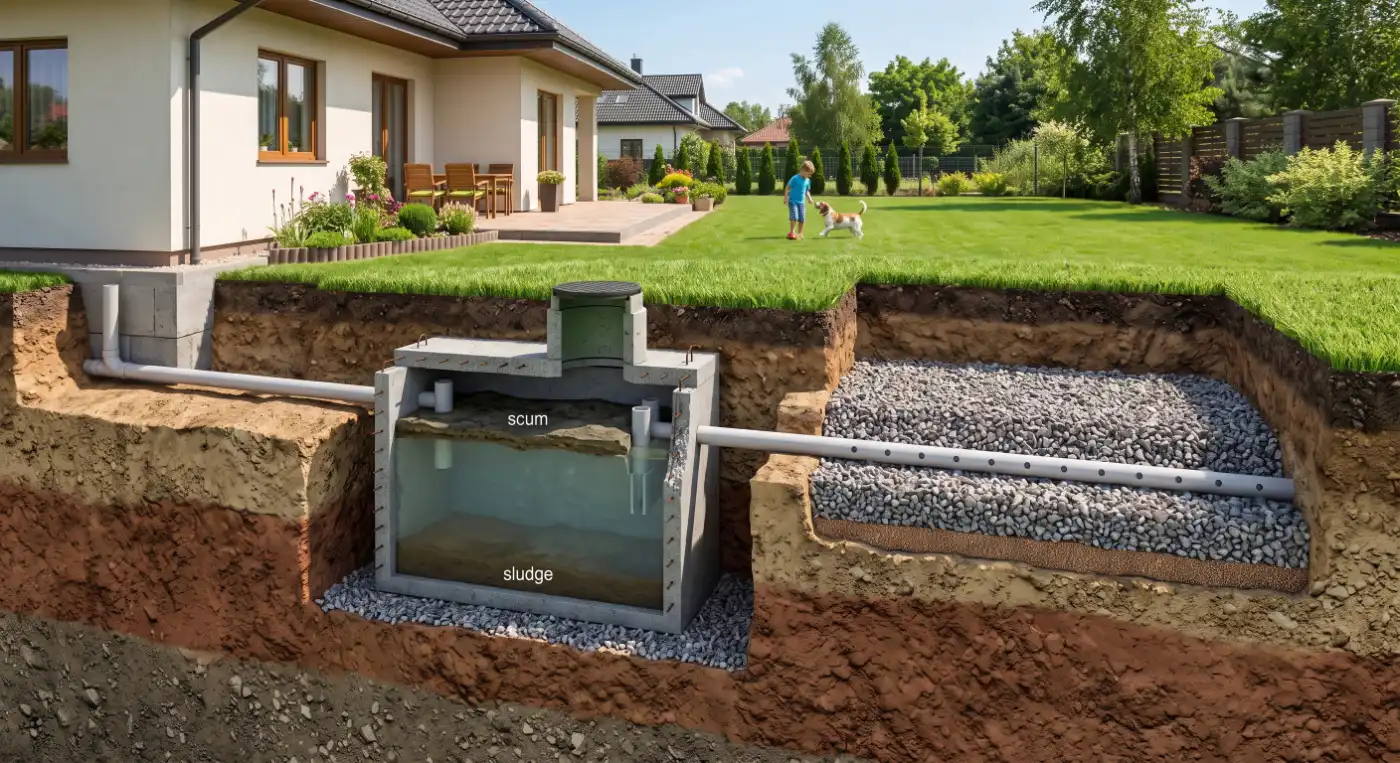
The most basic part of your system is the septic tank. Wastewater flows from your home into this concrete, plastic, or fiberglass box. Heavy solids settle to the bottom as sludge. Greases and oils float to the top as scum. The clear liquid in the middle flows out to your yard.
The solids at the bottom do not disappear. They build up over time. If the sludge layer gets too high, solids escape the tank and clog your yard.
Regular pumping is the only way to remove these solids. Most homes need their tank pumped every three to five years. The exact frequency depends on the size of your tank and how many people live in your house. Leaving a tank unpumped is the fastest way to destroy your entire system.
Regular inspections are just as critical. A professional checkup can find small issues before they turn into emergencies. An inspector looks for cracks in the tank, checks the baffling walls that keep solids inside, and measures the sludge layers. Skipping these small maintenance steps guarantees a much larger bill later.
The Drainfield: The Most Expensive Component
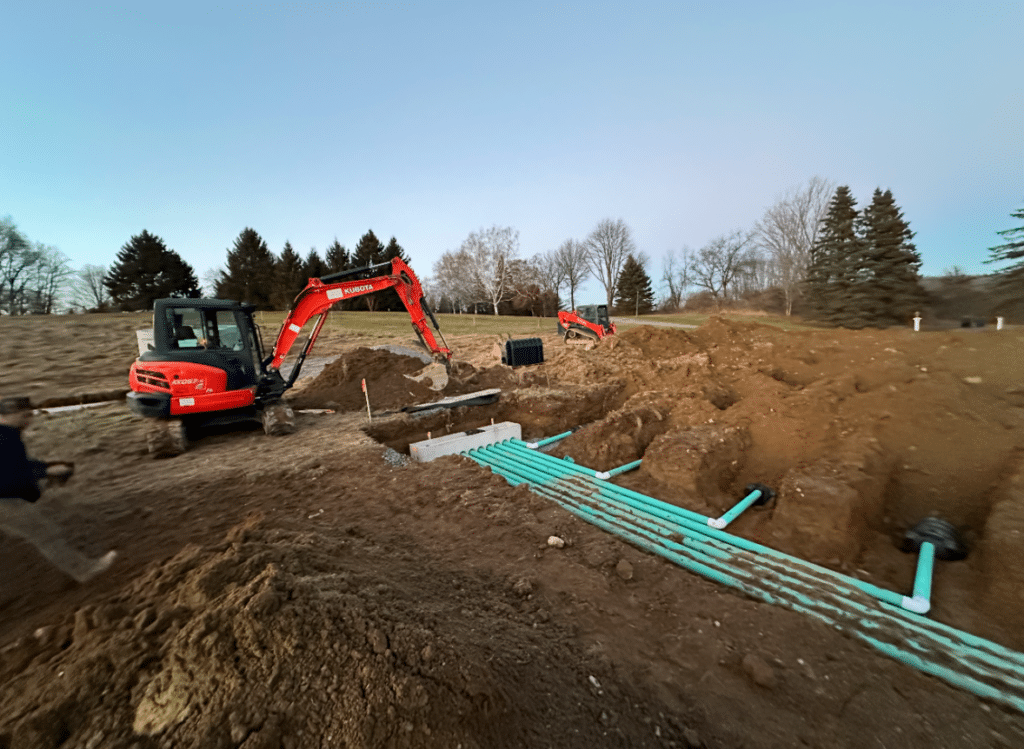
After wastewater leaves the tank, it travels to the absorption area. This area goes by several names, including the drainfield, leach field, or a “Turkey Mound” in certain terrains. This is where the actual liquid filtration happens. The water flows through perforated pipes into gravel and soil, where natural bacteria clean it.
A leach field is highly sensitive. If solids escape the septic tank because you skipped pumping, they will plug the holes in the pipes and the pores in the soil. When the soil becomes clogged, water cannot drain.
When a leach field fails, wastewater backs up into your home or pools on top of your lawn. You will notice spongy, bright green grass over the yard or a terrible odor.
Fixing a failed leach field is not a simple patch job. It often requires a complete replacement. This involves major excavation work, importing tons of specific sand and gravel, and laying brand-new pipe systems. It is the single most expensive repair a septic owner will ever face.
Grinder Pumps and Effluent Pumps: The Mechanical Hazards
Not every septic system relies entirely on gravity. If your home sits lower than your septic tank, or if your tank sits lower than the main disposal area, you need mechanical help. This is where pumps come into play.
A grinder pump acts like a heavy-duty garbage disposal. It chops up household wastewater and solid waste into a fine slurry. Then, it pumps that slurry uphill to the septic tank or the community sewer main.
An effluent pump moves treated liquid from the tank up to a raised mound system or a distant leach field.
These pumps live in harsh, wet environments. They run on electricity and contain moving parts, switches, and alarms. They do not last forever.
A grinder pump can fail suddenly if inappropriate items get flushed down the toilet. Wet wipes, feminine hygiene products, and cooking grease will jam the blades and burn out the motor. When a pump stops working, your home loses its ability to drain wastewater immediately. Replacing or repairing these pumps requires specialized knowledge and specialized tools.
The Hidden Threat of Tree Roots and Soil Compaction
Your septic system is vulnerable to environmental factors outside your plumbing. Trees and heavy weights are two major enemies of underground pipes.
Tree roots seek out moisture and nutrients. Your leach field and septic pipes are full of both. Small roots can slip through tiny cracks or pipe joints. Once inside, they grow rapidly, blocking the flow of water and cracking the infrastructure. Removing root blockages requires high-pressure tools, and severely damaged pipes must be dug up and replaced.
Soil compaction is another silent killer. The soil in your leach field needs to stay loose and porous so water can filter through it. Driving vehicles, parking heavy equipment, or even building a shed over your septic area compresses the dirt. Compressed soil loses its ability to absorb water. Once the soil hardens, the leach field fails, forcing you to install a new one somewhere else on your property.
Advanced Problems: Stormwater and Clogged Lines
Heavy rain and poor property drainage can overwhelm a septic system from the outside. When the ground becomes completely saturated with rainwater, your leach field cannot absorb any wastewater from your house.
If your gutters or driveway runoff empty near your septic area, you are dumping thousands of extra gallons of water directly into your system. This washes solids out of the tank before they can settle, destroying your leach field. Installing French drains and strategic drainage solutions around your property is often necessary to divert rainwater away from your infrastructure.
Inside the pipes, sludge and grease build up over the years. Standard plumbing snakes can punch a temporary hole through a clog, but they do not clean the pipe walls. High-pressure drain jetting, also known as hydro-jetting, uses blasting water streams to scour the inside of your lines. It removes years of scale and grease buildup, restoring full flow and preventing sudden backups into your sinks and tubs.
The True Costs of Neglect vs. Maintenance
The financial difference between maintaining a system and neglecting it is staggering. A standard maintenance routine involves a few hundred dollars every few years for pumping and a professional inspection.
Neglect leads to system failure. Replacing a cracked septic tank, installing a brand-new Turkey Mound leach field, or running new utility trenches requires heavy excavation equipment and weeks of permits and labor. These major projects cost thousands of dollars.
There are also health and legal costs. A failing septic system leaks raw sewage into the environment. This can contaminate your own well water or the groundwater of your neighbors. Local environmental agencies can issue steep fines for failing to repair a malfunctioning system.
Spotting the Warning Signs Before Disaster Strikes
You do not have to wait for a total backup to know your system is struggling. Your home will usually give you warning signs that something is wrong downstairs.
-
Sluggish Drains: If all the sinks, showers, and toilets in your house drain slowly, the problem is not a simple localized clog. The blockage is likely in your main sewer line or the septic tank itself.
-
Gurgling Sounds: A distinct gurgling noise coming from your pipes when you run the washing machine or take a shower means air is trapped in the system by rising water levels.
-
Foul Odors: The smell of sewage inside your home or near your outdoor tank is a clear sign that gases are escaping or the system is overflowing.
-
Lawn Changes: Extraordinarily green, lush, or spongy grass over your tank or leach field means wastewater is rising to the surface instead of sinking into the ground.
-
Frequent Pump Alarms: If your grinder pump or effluent pump warning light flashes or sounds an alert, the water level in the pump chamber is dangerously high.
Paying attention to these signs allows you to call for help while the problem is still manageable, preventing a total residential catastrophe.
How to Protect Your Wallet and Your Yard
Managing your septic costs comes down to everyday habits and a relationship with a trusted local professional. You can protect your system by watching what goes down your drains.
Never flush anything other than human waste and regular toilet paper. Avoid using chemical drain cleaners, as they kill the beneficial bacteria in your tank that break down solids. Limit your use of the garbage disposal, as food scraps do not decompose easily in a septic environment.
Finally, establish a relationship with an experienced local specialist who understands the local geography, soil types, and environmental regulations.
Quick Article Recap
-
Private Utilities: Homeowners with septic systems are fully responsible for their own wastewater treatment and infrastructure costs.
-
Routine Maintenance: Regular tank pumping and professional inspections every 3 to 5 years prevent catastrophic failures.
-
Leach Field Sensitivity: Driving over the yard or neglecting the tank destroys the drainfield, leading to the most expensive replacement costs.
-
Mechanical Wear: Grinder and effluent pumps require electricity and maintenance, failing quickly if foreign objects are flushed.
-
Environmental Factors: Tree roots, heavy rainwater runoff, and compacted soil can ruin underground pipes from the outside.
-
Early Detection: Sluggish drains, gurgling noises, bad smells, and wet patches on the lawn are urgent warning signs of system distress.
Keep Your Septic System Safe with Triple J Services
Don’t wait for a wet yard or a backed-up bathroom to think about your septic system. Triple J Services is your trusted, local private wastewater specialist based right here in Lackawaxen, Pennsylvania. We know the local soils, the climate, and exactly what it takes to keep your home running cleanly and efficiently.
Whether you need an emergency septic pumping, a routine inspection, a new grinder pump installation, or heavy excavation for a complete leach field replacement, our team has the tools and the experience to get the job done right. We handle everything from high-pressure hydro-jetting to complex French drain installations to keep your property dry and protected.
Take control of your home’s infrastructure before small issues turn into expensive disasters. Visit our About Us Page to learn more about our commitment to our community, or browse our full list of solutions on our Services Page.
Protect your investment today. Call Triple J Services at (845) 750-5222 to schedule your service or speak directly with an expert.