Living in Lackawaxen, Pennsylvania, means enjoying the natural beauty of the Upper Delaware River region. Here, we rely heavily on private wells and clean underground aquifers for our everyday drinking water. Because our homes are spread out across beautiful, wooded landscapes, we also rely on private septic systems to handle our household waste.
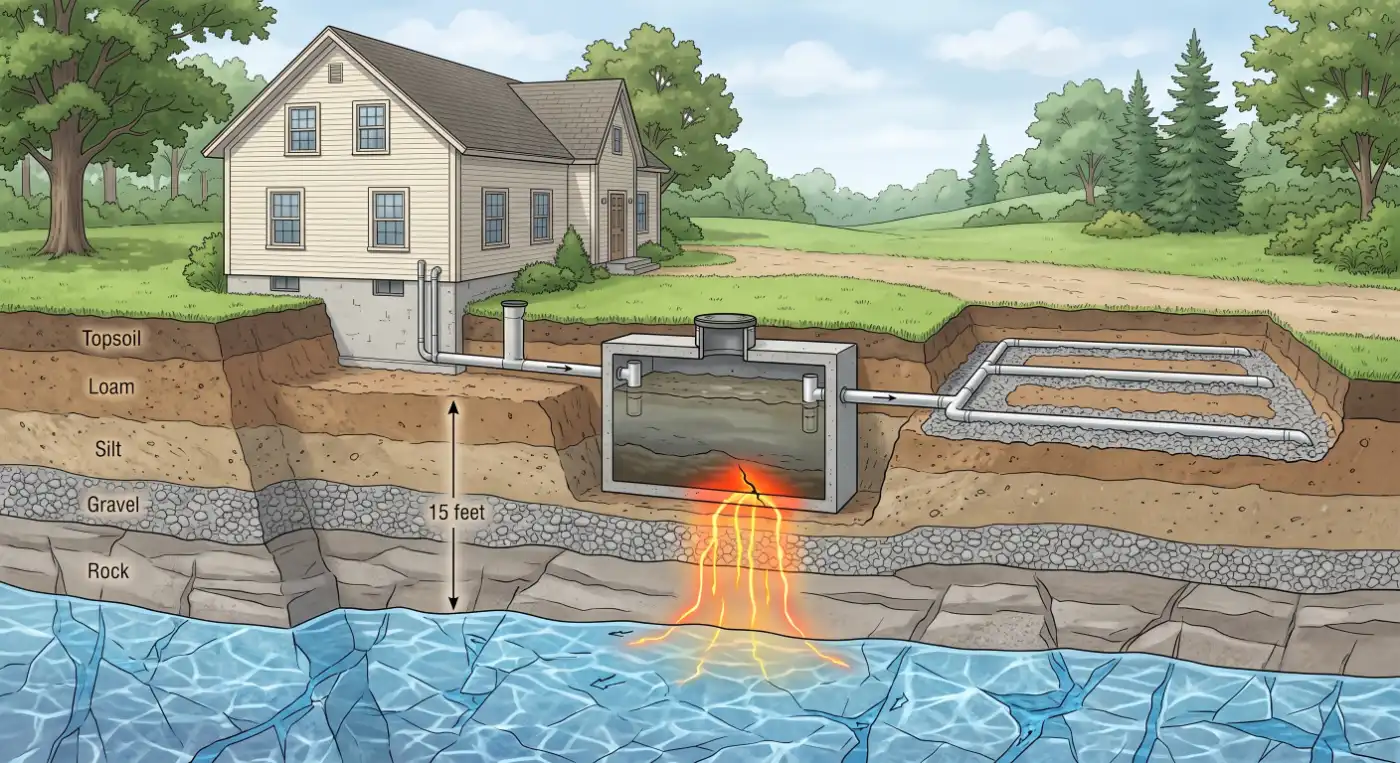
A septic system is highly efficient when it works correctly. It safely treats wastewater right on your property. But when a septic tank cracks, collapses, or overflows, that untreated waste can sink straight down into the groundwater.
Groundwater contamination is a silent threat. It directly impacts your family’s health, risks the safety of your neighbors’ wells, and harms the local environment. Knowing the signs of a subterranean septic leak can save you thousands of dollars in property damage and protect your community from serious health risks.
Understanding the Local Risk in Lackawaxen
The geography of Pike County plays a huge role in how septic systems behave. Our region features a mix of rocky terrain, clay-heavy soils, and areas with shallow water tables. When a septic tank fails here, the wastewater does not have to travel far to reach the groundwater supply.
According to guidelines from the Pike County Conservation District, drinking water wells should ideally be drilled uphill and at least 100 feet away from potential pollution sources like septic tanks. However, underground cracks or massive system failures can cause effluent to migrate much farther than expected.
When untreated sewage hits the water table, it carries harmful pathogens, nitrates, and chemicals into the very same aquifer that feeds your home’s well water. This is why local property owners must remain vigilant.
Signs Your Septic Tank Is Leaking Into the Groundwater
A standard septic failure might cause a toilet to back up into your bathroom. A groundwater leak, however, often shows up outside the house or straight out of your kitchen faucet. Here are the most critical warning signs that your septic tank is leaking directly into the underground water supply.
Elevated Bacteria or Nitrates in Your Well Water
This is the most dangerous sign because you cannot see it, smell it, or taste it. If your septic tank is leaking into the aquifer, fecal coliform bacteria like E. coli and high levels of nitrates can enter your well.
The U.S. Environmental Protection Agency (EPA) emphasizes that high nitrate or bacteria levels in a private well are clear indicators of nearby septic failure. The only way to know for sure is through regular testing. If your annual water test suddenly comes back positive for these contaminants, your septic tank or leach field is likely the source.
Unusually Lush, Bright Green Grass Patches
We all want a green lawn, but a single patch of thick, spongy, bright green grass over your septic tank or drain field is a major red flag.
When raw sewage escapes a cracked tank, it acts as a powerful fertilizer. The grass above it will grow rapidly and stay vibrant, even during a hot, dry summer stretch when the rest of your Lackawaxen yard turns brown. If the ground feels soft or muddy underneath that green grass when it has not rained for days, you are looking at surfacing effluent.
Spongy Ground or Standing Water Near the Tank
Do not ignore puddles that refuse to dry up. Saturated soil or pooling water directly over the septic tank itself indicates a structural leak near the top of the tank, a failed pipe joint, or a total backup.
As the liquid level rises or escapes through a crack, it saturates the soil from the bottom up until it pools on the surface.This wastewater eventually tracks downward into the local water table if left unresolved.
Persistent Sewage Odors Outdoors
An occasional whiff of gas from your roof vent can happen during strange weather changes. But a constant, heavy smell of rotten eggs or raw sewage around your yard means business.
The smell comes from gases escaping alongside raw wastewater as it leaks into the surrounding dirt. If the odor lingers on dry days and wet days alike, the structural integrity of your tank has likely been compromised.
Multiple Slow Drains or Gurgling Pipes
If one sink drains slowly, you have a simple clog. If every toilet, shower, and sink in your house drains at a snail’s pace, the problem is deep in your waste management system.
You might also hear a distinct gurgling sound in your pipes when you flush a toilet or run the washing machine. This happens when air gets trapped because water cannot freely flow into a full or structurally failing septic tank.
Algae Blooms in Nearby Streams or Ponds
Does your property border a local stream, pond, or drainage ditch? Take a close look at the water.
Nutrient-rich wastewater contains high amounts of nitrogen and phosphorus. When this effluent leaks into the groundwater, it frequently feeds nearby surface waters. The result is a sudden, thick explosion of green algae or murky plant overgrowth.
Immediate Action: What to Do Right Away
If you notice a combination of these warning signs, you cannot afford to wait. Groundwater contamination moves constantly, and delaying action will only make the remediation process more expensive. Take these steps immediately to protect your health and minimize property damage.
Stop Using Water Immediately
The very first thing you must do is cut down your indoor water consumption to the absolute bare minimum. Do not run the dishwasher, avoid doing laundry, and take incredibly short showers.
Every gallon of water you send down the drain puts more pressure on the cracked tank, forcing more raw sewage out into the surrounding soil and groundwater table.
Switch to Bottled Water
If you suspect your well water has been compromised by a leaking septic tank, stop drinking it right away. Do not use it for cooking, brushing your teeth, or giving to your pets.
Boiling water kills bacteria, but it actually concentrates nitrate levels, making the water even more dangerous. Stick to bottled water for all consumption until you can get your well tested and cleared by a professional lab.
Keep People and Pets Away From the Area
If you have standing water or soggy patches in your yard, fence it off or keep your family away from it. This surface water is highly contaminated with pathogens that can cause severe gastrointestinal illness, skin infections, or worse if touched or accidentally swallowed.
Schedule an Emergency Inspection and Pumping
Call a local septic professional right away. An emergency septic pumping will empty the tank completely. This removes the immediate pressure, stops the active flow of sewage into the groundwater, and allows an inspector to drop a camera down or visually inspect the empty tank walls for cracks, collapses, or failed seals.
Long-Term Solutions: Fixing the Root Cause
Once the immediate crisis is contained by pumping the tank, you have to look at long-term remediation. A cracked or leaking tank cannot simply be ignored after it is emptied; it will fill right back up with everyday household use and continue polluting the environment. Depending on what the inspection reveals, several professional services may be required to fix the root cause.
Septic Tank Repair or Complete Replacement
If the inspection reveals significant structural cracks or a collapsed baffle wall, you will need a professional septic system installation and replacement. Modern tanks are built from highly durable materials like reinforced concrete or heavy-duty polyethylene designed to withstand the shifting rocky soils of Lackawaxen. Replacing an old, deteriorating tank is the single best way to secure your property against future leaks.
Leach Field (“Turkey Mound”) Repair and Installation
Sometimes the tank itself is fine, but the leach field has failed. If the soil in your drainage area is completely saturated, wastewater can back up and pool around the tank, eventually seeping down into the groundwater without proper filtration.
In areas of Pennsylvania with high water tables or shallow bedrock, a traditional underground leach field won’t work. We often have to build an elevated sand mound, colloquially known as a “Turkey Mound.” This engineered system raises the absorption bed above the natural ground level, giving the wastewater plenty of sand and soil to filter through cleanly before it ever touches the natural groundwater table.
Grinder Pump or Effluent Pump Service and Replacement
Many homes in our region rely on pumps to move wastewater uphill to the treatment area. If your effluent pump fails, the tank will quickly overflow, causing a massive backup and localized leaking.
Having your effluent pump or grinder pump serviced, repaired, or completely replaced ensures that wastewater moves through the system exactly as designed, preventing structural stress on your tank joints.
High-Pressure Drain Jetting (Hydro-Jetting)
Over the years, solid waste, grease, and sludge can build up inside the solid lines connecting your home to the tank, or inside the lateral lines of your leach field. This buildup slows down the system and causes artificial high-water situations that stress the tank seals. High-pressure drain jetting uses specialized water streams to clear out stubborn blockages and restore optimal flow throughout your entire system, instantly relieving pressure on the tank.
French Drains and Advanced Drainage Solutions
Sometimes, external groundwater is actually the enemy. During heavy spring thaws or torrential rains, a high water table can push against the outside of your septic tank, finding small weaknesses or backing up the system entirely.
Installing a custom system of French drains and surface drainage solutions routes heavy stormwater away from your septic components. This keeps the soil around your tank stable and prevents heavy rain from overwhelming your system.
Excavation and Utility Trenching
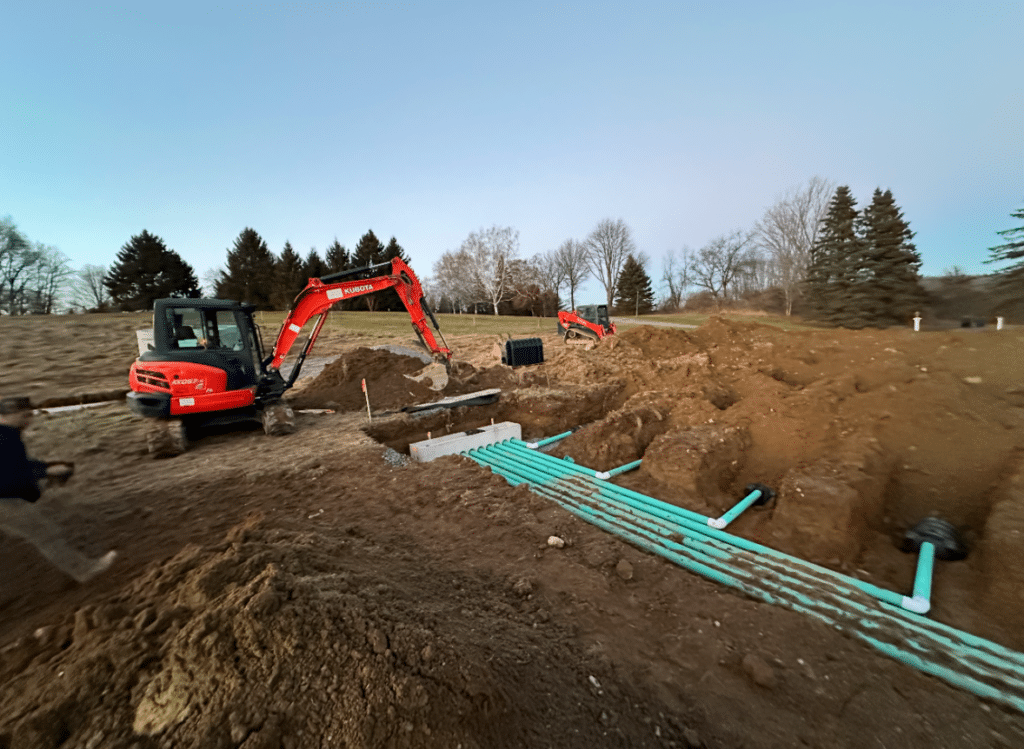
Fixing a deep underground leak or running completely new water and septic lines requires precise earthmoving. Professional excavation and utility trenching are necessary to safely dig out a failing tank, replace fractured pipes, or re-route lines without damaging your existing landscaping or compromising your clean water lines.
The Lifelong Value of Regular Septic Inspections
The best way to handle a groundwater leak is to prevent it from ever happening in the first place. A comprehensive septic system inspection should be performed every few years.
During a standard maintenance visit, a technician will measure the accumulation of sludge and scum layers, check all plumbing joints, inspect the structural integrity of the tank walls, and ensure your pumps are drawing the correct electrical currents. Catching a tiny fracture or a worn-out seal early can mean a simple, affordable repair instead of a massive, multi-thousand-dollar emergency replacement down the road.
Article Quick Recap
-
Silent Danger: A septic tank leaking into the groundwater can contaminate your private well with dangerous E. coli bacteria and high nitrates without changing the taste or smell of your water.
-
Key Visual Signs: Watch out for abnormally lush, bright green patches of grass, soggy mud directly over the tank, or pooling water during dry spells.
-
System Red Flags: Multiple slow-draining household fixtures, constant gurgling noises in your walls, and localized outdoor sewage odors indicate a major structural issue.
-
Immediate Steps: If you suspect a leak, stop using indoor water immediately, switch exclusively to bottled water, keep pets away from wet spots, and call for emergency pumping.
-
Long-Term Solutions: Resolving the underlying problem requires professional intervention, ranging from hydro-jetting lines to installing an elevated “Turkey Mound” leach field or replacing the structural tank entirely.
Protect Your Lackawaxen Property Today
You don’t have to navigate a stressful septic emergency on your own. At Triple J Services, we live and work right here in Lackawaxen, Pennsylvania. We know the local soils, the local regulations, and exactly what it takes to keep your home’s waste management system running safely and efficiently.
Whether you need an immediate emergency pumping, a comprehensive septic inspection, high-pressure line cleaning, or a complete system replacement, our experienced team is ready to help. We provide honest, clear advice and dependable workmanship to safeguard your property and protect our local groundwater.
Learn more about our team on our About Us page or check out our full range of septic, drainage, and excavation options on our Services page.
Don’t wait for a minor leak to turn into a major environmental hazard. Call Triple J Services today at (845) 750-5222 to schedule your septic service or inspection.