When a drought hits Pennsylvania, most people worry about brown lawns, dusty gardens, and dropping well water levels. It is easy to look at a baking summer sun and assume that your underground plumbing is safe from the elements. After all, if there is no heavy rain to flood your yard, your septic tank should be running smoothly, right?
Unfortunately, extreme dry weather brings its own set of serious challenges for residential wastewater systems. From the rolling hills of Pike County to homes right here in Lackawaxen, prolonged lack of rain alters the very structure of the earth surrounding your home. The ground shifts, soil shrinks, and the biological balance inside your disposal system gets thrown completely out of whack.
Understanding how these environmental shifts impact your property is the first step toward preventing a messy, expensive emergency. Underground infrastructure relies on a delicate balance of moisture, soil porosity, and bacterial activity. When that balance breaks down, your pipes and tanks bear the brunt of the damage.
How Dry, Compacted Soil Damages Buried Pipes
Healthy soil is like a sponge. It contains a natural balance of solid earth, air pockets, and moisture. When Pennsylvania experiences extended drought periods, the moisture evaporates from the upper layers of the earth, causing the soil particles to pack tightly together and shrink.
This shifting ground places immense physical stress on buried utility lines. As the earth contracts and drops, the support beneath your main sewer line and water pipes disappears. This movement can easily shear plastic joints, crack aging cast-iron lines, or pull connections completely apart.
When gravity-fed pipes shift even a fraction of an inch, they lose the precise slope required to carry waste away from your home. Without that perfect downward angle, wastewater slows down, solids settle in the middle of the pipe, and stubborn blockages begin to form. If you start hearing a strange gurgling sound when you flush the toilet, or if water lingers in the bottom of your shower, the ground around your home may be settling and pinching your lines.
The Science Behind Leach Field Failures in Drought Weather
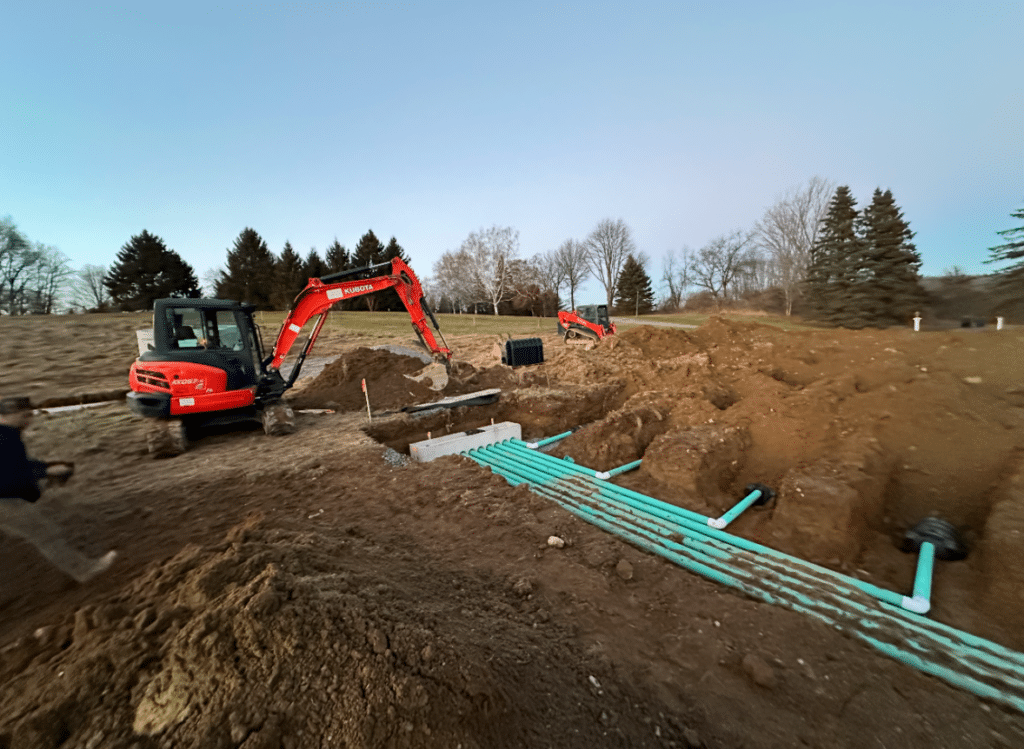
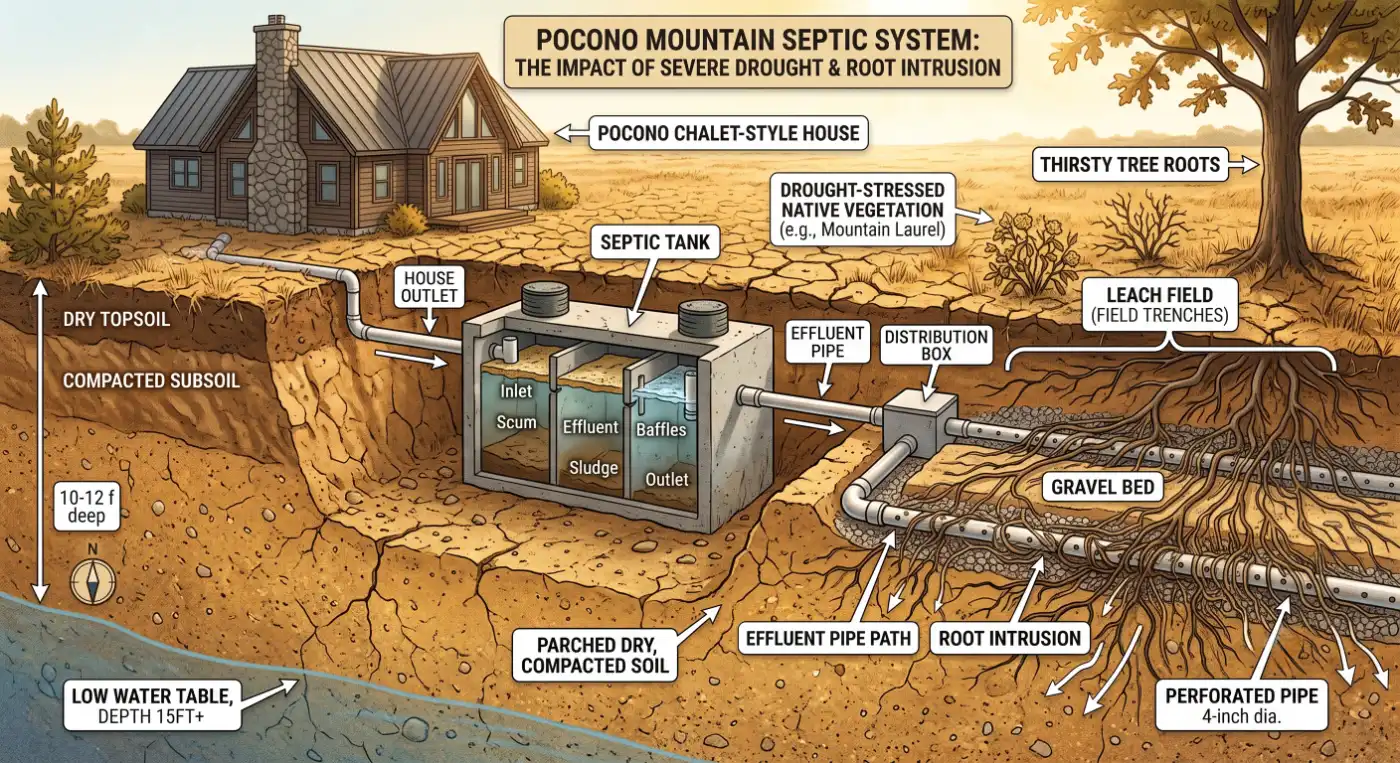
Your leach field, often referred to locally as a turkey mound or drain field, is the most vulnerable part of your septic setup during a dry spell. This area consists of a network of perforated pipes embedded in gravel and soil. Its job is to take the liquid wastewater, known as effluent, from your tank and safely filter it through the earth to remove harmful pathogens.
During a drought, the soil in your turkey mound turns hard and compacted, almost like concrete. When effluent leaves the tank and enters this tightly packed earth, the soil cannot absorb the liquid at its normal rate. Instead of trickling down smoothly to be purified, the wastewater gets trapped.
Paradoxically, a severe dry spell can cause wastewater to pool on top of your lawn or back up into your lower-level plumbing fixtures. The compacted earth simply loses its natural filtering capacity. According to environmental guidelines from organizations like the U.S. Environmental Protection Agency, maintaining specific soil porosity and moisture conditions is vital for the safe treatment of residential wastewater. When those conditions fail, the risk of surface contamination sky-rockets.
Tree Roots Turn Aggressive in Search of Water
During a hot, dry Pennsylvania summer, trees and large shrubs face a desperate fight for survival. To stay alive, their root systems expand rapidly and tunnel deeper into the ground, searching for any available source of moisture.
Your septic lines and leach field pipes are essentially underground oases. They carry a constant stream of moisture rich in organic nutrients. Tree roots can sense this moisture from a surprising distance away.
Small, hair-like root fibers will find the tiniest microscopic crack in a pipe joint or the holes in your drain lines and push their way inside. Once inside the pipe, the roots thrive on the nutrients and quickly grow into thick, tangled masses. These root clogs act like a net, catching toilet paper and solid waste until the pipe is entirely choked off. Clearing out these stubborn blockages often requires specialized high-pressure drain jetting to slice through the wood fibers and restore normal flow.
Shifting Bacteria Balances Inside Your Septic Tank
A septic tank is not just a concrete box that holds waste; it is a living biological ecosystem. Millions of beneficial, naturally occurring anaerobic bacteria live inside the tank. Their job is to break down solid waste, turning paper and organic matter into liquid sludge so it doesn’t fill up your tank too quickly.
These microscopic workers require stable conditions to do their jobs effectively, including a steady, balanced influx of water. When drought conditions prompt strict household water conservation, or when the overall environment becomes excessively dry, the internal chemistry changes.
If water usage drops drastically and suddenly, the concentration of solids and household chemicals inside the tank increases dramatically. This harsh environment can kill off the helpful bacteria. Without enough active microbes to dissolve the solids, the scum and sludge layers build up at an accelerated pace. If left unmanaged, those solids will escape the tank and flow directly into your leach field, permanently plugging up the system.
The Ripple Effect on Grinder and Effluent Pumps
Many homes in our region rely on specialized pumps to move wastewater, especially if the home sits lower than the main septic tank or the municipal connection. Grinder pumps shred solid waste and push it uphill, while effluent pumps move clarified liquid out to a raised turkey mound.
When dry conditions cause soil shifting and pipe misalignment, these pumps have to work twice as hard to push waste through restricted or altered pathways. A minor restriction caused by a shifted pipe forces the pump motor to run longer cycles, leading to overheating and premature mechanical failure.
Furthermore, if a dry spell has caused a partial backup in your compacted leach field, the effluent pump might find itself trying to push water into a zone that is already full. This creates immense backpressure. If you notice your pump running constantly or hear its warning alarm buzzing, you need a professional technician to evaluate the system before the motor burns out completely.
Protecting Your Septic Investment During Dry Spells
While you cannot control the weather in Pennsylvania, you can take practical steps to protect your plumbing and septic components from drought-related damage. Managing a private waste system during a dry season requires a gentle, deliberate approach to home maintenance.
-
Space Out Your Water Usage: While conserving water is excellent during a dry spell, avoid saving all your chores for a single day. Running four loads of laundry back-to-back can overwhelm a compacted leach field. Spread water-heavy tasks throughout the week.
-
Keep Vehicles Off the Yard: Compacted soil is already a major issue during a drought. Driving cars, trucks, or heavy lawn equipment over your tank or drain field will pack the dry earth down even further, cracking pipes and destroying soil structure.
-
Watch for Warning Signs: Keep a close eye on your lawn and drains. If you notice unusually lush, bright green patches of grass directly over your turkey mound while the rest of the yard is brown and parched, your system is struggling to push water downward.
-
Schedule Proactive Pumping: Do not wait for a total backup to occur. If your tank is due for service, getting it pumped out early prevents excess solids from migrating into your fragile, dry leach field.
When underground complications arise, amateur fixes often cause more harm than good. Excavating around dry, unstable soil or using harsh chemical drain cleaners can permanently damage your system’s structural integrity and bacterial health. Relying on professional septic services ensures that problems are accurately diagnosed and resolved using industry-standard techniques. Organizations like the National Environmental Services Center emphasize that regular professional maintenance is the single most cost-effective way to extend the lifespan of an onsite wastewater system.
Comprehensive Care with Triple J Services
Living in Lackawaxen means enjoying the beautiful, rugged landscape of Pennsylvania, but it also means dealing with unique soil conditions and weather patterns. At Triple J Services, we specialize in keeping your underground systems functioning perfectly, no matter what the weather looks like outside. Our experienced team provides targeted, reliable solutions designed to protect your home and property.
If a drought has shifted your soil and caused sluggish drainage, our high-pressure drain jetting can clear out sediment, debris, and stubborn root intrusions without damaging your lines. We also provide precision excavation and utility trenching to repair or replace broken pipes that have buckled under the weight of shifting earth.
From complete septic system installations and turkey mound reconstructions to emergency septic pumping and pump replacements, we handle it all. We understand the specific challenges that local property owners face, and we are committed to keeping your home safe, clean, and fully operational.
Quick Article Recap
-
Soil Contraction: Extended dry weather evaporates moisture, causing soil to shrink, shift, and crack or disconnect buried pipes.
-
Leach Field Strain: Compacted, dry earth cannot absorb wastewater efficiently, which can lead to unexpected backups or surface pooling.
-
Root Intrusion: Thirsty tree roots aggressively target septic lines for moisture, causing major blockages.
-
Bacterial Imbalance: Reduced or altered water flows disrupt the beneficial bacteria in your tank, speeding up solid waste accumulation.
-
Pump Overheating: Shifted lines and high backpressure force grinder and effluent pumps to run longer, risking mechanical failure.
Contact Triple J Services Today
Don’t let dry weather ruin your home’s plumbing infrastructure. Whether you need a routine inspection, a tank pump-out, or an emergency line repair in Lackawaxen, PA, our skilled professionals are ready to help. Explore our full range of expert care on our Services Page or get to know our local team on our About Us Page. Call Triple J Services directly at (845) 750-5222 to schedule your appointment today!