
The Homeowner’s Guide to Owning a Septic System: Maintenance, Myths, and When to Call the Pros
Moving into a home with a private septic system can feel like unchartered territory if you are used to city sewer lines. Instead of sending waste down the drain and forgetting about it, you are now the manager of your own mini wastewater treatment plant. It sounds intimidating, but it does not have to be a source of constant anxiety.
Understanding how your septic system operates, what it can handle, and how to spot early warning signs of trouble will save you thousands of dollars in premature replacement costs.
The Anatomy of a Septic System: What is Happening Underground?
Before you can properly maintain a system, you need to understand its components. A standard residential septic setup relies on relatively simple physics and biological processes to clean your household wastewater.
Everything starts at your main main drainage pipe, which exits your home and routes all wastewater into the septic tank. This watertight container, usually made of concrete, fiberglass, or plastic, is buried underground.
Inside the Septic Tank
When wastewater enters the tank, it naturally separates into three distinct layers:
-
The Scum Layer: Lightweight materials like grease, oils, and fats float to the very top.
-
The Sludge Layer: Heavy solids, organic matter, and soil sink to the bottom. Naturally occurring bacteria break down these solids over time, turning them into a more compact liquid sludge.
-
The Effluent Layer: The relatively clear liquid layer trapped in the middle.
As new wastewater enters the tank, an equal amount of this middle liquid layer—the effluent—is pushed out through an exit pipe.
The Journey Through the Pumps
Depending on the topography of your property in Pike County, your system may rely on specialized pumps to move this liquid along. If your drainfield sits at a higher elevation than your septic tank, you will have an effluent pump system. You can learn more about how these keep your system moving on our effluent pump service page.
For homes with fixtures located below the main sewer line, like a basement bathroom, a grinder pump is required. This device acts like a powerful garbage disposal, macerating solids into a slurry and pumping them uphill to the main tank. Because these pumps run on electricity and contain moving mechanical parts, they are prone to unexpected failures. If you ever hear a loud buzzer sounding from your yard or basement, you are likely dealing with a grinder pump alarm event, which requires immediate attention via our grinder pump repair emergency services.
The Absorption Area (The Leach Field)
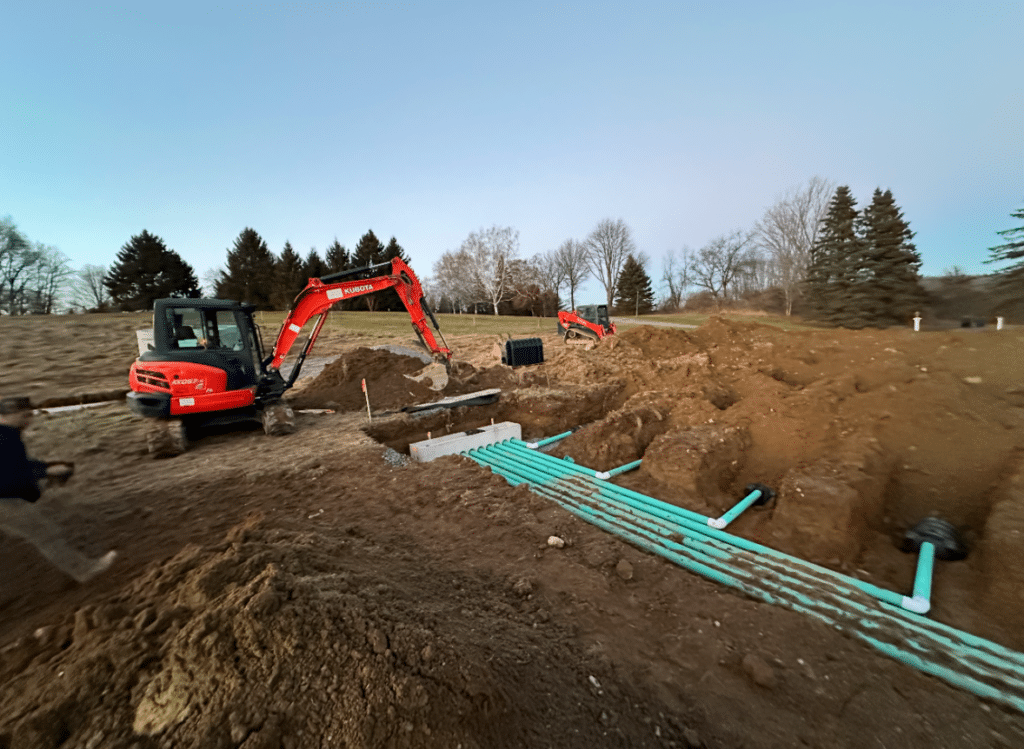
The effluent leaves the tank or pump chamber and travels to the absorption area, commonly referred to as a leach field or drainfield. This area consists of a series of perforated pipes buried in shallow, gravel-filled trenches.
The liquid slowly trickles out of the pipe perforations and filters down through the gravel and natural soil layers. The soil acts as a natural biological filter, neutralizing harmful bacteria, viruses, and nutrients before the purified water eventually re-enters the local groundwater supply.
In areas with high water tables or dense bedrock—which is incredibly common across portions of Northeast Pennsylvania—a traditional leach field cannot be built. Instead, an engineered mound system is constructed. This creates a raised hill of specific sand and gravel blends above the natural landscape to ensure proper filtration happens before wastewater hits the water table.
Daily Septic Habits: The Golden Rules of Waste
Your underground bacterial colony is surprisingly fragile. To keep your system running smoothly, you must monitor what goes down your drains. Treat your toilets and sinks with respect, and you will rarely have to deal with an unexpected backup.
Keep the Trash Out of the Toilet
Your toilet is not a trash can. The only things that should ever be flushed are human waste and standard toilet paper.
Do not believe the packaging on so-called “flushable” wipes. These wipes do not break down in water like traditional toilet paper. Instead, they remain intact, binding with grease to form massive clogs in your pipes, jamming effluent pumps, and rapidly filling up your septic tank.
The same rule applies to feminine hygiene products, cotton swabs, dental floss, cigarette butts, paper towels, and diapers. If it isn’t toilet paper, throw it in the wastebasket.
Rethink Your Kitchen Habits
If your home has a garbage disposal, use it sparingly—or better yet, don’t use it at all. Disposals grind up food scraps into fine particles that do not dissolve easily. This introduces a massive volume of additional solids into your tank, forcing you to schedule pump-outs far more frequently than normal.
Never pour cooking oils, animal fats, or grease down the kitchen sink. Grease solidifies as it cools, coating the interior walls of your plumbing lines and forming a thick, impenetrable scum layer at the top of your septic tank that can clog inlet and outlet pipes.
Chemical Warfare on Bacteria
Your septic tank requires a thriving ecosystem of live bacteria to break down organic solids. If you kill off those bacteria, raw solids will accumulate quickly and wash out into your leach field, ruining your soil’s filtering capability.
Avoid pouring harsh chemical drain cleaners down your pipes. A single bottle of caustic drain opener can kill off your tank’s bacterial population for weeks. Instead, opt for mechanical snakes or enzyme-based cleaners to clear stubborn clogs.
Limit your use of heavy bleach, chemical disinfectants, and anti-bacterial soaps. Normal household cleaning amounts are usually fine, but excessive, everyday use of bleach will stall your system’s natural digestive process.
Managing Your Home’s Water Budget
A septic system can only process a finite amount of liquid at one time. Every gallon of water you send down the drain must spend enough time in the tank for solids to settle out properly. If you overload the system with water, you create a hydraulic surge that flushes un-decomposed solids directly into your absorption field.
Stagger Your Water Use
The classic mistake is saving all household laundry for Saturday morning. Running five consecutive loads of laundry sends hundreds of gallons of water rushing through your septic tank in a matter of hours. The tank gets flooded, the solids are stirred up, and messy effluent is pushed straight out to the yard.
Space out your water-heavy activities. Run one load of laundry per day. Avoid running the dishwasher at the exact same time someone is taking a long shower. Giving your tank time to rest ensures proper settling.
Fix Leaks Immediately
A running toilet might seem like a minor annoyance, but a slow, continuous leak can dump hundreds of gallons of clean water into your septic tank every single day. This constant flow keeps the tank agitated and completely overwhelms your leach field’s ability to absorb moisture. Check out the EPA’s water conservation guidelines for easy ways to audit your home’s water use and spot hidden plumbing leaks before they cause an underground catastrophe.
The Pumping Schedule: When and Why to Clear the Tank
No matter how carefully you manage what goes down your drains, your septic tank will eventually fill up with non-biodegradable sludge and scum. This material must be physically pumped out and hauled away by a licensed specialist.
How Often Should You Pump?
As a general rule of thumb, a standard residential septic system tank should be professionally inspected and pumped every three to five years. The exact frequency depends heavily on three main factors:
-
The overall size of your tank.
-
The total number of people living in your household.
-
The volume of solids introduced into the system.
Skipping your routine pump-out is the number one cause of total system failure. When the sludge layer grows too thick, there is less space for wastewater to settle. The liquid moves through the tank too fast, carrying solid debris out into the perforated pipes of your leach field. Once those soil pores are choked with solid waste, the field fails, and you are left facing an incredibly expensive excavation and replacement project.
If you cannot remember the last time your tank was cleaned, it is time to establish a baseline. You can schedule a routine maintenance visit through our emergency septic pumping services page to get your system inspected and emptied before problems arise.
Recognizing the Warning Signs of Septic Trouble
Septic systems rarely fail without warning. Your plumbing will usually drop hints that things are beginning to go wrong underground. Learning to recognize these signs allows you to intervene before you find sewage backing up into your kitchen sink.
1. Slow-Draining Fixtures
If a single sink drains slowly, you probably have a localized hair clog in that specific trap. However, if every drain in your house—your showers, toilets, and sinks—is sluggish, your septic tank or main exit line is likely backed up to capacity.
2. Gurgling Sounds in the Plumbing
Hear an odd, bubbling, or gurgling sound coming from your toilets or drains when you run the washing machine or take a shower? That sound is trapped air trying to escape your plumbing system because wastewater is hitting a blockage or a completely full septic tank.
3. Unusually Lush, Green Grass
Walk your backyard periodically. If you notice a specific strip of grass over your leach field that is noticeably greener, taller, and more vibrant than the rest of your lawn, your drainfield may be failing. This happens because excessive effluent is rising to the surface, artificially fertilizing the lawn from underneath.
4. Spongy Soil or Standing Water
If you see muddy patches, pooling water, or feel a spongy texture underfoot when walking near your septic tank or absorption field during dry weather, your system is failing to absorb liquid. Raw sewage is forcing its way upward to the surface of your yard.
5. Foul Odors
A properly functioning septic system should never smell. If you step out into your yard or open a window and encounter a distinct rotten-egg odor, gases are escaping your system. This often points to a cracked pipe, a broken vent, or a severely overloaded tank.
When to Call the Experts at Triple J Services
Some home maintenance tasks can be handled with a quick trip to the hardware store. Septic systems are not one of them. Working with wastewater requires specialized heavy equipment, protective gear, and deep technical knowledge of local environmental codes.
Trying to open or service a septic tank yourself is incredibly dangerous. Septic tanks produce toxic, asphyxiating gases like methane and hydrogen sulfide that can cause unconsciousness or death within moments of exposure.
At Triple J Services, we bring decades of hands-on excavation and plumbing experience directly to your doorstep. We proudly serve homeowners across the region, including Lackawaxen, Milford, and Dingmans Ferry. You can check our complete coverage map on our service areas page to confirm we cover your neighborhood.
Whether you need an advanced, code-compliant design via our septic system installation page, a rapid pump-out, or an emergency diagnostic repair, our team is available 24/7 to keep your home safe and sanitary. Get to know our background, values, and dedication to local property owners by visiting our about page.
Quick Summary: Septic System Guide
-
Understand Your System: Wastewater separates into scum, sludge, and effluent layers inside your tank before exiting to your leach field or mound system.
-
Watch the Drains: Avoid flushing trash, flushable wipes, grease, fats, or harsh chemical cleaners that destroy your tank’s natural biological balance.
-
Budget Your Water: Space out laundry loads and fix plumbing leaks promptly to prevent hydraulic overloading of your absorption field.
-
Pump Routinely: Have your septic tank inspected and pumped out every 3 to 5 years to keep solids from ruining your soil filtration.
-
Spot the Flags: Act quickly if you notice slow drains, gurgling toilets, foul odors, or localized muddy patches over your drainfield.
Need Local Septic System Help? Get in Touch Today
Septic issues never happen at a convenient time. If your system is backing up, your pump alarm is sounding, or you simply want to stay ahead of the game with preventative maintenance, do not wait for the problem to grow worse.
Reach out to the local, family-trusted professionals at Triple J Services for fast, transparent, and expert septic System solutions. Head over to our contact page to submit a service request, or give us a call directly to speak with a specialist right away.