
A massive storm rolls through northeast Pennsylvania, dumping inches of rain in a matter of hours. The lightning stops and the clouds clear. You think the worst is over. Then, you notice a terrible smell. You walk out to your yard, and the ground above your septic system is soggy, muddy, and covered in pooling water. Back inside, the toilets are gurgling and the drains are backing up.
A flooded septic system is a homeowners nightmare. When heavy rain saturates the earth, it leaves your wastewater with nowhere to go. If you find yourself in this situation, do not panic. Taking the wrong steps can ruin your system permanently, but acting quickly and smartly will save your home and your wallet.
Why Heavy Rain Overwhelms Your Septic System
Your septic system relies entirely on the soil around it to function. Under normal conditions, wastewater flows from your house into the underground tank. Solid waste settles to the bottom, while the liquid layer travels out into the absorption field, often called the leach field or drainfield. The soil acts as a natural filter, cleaning the water before it returns to the local groundwater supply.
A heavy storm ruins this entire process. When a massive volume of rain falls in a short period, the ground becomes completely saturated. The soil fills up with water like a soaked sponge. Because the earth is already holding as much liquid as possible, it can no longer absorb the wastewater leaving your septic tank.
This creates a brutal backup scenario. The liquid in your drainfield has nowhere to go, so it begins to push backward. It flows back into the distribution box, back into the septic tank, and eventually, right back up the pipes leading into your house.
The Hidden Threat of Soil Compaction and Shifting
The structural impact of heavy rain goes beyond simple water saturation. When the ground becomes waterlogged, the soil loses its stability. The weight of the wet earth increases dramatically, putting intense physical pressure on your underground pipes and the tank itself.
If you drive a car, a lawnmower, or any heavy equipment over a saturated drainfield, you will compact the soil. Compacted soil loses the tiny air pockets required to filter wastewater properly. Even worse, the physical weight can crush buried PVC lines or shift the pitch of your pipes. Once a pipe loses its proper downward slope, gravity works against you, leading to persistent blockages long after the floodwaters recede.
Step 1: Stop Using Water Immediately
The very first thing you must do if your septic system shows signs of flooding is cut off your indoor water usage. This is the most critical emergency step. Every single gallon of water you send down the drain right now will directly worsen the backup.
-
Turn off the washing machine and delay any laundry cycles.
-
Avoid running the dishwasher completely.
-
Keep your showers incredibly short, or skip them entirely until the ground dries.
-
Flush the toilets only when absolutely necessary.
Think of your septic tank as a bucket that is already filled to the brim. If you add more liquid to the top, it has to spill out somewhere. By reducing your indoor water consumption to near zero, you give the system a fighting chance to rest and drain naturally as the outdoor water table lowers.
Step 2: Inspect Your Yard Safely
Once you have managed your indoor water situation, put on some heavy-duty rubber boots and head outside to inspect the property. You need to look for specific visual clues to understand exactly what your system is dealing with. However, you must prioritize your personal safety while doing this.
Look closely at the area directly above your tank and drainfield. Check for large pools of standing water, exceptionally muddy patches, or patches of grass that feel spongy or bouncy when you step on them. Take note of any strong sewer odors hanging in the air.
Most importantly, look for signs of structural collapse. Saturated soil can occasionally cave in around an old or compromised septic tank. If you see a sudden, unusual dip or a literal hole opening up in the ground near your system, stay far away from it. A collapsing septic area is incredibly dangerous and requires immediate professional intervention.
Step 3: Check Your Home for Wastewater Backups
After checking the yard, inspect the lowest points inside your home. This usually means checking basement floor drains, utility sinks, crawl spaces, and downstairs bathrooms.
Wastewater backing up into a home is a serious biohazard. It carries dangerous bacteria, viruses, and parasites that can cause severe illness. If you find dark, foul-smelling water bubbling up through your drains, do not attempt to clean it up with standard household rags.
Keep children and pets completely away from the affected areas. If the water has reached any electrical outlets, baseboard heaters, or appliances, turn off the power to that specific zone at your main breaker panel. Mixing raw sewage with live electricity is a recipe for disaster.
Step 4: Divert All Surface Water Drainage
Take a look at how stormwater moves across your property. Sometimes, a septic system overflows because roof gutters and surface runoff are pointing directly at the drainfield.
-
Check your downspouts to ensure they are discharging water far away from the septic absorption area.
-
Look at surrounding hillsides or driveways to see if they are funneling sheets of rainwater right onto your underground system.
-
Use temporary barriers, sandbags, or flexible gutter extensions to redirect incoming surface water toward a ditch or natural drainage zone.
By stopping extra rainwater from pooling directly over your system, you speed up the natural drying process. The goal is to isolate the drainfield as much as possible so the soil can breathe and start draining again.
What You Must Avoid Doing During an Overflow
When people are stressed out by a household emergency, they often make impulsive decisions that make the problem significantly worse. Knowing what not to do is just as vital as knowing the right steps to take.
First, never hire a pumping truck to empty your septic tank while the surrounding ground is still completely flooded. It sounds like the perfect solution, but it can destroy your infrastructure. When the soil is saturated, the water table is high, creating massive upward pressure on your underground tank. If you pump the tank completely empty, it becomes light and buoyant. The surrounding mud and water can actually pop the entire tank right out of the ground, rupturing all your plumbing connections instantly.
Second, do not pour harsh chemical drain openers, heavy-duty bleach, or magic septic additives down your toilets. Your septic system relies on live, healthy bacteria to break down organic waste. Flooding already stresses these microbes. Dumping toxic chemicals into the mix kills off the remaining beneficial bacteria, severely damaging your system’s long-term biological treatment capacity.
Third, never open the septic tank covers yourself while the yard is underwater. If you open the access lids, the muddy storm water sitting on your lawn will rush into the tank. This introduces massive amounts of silt, dirt, and debris directly into the system, which will quickly clog your pipes and ruin the absorption field permanently.
How to Tell When Your System Is Recovering
As the weather improves and the days pass, the local water table will naturally begin to drop. You can monitor your system’s recovery by keeping an eye out for a few positive signs.
The pools of standing water on your lawn should drain away, and the soil should lose its spongy, muddy texture. Indoors, your toilets should stop making gurgling sounds when you sink water down the drain, and your sinks should drain cleanly without leaving water standing in the basin.
Even if things seem back to normal, continue to use water conservatively for a few days. The soil needs time to fully recover its filtering capacity. Pushing a massive volume of water through the system too quickly after a major storm can trigger a secondary backup.
Long-Term Preventive Measures for Homeowners
Once your system has recovered from the storm, it is time to think about long-term protection. Weather patterns are unpredictable, and preparing your property now will save you from future headaches.
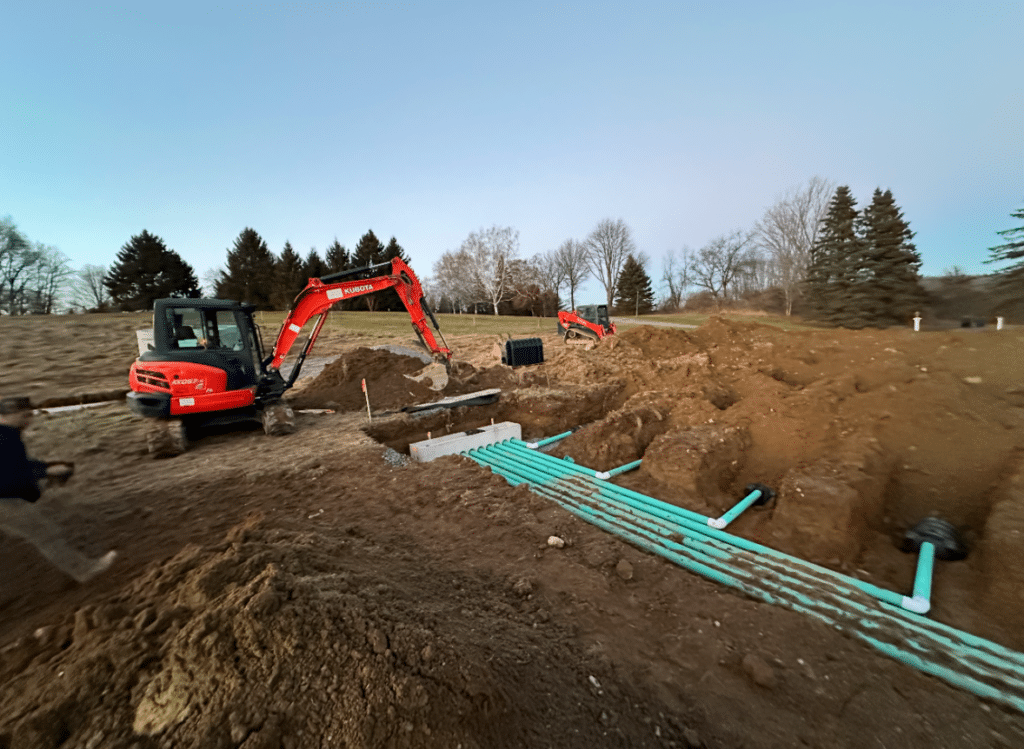
Consider reshaping your yard’s landscape. A professional excavator can gently regrade the soil around your home, creating subtle slopes that guide heavy rainwater completely around your septic field instead of allowing it to pool on top. Planting a healthy layer of dense grass over the drainfield also helps, as the roots absorb excess moisture and hold the soil firmly in place.
Regular maintenance is your best defense. Keeping your tank on a strict pumping schedule ensures that the solid waste layer never builds up high enough to easily escape into the drainfield during a high-water event. You can learn more about the biology of these systems by reading about wastewater management through the Environmental Protection Agency (EPA) or checking out clean water initiatives via the National Environmental Health Association (NEHA).
The Value of Local Expertise
Every region has unique soil characteristics. The glacial till and mountain soils found here in Lackawaxen, Pennsylvania, handle water completely differently than the sandy loam found in coastal regions. That is why working with a local specialist matters.
A local service provider understands the regional geography, the climate patterns, and the specific challenges homeowners face during heavy mountain storms. They can pinpoint structural weaknesses in your system and provide real, long-lasting solutions tailored exactly to your property.
Key Takeaways
-
Saturated Soil: Heavy rain fills the ground with water, leaving your septic wastewater with nowhere to go and causing immediate backups.
-
Stop Water Use: The moment you suspect an overflow, stop running all major appliances, showers, and faucets to prevent adding liquid to a full tank.
-
Skip Emergency Pumping: Never pump a septic tank while the ground is waterlogged, or the entire tank could float upward and break your plumbing.
-
Avoid Chemical Treatments: Keep harsh chemicals and additives out of your drains; they destroy the vital bacteria needed to process waste.
-
Divert Runoff: Move roof downspouts and surface drainage pathways far away from your absorption field to help the soil dry out faster.
-
Watch for Hazards: Treat indoor sewage backups as strict biohazards, keeping family members away and disconnecting nearby power if necessary.
Don’t Wait for the Next Storm—Secure Your Septic System Today
Dealing with a septic failure after a major storm is incredibly stressful, but you do not have to handle it alone. At Triple J Services, we provide the reliable, straightforward, and hard-working support our neighbors in Lackawaxen, Pennsylvania, depend on. Whether you are facing an urgent drainage crisis right now or want to prevent the next big backup with proactive maintenance, our team is ready to step in.
Get to know our local roots and commitment to quality on our About Us page. To see how we can assist with septic care, site preparation, and professional property drainage solutions, explore our comprehensive Services page. Contact Triple J Services today, and let’s make sure your home is fully prepared for whatever the weather throws our way.