Your septic system is one of the most vital parts of your home’s infrastructure. Yet, for many homeowners in Lackawaxen, Pennsylvania, it remains out of sight and out of mind until something goes wrong. When issues do arise, they can trigger immediate panic. You might wonder if a sudden odor signals a financial disaster, or if a long-neglected tank is on the verge of a catastrophic backup.
At Triple J Services, we believe that understanding how your waste infrastructure functions is the best defense against costly repairs. Homeowners frequently approach us with specific concerns regarding their lawns, indoor air quality, cleaning habits, and maintenance schedules.
To help you protect your investment, we have gathered our team of local specialists to answer four of the most critical questions we receive about septic performance and safety.
Will a Septic Failure Ruin My Professional Landscaping?
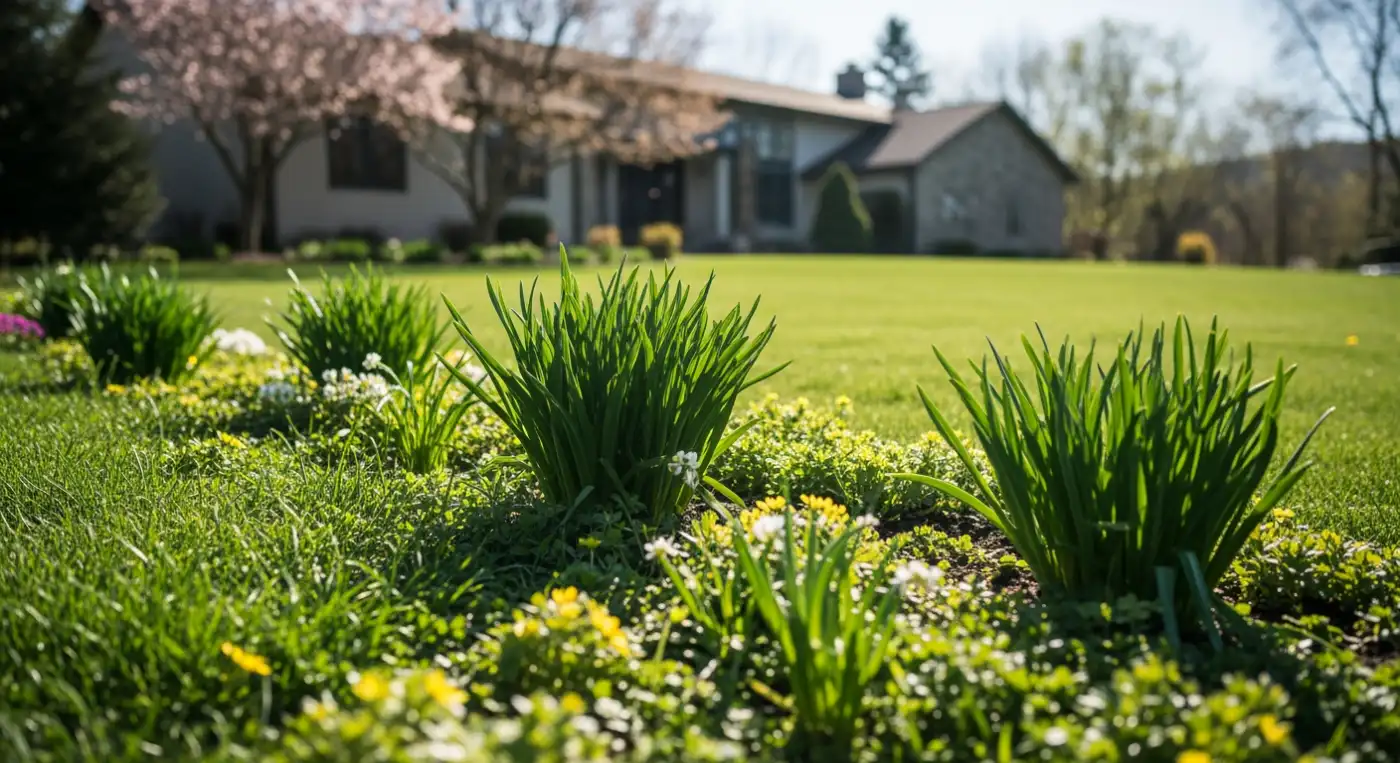
Investing in high-end professional landscaping elevates your property’s curb appeal and increases its overall value. However, if your disposal field or tank begins to fail underneath that pristine lawn, the consequences for your gardens, trees, and hardscaping can be severe.
Surface Flooding and Soil Saturation
When a structural or operational failure occurs, wastewater can no longer drain away properly. Instead, it backs up and forces its way upward toward the surface of your yard. This creates areas of standing water, thick black slime, and perpetually soggy soil.
Most ornamental grasses, shrubs, and flowers cannot survive in waterlogged dirt. The excess moisture cuts off oxygen supply to the roots, leading to root rot and the rapid death of your expensive plants.
Contamination and Soil Damage
The liquid leaving a malfunctioning system is not clean water. It is untreated effluent loaded with bacteria, household chemicals, and solid organic matter.
As this sludge saturates your lawn, it alters the chemical composition of the soil. It can deposit thick layers of scum that suffocate turfgrass and contaminate vegetable gardens or flowerbeds, making the area hazardous to work in or enjoy.
Heavy Equipment Destruction
The damage to your landscaping is not caused solely by the wastewater itself. It also stems from the physical process required to fix the issue.
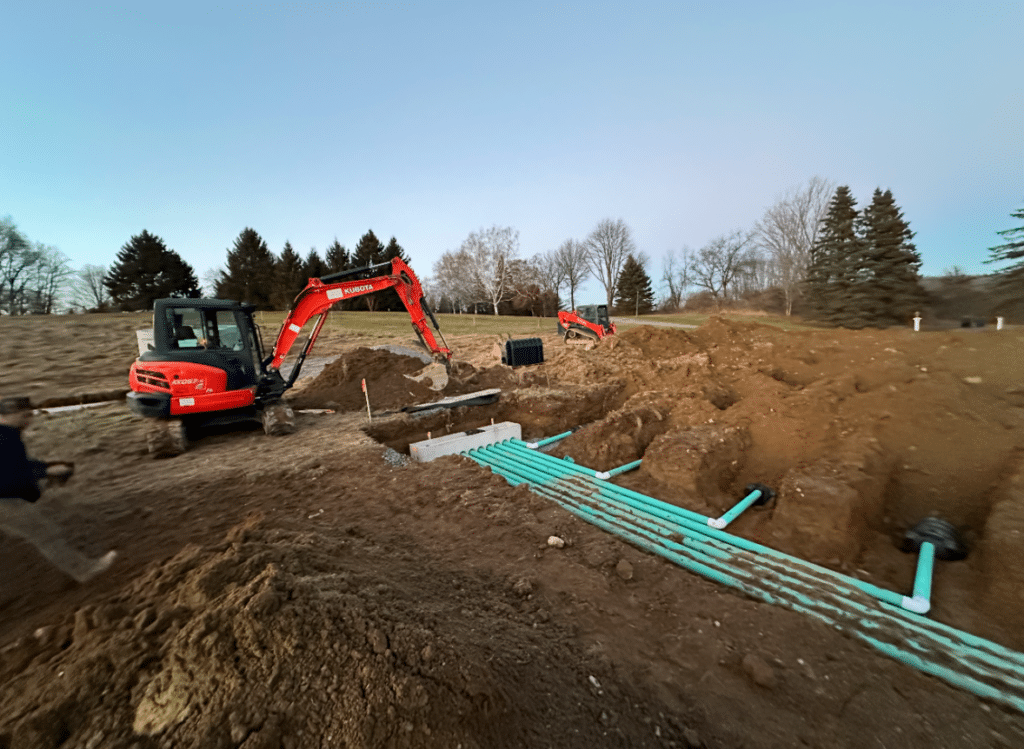
Repairing a broken pipeline, replacing a cracked tank, or completely replacing a failed absorption area requires heavy excavating machinery. Backhoes and dump trucks must drive across your property, which can crush custom stone pathways, destroy flowerbeds, and leave deep ruts in manicured lawns.
How to Safely Landscape Near Your Drainfield
You do not have to leave your yard completely barren to protect your utility lines. You simply need to choose the right plants and layout.
-
Select Shallow-Rooted Plants: Plant low-maintenance turfgrass, perennials, or annual flowers over your absorption area. Their shallow roots stabilize the topsoil without invading underground pipes.
-
Keep Trees and Large Shrubs Far Away: Plant large trees and aggressive shrubs at a distance equal to their expected mature height. This prevents roots from breaking through concrete or clogging perforated pipelines.
-
Avoid Hardscaping over the Infrastructure: Never build patios, decks, driveways, or sheds over any part of your waste management system. Weight from these structures compresses the soil, restricts oxygen flow needed for natural water treatment, and completely blocks physical access for maintenance crews.
The Truth About Sewage Smells Inside the House?
Noticing a foul odor indoors can be deeply unsettling. A distinct sewage scent is a clear sign that something in your home’s waste network is failing to contain gases. Understanding where these smells originate can help you address the issue before it escalates into a sanitary emergency.
Dried Out P-Traps
Every plumbing fixture in your home—including sinks, showers, toilets, and floor drains—features a U-shaped pipe underneath called a P-trap. This curve is designed to permanently hold a small amount of water. This water trap acts as a physical barrier that blocks underground gases from rising back up into your living spaces.
If you have a guest bathroom, a wet bar, or a basement floor drain that is rarely used, the water inside that trap can completely evaporate over time. When the barrier disappears, foul-smelling gases flow freely out of the drain.
Fortunately, this is an easy fix. Running fresh water down every unused drain for one to two minutes will refill the P-trap and block the odor instantly.
Clogged Plumbing Vents
Your home features a network of ventilation pipes that extend upward through the attic and exit out of the roof. These vents fulfill two primary roles. They allow sewer gases to vent out safely above your house, and they introduce fresh air into the system so that water drains smoothly.
If birds build a nest in the roof vent, or if autumn leaves and winter ice accumulate over the opening, the trapped gases cannot escape into the atmosphere. With nowhere else to go, the pressure forces these stinky fumes backward through your drains and directly into your rooms.
Keeping roof lines clear of debris and installing simple mesh vent caps will keep your airflow moving in the right direction.
Loose Toilet Wax Rings
Toilets are securely bolted to the bathroom floor, but they rely on a thick, pliable wax ring underneath to create a gas-tight and water-tight seal with the sewer pipe. Over time, as a toilet shifts or ages, this wax ring can dry out, shrink, or crack.
Even if you do not notice liquid leaking onto the bathroom tile, a compromised wax ring can allow sewer air to seep into the room from beneath the base of the toilet fixture. If a toilet rocks slightly when you sit down, or if the smell is concentrated around the base, the wax ring likely needs to be replaced.
Internal Tank Backups
The most serious cause of an indoor odor is a physical backup within the main tank or line. When a tank fills beyond its operational capacity or experiences a downstream blockage, gasses and liquids are pushed back toward the house.
This symptom often appears alongside slow-draining sinks or gurgling sounds coming from your pipes when you flush a toilet. If fixing dry traps and clearing vents does not solve the odor, you need a professional to inspect the main line.
Does Bleach Kill My Septic System? How Much Is Safe to Use?
The short answer is yes: excessive amounts of bleach will kill the biological ecosystem inside your tank. However, using small amounts for normal household cleaning will not destroy your system. To protect your home’s plumbing, it helps to look at how these chemicals interact with the waste treatment process.
The Role of Bacteria in Waste Management
A septic tank is not just a storage container; it is a living biological treatment chamber. Every time waste leaves your home, it carries millions of natural, beneficial bacteria into the underground tank. These microscopic organisms immediately go to work breaking down solid waste, toilet paper, and organic matter.
This natural decomposition separates waste into three distinct layers:
-
The Scum Layer: Lightweight oils, grease, and fats that float to the very top.
-
The Sludge Layer: Heavy solids that settle to the bottom of the concrete tank.
-
The Effluent Layer: Clarified liquid in the middle that flows out to the secondary absorption field.
Without these active bacteria, solids do not break down. They quickly fill the tank, slip into the outflow lines, and permanently clog the soil pores in your yard.
How Bleach Disrupts the System
Chlorine bleach is a powerful antimicrobial chemical engineered specifically to sanitize surfaces by wiping out bacteria. When you pour large quantities of concentrated bleach down your drains, it does the exact same thing underground. It sanitizes your tank, wiping out the beneficial bacteria necessary for waste processing.
Safe Usage Guidelines for Homeowners
You do not need to banish bleach from your laundry room entirely to keep your home running smoothly. The key is moderation and dilution.
-
Normal Laundry Loads Are Safe: Washing a single load of white clothes with a standard cup of bleach will not ruin your system. By the time that chemical mixes with the hundreds of gallons of water stored in your tank, it becomes highly diluted and loses its destructive power.
-
Avoid Consecutive Bleach Cycles: Do not run multiple bleach-heavy wash loads back-to-back on the same day. Spread your heavy cleaning across the week to give the bacterial colony time to recover.
-
Skip Chemical Toilet Rims: Avoid using continuous-release toilet bowl cleaners that sit inside the flush tank and release chlorine or blue dyes with every single flush. This constant chemical drip kills bacteria before they can even reach the main tank.
-
Switch to Safer Alternatives: For routine bathroom and kitchen sanitizing, consider using mild soap, baking soda, white vinegar, or specialized green products labeled safe for residential waste systems.
I Haven’t Pumped My Tank in 10 Years: Am I in Immediate Trouble?
If a decade has passed since your last service visit, you are living on borrowed time. While your plumbing might seem to function perfectly right now, an unpumped tank represents a serious structural risk that could fail without warning.
The Problem with Hidden Sludge Accumulation
Even a highly efficient biological ecosystem cannot dissolve every solid that enters the chamber. Heavy materials, dirt, bones, and non-biodegradable particles sink to the bottom and form a permanent layer of sludge.
As the years pass, this layer rises higher and higher. Because the tank has a fixed total volume, a rising sludge layer leaves less room for wastewater. This significantly reduces the time liquid spends inside the tank, preventing solids from settling out properly.
The Threat of Clogged Absorption Fields
When sludge fills the tank, incoming wastewater moves through the chamber too quickly. Instead of settling at the bottom, solid waste particles remain suspended in the liquid and flow out into your drainfield.
These fine solids plug up the perforations in your underground pipes and seal off the surrounding soil. Once the ground is clogged with solid waste, it can no longer filter or absorb liquid. This can trigger sewage backups inside your home or create flooded areas in your backyard.
High Repair Costs vs. Maintenance Costs
Cleaning out a clogged absorption field or replacing an entirely ruined soil bed is an expensive process that can cost thousands of dollars. In comparison, a routine maintenance visit to clear out accumulated sludge costs a fraction of that amount. Skipping regular service to save a few dollars short-term often leads to major repair bills down the road.
Recommended Pumping Frequency
The exact timeframe for servicing your system depends on your household size, water use, and the overall size of your tank. As a general rule, a standard family home should have its tank cleaned every three to five years.
If you have gone ten years without service, you should schedule a professional inspection immediately. A specialist can measure your current sludge levels, evaluate the structural integrity of your tank, and clear out accumulated solids before they ruin your drainage field.
Summary
-
Landscaping Risks: Malfunctioning wastewater networks cause surface flooding and root rot. Heavy machinery needed for repairs can tear up your yard, so stick to shallow-rooted grass and flowers over your lines.
-
Indoor Odor Causes: Foul sewer odors inside the home usually point to dry P-traps, blocked roof vents, or worn-out toilet wax seals rather than a complete system failure.
-
Bleach Management: While large quantities of bleach destroy the beneficial bacteria that break down solids, occasional small amounts used in laundry are safe because they dilute quickly.
-
The Danger of Neglect: Waiting ten years between pumpings allows heavy sludge to build up. This sends solid waste into your absorption lines, which can clog the surrounding soil and cause a major backup.
Take Action to Protect Your Property
Do not wait for an unexpected plumbing emergency to find out if your system is working correctly. Whether you are dealing with a strange smell in the bathroom or realizing it has been years since your last service visit, the local team at Triple J Services is here to help.
We provide reliable diagnostic inspections, routine maintenance, and repair services throughout the Lackawaxen, PA area. Explore our history on our About Us Page or view our full line of residential solutions on our Services Page. Contact us today to secure your home’s infrastructure! Contact Triple J Today