Building a deck in the Poconos is a dream for many homeowners. Our region offers stunning views and a perfect climate for outdoor living. However, beneath that beautiful Lackawaxen landscape lies a complex network of infrastructure. If you are planning a new outdoor space, you must look down before you look up.
Triple J Services, based in Lackawaxen, PA, sees many homeowners overlook the “hidden” parts of their property. Your backyard isn’t just dirt. It contains septic tanks, leach fields, and utility lines. Hitting these during construction can lead to thousands of dollars in damages.
The Unique Challenges of Poconos Terrain
The Poconos region is known for its rocky soil and specific drainage needs. Most homes here rely on private septic systems rather than municipal sewers. This means your backyard is essentially a small-scale waste treatment plant.
When you dig footings for a deck, you are entering a danger zone for underground pipes. A single misplaced post can pierce an effluent line or crack a septic tank lid. Understanding the layout of your septic system is the first step in any construction project.
Identifying Your Septic Infrastructure
You cannot build a deck directly over a septic tank or a leach field. Most local codes and safety standards require a specific setback. This is because the weight of a deck can crush pipes or compact the soil in your drainage area.
The Septic Tank
Your septic tank is the heart of the system. It needs to be accessible for emergency septic pumping and routine maintenance. If you build a deck over the access lids, you make it impossible for a service truck to reach the tank. You would have to tear up your new deck just to get a routine pump-out.
The Leach Field and Turkey Mounds
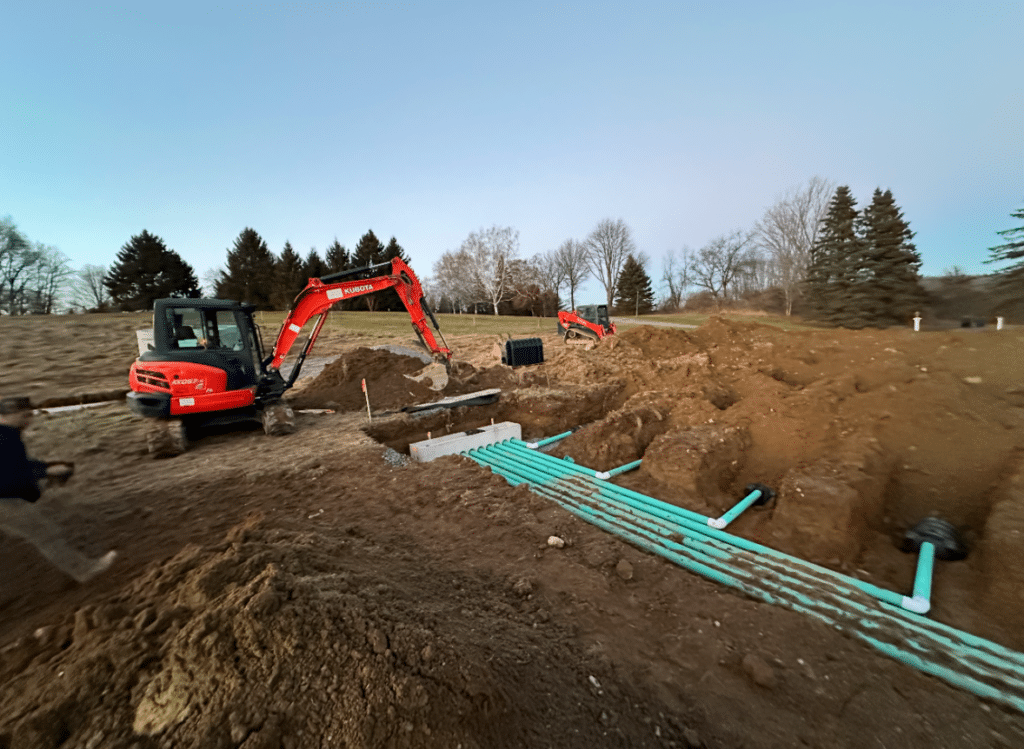
In the Poconos, many homes use “Turkey Mounds” or raised leach fields due to the high water table. These areas are incredibly sensitive. Compacting the soil with heavy lumber or deck footings will kill the bacteria that treat your wastewater. If the leach field fails, you are looking at a full leach field repair or installation, which is a major excavation project.
Grinder and Effluent Pumps
If your yard has an uphill slope, you likely have a grinder pump or an effluent pump. These pumps move waste from the house to the mound. The electrical lines and high-pressure pipes for these pumps are often buried just a few feet underground. Striking these can cause an immediate sewage backup into your home.
Navigating Utility Lines Safely
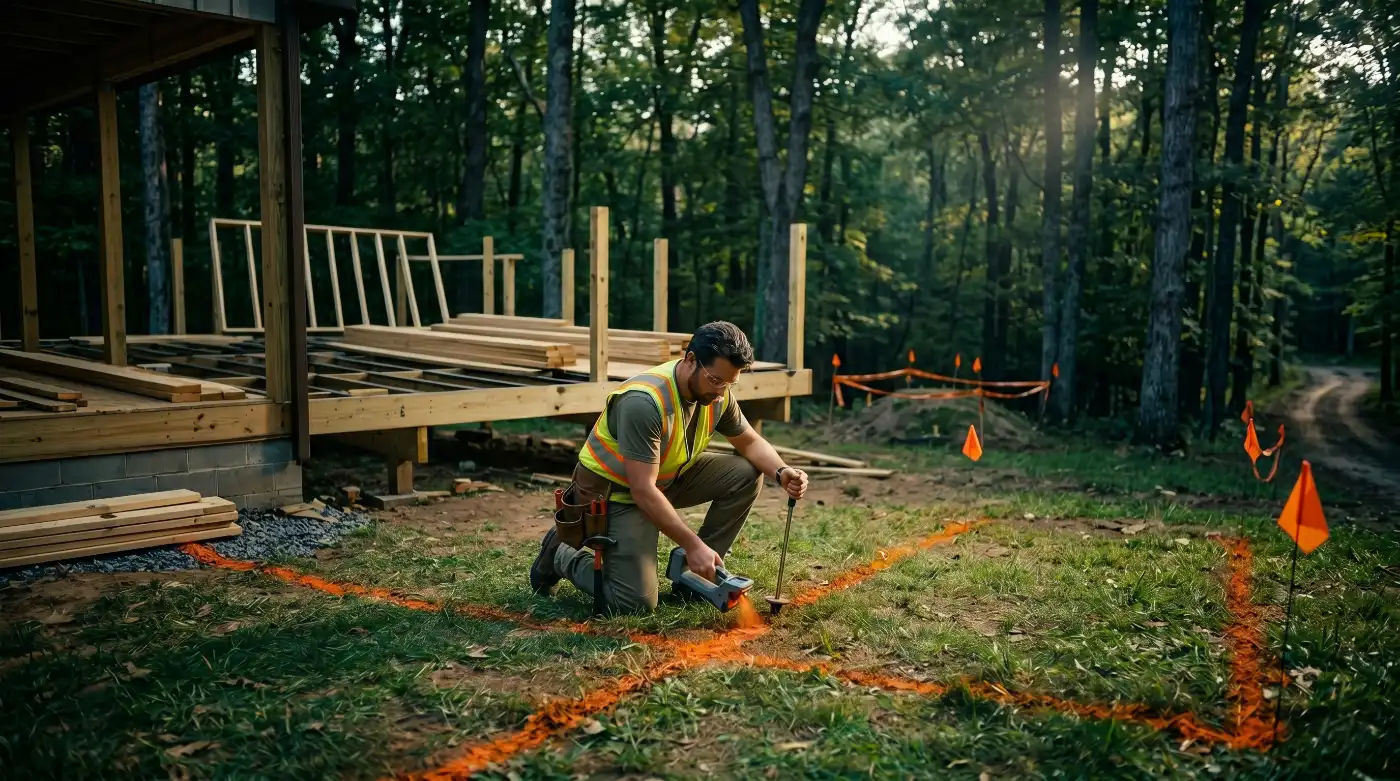
Septic lines aren’t the only concern. Power, water, and gas lines often crisscross the backyard. In Pennsylvania, calling 811 is a legal requirement before you dig. However, 811 only marks public utility lines. They generally do not mark private septic lines or secondary water lines.
This is where excavation and utility trenching experts come in. Triple J Services helps homeowners identify where their specific lines run. We use specialized equipment to map out the path from your house to your septic tank and beyond.
The Danger of Soil Compaction
Heavy machinery is often used to move materials for deck building. Even if you aren’t digging directly over a pipe, the weight of a skid steer or a delivery truck can cause damage.
Septic systems rely on porous soil to filter liquid waste. When heavy weight is applied, the air pockets in the soil collapse. This prevents the “perc” (percolation) process. Once soil is compacted, it can rarely be fixed without full replacement. Always keep heavy equipment away from the designated septic area.
Designing Your Deck Around the Septic System
You don’t have to cancel your deck plans just because you have a septic system. You simply need to design with the underground reality in mind.
-
Maintain Access: Ensure there is a clear path for a pumper truck to get within 50 to 100 feet of your tank.
-
Respect Setbacks: Most regulations suggest a 5 to 10-foot setback from the tank and at least 15 feet from the leach field.
-
Cantilever Designs: If you want the deck close to the septic area, consider a cantilevered design. This allows the deck to “hang” over an area without putting weight-bearing footings into sensitive soil.
-
Removable Panels: If a portion of your deck must be near a tank lid, build that section with removable panels. This allows for septic system inspections without destroying the structure.
Drainage Solutions for New Construction
Adding a deck changes how rainwater flows across your yard. If the deck causes water to pool near your septic tank, you could flood the system. This can lead to a “saturated” leach field that won’t take any more liquid.
Triple J Services provides French drains and drainage solutions to prevent this. We can install systems that redirect gutter runoff and deck drainage away from your septic components. Proper water management is essential to the longevity of both your deck and your waste system.
Clearing the Way: High-Pressure Jetting
Before you start a major project, it is a great time to ensure your current pipes are in good shape. High-pressure drain jetting, also known as hydro-jetting, clears out years of buildup in your lines.
If you are going to be building near your main sewer line, you want to know it is flowing perfectly. Hydro-jetting uses intense water pressure to scrub the inside of the pipes. This is much safer than traditional snaking, which can sometimes damage older or more fragile Poconos pipes.
Why You Need a Septic Inspection First
A septic system inspection should be your first “call” after talking to a deck contractor. At Triple J Services, we can locate your tank, probe the lines, and tell you exactly where it is safe to dig.
According to the Environmental Protection Agency (EPA), regular inspections are the best way to prevent system failure. Doing this before a deck build ensures you aren’t building a beautiful structure over a system that is about to fail.
Moving a Septic Line or Component
Sometimes, the perfect deck location is right where a pipe currently sits. In these cases, utility trenching and septic installation services can sometimes relocate lines.
While you can’t easily move a whole “Turkey Mound,” moving a transport line or a pump station is often possible. This requires professional excavation and a deep understanding of gravity-fed vs. pressure-dosed systems. Our team at Triple J Services handles the permits and technical requirements for these adjustments.
Managing Underground Water Lines
Many Poconos homes have wells. The water line from the well to the house often runs through the same area as the septic system. These lines are usually made of plastic and are easily crushed or cut by an auger.
When we perform utility trenching, we map these out to ensure your home doesn’t lose water during your deck project. Maintaining a clear separation between your water and waste lines is vital for health and safety.
Long-Term Maintenance Post-Construction
Once your deck is finished, don’t forget about the system beneath it. It is easy to “forget” about a septic tank once it is hidden by beautiful landscaping or a nearby deck.
Keep a map of your system’s location inside your home. Ensure no one ever plants trees with aggressive roots near the leach field, as these can grow into the pipes. Continue with your scheduled effluent pump service to keep the system moving.
Expert Excavation in Lackawaxen
Choosing a local expert matters. Triple J Services knows the specific soil conditions of Lackawaxen and the surrounding Poconos area. We understand how the freeze-thaw cycle affects underground pipes in Pennsylvania.
We are a family-oriented business focused on protecting your property. Whether you are building a small porch or a massive wrap-around deck, our goal is to ensure your underground utilities remain safe and functional. You can learn more about the importance of professional excavation on trade sites like Equipment World.
Final Preparation Checklist
Before the lumber arrives, make sure you have checked these boxes:
-
Called 811 for public utilities.
-
Had a private septic system inspection to mark your tank and field.
-
Identified the location of any grinder or effluent pumps.
-
Verified that your deck footings are not within the “setback” zone of your septic mounds.
-
Checked for drainage issues that might affect the leach field.
Article Recap: Poconos Building
-
Site Awareness: Always locate septic tanks and leach fields before designing a deck to avoid crushing underground components.
-
Accessibility: Never build over septic lids; pumper trucks need clear access for emergency septic pumping.
-
Leach Field Safety: Avoid “Turkey Mounds” and drainage areas to prevent soil compaction and system failure.
-
Private Utilities: Remember that 811 does not mark septic lines or private water lines; professional locating is required.
-
Drainage: Redirect deck runoff away from the septic area using French drains to prevent system flooding.
-
Professional Inspection: A pre-construction inspection ensures you aren’t building over a failing or compromised system.
-
Weight Limits: Keep heavy machinery away from septic areas to protect the porous soil needed for wastewater treatment.
Ready to Start Your Poconos Project?
Don’t risk your home’s infrastructure for a new deck. At Triple J Services, we specialize in the “underground” work that makes your “above-ground” dreams possible. From septic inspections and pumping to professional excavation and hydro-jetting, we serve Lackawaxen and the greater Poconos area with expertise you can trust.
Contact Triple J Services today to schedule an inspection and ensure your deck build is safe from the ground up.