If you are a homeowner in Lackawaxen, PA, or the surrounding Pocono region, you likely enjoy the privacy and independence that comes with living in a rural or semi-rural area. However, that independence comes with specific responsibilities. One of the most important is managing your own waste through a septic system.
When the time comes to upgrade your property by paving your driveway, it is easy to get caught up in choosing between asphalt and pavers. You might be dreaming of a smooth, mud-free entrance to your home. But before the first piece of heavy equipment arrives, there is one non-negotiable step: you must locate and mark your septic tank and drain field.
At Triple J Services, we have seen firsthand how a lack of preparation can turn a home improvement project into a multi-thousand-dollar disaster. We pride ourselves on helping our neighbors navigate these technical hurdles safely. Understanding the layout of your underground utilities is the difference between a successful paving job and a destroyed septic system.
The Hidden Danger Beneath Your Tires
Most people think of their driveway as a simple surface. In reality, it is a structural element that exerts significant pressure on the ground beneath it. When you add the weight of a paving machine, a loaded dump truck, or a steamroller, that pressure increases exponentially.
Septic tanks are not designed to support the weight of heavy machinery or permanent structures like driveways. Most residential tanks are made of concrete, fiberglass, or polyethylene. While they are sturdy enough to hold waste and withstand the weight of soil and a lawnmower, they are not reinforced for traffic.
If a contractor accidentally drives a heavy truck over your tank, several things can happen. The lid can crack, the tank walls can collapse, or the inlet and outlet pipes can be severed. Even worse, the weight can compact the soil in your drain field, which is a much more expensive fix than just replacing a tank.
Understanding Your Septic System Layout
Before you start your paving project, you need to understand the two main components of your system: the tank and the absorption field (also known as the leach field or drain field).
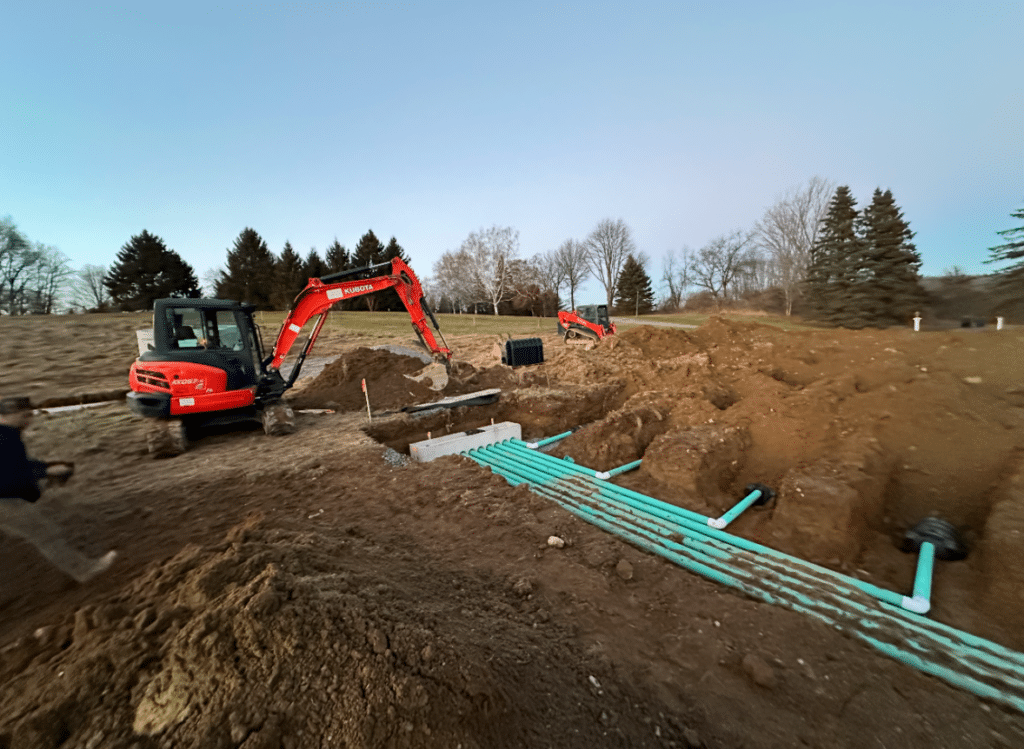
The septic tank is where the solids settle. It is usually located relatively close to where the main sewer line exits your house. From the tank, the liquid effluent flows into the absorption field. This field consists of a series of perforated pipes buried in trenches filled with gravel or sand.
The absorption field relies on porous soil to filter and treat the liquid. If you pave over this area, or even just drive over it with heavy equipment, you compact that soil. Once the soil is compacted, it loses its ability to absorb liquid. This leads to sewage backups in your house or “swampy” spots in your yard.
Why Driveways and Septic Systems Clash
In Pennsylvania, specifically in hilly areas like Lackawaxen, space on a lot can be limited. Over the years, property lines change, additions are built, and the exact location of the septic system might be forgotten.
Sometimes, an old gravel driveway was placed too close to a septic line. While a car driving on gravel once a day might not cause immediate failure, the process of paving—which involves heavy excavation and massive vibration—will finish the job.
Compaction is a silent killer for septic systems. According to the Environmental Protection Agency (EPA), protecting your drain field from heavy traffic is one of the most critical aspects of system maintenance. Paving creates a permanent “cap” over the soil, preventing the evaporation and oxygen exchange necessary for the system to function.
How to Locate Your Septic Tank
If you don’t have a map of your system, you have a few ways to find it. Start by looking at your property’s “as-built” drawing. This is a blueprint of your home and utilities that is often filed with the local municipality or the county health department.
If those records are missing, look for visual clues.
-
The “Main Drain”: Find where the 4-inch sewer pipe leaves your basement or crawlspace. The tank is usually 10 to 20 feet away from the house in a straight line from that pipe.
-
Unusual Grass Growth: Sometimes the grass over a septic tank is greener, or in dry summers, it might turn brown faster because the soil is shallower.
-
Depressions or Mounds: A slight dip in the yard or a small mound can indicate where the tank was buried.
-
Probing: You can use a thin metal soil probe to gently “feel” for the concrete lid of the tank about 2 to 4 feet underground.
If you are still unsure, it is worth hiring a professional. At Triple J Services, we emphasize the importance of knowing your property before starting any major earth-moving work.
The Risks of Paving Without a Plan
What happens if you ignore this advice? The consequences are rarely minor.
A collapsed septic tank is an environmental and health hazard. It requires emergency excavation and replacement. If the pipes leading to the drain field are crushed, you might have to relocate the entire field. In Pennsylvania, relocating a drain field often requires new soil testing (perc tests) and permits, which can take weeks or months.
Additionally, most paving warranties do not cover damage caused by sinking soil or collapsing structures beneath the asphalt. If your tank fails six months after the driveway is finished, you will have to tear up your brand-new pavement to fix the septic system. You end up paying for the driveway twice.
How to Protect Your System During Paving
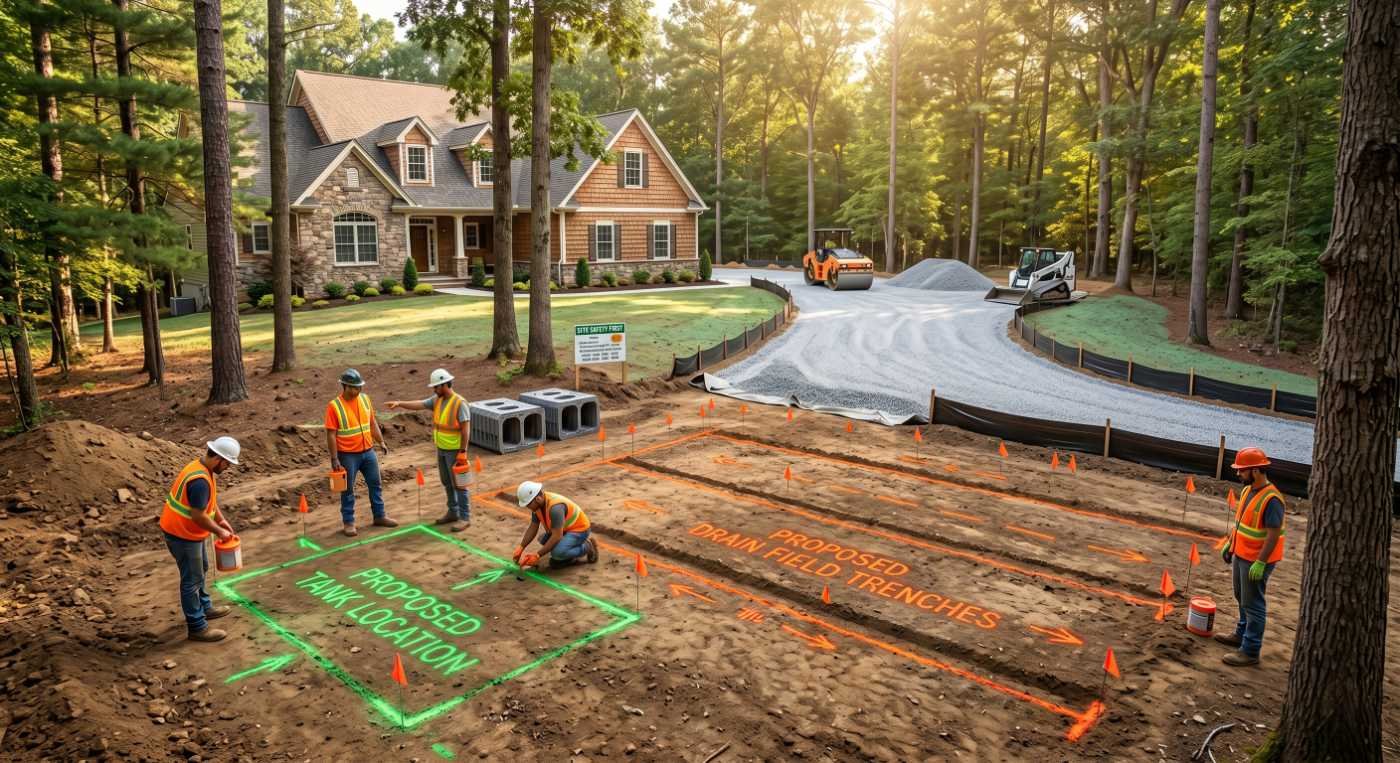
Once you have located your tank and field, you must mark them clearly. Use bright neon spray paint or tall stakes with flags. Make sure every worker on the job site knows that those areas are “off-limits” for trucks and equipment.
If your new driveway must pass near the septic tank, you may need to install a “bridge” or reinforced concrete slab over the area to distribute the weight. However, it is always better to reroute the driveway entirely if possible.
You should also check the depth of your lines. In some cases, pipes might be only 12 inches below the surface. A standard skid-steer loader used in paving prep can easily crush these lines.
The Triple J Services Professional Approach
We don’t believe in “guessing” when it comes to your home’s infrastructure. When we discuss a project with a client, we walk the property to identify potential conflicts. We look at the slope of the land, the location of the well, and the likely path of the septic lines.
Our team in Lackawaxen understands the local geology. We know that the rocky soil in the Poconos can sometimes mask the location of underground tanks. We work with you to ensure that your new driveway enhances your property without endangering its most vital systems. You can see our full range of excavation and site prep services to see how we handle these complexities.
Designing for Longevity
Paving is a significant investment. To make it last, the ground beneath it must be stable. If a septic tank is rotting or a leach field is failing, the soil above it will eventually shift. This causes the asphalt to crack and sink.
By locating your septic tank first, you have the opportunity to inspect it. If the tank needs pumping or the lid looks weak, it is much easier and cheaper to fix those issues before the paving starts. Think of it as a “pre-flight check” for your property.
Pennsylvania Regulations and Permits
In Pennsylvania, the Department of Environmental Protection (DEP) has strict rules regarding the proximity of structures to septic systems. Generally, you want to keep a “setback” of at least 10 feet between your septic tank and any permanent paving. For the drain field, that distance should be even greater to prevent compaction and runoff issues.
Ignoring these setbacks can lead to fines or problems when you try to sell your home. A home inspection during a real estate transaction will almost certainly flag a driveway that is built over a septic tank.
Choosing the Right Contractor
When you interview paving contractors, ask them how they handle septic systems. If they tell you “don’t worry about it” or “it shouldn’t be a problem,” that is a red flag. A reputable contractor will insist on knowing the location of your utilities.
A professional will help you plan the “path of least resistance.” This might involve making the driveway slightly narrower in certain spots or using different materials over sensitive areas.
Environmental Stewardship in Lackawaxen
Maintaining a healthy septic system isn’t just about saving money; it’s about protecting the beautiful environment we live in. Lackawaxen is home to pristine waterways and diverse wildlife. A failing septic system leaks nitrates and bacteria into the groundwater, which eventually finds its way into our local streams and the Delaware River.
By taking the time to locate your tank and protect your drain field, you are doing your part to keep Pennsylvania clean for future generations.
Recap of Septic Safety and Paving
-
Weight Sensitivity: Septic tanks and drain fields cannot support the heavy machinery used in paving.
-
Compaction Issues: Driving or paving over a drain field ruins the soil’s ability to filter waste.
-
Locating Tactics: Use “as-built” blueprints, look for sewer exit points, or hire a pro with a probe.
-
Mark the Zone: Use flags and paint to create “no-go” zones for construction equipment.
-
Cost of Failure: Tearing up a new driveway to fix a crushed tank is a massive financial loss.
-
Setback Rules: PA regulations often require specific distances between paving and septic components.
-
Pre-Paving Inspection: Locating the tank gives you a chance to pump and inspect it before it’s covered.
-
Site Evaluation: Triple J Services provides expert site assessments to identify underground risks.
Ready to Upgrade Your Property Safely?
A new driveway should be a source of pride, not a source of stress. At Triple J Services, we have the local expertise and the equipment to handle your paving prep, excavation, and site work with the care your property deserves. We know Lackawaxen, we know the Poconos, and we know how to protect your home’s infrastructure.
Don’t leave your septic system to chance. Let the professionals help you plan a project that lasts.
Contact Triple J Services Today for a consultation on your next paving or excavation project.