Private wells provide clean, crisp drinking water to millions of homes across the Keystone State. If you live in a rural area or a small mountain community, owning a private well offers incredible independence. You are completely free from municipal water bills and chemical treatment facilities.
However, this independence brings personal responsibility. Unlike public city water grids, private residential wells are not regulated or monitored by government agencies. The safety of your family’s drinking water rests entirely on your shoulders.
Groundwater paths change constantly. Hidden contaminants can slip into your aquifer without ever changing the look, smell, or taste of the liquid pouring from your kitchen faucet. Regular testing is the only definitive way to ensure your water remains perfectly safe to drink.
The Reality of Well Water Safety in Pennsylvania
Many homeowners assume that if their water looks crystal clear and tastes fine, it must be safe. This is a dangerous misconception. The most hazardous environmental contaminants found in Pennsylvania groundwater are completely invisible and completely odorless.
Pennsylvania is one of the few states in the nation that does not enforce statewide construction or testing regulations for private residential water wells. This regulatory gap means that structural well maintenance and regular safety assessments are left completely up to individual property owners.
Environmental data shows that a staggering number of private wells in Pennsylvania fail at least one health-based safety standard. Runoff from agricultural fields, naturally occurring underground mineral deposits, and old septic systems can easily degrade your water supply. Testing your well protects your household health and preserves your long-term property value.
When Should You Schedule a Well Water Test?
As a baseline safety practice, you should test your well water at least once every single year. Routine annual monitoring helps you establish a clear data baseline, making it easy to spot subtle changes in your aquifer over time.
Beyond your annual checkup, specific environmental warning signs require immediate testing. If you notice a sudden shift in the color, clarity, or odor of your tap water, stop drinking it until you complete a full lab analysis.
Weather events also impact well safety. Severe local flooding can wash surface bacteria, agricultural waste, and loose debris straight down your well casing. Always test your system immediately after any major storm or flood event.
Furthermore, pay close attention to your physical health. If anyone in your household experiences ongoing, unexplained digestive issues, contaminated water could be the culprit. You must also run a comprehensive water test before bringing a new baby home, as infants are highly vulnerable to specific chemical imbalances.
Finally, keep an eye on your local surroundings. If a neighbor installs a new septic tank close to your property line, or if a nearby commercial construction project requires deep digging, schedule a water test to ensure your subterranean pathways remain completely protected.
Top Contaminants to Test for in Pennsylvania
Groundwater composition varies dramatically from region to region. In Pennsylvania, well owners face a specific mix of naturally occurring minerals and man-made pollutants.
Total Coliform and E. coli Bacteria
Coliform bacteria are microbes found naturally in soils, surface waters, and warm-blooded animal waste. While some strains are harmless, their presence inside your well reveals that surface water or sewage is actively leaking into your drinking supply.
If a laboratory test finds Escherichia coli (E. coli) in your water sample, it means human or animal fecal waste has entered your well. These pathogens cause immediate, severe stomach pain, nausea, and dehydration.
Nitrates and Nitrites
Nitrates are chemical compounds found commonly in agricultural fertilizers, commercial lawn treatments, and residential sewage runoff. High levels of nitrates are incredibly dangerous for infants under six months of age.
When a baby drinks water high in nitrates, the chemicals disrupt the blood’s ability to carry oxygen safely. This leads to a dangerous condition known as Blue Baby Syndrome. Regular testing for nitrates is essential for any home with young children or pregnant women.
Lead and Copper
Lead and copper rarely occur naturally within deep groundwater aquifers. Instead, these heavy metals leach directly into your drinking water from aging household plumbing infrastructure.
If your home features copper pipes connected by older lead solder, acidic well water will slowly dissolve those metal joints over time. Long-term exposure to lead causes severe developmental delays in children and serious kidney damage in adults.
Total Dissolved Solids and Hardness
Hard water is caused by high concentrations of dissolved calcium and magnesium minerals. While hard water does not pose an immediate risk to your health, it ruins your household appliances.
Hard water leaves crusty white scales on your plumbing fixtures, clogs up your water heater elements, and leaves clothing looking dull. Testing your Total Dissolved Solids (TDS) helps you determine if your home requires a dedicated water softening system.
Understanding Local Acidic Water Challenges
The geographic terrain of northeastern Pennsylvania features distinct rock formations that directly influence the chemical balance of your water. Many homes in this region suffer from low pH levels, meaning the water is highly acidic.
Acidic water acts as a natural solvent. As it flows through your home’s internal copper lines and brass fixtures, it eats away at the metal. You can spot this problem easily by looking for distinct blue-green stains inside your porcelain sinks, bathtubs, and toilet bowls. Over time, this constant chemical wear creates pinhole leaks in your pipes, resulting in costly hidden water damage inside your walls.
A Reliable Step-by-Step Testing Process
Testing your well water does not have to be complicated. Following a clear, organized process ensures your results are accurate and actionable.
1. Select a State-Certified Testing Laboratory
Never rely on cheap, over-the-counter home testing strips for your family’s safety. These quick store-bought kits lack the sensitivity required to detect low, dangerous levels of heavy metals and chemical compounds.
Always utilize a professional laboratory certified by the Pennsylvania Department of Environmental Protection (DEP). Certified labs follow strict scientific protocols to provide completely accurate data. You can find an official registry of certified environmental testing facilities on the Pennsylvania Department of Environmental Protection website.
2. Obtain a Sterile Sample Kit
Contact your chosen laboratory or a trusted local service provider to request an official testing kit. The lab will provide specific, sterile plastic bottles along with detailed collection instructions.
Different contaminants require different container styles. For instance, a bacteria test requires a specialized sterile bottle containing a small stabilizing powder tablet. Never rinse out these bottles before collecting your sample.
3. Collect Your Water Sample Carefully
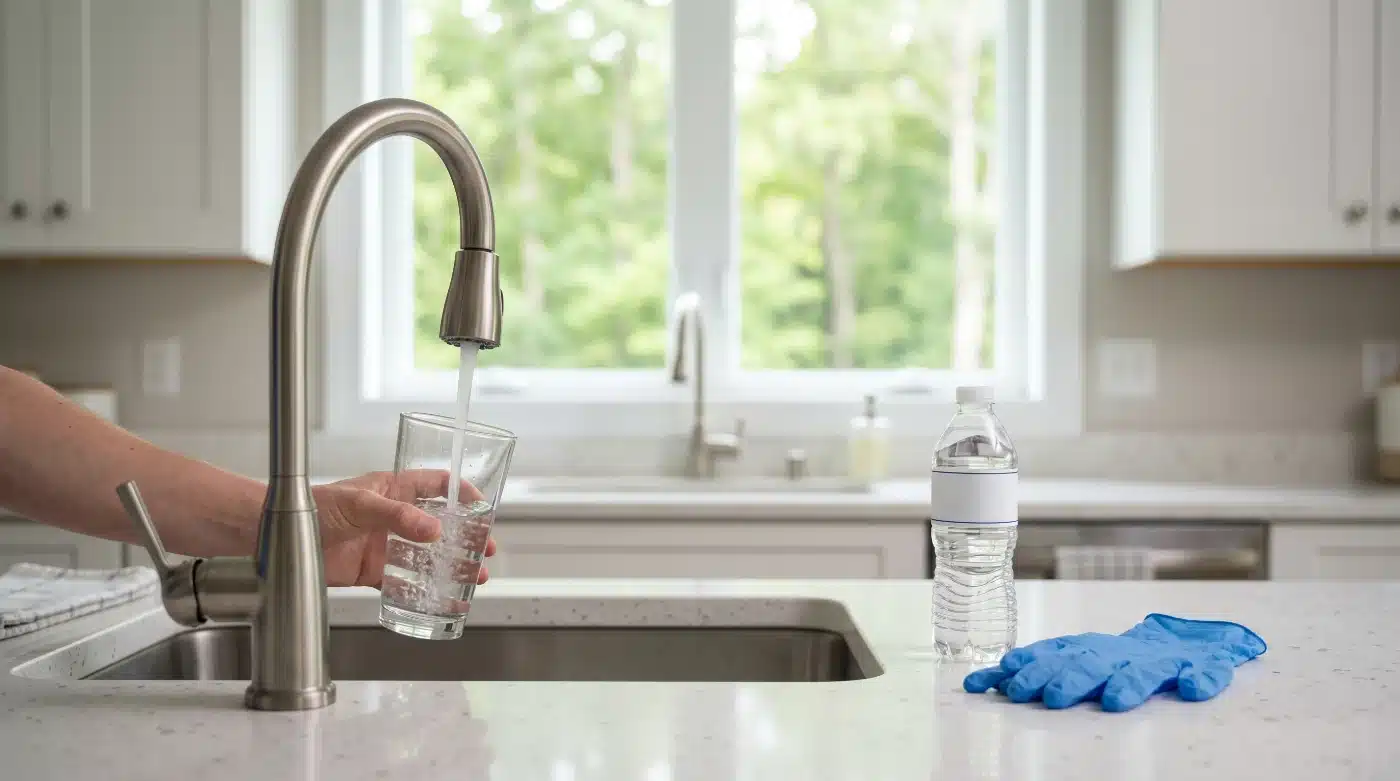
To get an accurate picture of your water safety, gather your sample directly from a primary indoor faucet, such as your kitchen sink.
-
Remove any aerator screens, mesh filters, or purification attachments from the tip of the faucet before starting.
-
Clean the faucet mouth thoroughly with isopropyl alcohol to kill any lingering surface bacteria.
-
Turn on the cold water valve and let it run at a steady pace for roughly five to ten minutes. This flushes out the stagnant water sitting inside your pipes and draws fresh water straight from the well.
-
Reduce the water flow to a thin, gentle stream to prevent splashing.
-
Open the sterile lab bottle carefully, making sure your fingers never touch the inside of the cap or the rim of the container.
-
Fill the bottle exactly to the marked fill line, secure the cap tightly, and write your name, date, and collection time clearly on the label.
4. Deliver the Sample Quickly
Many water contaminants degrade rapidly once exposed to light and air. Bacteria and nitrate samples must reach the laboratory analysis equipment within 24 to 30 hours of collection. Pack your sample bottles inside a insulated cooler with ice packs to keep the water chilled during transport.
Deciphering Your Official Water Laboratory Report
When your lab results arrive in the mail or via email, the document can look like a confusing wall of numbers and chemical symbols. To read the report correctly, compare your specific numbers against national safety benchmarks. You can review the complete index of national primary drinking water standards on the United States Environmental Protection Agency official platform.
Look closely at these three primary categories on your lab document:
-
The Parameter: This column lists the specific chemical, mineral, or microbe that the lab tested for, such as Lead or Total Coliform.
-
Your Result: This value shows the exact amount of that contaminant found inside your specific water sample, measured in milligrams per liter (mg/L) or parts per million (ppm).
-
The Maximum Contaminant Level (MCL): This is the maximum safe threshold established by environmental health scientists. If your personal result number is higher than the listed MCL number, your water requires immediate treatment before it is safe to use.
Tailored Local Expertise with Triple J Services
If your water report reveals high contaminant levels, or if you simply want a professional to handle the collection process safely, you do not have to figure it out alone. Operating directly out of Lackawaxen, Pennsylvania, Triple J Services understands the unique groundwater challenges faced by homeowners across Pike and Wayne counties.
We provide the local knowledge, technical skill, and responsive care needed to keep your residential water systems pristine. We help you protect your home foundation so you can enjoy total peace of mind every time you turn on your tap.
Professional Collection and Comprehensive Diagnostic Analysis
Our team takes the guesswork out of water safety. We come directly to your property to inspect your physical well infrastructure, check your pressure tank setup, and collect your water samples using pristine sterile techniques.
We handle the logistics of transport to certified laboratories, ensuring your samples arrive within strict temperature and time limits. Once the results are ready, we sit down with you to explain exactly what the numbers mean in plain, simple English.
Advanced Well Water Filtration and Custom Treatment Solutions
If your water test reveals a problem, we design a custom treatment system built specifically for your home’s unique water chemistry. We install high-performance filtration setups to address any residential challenge:
-
Whole-House Acid Neutralizers: We set up professional calcite filtration systems to raise your water’s pH level safely, stopping plumbing corrosion and eliminating blue-green sink stains.
-
Premium Water Softeners: We install advanced ion-exchange systems to remove heavy calcium and magnesium, protecting your water heater and keeping your appliances running efficiently.
-
Ultraviolet (UV) Purification Systems: We mount high-output UV light chambers that destroy 99.9% of harmful bacteria and viruses without adding harsh chemical tastes to your drinking water.
-
Specialized Iron and Sulfur Filters: We set up dedicated oxidation systems to eliminate stubborn metallic tastes and embarrassing rotten-egg sulfur odors from your tap.
To learn more about our complete line of residential plumbing and well care packages, explore our dedicated servicespage. Our team is fully committed to delivering reliable, clear, and long-lasting mechanical solutions to our neighbors throughout the Lackawaxen area.
Proactive Well Water Maintenance Strategies
Testing your water is an ongoing part of household management. Alongside your annual laboratory assessments, practicing proactive structural well maintenance helps prevent contaminants from entering your water supply in the first place.
Regularly walk out to your property line to inspect your physical well cap and casing. The protective well cap should sit securely at least twelve inches above the surrounding ground level, completely sealed against insects, rodents, and surface rainwater. The surrounding ground should slope downward away from the wellhead to ensure surface runoff drains far away from your underground shaft.
Additionally, never store household chemicals, lawn fertilizers, paints, or automotive fluids inside your well house or near your well casing. By combining structural awareness with annual laboratory testing, you can protect your local water supply and enjoy pure, refreshing well water for decades to come.
Key Takeaways: Well Water
-
Private Well Responsibility: Pennsylvania does not regulate private residential water wells; property owners are entirely responsible for their own water safety monitoring.
-
Annual Testing Mandate: Test your well water at least once every single year to establish a reliable baseline and catch invisible chemical variations early.
-
Watch for Environmental Triggers: Schedule an immediate water test after severe local flooding, nearby construction, or any sudden change in your water’s taste or smell.
-
Identify Invisible Threats: The most dangerous groundwater hazards—like nitrates, lead, and E. coli bacteria—are completely invisible and have no odor.
-
Local Acidic Challenges: Homes in northeastern Pennsylvania frequently suffer from low pH levels, which corrodes copper pipes and creates blue-green stains.
-
Insist on State Certification: Never trust your safety to cheap DIY home test strips; always use a state-certified laboratory for complete accuracy.
-
Deploy Target Solutions: If a test reveals a water imbalance, professional systems like UV purifiers or acid neutralizers can easily fix the issue.
Protect Your Home’s Water Supply with Triple J Services
You should never have to guess about the safety of your family’s drinking water. At Triple J Services, we provide expert water sampling, clear lab breakdowns, and custom filtration installations to homeowners throughout the Lackawaxen, Pennsylvania area. Whether you need to fix acidic pipe corrosion, soften hard water, or install a protective UV purification system, our local team delivers clear, reliable results backed by honest community care.
Let us help you ensure your water stays clean, safe, and refreshing. Ready to schedule your annual well water assessment? Connect with our local service specialists today by visiting our about us page.