Building a new home or upgrading an old property in Pennsylvania comes with a massive checklist. You have to think about blueprints, excavation, framing, roofing and septic system installation cost.
Yet, one of the most critical parts of your entire project is entirely hidden underground. If your property sits outside a major municipal sewage network, you need a reliable septic system.
Thinking about a septic installation can feel overwhelming. It is not an everyday purchase. Most homeowners only deal with it once or twice in a lifetime.
Naturally, the very first question everyone asks is about the price tag. How much money do you actually need to set aside for a professional install?
The short answer is that prices vary wildly. In Pennsylvania, a standard installation can range anywhere from a few thousand dollars to tens of thousands of dollars.
Every piece of land is built differently, and every household has unique waste requirements. Let us map out the major factors that shape your final bill, from initial soil testing to local permit regulations, so you can plan your budget with total confidence.
The Financial Framework: Why One Size Never Fits All
Before looking at specific numbers, we need to establish an essential baseline truth. There is no flat, universal price for a septic system.
Any generic price guide you find online should be treated as a collection of broad geographic averages. Your specific property requires an individualized, on-site assessment.
The Role of System Variety
A standard gravity-fed setup is relatively straightforward and cost-effective. However, if your soil drains poorly or your water table sits high, local laws will require an advanced alternative mechanism.
These alternative systems utilize specialized pumps, sand filters, or raised mounds to treat wastewater safely. The advanced technology behind these configurations naturally increases the cost of materials and labor.
Property Size and Household Demands
The physical dimensions of your system are directly tied to the potential water usage of your home. Local regulatory boards do not count the number of residents; instead, they calculate requirements based on the number of bedrooms.
A tiny two-bedroom cabin requires a much smaller tank and a shorter absorption area than a sprawling five-bedroom estate. More bedrooms mean a larger operational footprint, which translates directly into higher component and excavation costs.
Initial Steps: Soil Testing and Engineering Assessments
You cannot simply dig a hole in the backyard and drop a concrete tank into the earth. Long before heavy machinery ever arrives at your property, you must complete a rigorous scientific evaluation of your land.
Site Inspection ➔ Soil Morphology Study ➔
Percolation Test ➔ Engineered Layout ➔ Permit Issuance
The Critical Soil Percolation Test
Commonly known as a perc test, this evaluation measures how quickly water drains through your natural soil layers. A local Sewage Enforcement Officer must witness this process to verify the results.
A professional digs a series of small holes, fills them with water, and tracks the drop in fluid levels over a set timeframe. If your soil absorbs water too fast or too slow, a standard setup will be automatically rejected to protect local groundwater from pollution.
Soil Morphology and Geotechnical Profiling
In many parts of Pennsylvania, deep soil testing or morphology studies are becoming the standard protocol. A licensed soil scientist digs a deep trench to examine the physical characteristics, color changes, and structural variations of the earth.
This deep look helps identify hidden seasonal water tables or solid bedrock formations that sit close to the surface. Discovering these elements early determines exactly what kind of system your land can safely support.
Custom Engineered Architectural Drafts
If your soil profiles show limitations, you cannot use a basic template design. You will need to hire a licensed civil engineer or an experienced designer to draft a custom blueprint tailored strictly to your property lines.
The specialist designs the precise slopes, pipe layouts, and tank specifications needed to meet strict environmental codes. This engineering step adds an upfront cost to your budget, but it prevents catastrophic system failures down the road.
According to technical standards published by the Pennsylvania Department of Environmental Protection, every single piece of land must pass independent site testing before any local municipal construction permits can be signed off.
Breaking Down the Physical Components and Construction Expenses
Once your blueprints are approved, the financial focus shifts to the physical materials and the labor required to reshape your landscape.
Choosing Your Underground Holding Tank
The tank acts as the primary reception center for your household wastewater, separating solid waste from liquids. Tanks are manufactured in varying capacities, usually ranging from 1,000 to 1,500 gallons for standard residential properties.
-
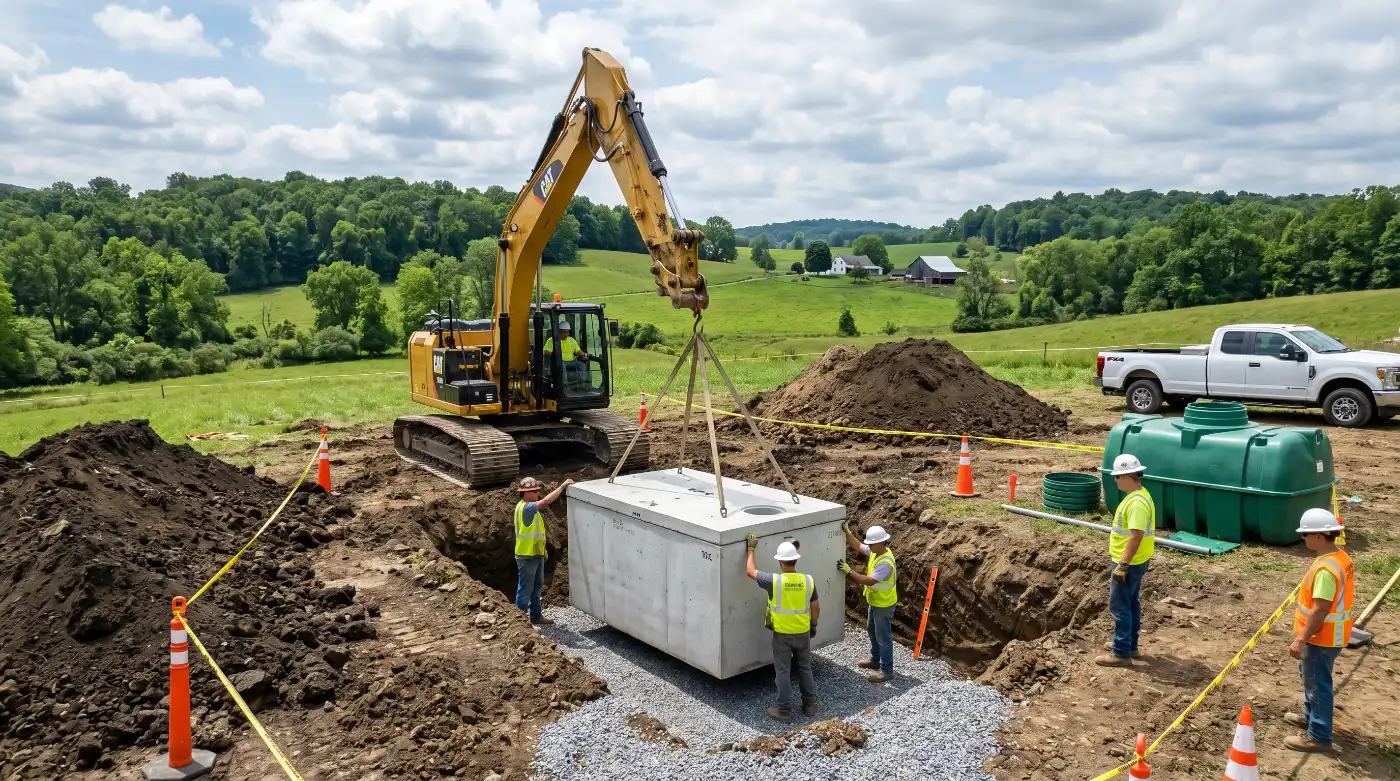
Concrete Holding Tanks: These are the traditional industry standard. They are incredibly heavy, highly durable, and built to last for decades. They require heavy cranes to lift and position correctly, which adds to the initial equipment overhead.
-
Plastic or Polyethylene Tanks: These alternatives are significantly lighter and easier to maneuver into tight spaces without massive machinery. However, they must be installed with extreme care to prevent the surrounding soil pressure from crushing the walls over time.
Constructing the Absorption Area
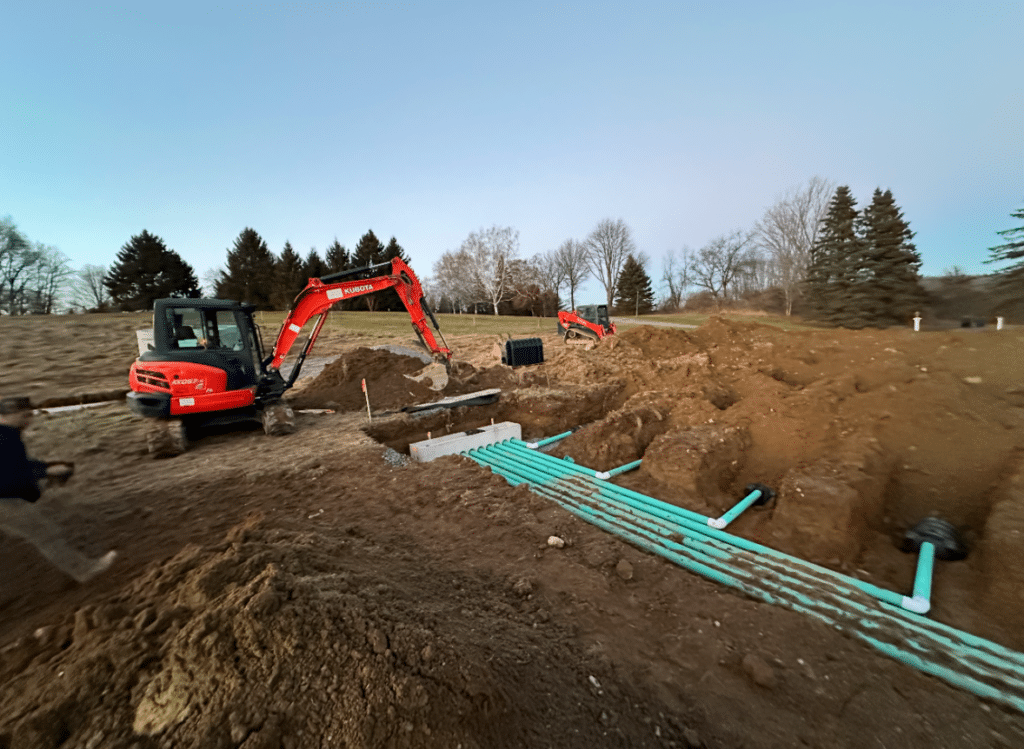
The absorption area, or drain field, is where the liquid waste receives its final environmental purification. Constructing this zone involves clearing vegetation, hauling away native soil, laying down tons of clean washed stone, and installing perforated distribution pipes.
If your layout requires an advanced sand mound setup, the material costs will increase substantially. Workers must haul in specific types of approved select sand to build an above-ground filtration zone from scratch.
Heavy Equipment Operations and Excavation Labor
A major portion of your investment pays for specialized mechanical labor. Installing a functioning system requires operating heavy dump trucks, tracked excavators, and compact skid steers over several consecutive days.
Fuel prices, equipment transport fees, and the physical complexity of your terrain shape this portion of your bill. Clearing mature trees, blasting through solid rock layers, or navigating steep mountainsides will naturally expand the timeframe and increase the cost.
Navigating the Maze of Municipal Permissions and Inspections
Working with wastewater means dealing with strict local bureaucracy. You cannot bypass the regulatory framework without risking massive legal penalties and destroying your property value.
Local Municipality Application Costs
Every township across Pennsylvania charges unique administrative fees to review your applications and process your paperwork. These costs cover the administrative time required for the local Sewage Enforcement Officer to look over your engineered blueprints and visit your site in person.
Mandatory Operational Compliance Checks
An enforcement officer will visit your site multiple times during the active construction process. They need to verify that the tank sits at the exact depth specified in the plans, the sand meets cleanliness certifications, and the pipes feature the correct structural slope.
These inspections ensure your system is perfectly compliant with Pennsylvania Code Title 25. While the associated paperwork adds small fees to your layout, it provides an invaluable guarantee that your system is safe and legal.
The Impact of Local Geography on Overall Project Costs
Pennsylvania features an incredibly diverse natural landscape. The geological realities of your specific region will play a massive role in dictating your final installation expenses.
Navigating Steep Hills and Hard Bedrock
If you live in a rocky, mountainous region, excavation becomes a massive challenge. Hitting solid ledges of granite or limestone beneath the surface requires specialized hydraulic hammering attachments to break through the stone.
Furthermore, steep slopes require creative terracing and advanced pumping chambers to push wastewater uphill against gravity, increasing the complexity of the plumbing.
Managing High Water Tables and Clay Soil
Properties located near rivers, valleys, or areas filled with heavy, dense clay face different structural hurdles. Clay traps moisture and prevents water from draining away naturally.
In these damp environments, traditional underground gravel trenches will fail completely. Installers must build specialized, above-ground sand mounds or utilize advanced aerobic treatment units to purify the water safely before it reaches the shallow water table.
As noted in regional landscape studies from the Penn State Extension, Pennsylvania’s diverse soil profiles require precise, localized adjustments to prevent environmental contamination and preserve the life of residential wastewater systems.
Long-Term Financial Planning: Maintenance and Care
Your financial commitment to your home infrastructure does not end on the final day of construction. A septic system is a living biological mechanism that requires consistent, long-term attention to operate efficiently and prevent premature failures.
Scheduled Maintenance and Pump-Out Routines
Over months of daily use, solid waste accumulates at the bottom of your holding tank. If you neglect this buildup, these solids will eventually escape into your drain field, clogging your pipes and ruining your soil’s ability to absorb water.
To prevent this disaster, you should hire a professional to pump out and inspect your tank every three to five years. This simple maintenance routine keeps your system running smoothly and protects your investment.
Smart Daily Habits for Your Pipes
Protecting your system requires mindful daily habits. Avoid pouring harsh chemical cleaners, automotive fluids, or grease down your drains. These substances kill the beneficial bacteria inside your tank that naturally break down human waste.
Additionally, never flush non-biodegradable items like baby wipes, paper towels, or feminine hygiene products, which can cause immediate blockages and expensive emergency plumbing repairs.
Why Professional Design and Execution Save Money
When looking at a major infrastructure bill, it can be tempting to try and cut corners or hire an unverified contractor who promises a unusually cheap rate. This approach almost always backfires.
An incorrectly installed system can contaminate your local drinking water, create foul odors across your yard, and cause wastewater to back up directly into your home’s toilets and sinks.
Fixing a failed installation often costs twice as much as doing the job right the first time because workers must pay to excavate the broken system, haul it away, and rebuild the entire layout from scratch.
Investing in a certified, experienced local team ensures that your project is fully compliant with state laws, utilizes durable materials, and is built to function reliably for decades to come.
Focus on Long-Term Peace of Mind
Navigating a septic system installation requires a careful blend of state environmental science, heavy excavation skill, and local municipal law. While the upfront costs represent a significant investment in your property, a well-engineered system is essential for maintaining a clean, healthy, and high-functioning home.
By taking the time to understand your soil properties, budgeting for mandatory site testing, and working alongside verified local professionals, you protect your land and build a solid foundation for your home’s future value.
Article Recap
-
No Flat Rates Exist: Septic system installation costs vary wildly across Pennsylvania; every piece of land requires a personalized, on-site price evaluation.
-
Soil Dictates Design: Mandatory percolation tests and morphology studies determine exactly what type of system your land can safely support.
-
Bedroom Counts Matter: System dimensions are calculated by the total number of bedrooms in a home, not the current number of residents.
-
Component Demands Impact Pricing: Advanced setups, including raised sand mounds and electric pumping stations, require more materials and labor than simple gravity systems.
-
Local Geography Alters Budgets: Mountainous bedrock, steep hillsides, and heavy clay soil add unique excavation challenges that increase your overall costs.
-
Bureaucracy is Mandatory: Homeowners must budget for local permit fees and multiple compliance checks executed by a municipal Sewage Enforcement Officer.
-
Maintenance Protects Investments: Scheduling routine professional pump-outs every three to five years prevents catastrophic field failures and extends your system’s life.
General Cost Disclaimer
The cost figures discussed throughout this guide represent broad geographic averages and historical trends within the state of Pennsylvania. These estimates are intended solely for introductory educational purposes. Every residential property features completely unique soil conditions, topographical variances, and local municipal regulations. Consequently, final installation costs can only be accurately determined through an individualized on-site inspection and a custom project quote.
Plan Your Project with Triple J Services
Ready to take the guesswork out of your property development? Your home deserves a reliable, code-compliant septic system engineered by an experienced local team that knows Pennsylvania’s unique terrain.
At Triple J Services, we handle the entire installation process from start to finish. Based in Lackawaxen, Pennsylvania, our skilled team provides professional excavation, site preparation, and infrastructure solutions tailored strictly to your land’s unique layout.
Explore our full range of capabilities on our Triple J Services services page, or learn more about our commitment to quality workmanship on our dedicated about us page.
Don’t leave your underground infrastructure to chance. Visit our official Triple J Services website today to connect with a local expert and request your custom, on-site project evaluation.