Living in the Poconos offers breathtaking mountain views and a serene lifestyle. However, the geology of Northeastern Pennsylvania presents unique challenges for homeowners relying on private wells. The ground is rich in minerals and organic matter. While these are natural, they often wreak havoc on your plumbing, skin, and drinking water quality.
Understanding what is in your water is the first step toward fixing it. Most residents in this region deal with a “triple threat” of water issues: calcium hardness, iron staining, and that unmistakable rotten egg smell caused by sulfur. Ignoring these problems doesn’t just affect the taste of your morning coffee; it can lead to thousands of dollars in appliance damage and pipe corrosion.
Understanding Hard Water in the Poconos
Hard water is perhaps the most common issue across Monroe, Pike, and Wayne counties. It occurs when water picks up high concentrations of dissolved minerals, specifically calcium and magnesium, as it filters through limestone and bedrock.
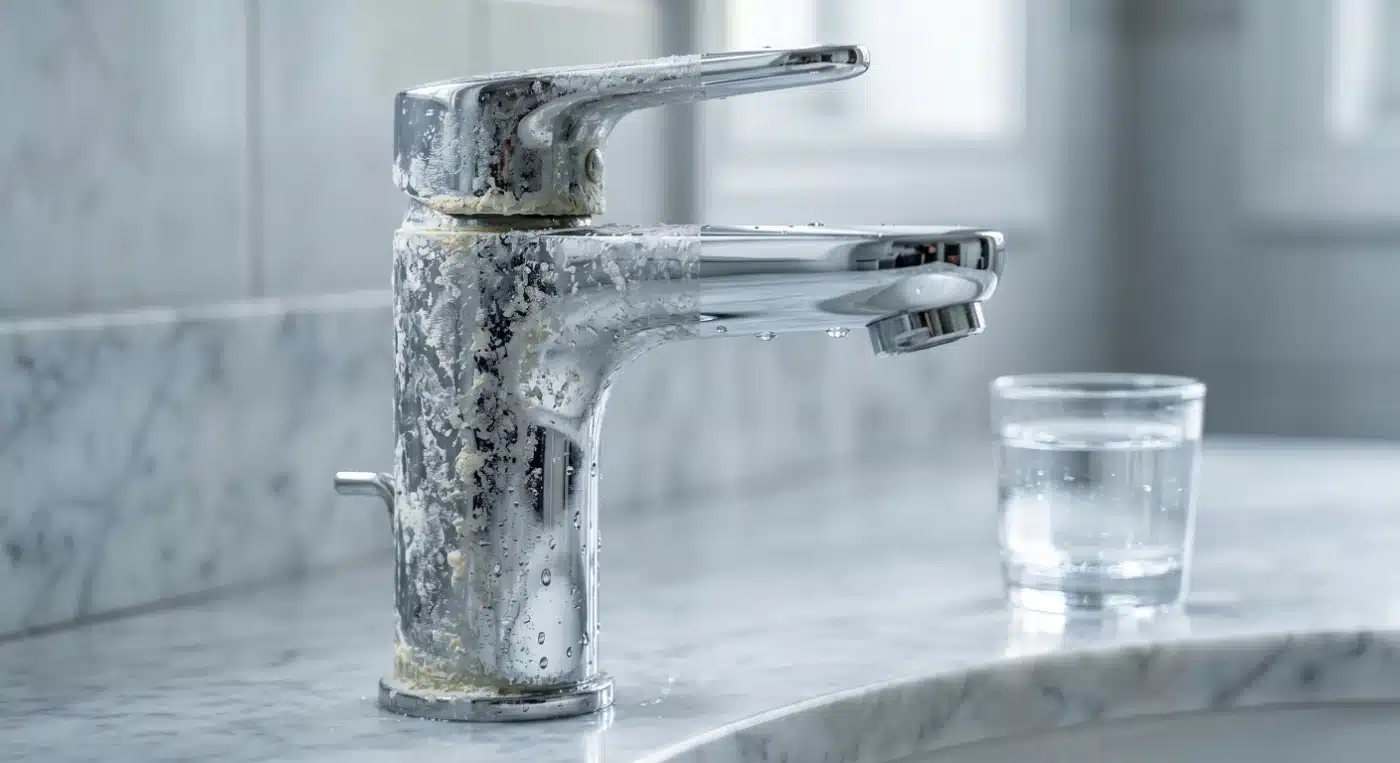
You can see the evidence of hard water everywhere in a household. It appears as white, crusty buildup on showerheads and faucets. This is known as scale. Scale acts as an insulator in your water heater, forcing the unit to work harder and increasing your monthly energy bills.
Beyond the pipes, hard water affects your daily comfort. It prevents soap from lathering properly. You might notice a sticky film on your skin after showering or hair that feels brittle and dry. Your laundry may come out looking dingy or feeling stiff because the minerals are trapped in the fabric fibers.
How to Manage Mineral Buildup
The standard solution for hard water is a salt-based water softener. These systems use an ion-exchange process. As water enters the tank, calcium and magnesium ions are swapped for sodium ions. This effectively “softens” the water before it travels through the rest of your home.
Modern softeners are highly efficient. They monitor your water usage and only regenerate when necessary, saving you money on salt and water. For those on sodium-restricted diets, potassium chloride can often be used as a substitute for traditional softener salt.
The Problem with Iron and Manganese
If you see orange, red, or brown stains in your toilet bowls and sinks, you have an iron problem. In the Poconos, iron is frequently found in well water. It exists in two primary forms: clear-water iron (ferrous) and red-water iron (ferric).
Clear-water iron is tricky because the water looks fine when it comes out of the tap. Once it sits in a glass or a basin and reacts with oxygen, it turns into solid particles that leave behind stubborn stains. Red-water iron is already oxidized and appears cloudy or discolored immediately.
Manganese often accompanies iron. It leaves behind black, oily specks or stains. Both minerals can give water a metallic taste that ruins the flavor of food and beverages. Over time, iron buildup can restrict water flow in your pipes, leading to a noticeable drop in water pressure.
Effective Iron Filtration Methods
Simple water softeners can handle very low levels of iron, but they are often overwhelmed by Poconos water. For significant iron issues, an oxidizing filter is the better choice. These systems use air or chemical oxidants like potassium permanganate to turn the dissolved iron into a solid. Once the iron is a solid particle, it can be easily trapped by a filter bed and washed away during a backwash cycle.
Air induction filtration is a popular, chemical-free option. It creates an air pocket at the top of the tank to oxidize the minerals. It is highly effective for moderate levels of iron and is relatively low-maintenance for the average homeowner.
Solving the Rotten Egg Sulfur Smell
Nothing is more off-putting than turning on the shower and being hit with the smell of rotten eggs. This scent is caused by hydrogen sulfide gas. In the Poconos, this gas is usually produced by “sulfur bacteria” that live in low-oxygen environments, like deep wells or water heaters.
Sulfur isn’t just a nuisance for your nose. The gas is corrosive and can damage silver, copper, and brass plumbing fixtures. It can also interfere with the effectiveness of water softeners by coating the resin beads, making them unable to swap ions properly.
Eliminating Hydrogen Sulfide Gas
Treating sulfur requires a two-step approach. First, you must identify if the smell is coming from the well itself or just the water heater. If the smell only occurs when you run hot water, it is likely a reaction with the magnesium anode rod in your water heater. Replacing it with an aluminum or powered anode rod can solve the problem.
If the smell is in both hot and cold water, you need a whole-house solution. Carbon filtration can work for very low levels of sulfur. However, for the strong odors common in this region, aeration or chemical injection is required. Hydrogen peroxide injection is a favored method because it kills the sulfur bacteria and neutralizes the smell without leaving a chemical taste behind.
Why Water Testing Matters
You cannot see, smell, or taste every contaminant. While iron and sulfur are obvious, other issues like low pH (acidic water) or arsenic can hide in plain sight. Acidic water is common in the Poconos and will eat away at copper pipes, leading to blue-green stains and eventual pinhole leaks.
Before investing in expensive equipment, get a comprehensive water test from a certified laboratory. A professional test will provide a detailed breakdown of your water’s chemistry, including hardness grains, parts per million of iron, and pH levels. This data ensures you buy the right equipment the first time.
External Resource Ideas
To learn more about local water quality standards and health implications, you can visit high-authority resources. The Environmental Protection Agency (EPA) provides extensive guides on private well safety. Additionally, the Penn State Extension offers specific insights into Pennsylvania’s groundwater challenges and testing procedures.
Long-Term Maintenance for Poconos Wells
Installing a treatment system is just the beginning. To keep your water clean, you must perform regular maintenance. For softeners, this means checking salt levels monthly and ensuring the brine tank doesn’t develop a “salt bridge,” which is a hard crust that prevents the salt from dissolving.
Filtration systems that use specialized media need to be backwashed regularly. Most modern systems do this automatically, but you should check the timer to ensure it happens during a time of low water usage, typically the middle of the night. If you use a sediment pre-filter, change the cartridge every three to six months to prevent pressure loss.
Maintaining your well cap is also vital. Ensure it is tightly sealed and sits at least 12 inches above the ground. This prevents surface runoff, insects, and bacteria from entering your water supply, which is especially important during the heavy rains and snowmelts common in the Poconos.
Quick Recap: Pocono Water Guide
-
Hard Water: Caused by calcium and magnesium; leads to scale buildup, dry skin, and inefficient appliances.
-
Iron & Manganese: Causes red, orange, or black stains and a metallic taste; requires oxidation for removal.
-
Sulfur: Identifiable by a “rotten egg” smell; caused by hydrogen sulfide gas or sulfur bacteria.
-
Water Testing: Essential to determine the exact mineral levels and pH balance before choosing a system.
-
Maintenance: Regular salt refills and filter changes are necessary to keep systems functioning effectively.
Ready to fix your water? Contact a local water treatment specialist today for a free consultation and take the first step toward crystal-clear water in your Poconos home. Contact Triple J Services Today for an Septic Problems.
Frequently Asked Questions (FAQ)
1. Is the water in the Poconos hard or soft?
The Poconos region, covering Monroe, Pike, and Wayne counties, is known for having moderately hard to very hard water. This is due to the local geology, where groundwater filters through limestone and bedrock, picking up high concentrations of calcium and magnesium minerals.
2. Why does my well water smell like rotten eggs in Pennsylvania?
A “rotten egg” smell is usually caused by hydrogen sulfide gas. In Northeastern PA, this is often produced by sulfur bacteria living in deep wells or a chemical reaction occurring inside your water heater’s anode rod. This gas is corrosive and can damage plumbing fixtures over time.
3. What causes orange or brown stains in Poconos sinks and toilets?
Orange, red, or brown staining is a definitive sign of high iron content in your well water. This occurs in two forms: ferrous (clear-water iron), which oxidizes and turns brown after hitting the air, and ferric (red-water iron), which appears discolored immediately upon exiting the tap.
4. How do I get rid of white crusty buildup on my faucets?
The white, chalky substance is known as limescale, a byproduct of hard water. The most effective long-term solution is installing a salt-based water softener, which uses an ion-exchange process to remove calcium and magnesium before the water enters your home’s plumbing.
5. Can hard water cause dry skin and brittle hair?
Yes. Hard water prevents soaps and shampoos from lathering and rinsing away properly. This leaves a microscopic filmon the skin that can cause irritation and dryness, while mineral deposits in hair fibers make it feel brittle, stiff, and difficult to manage.
6. Is it better to use a water softener or an iron filter for well water?
It depends on your water test results. A water softener is designed primarily for hardness (calcium/magnesium), whereas an oxidizing iron filter is necessary for high levels of iron and manganese. In the Poconos, many homeowners require a combination of both to address the “triple threat” of hardness, iron, and sulfur.
7. Why is my water pressure dropping in my Poconos home?
A common cause of pressure loss in well systems is mineral scale or iron buildup inside the pipes. Over time, these deposits restrict water flow. Additionally, a clogged sediment pre-filter can significantly reduce pressure if not changed every 3 to 6 months.
8. Is the sulfur smell in my water dangerous?
While hydrogen sulfide is generally not a health risk at the levels found in household water, it is a significant nuisance and corrosive agent. It can tarnish silver and copper, and the bacteria responsible for the smell can coat water softener resin, making the system less effective.
9. What are the signs of acidic water (low pH) in a home?
If you notice blue-green stains on your tubs or sinks, your water is likely acidic. Low pH water is common in Pennsylvania and is highly corrosive; if left untreated, it will eat through copper piping, eventually causing pinhole leaks.
10. How often should I test my well water in the Poconos?
Experts recommend a comprehensive water test at least once a year or whenever you notice a change in taste, odor, or color. Because Poconos geology can fluctuate, testing ensures your filtration equipment is calibrated correctly to handle current mineral levels.