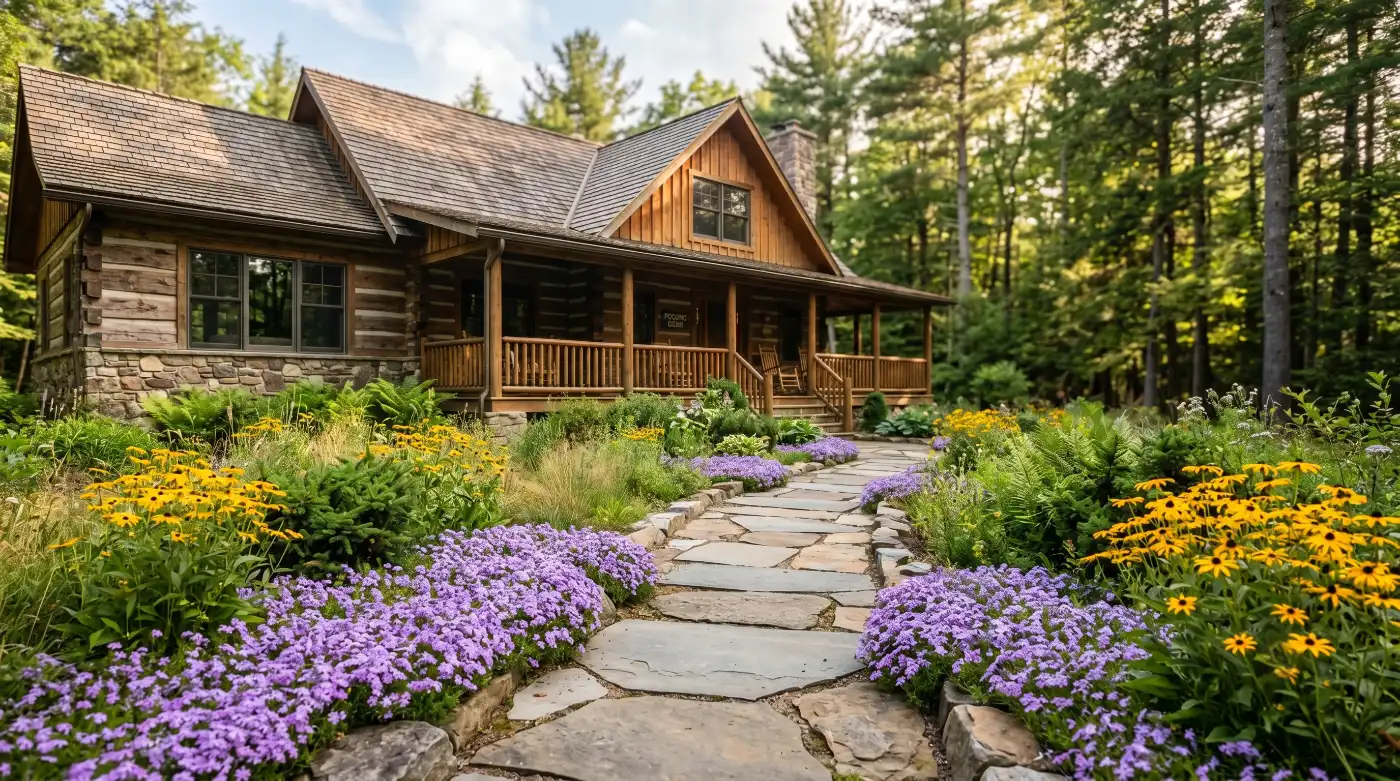
Owning a cabin or a second home in the Poconos offers a perfect escape from city life. Places like Lackawaxen Township in Pike County, Pennsylvania, provide gorgeous woods, river views, and a quiet mountain atmosphere. However, managing a property from afar comes with distinct challenges. You want to arrive on the weekend to relax, not to spend your entire trip battling overgrown brush, clearing fallen limbs, or dealing with an unexpected plumbing disaster.
Landscaping for a part-time residence requires a deliberate strategy. It needs to look natural and beautiful without requiring weekly mowing, trimming, or watering. For rural properties in Northeastern Pennsylvania, your yard design must also protect your critical infrastructure. Most homes in our region rely completely on private infrastructure, specifically septic tanks and absorption areas.
Planting the wrong tree or shrub near your waste system can lead to massive structural failures. Invasive roots easily break into underground pipes, clog drainage gravel, and cause wastewater to back up into your home. Balancing a beautiful, low-maintenance yard with the safety of your septic system is easier than it sounds. It simply requires making smart, regional plant choices and understanding how your underground utilities function.
The Unique Realities of Poconos Properties
The Poconos landscape features dense forests, rocky soil, steep slopes, and variable mountain weather. Winters bring heavy snow and deep freezes, while summers can alternate between high humidity and dry spells. Property owners in areas like Lackawaxen often deal with aggressive local wildlife, including white-tailed deer and black bears, which love to turn expensive ornamental plants into an overnight snack.
Because you are not at the property every day, traditional suburban lawns are highly impractical. A standard grass lawn requires regular mowing, fertilization, and weed control. If you only visit every few weeks, you will return to a chaotic jungle. Even worse, heavy lawn mowers driving repeatedly over a septic drain field compress the soil. Compressed soil loses its ability to filter wastewater correctly, leading to early system failure and costly repairs.
The smart alternative is a naturalized, low-maintenance landscape. By using native plants, ground covers, and hardscaping elements, you can design a yard that blends into the Pennsylvania woods. This approach saves energy and keeps your property looking manicured even when left alone for a month.
Understanding Your Underground Septic Ecosystem
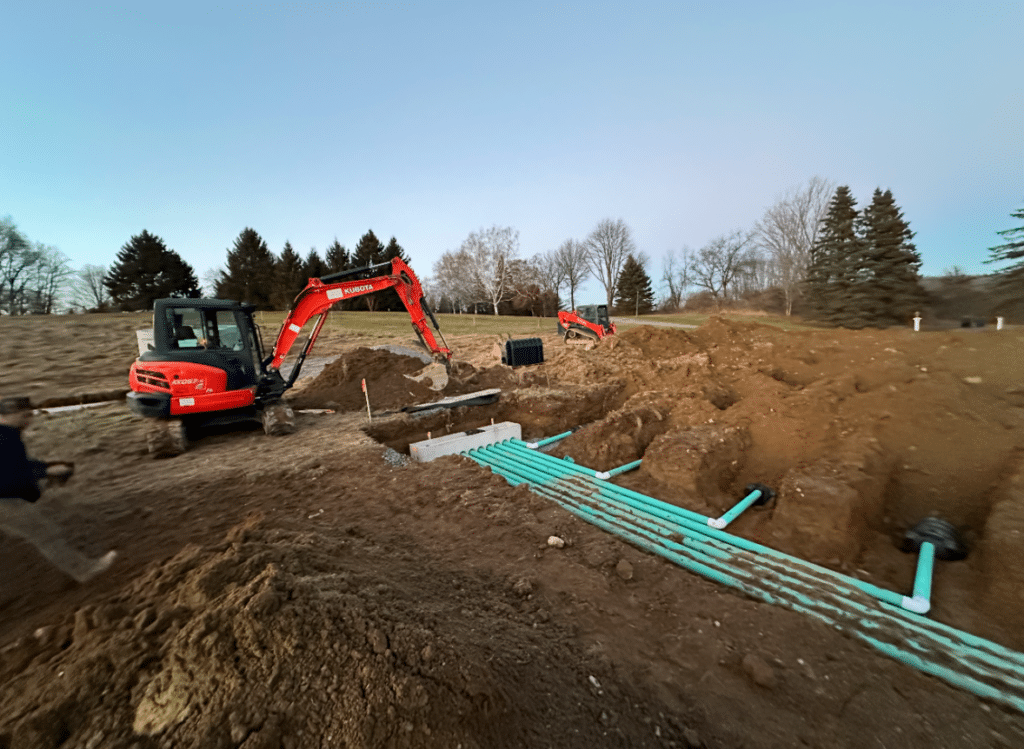
Before picking up a shovel or heading to a local nursery, you must know exactly where your septic components sit beneath the soil. A typical residential setup includes a solid pipe running from the house, a buried septic tank, and a network of perforated pipes buried in a stone ditch, known as the leach field or absorption area. In the rocky, sloped terrain of Pike County, many properties feature specialized systems, including elevated sand mounds, often called turkey mounds.
The leach field is the most fragile part of your home infrastructure. Its job is to allow pre-treated wastewater to slowly percolate downward through the soil, where natural bacteria filter out harmful pathogens. This process requires loose, unsaturated soil and open pathways.
When plants with aggressive, deep taproots are placed over these areas, they seek out the moisture and nutrients inside the perforated pipes. The roots slip into the small holes in the lines, expand rapidly, and completely block the flow of water. This leads to slow drains inside the cabin, soggy patches of smelly grass in the yard, and eventually, the need for a total system replacement.
For comprehensive regulatory details on how these systems operate and the environmental protections required in our state, homeowners can review the Pennsylvania Department of Environmental Protection Onlot Sewage Program. Understanding these regulations helps keep your property compliant and prevents accidental environmental contamination.
Rules for Septic-Friendly Plantings
Protecting your investment does not mean you have to leave your yard completely bare. You can safely plant around your tank and leach field if you stick to a few structural guidelines.
Stick to Shallow, Fibrous Root Systems
The absolute golden rule for planting near a leach field is to select herbaceous plants, native grasses, and shallow-rooted perennials. These plants have thin, fibrous root systems that stay in the top layers of topsoil. They stabilize the earth and prevent erosion without diving deep enough to interfere with your buried utility pipes.
Avoid Moisture-Loving Trees Completely
Certain tree species are notoriously aggressive water-seekers. Never plant willow, elm, beech, birch, maple, or walnut trees anywhere near your septic infrastructure. A good rule of thumb is to keep any major tree at a distance equal to its expected mature height away from the edges of the drain field. If a tree grows thirty feet tall, keep it thirty feet away.
Do Not Alter the Soil Depth
Septic systems are carefully engineered based on specific soil depths. Adding a massive layer of heavy topsoil over the field to build a raised garden bed suffocates the system. It prevents oxygen from reaching the filtering bacteria in the ground. Keep the original grade of the land intact.
Skip the Landscape Fabric and Heavy Plastic
It is tempting to throw down thick plastic weed barriers and cover them with heavy stones to keep weeds away. However, plastic sheets block the natural evaporation of moisture from the soil. The ground underneath stays waterlogged, disrupting the effluent treatment process. Use natural, breathable organic mulch instead.
Top Low-Maintenance, Septic-Safe Plants for Pike County
Northeastern Pennsylvania sits within USDA Hardiness Zones 5b to 6a, depending on your exact elevation in the mountains. The following native options thrive in our local climate, resist deer browsing, require almost zero attention once established, and feature safe root systems.
Resilient Ground Covers
Ground covers are excellent substitutes for traditional grass. They create a lush, green carpet that never needs to be mowed.
-
Creeping Phlox (Phlox subulata): This native perennial thrives in full sun and rocky, poor soil. In the spring, it erupts into a vibrant blanket of pink, purple, or white flowers. Its roots are incredibly shallow, making it perfectly safe for use over leach fields and sand mounds.
-
Wild Ginger (Asarum canadense): If your cabin sits under a heavy, dense tree canopy with lots of shade, wild ginger is an ideal choice. It features beautiful, heart-shaped velvety leaves, spreads slowly to choke out weeds, and handles dry spells easily.
-
Barren Strawberry (Waldsteinia fragarioides): A tough, low-growing plant that looks like a wild strawberry but produces bright yellow blooms in early summer. It is highly drought-tolerant and ignores deer completely.
Native Perennial Flowers
Perennials return year after year, saving you the trouble of replanting every spring. They add splashes of color to your cabin exterior while supporting local pollinators.
-
Black-Eyed Susan (Rudbeckia hirta): A classic Pennsylvania wildflower that loves sunshine and handles neglect beautifully. Its fibrous roots pose zero threat to underground lines, and it blooms consistently from mid-summer until the first hard winter frost.
-
Coneflower (Echinacea purpurea): Exceptionally hardy and drought-resistant, coneflowers feature sturdy stems that hold up against mountain winds. Deer usually leave them alone, and their seed heads provide food for local birds during the fall.
-
Bee Balm (Monarda): This plant loves sunny spots, grows quickly, and produces unique, ragged blossoms that hummingbirds adore. Because it belongs to the mint family, it carries a distinct scent that naturally deters deer and rabbits.
Ornamental Grasses
Native grasses add texture, movement, and a rustic mountain aesthetic to your landscaping. They require trimming only once a year in the late winter.
-
Little Bluestem (Schizachyrium scoparium): This blue-green summer grass turns a gorgeous coppery-bronze color in the autumn. It handles poor, rocky mountain soil with ease and helps prevent soil erosion on sloped properties.
-
Switchgrass (Panicum virgatum): A taller option that works well for creating privacy screens along property edges. It tolerates both dry conditions and occasional heavy downpours without skipping a beat.
Hardscaping Solutions for Vacation Properties
If you want to reduce yard maintenance even further, hardscaping is a fantastic path forward. Using non-living elements like stone paths, gravel beds, and timber accents cuts down on weeding and watering entirely. However, you must handle hardscaping near a septic system carefully.
Never install permanent, heavy structures over any part of your waste management system. Concrete patios, asphalt driveways, brick retaining walls, and heavy storage sheds should stay far away. If an underground pipe breaks or your tank needs a full replacement, heavy machinery must reach the area. Tearing up a gorgeous stamped concrete patio to fix a pipe is a logistical and financial nightmare.
Instead, stick to light, removable hardscape features over your septic zones. Walkways made of uncompacted pea gravel, clean river stone, or loose stepping stones are ideal. They look rustic, allow rainwater to pass through naturally into the soil, and can be easily shoveled aside if an excavation team needs to uncover a line or pump a tank.
Homeowners looking for ideas on blending natural elements with durable outdoor designs can check out the Lady Bird Johnson Wildflower Center Plant Database. This resource provides comprehensive, searchable data on root depth and growth habits for native species across North America, ensuring your choices remain infrastructure-friendly.
Smart Vacation Care for Remote Property Owners
When you only live at your Poconos property part of the time, your maintenance schedule looks a little different. Here are a few straightforward strategies to keep your landscaping under control and your septic system healthy while you are away.
First, use a thick layer of shredded bark mulch around your approved plantings. Mulch retains soil moisture, stops weed seeds from sprouting, and keeps soil temperatures stable during winter cold snaps. Avoid buying cheap, shredded pallets that may contain chemical dyes or staples. Stick to natural cedar or hemlock mulch, which decomposes cleanly and adds nutrients back into the earth.
Second, manage your home’s water flow. If your cabin sits empty for weeks, your septic tank bacteria can become inactive due to a lack of organic material. When you return with a group of guests and run multiple loads of laundry, take long showers, and run the dishwasher all at once, you subject the system to hydraulic shock. This sudden surge of water flushes solid waste straight out of the tank and into your leach field, causing immediate blockages. Space out your water usage when arriving for the weekend to give the system time to process the load.
Finally, consider installing a simple smart water monitor on your main water line. If a toilet valve leaks or a pipe cracks while you are away in the winter, thousands of gallons of water can run continuously into your septic tank. This floods the absorption field, ruins your landscaping from beneath, and can burn out delicate electrical components like effluent pumps or grinder pumps. A smart monitor alerts your phone the moment it detects unusual, continuous water flow, letting you catch the emergency before it destroys your yard.
Professional Septic Care with Triple J Services
Designing a beautiful, low-maintenance exterior is a great first step, but even the best landscaping cannot replace proper underlying maintenance. Your septic system is a dynamic, living biological tool that requires regular inspection and care to function smoothly.
Triple J Services, located right in Lackawaxen, Pennsylvania, specializes in keeping mountain systems working perfectly. We understand the specific regional challenges of Pike County, from handling rocky excavation work to repairing damaged leach fields on steep slopes. Our team offers a complete range of expert services tailored to part-time residents and year-round homeowners alike.
If your property has been sitting empty or you are noticing slow drains, our high-pressure drain jetting, also known as hydro-jetting, cuts through stubborn grease, sludge, and debris to restore full flow. For homes built on challenging terrain, we handle everything from standard effluent pump service and replacement to complex grinder pump repair and installation.
If your yard shows signs of poor drainage or surface water pooling near your home foundation, we install efficient French drains and advanced drainage solutions to redirect water safely away from your living space. From comprehensive septic system installations and routine replacements to detailed septic system inspections for real estate transactions, Triple J Services brings reliable, expert care to every job. You can learn more about our dedicated team by reading our Triple J Services About Us Page and view our full list of technical capabilities by exploring the Triple J Services Core Offerings Page.
Key Takeaways: Low Maintenance Landscaping
-
The Break-Fix Alternative: Naturalized, native landscaping eliminates the need for constant mowing, saving part-time residents time and money.
-
Protect the Field: Only plant shallow-rooted, fibrous perennials and ground covers over septic leach fields and sand mounds to avoid pipe blockages.
-
Avoid Tree Damage: Keep aggressive water-seeking trees like maples, willows, and birches at a safe distance away from your waste infrastructure.
-
Smart Hardscaping: Use removable stone paths or loose river rock instead of permanent concrete or asphalt over underground utilities.
-
Avoid Hydraulic Shock: Space out water usage when returning to a vacant cabin to prevent overwhelming your septic system’s biological treatment balance.
Schedule Your Inspection Today!
Do not wait for a soggy yard or a major plumbing backup to check on your underground utilities. Whether you need an emergency septic pumping, high-pressure line cleaning, a new utility trench dug, or a complete leach field replacement, the team at Triple J Services is ready to help. Contact our local office today by visiting us today Triple J Services to schedule an inspection and ensure your Poconos retreat stays worry-free all year long.