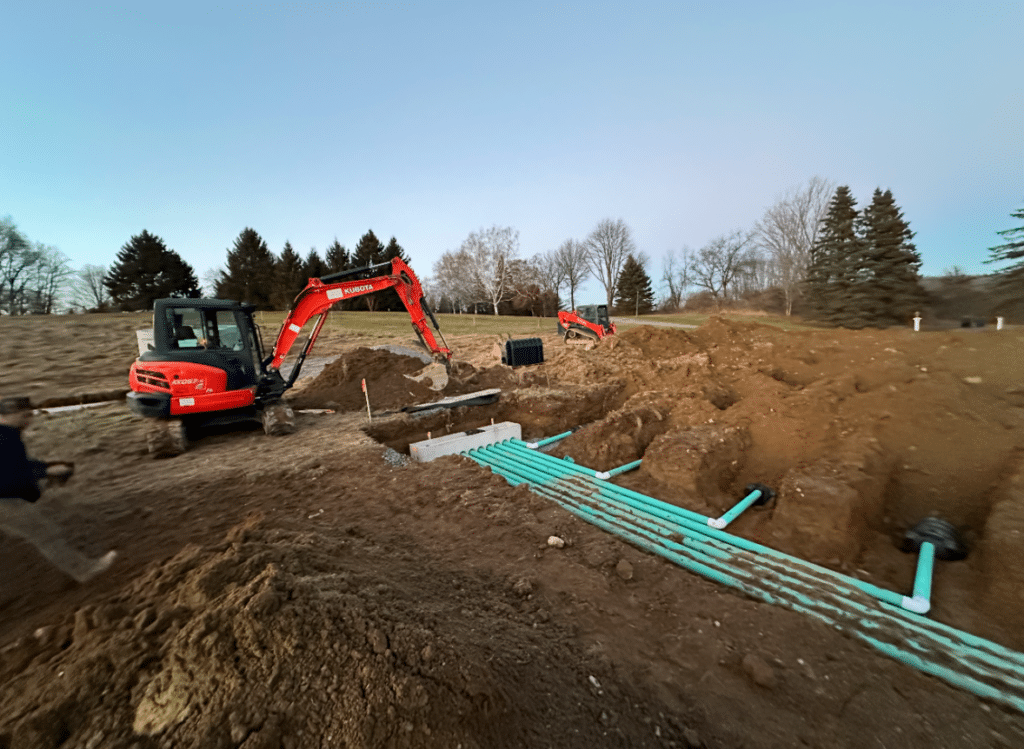

Executive Summary / Fast Track Summary:
-
Glacial Till Soils: Poconos terrain demands specialized mound designs because shallow bedrock and heavy clay restrict natural effluent percolation and accelerate surface freezing.
-
Winter Thermal Insulation: Snowpack serves as essential natural insulation over leach fields and pipes; clearing it or driving over lines drives frost deep enough to freeze distribution manifolds.
-
Hydrostatic Foundation Pressure: Winter freeze-thaw cycles convert trapped groundwater into expanding ice wedges against foundation walls, necessitating proactive perimeter drainage strategies.
-
High-Altitude Pump Protection: Extreme cold compromises uninsulated effluent check valves and grinder pump stations, leading to rapid mechanical backup during holiday hydraulic surges.
Moving to the Poconos: What No One Tells You About Septic Systems, Winter Prep, and Private Utilities
A home buyer from a suburban municipal district moves into a scenic Pocono property in Wayne County, turns up the thermostat during an initial sub-zero January freeze, and wakes up to a backup of raw sewage in the basement shower. City municipal systems continuously sweep waste away through heated, deeply buried trunk lines, but rural mountain homes rely entirely on an isolated, self-contained micro-utility anchored in glacial till. When deep ground frost meets low-occupancy thermal drop-offs and high-volume holiday usage, unmaintained private utilities fail catastrophically.
How Winter Conditions and Glacial Soils Vulnerability Threaten Pocono Septic Systems
Pocono soil profiles dominated by heavy glacial till restrict natural effluent filtration, forcing wastewater toward shallow soil layers where extreme frost lines create severe freezing hazards for uninsulated pipes and mound systems. Deep ground frost solidifies stagnant effluent inside distribution boxes, while snowpack removal over leach fields strips away critical thermal protection, causing widespread system backups during prolonged sub-zero snaps.
Understanding thermal dynamics and identifying mechanical vulnerability points are essential steps in protecting private utilities from severe regional cold snaps:
-
Heavy Snow Cover Dynamics: Undisturbed snowpack traps subsurface ambient heat, effectively insulating the soil profile and preventing frost from reaching buried infrastructure.
-
Cleared Surface Vulnerabilities: Removing snowpack from driveways or access paths strips away thermal insulation, allowing deep frost to plunge rapidly into the soil bed.
-
Shallow Sewer Lateral Risks: Main lines installed at depths shallower than thirty-six inches face severe ice damming when low wastewater flows freeze incrementally along pipe walls.
-
Uninsulated Distribution Box Failures: Exposed or uninsulated distribution boxes allow stagnant effluent to freeze solid, completely halting fluid distribution to the lateral network.
-
Exposed Force Main Vulnerabilities: External pump discharge lines without functional check valves or thermal protection freeze open, allowing cold air to migrate back down toward the pump chamber.
The Physics of Frost Depth and Glacial Till in Northeastern PA
The geological landscape of Monroe and Pike Counties consists primarily of dense, compacted glacial till—a tight mixture of clay, silt, sand, and heavy rock fragments deposited by receding glaciers. Soil profiles across the Pocono plateau frequently exhibit shallow depths to bedrock or perched water tables. These conditions prevent traditional deep trench drain fields from functioning safely without contaminating groundwater, which is why local regulations heavily mandate elevated absorption areas.
The Pennsylvania Department of Environmental Protection (PA DEP) enforces strict site testing protocols, including deep probe evaluations and percolation tests, to determine how quickly water moves through these unyielding soil matrices. When winter temperatures drop, the moisture trapped within high-clay glacial soils freezes solid, expanding by approximately nine percent. This frost heave exerts tremendous lateral pressure against buried pipes, concrete septic tanks, and distribution boxes, creating structural stress that city-dwelling transplants rarely anticipate.
Snowpack as Thermal Insulation vs. The Threat of Soil Compaction
A heavy layer of fluffy, undisturbed snow acts as a thermal blanket over a septic tank and its absorption field. Snow traps air within its structure, dramatically slowing the rate at which atmospheric cold penetrates the soil. Soil covered with twelve inches of fresh snow may maintain a subsurface temperature above freezing, even when ambient air temperatures plummet below zero degrees Fahrenheit.
Driving heavy equipment, snowmobiles, or even passenger vehicles over a leach field crushes this delicate snow structure, driving out the insulating air pockets and forcing cold air directly into the ground. Vehicle weight over frozen or saturated soil compacts the earth below, crushing PVC lateral pipes and destroying the macro-pores in the soil needed for effluent absorption. Once these soil pores collapse, the leach field loses its ability to process liquid waste, leading to permanent failure that requires extensive earthmoving and system replacement.
The Myth of “Winterizing” a Septic Tank with Chemicals or Additives
Many mountain homeowners attempt to protect their wastewater systems from winter freezes by dumping commercial additives, chemical anti-freeze products, high-strength acids, or salt solutions down their drains. These treatments damage biological treatment processes and fail to prevent physical ice blockages.
-
Bacterial Colony Destruction: Chemical additives kill the beneficial anaerobic and aerobic bacteria operating inside the primary septic tank, halting biological solids decomposition and leading to rapid sludge build-up.
-
Corrosive Component Degradation: Concentrated salt solutions and harsh chemicals degrade concrete tank baffles, corrode steel risers, and ruin rubber gaskets inside pump chambers.
-
Effluent Viscosity Shifts: Chemical additives do not lower the freezing point of liquid waste in a leach field enough to prevent ice blockages during extended regional cold spells.
-
Groundwater Contamination Risks: Unfiltered chemical additives pass through porous mountain soils into shallow aquifers, polluting private well water supplies across the region.
When a distribution box or lateral pipe freezes, pouring hot water or chemicals down the drain only adds volume to an already blocked line, accelerating an indoor sewage backup. Professional mechanical thawing utilizing controlled hot-water jetting equipment remains the only safe method to restore effluent flow without destroying the underground infrastructure. Homeowners facing sudden cold-weather line blockages rely on targeted high-pressure drain jetting (hydro-jetting) to clear frozen debris and restore proper flow through main sewer laterals.
The Hidden Vulnerability of Elevated Sand Mounds (“Turkey Mounds”)
When natural soil depth proves insufficient to filter wastewater, engineers design raised absorption areas, commonly called elevated sand mounds or “Turkey Mounds.” These systems lift the absorption zone above the natural grade using aggregate sand layers and crushed stone wrapped in geotextile fabric. Because these mounds sit above the surrounding topography, they are exposed to bitter mountain winds and freezing ambient air on all sides.
An elevated sand mound is constructed through a precise sequence of layered structural materials designed to process wastewater above natural grade:
-
Topsoil and Turf Layer: An upper protective soil cap planted with shallow-rooted grasses stabilizes the mound, sheds surface rainfall, and provides initial thermal retention.
-
Clean Aggregate Sand Layer: High-spec concrete sand directly below the topsoil filters incoming effluent, trapping pathogens as liquid trickles downward.
-
Lateral Distribution Network: Perforated pressure pipes bedded within clean aggregate distribute equal doses of wastewater across the entire absorption footprint.
-
Permeable Stone Matrix: A crushed aggregate stone layer supports the lateral piping and allows effluent to distribute evenly across the sand bed.
-
Natural Soil and Glacial Till Interface: The prepared native soil bed absorbs the purified liquid, allowing it to percolate safely into the underlying water table.
If a sand mound lacks proper vegetation cover, or if autumn maintenance clears away healthy ground cover without leaving an insulating layer of organic mulch or snow, cold air penetrates deep into the sand bed. Wastewater pumped into the mound arrives in controlled, high-volume doses via a pressure distribution network. If the small perforation holes in the lateral pipes freeze between pump cycles, incoming effluent cannot escape, causing the force main to pressurize, overheat the pump, and trigger severe system electrical failures.
Maintaining Effluent and Grinder Pumps in Deep Freeze Cycles
Homes set on sloped mountain properties or those feeding into pressurized community sewer loops rely on mechanical pump stations to move waste uphill. These stations feature either effluent pumps designed to push clear liquid or heavy-duty grinder pumps that shred raw sewage solids before pumping them through narrow force mains.
Cold weather introduces distinct mechanical failure vectors for these pump stations that require specific proactive checks:
-
Check Valve Freezing Points: Water trapped above an uninsulated check valve freezes into a solid plug, preventing the pump from discharging effluent during normal activation cycles.
-
Air Phase Exposure Hazards: Atmospheric cold air entering through unsealed riser vents can freeze mechanical float switches into an off position, preventing automatic pump engagement.
-
Thermal Loading Drop-offs: Extended vacant periods in vacation properties cause standing water inside shallow pump basins to drop below freezing, leading to complete basin ice-overs.
-
Impeller Jamming from Sludge: Cold temperatures increase effluent viscosity, causing heavy grease and biological solids to thicken and jam grinder impellers upon startup.
If the check valve on a force main is installed above the frost line without proper weep holes or thermal protection, effluent trapped in the vertical pipe section freezes into a solid plug. When the pump attempts to kick on, it pushes against this impenetrable ice barrier, blowing out internal mechanical seals or burning out the motor windings.
Vacation homes left empty for weeks during winter experience a drop in thermal input. Daily warm water discharge from showers, dishwashers, and laundry keeps septic tanks and pump basins naturally warm. When a home sits vacant, this heat source disappears, allowing standing water inside shallow pump basins to drop below freezing. Installing properly sized, insulated riser covers and verifying the operation of emergency high-water alarms before winter sets in provides critical protection against off-season failures. Properties requiring immediate mechanical servicing depend on expert effluent pump service & replacement to restore reliable waste transport before freezing temperatures ruin internal components.
Strategic Private Utility Integration and Foundation Protection for Mountain Properties
Safeguarding a mountain home requires integrating perimeter site drainage, deep foundation water mitigation, and winterized septic infrastructure into a unified water-management strategy. Hydrostatic pressure build-up from trapped groundwater damages foundation footings during freeze-thaw cycles, while uninsulated utility trenches convert underground pipe runs into ice-conduits that disrupt private well and sewer operations.
Hydrostatic Pressure, Frost Heave, and Perimeter Drainage Mechanics
As snow melts during mid-winter thaws and combines with heavy spring rain, mountain slopes direct massive volumes of surface runoff toward residential foundations. When this water collects against concrete foundation walls or beneath basement floor slabs, it generates immense hydrostatic pressure. As temperatures plunge back below freezing, this trapped water expands, creating frost-heave forces capable of bowing concrete block walls, snapping subterranean utility conduits, and driving dampness into living spaces.
To prevent this structural degradation, site engineers install subsurface interception systems designed to capture and redirect ground water long before it reaches foundation footings.
-
Curtain Drains: Installed uphill from a home or absorption field, these deep, gravel-filled trenches intercept horizontal groundwater migrating down a slope, directing it safely around site infrastructure.
-
Exterior French Drains: Positioned alongside foundation footings below the basement floor slab level, these perforated pipe networks collect water pooling against foundation walls and discharge it downhill via gravity.
-
Perimeter Swales: Carefully graded surface channels lined with turf or rip-rap stone redirect heavy surface sheet-flow away from septic tanks, wells, and structural footings.
-
Sub-slab Sump Systems: Interior drainage channels paired with heavy-duty sump pumps collect water that slips beneath foundation footings, pumping it out to well-maintained exterior discharge points.
Improperly installed perimeter drainage that discharges water too close to a sand mound or septic tank causes severe hydraulic overload. Excess groundwater saturates the soil surrounding the absorption area, preventing domestic effluent from percolating out of the system. This backs up the entire network and forces raw sewage toward the surface. Homeowners struggling with water pooling against foundation walls turn to specialized French drains & drainage solutions to route subsurface runoff away from sensitive living zones.
Protecting Private Water Wells and Submersible Delivery Infrastructure
Private water supply systems face extreme cold-weather operational stresses across high-altitude regions. Most rural properties draw water from deep-drilled bedrock wells powered by submersible pumps. Water travels from the well casing to the home through a horizontal pipe called a service line, connected via a pitless adapter buried beneath the earth.
To ensure well infrastructure survives sub-zero atmospheric temperatures, installation must follow precise subsurface guidelines:
-
At-Grade Well Head Extension: The heavy steel casing extends a minimum of twelve inches above final ground surface to prevent melting surface snow and runoff from polluting the well.
-
Subsurface Pitless Adapter Mount: A sanitary, watertight fitting connects the vertical well pipe to the horizontal delivery line four to five feet below grade, safely underneath the regional frost line.
-
Deep Service Line Trenching: The horizontal water supply line runs from the well head to the home interior buried at a minimum depth of forty-eight inches to avoid ambient cold.
-
Thermal Casing Insulating Wraps: Above-ground casing sections utilize thermal frost boxes or insulated caps to prevent severe ambient cold from conducting down the steel casing into the water column.
If an excavator installs the service line above the local frost line—which reaches depths of 40 to 48 inches in Wayne, Pike, and Monroe Counties—standing water inside the line freezes, cutting off home water access and splitting the supply pipe.
Another primary failure point occurs inside the well head assembly itself. While the pitless adapter sits underground, the well casing must extend at least 12 inches above the final surface grade to prevent surface runoff from entering the potable water supply. During extreme cold snaps with minimal snow cover, ambient cold travels directly down the steel casing, freezing the water line right at the connection point. Installing thermal well caps or insulating frost boxes protects this crucial connection point without violating sanitary setback laws enforced by the US Environmental Protection Agency (EPA).
The Interconnected Risk of Roof Runoff, Ice Dams, and Foundation Soils
When snow accumulates on a roof, heat escaping through poorly insulated attics melts the bottom layer of snowpack. This meltwater flows down the roof deck until it reaches the unheated cold overhang of the eaves, where it freezes into a solid band of ice known as an ice dam. As more meltwater backs up behind this ice barrier, it forces its way under roof shingles, rots structural roof decking, and drips down through interior exterior walls.
The cascade of site failures triggered by uncontrolled roof meltwater follows a destructive sequence down to the foundation:
-
Roof Deck Thermal Melting: Heat loss through poor attic insulation melts accumulated snowpack, sending liquid runoff cascading down toward unheated roof eaves.
-
Eave Line Ice Blockage: Cold air at the roof overhang freezes the cascading meltwater, forming a thick ridge of ice that blocks further natural drainage.
-
Shingle Infiltration and Overflow: Trapped water backs up beneath roof shingles while excess meltwater overflows gutters, dropping directly onto perimeter foundation soils.
-
Foundation Soil Saturation: Gallons of falling roof water completely saturate the soil adjacent to basement walls, overcoming standard perimeter drainage.
-
Freeze-Thaw Wall Expansion: Hydrostatic water trapped in perimeter soils freezes solid during temperature drops, exerting massive lateral pressure that cracks foundation walls and destroys buried sewer laterals.
Integrating seamless gutter systems, ice-melt cabling, and deep buried conductor pipes routes roof runoff away from foundation footings and septic tanks, protecting structural foundations and wastewater treatment zones from freeze-induced site failure.
Utility Trenching, Soil Bedding, and Heavy Structural Compaction
Installing underground infrastructure across mountain environments requires precise site prep and deep excavation practices. Simply digging a trench with an excavator, dropping in PVC pipe, and pushing rocky backfill on top leads to swift system failure in extreme weather conditions.
Constructing a frost-resistant utility trench requires a strict layering methodology to protect buried piping from earth movement and deep cold:
-
Excavation Below Frost Depth: The main trench path is excavated to a uniform depth below forty-eight inches, establishing a stable, unyielding foundation base.
-
Stabilized Aggregate Bedding: A six-inch layer of washed pea gravel or clean sand is placed along the trench floor to cushion the piping and provide uniform support.
-
Rigid PVC Pipe Alignment: Schedule-40 PVC piping is laid over the aggregate bed with a constant quarter-inch per foot slope, preventing standing liquid pockets.
-
Protective Sand Encasement: Additional sand or fine aggregate is backfilled around and over the pipe to a depth of six inches, safeguarding it from sharp native rocks.
-
Subsurface Warning Marker Placement: Bright metallic warning tape is buried twelve inches above the encasement layer to alert future excavators before reaching the main pipe line.
-
Compacted Screened Backfill: Screened native soil, free of large boulders and glacial till, is backfilled in shallow lifts and mechanically compacted to prevent surface water pooling.
When native glacial till is backfilled over bare pipe without proper select material bedding, heavy jagged rocks settle directly against pipe walls. As ground frost expands and shifts the surrounding soil, these rocks act as point-loads, cracking rigid schedule-40 PVC pipes or creating dips and sags along the utility line. Water collects inside these low spots, creates standing pools, and freezes into solid ice plugs during winter, cutting off flow through main sewer lines.
Proper utility installation demands excavating trenches below local frost depths, bedding all piping in six inches of washed pea gravel or sand, and carefully backfilling the trench in shallow lifts using screened material. Proper compaction prevents trench settlement, which can collect surface water, direct cold air downward, and accelerate subsurface pipe freezing. Developers and homeowners expanding mountain sites rely on expert excavation & utility trenching to prepare stable utility beds capable of withstanding severe mountain freezes.
Off-Grid Site Planning: Setbacks, Slope Dynamics, and Emergency Access
Building or renovating a home in rural mountain settings requires balancing site topography, legal boundary setbacks, and heavy equipment access pathways. Pennsylvania state regulations mandate strict minimum setback distances between private utilities and structural elements to protect public health and prevent groundwater contamination.
-
Private Well to Septic Tank: Minimum 50-foot clear separation distance.
-
Private Well to Absorption Field: Minimum 100-foot clear separation distance (can increase in fractured rock formations).
-
Septic Tank to Property Line: Minimum 10-foot isolation buffer.
-
Absorption Field to Property Line: Minimum 10- to 15-foot buffer depending on slope dynamics.
-
Septic Components to Dwelling Foundation: Minimum 10-foot separation for tanks; minimum 20-foot separation for absorption fields.
Navigating these setback limits gets tricky on steep mountain plots. Absorption fields must sit down-gradient or laterally away from private water wells to eliminate contamination risks. Placing a mound system on steep terrain requires custom grading to prevent effluent from surfacing down-slope during high-volume household usage.
Proper site layout on sloped mountain parcels requires managing elevation changes between potable water supplies and waste disposal zones:
-
Uphill Potable Well Elevation: Private wells are drilled at higher elevations on the property to prevent surface or subsurface effluent migration toward drinking supplies.
-
Intermediate Structural Footprint: The residential dwelling sits down-gradient from the well head, maintaining required setback distances for water service delivery.
-
Downhill Waste Management Zone: Septic tanks and elevated sand mounds are constructed at lower site elevations, ensuring natural gravity flow away from potable water sources.
Emergency vehicle access poses another critical site planning challenge. Pumping trucks, excavation equipment, and service vehicles weigh between 20,000 and 50,000 pounds. If access driveways are built too narrow, lack proper crushed-stone bases, or feature steep grades without turnarounds, heavy service trucks cannot reach septic tanks during winter emergencies.
Homeowners who clear narrow access routes and maintain clear pathways over buried risers ensure that vacuum trucks and service crews can position directly over tank access ports during severe weather events. Property owners needing urgent service during severe winter blockages count on rapid emergency septic pumping to remove high solids levels before line freezes cause structural backups.
Technical Specifications for Pocono Infrastructure Planning
To help property owners and land developers evaluate their mountain site infrastructure needs, the following technical specifications summarize crucial depth, slope, and temperature benchmarks enforced across the regional trade:
-
Regional Frost Depth Baseline: Minimum buried pipe depth must reach 40 to 48 inches below final grade across Wayne, Pike, and Monroe Counties to prevent frost penetration.
-
Gravity Lateral Slope Specifications: Main sewer pipes require a uniform slope drop of 1/4 inch per linear foot for 3-inch or 4-inch lines to ensure solids and liquids move together without stranding waste in the pipe.
-
Septic Tank Minimum Pumping Schedule: Residential tanks require thorough vacuum pumping every 3 to 5 years, depending on total household occupancy, to prevent solids from washing over into absorption fields.
-
Sand Mound Soil Percolation Thresholds: Elevated mounds are required on sites where natural soil percolation rates fall outside the viable range of 6 to 90 minutes per inch, or where un-fractured bedrock lies within 20 inches of the surface.
-
Well Casing Height Requirement: Steel water well casings must extend a minimum of 12 inches above final surface grade, sloping terrain away from the head to prevent surface meltwater contamination.
Authority & Technical References
For official state and federal standards on private wastewater treatment, water quality rules, and cold-weather infrastructure guidelines, consult these authoritative regulatory resources:
-
Pennsylvania Department of Environmental Protection (PA DEP) – Onsite Wastewater Management:Comprehensive regulatory standards covering Chapter 73 regulations for onsite sewage disposal systems, sand mound design specifications, and site testing requirements across PA. Visit the PA DEP Official Wastewater Portal.
-
US Environmental Protection Agency (EPA) – Septic Smart Program: Federal technical guidance detailing proper septic system operation, homeowner maintenance schedules, environmental protection protocols, and advanced wastewater treatment options. Learn more at the US EPA SepticSmart Information Center.
-
National Oceanic and Atmospheric Administration (NOAA) / National Weather Service: Climatological data, regional frost depth monitoring, and severe weather planning resources for mountain regions. Access forecasts at the National Weather Service Portal.
Key Takeaways for Mountain Property Owners
-
Protect Ground Cover: Preserve snowpack and natural brush over leach fields and sand mounds to maintain subsurface warmth and prevent deep ground frost.
-
Avoid Chemical Additives: Skip harsh anti-freeze products or chemical additives; they destroy essential treatment bacteria and degrade concrete system components.
-
Maintain Water Flow: Fix interior plumbing leaks immediately—continuous small trickles of water into unused pipes freeze solid inside unheated soil zones.
-
Keep Risers Accessible: Keep septic tank lids and pump riser covers cleared of deep snow drifts to facilitate rapid access during emergency cold-weather servicing.
-
Manage Surface Water: Route roof runoff, driveway drainage, and sump pump lines far away from absorption areas to prevent hydraulic overload and soil compaction.
-
Ensure Year-Round Access: Build wide, stable access driveways so heavy service vehicles can safely reach septic tanks during mid-winter emergencies.
Professional Site Services for Northeastern Pennsylvania and the Tri-State Area
Managing private utilities in the rugged environment of Northeastern Pennsylvania requires local trade experience, specialized heavy equipment, and a deep understanding of regional soil and climate conditions. From installing advanced mound systems and excavating deep utility trenches to clearing frozen laterals and resolving complex drainage issues, Triple J Services delivers complete site solutions tailored to your property.
If you are buying a mountain home, upgrading an aging septic system, or facing a winter utility emergency, contact our field team today at (845) 750-5222 or visit Triple J Services Online to schedule a comprehensive site evaluation or service call.