The Hidden Reality of Building Luxury Estates in Pike County and the Poconos
Designing a dream estate in the Pocono Mountains comes with breathtaking rewards: sweeping timberline views, serene privacy, and custom architectural masterworks. Yet behind every sprawling multi-bedroom layout, infinity pool house, and gourmet chef kitchen lies an unyielding environmental truth. Mountain soil does not play by standard suburban rules.
When building a high-end estate in places like Milford, Lake Wallenpaupack, or Dingmans Ferry, wastewater management isn’t a detail you can pull off a standard shelf. A generic off-the-shelf septic setup will fail quickly when pushed against the complex geology of Northeastern Pennsylvania.
High-end properties demand custom septic engineering that accounts for steep slopes, shallow bedrock, heavy hydraulic surges, and strict state environmental mandates. Partnering with a proven local specialist—a team rooted in heavy excavation and site-specific engineering—is the single most important decision you can make for your property’s long-term value.
At Triple J Services, we approach every luxury project with a deep understanding of Pike County terrain. From intricate soil morphology to heavy-duty pump selection, site custom design requires a combination of engineering precision and hands-on dirt work.
Why Standard Septic Systems Fail on Pocono Mountain Properties
A traditional gravity-fed septic tank relies on deep, permeable soil to treat and disperse wastewater. In many suburban master-planned communities, achieving proper percolation is straightforward. The Poconos, however, present a completely different landscape.
High Water Tables, Shallow Bedrock, and Glacial Till
The geological footprint of Pike County is defined by glacial till, dense clay, high seasonal water tables, and stubborn blue-stone or granite formations mere inches below the topsoil. Standard trenching often hits impenetrable ledge long before reaching required depth. When wastewater cannot migrate downwards through proper soil layers, it ponds on the surface, backs up into the residence, or contaminates localized groundwater.
Heavy Hydraulic Loads and Architectural Demands
Luxury mountain homes are rarely built like standard 3-bedroom ranches. They often feature:
-
Multiple luxury master suites and guest wings
-
High-flow spa showers, soaking tubs, and multi-zone laundry facilities
-
Outbuildings such as carriage houses, pool cabanas, and detached workshops
-
Intermittent peak usage patterns, such as quiet weekdays followed by large weekend gatherings
This uneven hydraulic loading can instantly overwhelm a standard gravity system. When dozens of guests arrive for a summer weekend, hundreds of gallons of water hit the treatment system within hours. Without custom sizing, flow equalization, and specialized pump dosing, solids flush straight into the absorption area, clogging soil pores and causing premature field failure.
Custom Septic Solutions for High-End Mountain Homes
To protect both your investment and the surrounding Pocono watershed, your wastewater system must be tailored to your site’s exact topography and load demands. Modern wastewater engineering offers several sophisticated options designed specifically for difficult sites.
Understanding the Luxury Estate Wastewater Flow Path
-
Estate Residence Generation: Wastewater exits the main home and outbuildings under heavy hydraulic load conditions.
-
Dual-Chamber Septic Tank: Initial solid-liquid separation occurs via gravity feed, settling heavy solids and capturing surface grease.
-
Heavy-Duty Pump Chamber: Effluent flows into a dedicated pump vault equipped with high-capacity grinder or effluent pumps and dual alternating float controls.
-
Pressurized Pipe Transport: Effluent is forcefully pumped uphill or over long distances through sealed, small-diameter force mains.
-
Custom Dispersal Area: Wastewater reaches its final engineered destination, such as a raised sand mound system or low-pressure subsurface drip dispersal lines.
Engineered Sand Mounds and Elevated Absorption Beds
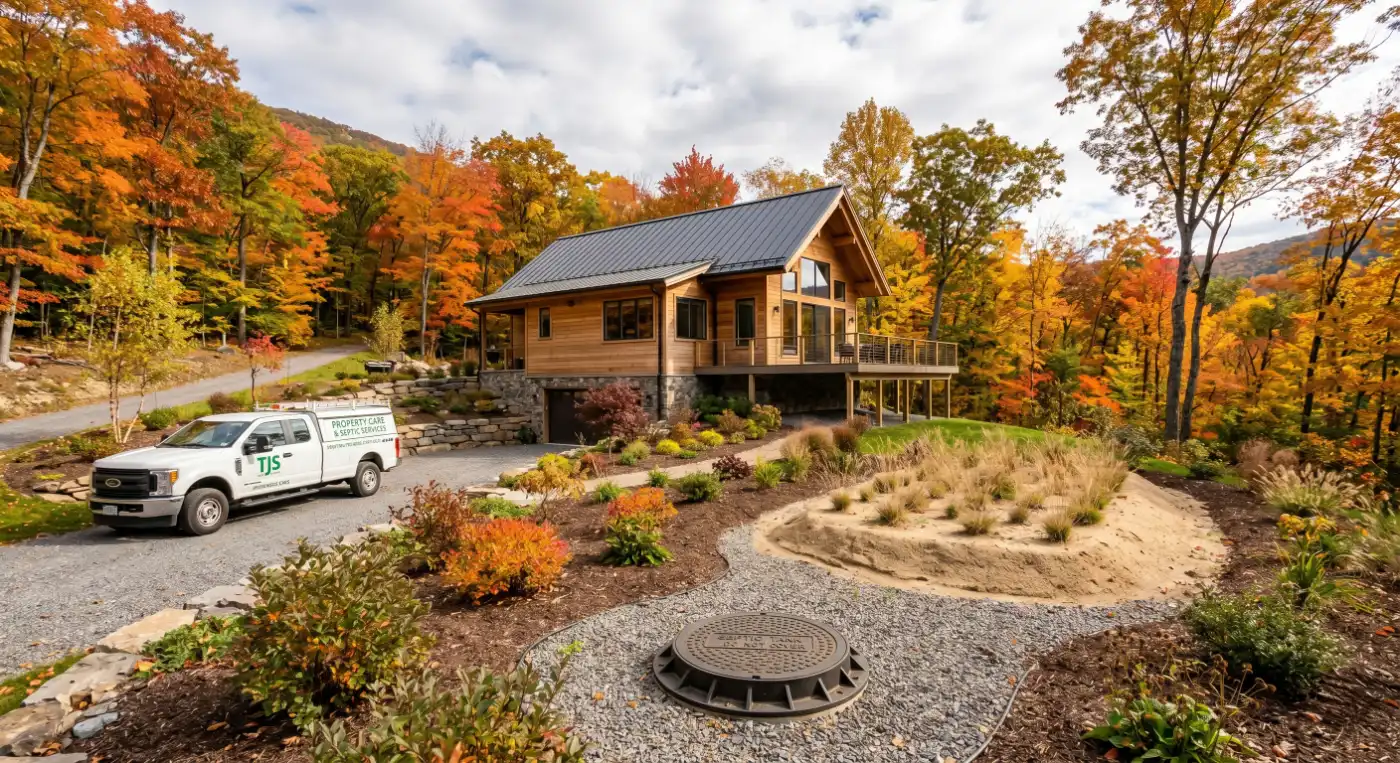
When bedrock or high water tables sit close to the surface, an elevated sand mound is often the primary engineered solution. Rather than relying on natural soil underground, an elevated bed of clean, coarse sand is built above the native ground line.
Wastewater is pre-treated in the septic tank, piped to a dosing tank, and then pressure-dosed through a network of perforated pipes set within the sand layer. This ensures uniform distribution and thorough biological treatment before effluent ever reaches the delicate natural soil beneath.
Advanced Effluent Pumps and Heavy-Duty Grinder Systems
On steep mountain lots, your disposal area might sit at a higher elevation than your home’s main drain output. Gravity won’t move water uphill. This requires high-head effluent pumps capable of pushing thousands of gallons across hundreds of feet of elevation rise.
For estates with deep basements, detached guest quarters, or complex plumbing layouts, standard solids-handling pumps aren’t enough. Installing a commercial-grade grinder pump chops solids into a fine slurry, preventing clogs and allowing wastewater to be transported smoothly through smaller-diameter pressurized pipes over long distances.
If you ever run into high-water alarms or mechanical glitches on an existing system, having access to quick-turnaround grinder pump repair and emergency services keeps small issues from escalating into major home disasters.
Micro-Mound and Drip Dispersal Innovations
For homeowners who prefer to keep their estate landscapes pristine without a prominent mound feature, subsurface drip dispersal offers a discreet alternative. Drip systems utilize flexible tubing equipped with pressure-compensating emitters buried just 6 to 12 inches below the surface.
This method distributes small, precise doses of treated effluent directly into the root zone of your lawn or woodland edge. It requires minimal site clearing and preserves natural mature trees and architectural landscaping.
The Excavation Edge: Why Heavy Machinery and Soil Expertise Rule Supreme
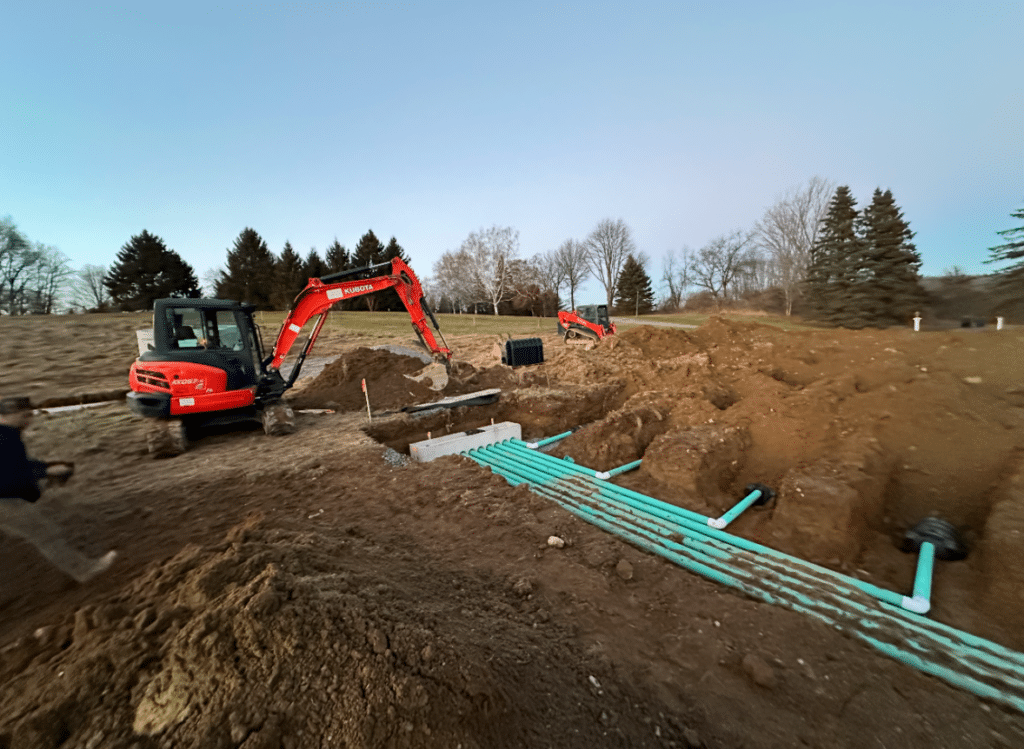
Designing a custom septic system on paper is only half the battle. Executing the plan in tough terrain requires heavy iron, precise grading, and an intimate working knowledge of soil behavior.
-
Precision Grading: Preventing surface run-off from washing out sand mounds or saturating absorption trenches.
-
Rock Excavation: Utilizing heavy excavators and hydraulic hammers to clear ledge without fracturing subterranean rock pathways that feed local water wells.
-
Soil Preservation: Minimizing soil compaction in designated dispersal zones so natural absorption rates are maintained.
-
Drainage Integration: Integrating curtain drains and swales around the septic footprint to divert perched groundwater away from the treatment area.
At Triple J Services, our excavation-led mindset sets us apart. We don’t just drop tanks in holes; we reshape property hydraulics. Proper earthwork ensures your system performs reliably through spring thaws, torrential summer downpours, and freezing winter conditions.
Explore our full scope of earthwork and infrastructure capabilities on our septic system installation page.
Navigating Pennsylvania DEP Regulations and Local Pike County Permitting
Installing an onlot sewage system in Pennsylvania isn’t just a construction task—it’s a strictly governed regulatory process enforced by the Pennsylvania Department of Environmental Protection (DEP) and local municipal Sewage Enforcement Officers (SEOs).
Before breaking ground on a luxury build in Lackawaxen, Milford, or surrounding areas, a rigorous multi-step evaluation must occur:
-
Deep Probe Testing: Excavating 6-to-10-foot-deep pits to analyze soil horizons, rock layers, and redoximorphic features (indicators of high seasonal water tables).
-
Percolation (Perc) Testing: Measuring the drop rate of water in designated test holes to establish the soil’s absorption speed.
-
Site Plan & Engineering: Drafting a precise plot plan that satisfies strict isolation distances (minimum buffer zones from wells, property lines, lakes, and dwelling foundations).
-
Permit Issuance: Submitting the complete engineering package to the local SEO for formal review and permit approval.
Failing to follow these regulatory steps accurately can result in project shut-downs, costly redesigns, or unbuildable lot declarations. You can learn more about standard state wastewater testing criteria via the Pennsylvania Department of Environmental Protection Onlot Sewage System Guidelines.
Our team works hand-in-hand with site engineers and local municipalities across our entire service areas network to keep projects on schedule and fully compliant with state and local codes.
Designing for Longevity: Protecting Your Investment
A custom luxury septic system is a major capital investment. Protecting it requires intelligent system design choices made during the initial planning phase, along with a commitment to routine upkeep.
Dual-Tank Configurations and Flow Equalization
For large estates, relying on a single septic tank creates a major bottleneck. Installing primary and secondary tanks in series doubles sludge retention capacity, ensuring that clear effluent enters the pump chamber or leach field. Incorporating flow equalization controls prevents large bath discharges from shocking the biological treatment process.
Intelligent Pump Controllers and Telemetry Alarms
Modern high-end septic systems feature smart control panels equipped with visual and audible alarms, battery backups, and telemetry connections. If a float switch fails or a pump experiences an electrical trip, the panel alerts you immediately before wastewater backs up into your home.
Dedicated Maintenance Access
Luxury landscapes should never have to be torn up to service a tank. Installing heavy-duty, watertight risers brought flush to grade allows clean, effortless access for routine inspections and pumping.
Preventing Luxury Septic Disasters: Maintenance and Alarm Response
Even the most advanced septic system requires ongoing care. Luxury homes, with their high fixture counts and specialized water appliances, demand a proactive maintenance schedule.
-
Regular Tank Pumping: High-volume homes should schedule professional tank pumping every 1 to 3 years to prevent solids from accumulating and spilling into downstream components. Learn more about routine care options on our emergency septic pumping services page.
-
Filter Cleaning: Effluent filters located at the tank outlet catch hair, lint, and suspended solids. Cleaning these screens every 6 to 12 months maintains smooth flow rates.
-
Pump Chamber Inspection: Testing float switches, check valves, and electrical draw on your effluent pump systems prevents sudden mechanical shutdowns.
When an alarm triggers at 2:00 AM on a winter weekend, you need a local team that answers the call immediately. Triple J Services offers 24/7 emergency response throughout Pike County to resolve pump failures, clear line blockages, and get your system back online safely.
For additional seasonal tips and maintenance advice, visit our septic resources section.
Partner with Pike County’s Septic and Pump Specialists
Building or renovating a luxury mountain estate in the Poconos should be an exciting journey, not a nightmare of site failures and permit delays. By prioritizing custom septic design and partnering with heavy excavation specialists early in the architectural process, you ensure your property remains safe, valuable, and operational for decades to come.
To learn more about our company values and history, visit our about Triple J Services page, or explore our full suite of residential and commercial offerings on our septic services breakdown.
THE SHORT VERSION
-
Glacial Terrain Demands Custom Work: Standard septic designs fail in the Poconos due to shallow bedrock, heavy clay, high water tables, and steep slopes.
-
Heavy Hydraulic Capacities: Luxury estate amenities like spa tubs, multi-suite guest wings, and weekend events require specialized flow controls and larger dosing capacities.
-
Advanced Engineering Options: Solutions like sand mounds, pressure dosing, commercial grinder pumps, and drip dispersal protect mountain watersheds and keep landscapes clean.
-
Excavation Expertise Matters: Precision earthwork and heavy machinery are critical for proper site grading, rock clearing, and curtain drainage.
-
Regulatory Compliance: Navigating PA DEP rules and local Pike County SEO permitting requires an experienced partner who knows local soil science.
-
24/7 Protection: Smart control panels, telemetry alarms, and regular maintenance safeguard your high-end interior finishes against pump failures and system backups.
READY TO BUILD YOUR MOUNTAIN ESTATE?
Whether you are in the initial planning phases of a luxury build or need to upgrade an existing system on your Pike County property, Triple J Services is here to help. Our excavation-led expertise, deep understanding of Pocono geology, and 24/7 emergency response make us the local specialist high-end homeowners trust.
Don’t leave your estate’s wastewater infrastructure to chance. Contact our team today to schedule an on-site consultation or discuss your engineering plans.
👉 Get in touch with Triple J Services or call us directly to speak with a specialist.