Managing Multi-Unit Housing Asphalt: A Guide for Madison County Managers
Managing a multi-unit housing property comes with a mountain of responsibilities. Between tenant requests, utility management, and interior upgrades, exterior maintenance can easily slip to the back burner.
However, your parking lots, walkways, and driveways represent a massive chunk of your property’s curb appeal and capital value. In Madison County, Illinois, our diverse weather patterns bring blazing hot summers and freezing, icy winters. This localized climate profile places unique physical stress on your asphalt surfaces year-round.
When pavement begins to degrade, it does not just look bad. It actively threatens tenant safety, decreases overall property value, and introduces serious legal liability from trip-and-fall incidents.
For property managers stretching across Madison County and the northern half of the St. Louis metro area, a proactive pavement management plan is your best defense against premature, expensive total replacement overhauls.
Why Multi-Unit Housing Pavement Degrades Faster
Multi-unit residential properties experience a distinct type of wear and tear that standard residential or low-traffic commercial locations rarely face. Understanding these specific traffic patterns helps property managers predict when and where their pavement will fail first.
Constant, Heavy Traffic Cycles
Unlike a typical commercial retail lot that empties out entirely at night, an apartment complex or condominium parking structure is never truly at rest. Residents are constantly moving in and out, delivery trucks drop off packages all day, and waste management vehicles roll through weekly with extreme axle weights.
This relentless cycle of heavy vehicles exerts continuous downward pressure on your pavement’s sub-base, accelerating structural fatigue.
Environmental Stressors Unique to Southern Illinois
Madison County experiences intense seasonal temperature swings. In the winter, moisture seeps deep into the tiny pores of your unsealed asphalt. When that moisture freezes, it expands, putting immense pressure on the surrounding rock and bitumen mixture.
This mechanism is the root cause of the early-stage fractures that eventually give birth to major potholes. In the summer, unshaded asphalt bakes under harsh ultraviolet rays, causing the oil-based binders to dry out, oxidize, and turn a brittle, pale gray color.
The Core Pillars of a Proactive Preservation Strategy
Fixing asphalt only after it crumbles into gravel is a reactive approach that drains maintenance budgets fast. Instead, modern property management demands a preservation mindset.
By applying targeted surface treatments early on, you block moisture penetration and oxidation before the underlying foundation sustains permanent structural damage.
1. Sealcoating: Your Frontline Shield
Think of sealcoating as a defensive shield for your pavement investment. When applied correctly, a high-quality emulsion seals the tiny pores on the top layer of the asphalt. This effectively locks out water, motor oil, and destructive UV rays.
For property managers watching their bottom lines, professional seal coating can easily double the functional life of an asphalt surface. This preventive measure saves thousands of dollars compared to a complete tear-out and repave.
As a general rule of thumb for our local climate, multi-unit properties should aim to reapply a fresh protective coat every two to three years depending on observed traffic volumes.
2. Defeating Moisture with Crack Sealing and Filling
Water is the ultimate enemy of durable pavement. Once a crack opens wider than a quarter of an inch, surface water gains a direct pathway straight down into the dirt sub-base. If that base material washes away or turns into soft mud, the asphalt above it will collapse under the weight of the next passing car.
Property managers need to understand the difference between two primary repair strategies to make smart spending choices:
-
Rubberized Crack Sealing: This technique uses a specialized, flexible hot-pour rubber material designed to stretch and compress as the pavement shifts during seasonal temperature changes. It is the premier option for major structural cracks. You can learn more about this approach on our dedicated crack sealing page.
-
Cold-Pour Crack Filling: This method uses a more rigid material designed for non-working, static fractures. It works beautifully to smooth out minor surface cracks and keep water out. Discover how this fits your property by reviewing our crack filling options.
3. Rapid Pothole Repair and Patching
Once a pothole forms, it grows larger with every vehicle that rolls over it. Beyond the immediate eyesore, open potholes are a direct liability. They can damage resident vehicles, pop tires, and cause severe tripping hazards for tenants walking to their cars at night.
Using targeted pothole patching allows you to saw-cut the damaged section out, excavate the failed sub-base, and drop in fresh, compacted hot-mix asphalt. This structural patch completely restores the structural integrity of the parking area, keeping your tenants happy and your liability low.
Safety, Compliance, and Curb Appeal
Managing multi-unit housing asphalt is not just about keeping the surface smooth. It is also about organizing how vehicles and pedestrians move safely through the space. Clear visual organization reduces accidents and keeps your property in compliance with local laws.
Clear Layouts with Line Striping
Over time, bright parking lines fade into vague outlines under the sun. When residents cannot clearly see where to park, they tend to crowd spaces, block emergency lanes, and take up multiple stalls.
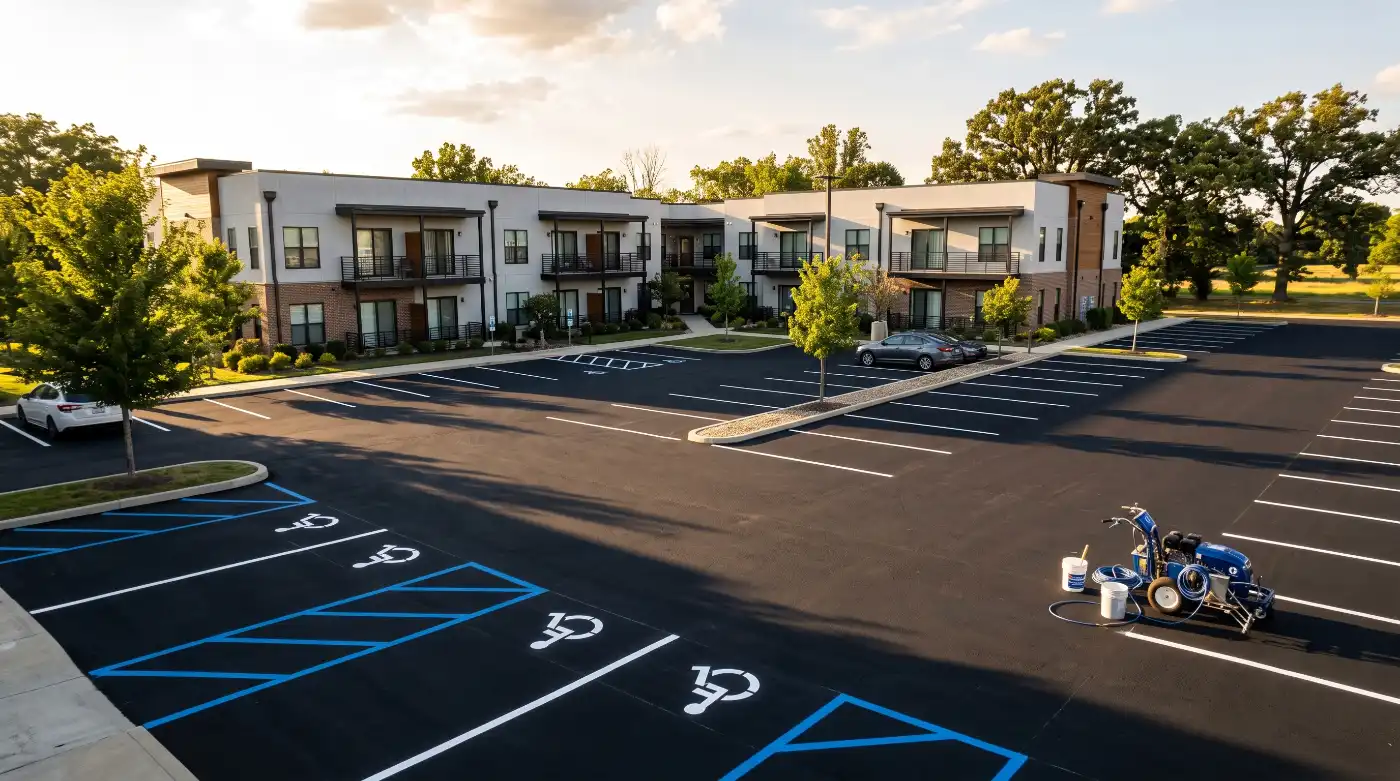
Investing in crisp, professional line striping restores immediate order to your parking areas. Using high-visibility, traffic-grade paints ensures that spaces are maximized and traffic flows smoothly through your complex.
ADA Compliance and Custom Pavement Markings
Every multi-unit housing development must comply with federal and state accessibility standards. This means you must provide a specific number of dedicated accessible parking stalls, complete with proper dimensions, loading zones, and international symbols.
Failing to maintain these markings can result in hefty fines and leaves your property vulnerable to accessibility lawsuits. Utilizing bright, durable pavement marking protocols keeps your property compliant, welcoming, and easy to navigate for all residents and guests.
The Strategic Planning Timeline for Property Managers
To help you stay on top of these requirements without breaking your annual budget, it helps to break down your pavement management tasks into clear, seasonal workflows.
-
Early Spring Inspections: Walk your entire property as the winter snow and ice melt away. Look closely for new cracks, fresh potholes, or areas where the asphalt looks like it is sagging.
-
Late Spring & Summer Execution: Schedule your heavy maintenance, such as patching, crack sealing, and sealcoating, when the ground is dry and night temperatures stay consistently warm.
-
Late Autumn Preparations: Do one final check before winter hits. Clean out your drainage systems and fill any newly formed cracks to prevent destructive freeze-thaw cycles from tearing up the pavement over the winter months.
If you want to read more industry insights on extending the lifespan of your pavement, feel free to explore our collection of articles on the Wells Asphalt blog.
Quick Summary
-
Traffic Pressures: Multi-unit properties experience heavy, continuous vehicle traffic that accelerates structural wear compared to standard residential driveways.
-
Climate Impact: Madison County’s extreme seasonal temperature shifts cause severe freeze-thaw cycles that turn minor cracks into major potholes.
-
Preservation First: Regular sealcoating every two to three years protects your asphalt from water penetration and damaging UV oxidation.
-
Water Defense: Sealing and filling surface cracks early stops moisture from softening the structural sub-base below.
-
Safety & Compliance: High-visibility line striping and proper ADA markings keep traffic moving smoothly and protect your property from legal liability.
Your parking lots and driveways are a major reflection of how you run your property. Do not wait for small cracks to turn into expensive, full-scale repaving projects. The team at Wells Asphalt Sealcoat & Striping specializes in helping property managers across Madison County protect their pavement investments with reliable, long-lasting maintenance solutions.
Ready to restore your property’s curb appeal and secure your asphalt investment? Contact Us Today!