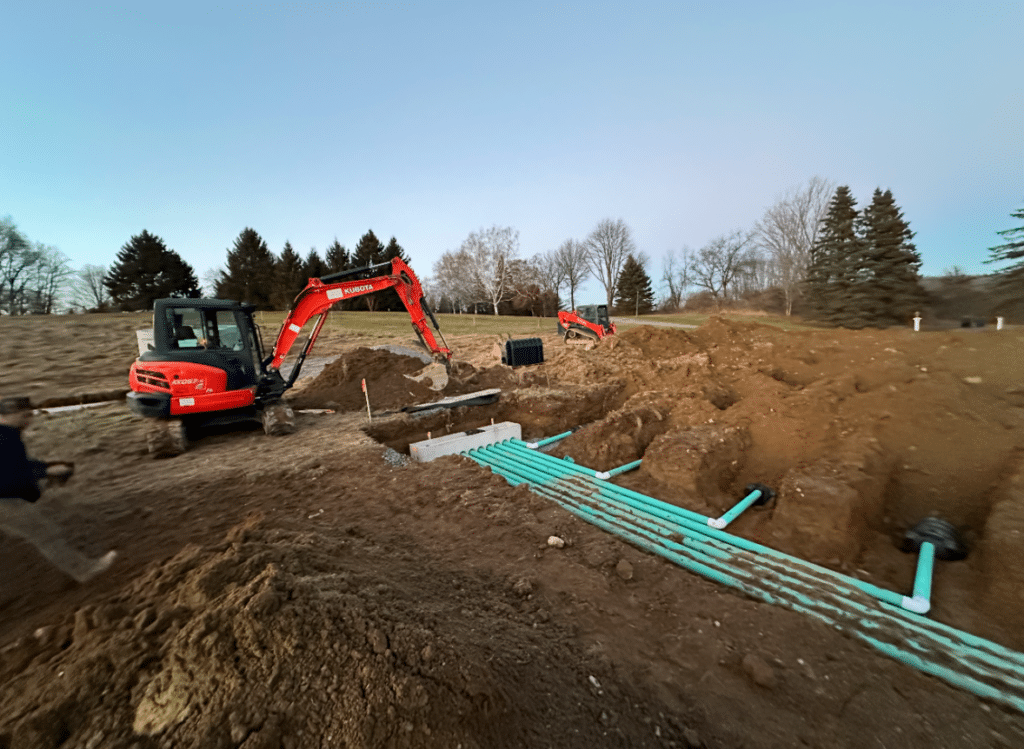

Managing a busy household with a large family is a major balancing act. Between sports schedules, grocery runs, school activities, and keeping up with endless piles of laundry, there is always something demanding your attention. With so much happening above ground, it is easy to forget about the critical infrastructure working hard right beneath your yard.
For households with four, five, or more people, your septic system experiences a level of daily stress that standard homes simply never encounter. A system designed for a couple or a small family will quickly become overwhelmed if it is forced to process the heavy wastewater loads generated by a large family without proper adjustments.
Failing to adapt your septic maintenance routine to your family size can lead to slow drains, foul odors, and catastrophic structural failure. Triple J Services, operating out of Lackawaxen, Pennsylvania, is here to pull back the curtain on residential wastewater management. Let’s look at exactly why large families need to rewrite the rules for septic upkeep and how you can protect your property from unexpected emergencies.
Why Household Size Re-Engineers the Septic Timeline
To understand why large families require unique pumping schedules, you have to look at how a septic tank functions. Every time a toilet is flushed, a shower is taken, or a load of laundry is run, wastewater streams down your drains and collects inside a large, buried concrete or plastic tank.
Inside this tank, nature goes to work. Heavy solid waste falls directly to the bottom, forming what is known as the sludge layer. Lighter waste, such as cooking oils, soap scum, and grease, floats to the top to form the scum layer. The middle section remains relatively clear water, known as effluent. This clear liquid eventually exits the tank and flows out into your soil absorption area for final filtration.
Inside a healthy tank, live bacteria constantly eat away at the solid waste, breaking it down and keeping the sludge layer from growing too quickly. However, these bacteria need time to do their job. When a large family constantly sends hundreds of gallons of water into the tank every day, two major problems occur.
First, the heavy, continuous flow of water pushes waste through the tank so rapidly that solids do not have adequate time to settle to the bottom. Second, the sheer volume of solid waste accumulates much faster than the bacteria can decompose it. This causes the sludge layer to rise rapidly toward the outlet pipe. If the sludge rises too high, it escapes the tank and flows straight into your yard’s drainage system, causing extensive and costly physical damage.
Calculating Your New Septic Pumping Frequency
A common rule of thumb passed around by homeowners is that a septic tank only needs to be pumped out once every three to five years. While that timeline works well for a standard household of two or three people, it can be a recipe for disaster for a large family.
For a household with six or more residents utilizing a standard 1,000-gallon or 1,250-gallon tank, that pumping timeline needs to be compressed significantly. In many heavy-use situations, a large family should have their septic tank professionally pumped every one to two years.
To map out an accurate schedule, you can look at the estimated guidelines established by environmental health organizations. For instance, the National Environmental Services Center provides comprehensive technical data regarding residential water use. Based on general usage data, a 1,000-gallon tank supporting a family of six will hit its maximum solid accumulation capacity in roughly 1.5 years. A larger 1,500-gallon tank buying a family of six a bit more time will still require pumping every 2.6 years.
If you add modern appliances into the mix, like a high-use garbage disposal or a non-stop washing machine, those timeframes shrink even further. Waiting five years under these heavy-use conditions practically guarantees that sludge will spill over into your lawn’s absorption zones.
The Unique Realities of Poconos Region Septic Fields
Geography plays an incredibly large role in how your home handles wastewater, especially if you live in Northeastern Pennsylvania. The Pocono Mountains region is famous for its beautiful landscape, but beneath that scenic terrain lies exceptionally rocky soil, dense clay, and a very high seasonal water table.
Because the native soil cannot rapidly absorb vast quantities of water, traditional underground leach fields frequently fail or cannot be legally installed. To bypass these environmental limitations, engineers developed the elevated sand mound system, locally and affectionately known across Pennsylvania as a “Turkey Mound.”
A Turkey Mound is essentially an above-ground, carefully engineered sandbox built right on your lawn. Instead of gravity pulling wastewater down into deep soil trenches, an electric pump pushes the clarified effluent upward into this raised mound of specialized sand. The sand filters out harmful pathogens before the water slowly trickles back down into the natural environment.
The Extra Vulnerability of a Turkey Mound
While Turkey Mounds are excellent at solving local soil issues, they are significantly more sensitive to over-use than traditional, deep underground drain fields. When a large family creates an excessive amount of wastewater, the electric pump inside the dosing chamber has to run continuously to send that water up into the mound.
If your home’s pumping schedule is neglected and solid sludge particles flow out of the main tank, those solids will land directly inside the clean sand of your Turkey Mound. The fine spaces between the sand grains will clog instantly. Once a Turkey Mound is severely choked with sludge and grease, it completely loses its ability to shed water.
The sand becomes waterlogged, the grass on the mound turns into a swamp, and raw sewage will eventually begin seeping out of the sides of the hill. Repairing a ruined sand mound is an intensive process that often requires removing the clogged layers, scarifying the remaining sand, and rebuilding the mound to its original specifications. For a large family utilizing an elevated sand mound system, keeping up with tight tank pumping intervals is the single best way to avoid a massive, multi-thousand-dollar excavation headache.
Managing the Critical Supporting Hardware
A traditional gravity-fed septic system relies on simple physics to move water. However, households with elevated sand mounds or homes with plumbing fixtures located below the main sewer line require mechanical help. This is where effluent pumps and grinder pumps enter the picture.
Effluent Pumps vs. Grinder Pumps
An effluent pump sits inside a secondary concrete chamber located right past your main septic tank. Its only job is to push the clear, filtered liquid wastewater uphill into your Turkey Mound or advanced treatment bed. It is built to move liquid, not solid waste.
A grinder pump, on the other hand, is a much tougher piece of equipment. Usually installed in basements or low spots on the property, a grinder pump utilizes sharp, rotating metal blades to chop up solid waste and toilet paper into a fine slurry. Once the waste is completely liquefied, the pump pushes it through a pressurized line up into the main septic tank or municipal sewer connection.
The Impact of Large Family Usage on Pumps
With a large family in the house, these mechanical pumps work double time. More flushes mean the grinder pump activates constantly, and more showers mean the effluent pump cycles through hundreds of gallons of water every single day. This heavy workload accelerates normal mechanical wear and tear.
If a pump motor burns out or a float switch gets stuck, the wastewater has nowhere to go. The system will back up into your home’s lowest drains almost immediately. Large families must include these pumps in their routine maintenance plans. Checking the electrical connections, clearing away grease build-up, and ensuring the warning alarms are functional can save your household from an overnight plumbing crisis.
Smarter Water Habits to Reduce Septic Stress
You do not have to live in fear of your plumbing just because you have a big family. While you cannot change the number of people using the bathrooms, you can absolutely change how water flows through your home. Implementing a few tactical household habits will significantly reduce the daily hydraulic load placed on your system.
Space Out Your Laundry Loads
The absolute worst thing a large family can do is save all their laundry for one single day of the week. Running five or six loads of laundry back-to-back creates a phenomenon known as hydraulic overloading.
Your septic tank is suddenly hit with an absolute flood of water, often exceeding 150 to 200 gallons in a matter of hours. This massive wave surges through the tank, stirs up the settled sludge at the bottom, and carries those destructive solids straight out into your leach field or Turkey Mound.
Instead of a weekend laundry marathon, adopt a strict policy of running just one or two loads of laundry per day. Spacing out your wash cycles gives your septic tank plenty of time to rest, settle, and properly process the incoming water.
Ban Destructive Items from Your Drains
When you have multiple children sharing bathrooms, it is incredibly easy for non-biodegradable items to end up down the toilet. You must establish a zero-tolerance policy for what gets flushed.
Items marketed as “flushable wipes” are the primary enemy of residential septic systems. Unlike traditional toilet paper, these heavy wipes do not dissolve in water. They sink directly to the bottom of the tank, rapidly filling up your sludge capacity, wrapping around grinder pump blades, and clogging structural pipes.
The same rule applies to your kitchen sink. Avoid using your garbage disposal heavily, or better yet, stop using it altogether. Dumping food scraps, coffee grounds, and cooking oils down the drain forces your septic bacteria to work overtime to break down complex organic materials, causing the scum and sludge layers to skyrocket.
Watching for the Early Warning Signs of System Failure
Even with an adjusted pumping schedule, large family homes should be regularly monitored for early warning signs of distress. Catching a septic issue when it is a minor clog is much easier and significantly cheaper than dealing with a total system failure. Take a walk out into your yard every few weeks and keep your eyes and nose open for these classic indicators:
-
Drains across your home are flowing noticeably slower, and toilets require multiple flushes to clear the bowl.
-
You notice a persistent, gurgling sound echoing from your pipes when the washing machine drains or someone takes a shower.
-
A strong, foul odor resembling sewage or sulfur wafts through your yard, particularly around the location of your main tank or sand mound.
-
The grass directly over your leach field or along the base of your Turkey Mound looks unusually bright green, lush, and spongy, even during a dry spell.
-
Standing pools of dark, murky water begin forming on the surface of your lawn.
If you notice any of these red flags, your system is crying out for professional help. Ignoring these subtle signs will allow the underlying problem to escalate into an expensive structural replacement.
Advanced Troubleshooting with Modern Technology
Sometimes, a simple pump-out isn’t enough to solve a systemic drainage issue. Over years of heavy family use, pipes accumulate a thick interior lining of soap scum, hardened grease, and organic sludge. This build-up narrows the interior pathway of your lines, leading to chronic blockages.
High-Pressure Hydro-Jetting
When standard plumbing snakes cannot clear a line, professional technicians utilize high-pressure drain jetting, also known as hydro-jetting. This process blasts specialized streams of highly pressurized water through your septic pipes. The force of the water strips away years of stubborn residue, scale, and grease without damaging the underlying pipe structure. It essentially restores the interior of your lines to a like-new condition, allowing your large family’s wastewater to flow smoothly without restriction.
Comprehensive Visual Inspections
If your system continues to act up after a fresh pumping, a digital camera inspection is the gold standard for diagnostic troubleshooting. A technician inserts a flexible, high-definition camera probe directly into your septic lines and tank access points.
This visual feed allows the team to inspect the structural integrity of your tank baffles, locate hidden pipe collapses, and evaluate the internal health of your distribution boxes. For more details on diagnostic standards and common regional compliance, the Pennsylvania Department of Environmental Protection offers extensive public resources on protecting local water quality. Armed with real-time visual data, you can make informed decisions about your property instead of guessing what is wrong underground.
Long-Term Capital Planning for Large Properties
If you plan on staying in your home for decades while raising a family, it helps to treat your septic system like a long-term financial investment. Every mechanical component, from your PVC distribution pipes to your electric effluent pump, has a natural lifespan.
By prioritizing minor preventative maintenance today, you avoid facing a massive capital expenditure down the road. Keep a detailed physical folder or digital log of every septic service your home receives. Note the exact date your tank was pumped, the name of the contractor, the volume of waste removed, and any notes regarding the structural condition of the tank or pump components.
When it comes time to eventually sell your property or pass it down to the next generation, having a pristine, multi-year record of proactive maintenance adds significant tangible value to your real estate. It proves to future buyers that your large household managed its infrastructure with care and responsibility.
Quick Article Recap
-
Large families generate heavy daily water volumes, preventing solids from settling and causing sludge layers to accumulate rapidly.
-
The standard three-to-five-year pumping rule does not apply to big households; heavy-use systems often require professional pumping every one to two years.
-
Elevated sand mounds, or “Turkey Mounds,” are common in the rocky Poconos region and are highly vulnerable to catastrophic failure if choked with escaping sludge.
-
Heavy water use accelerates wear on critical mechanical components like effluent pumps and grinder pumps, requiring regular operational checks.
-
Simple habits, like daily laundry distribution and a strict ban on “flushable” wipes and grease, protect the biological health of the system.
-
Early warning signs of failure include gurgling pipes, slow drains, foul exterior odors, and spongy, over-saturated patches of grass on your lawn.
-
Advanced solutions like high-pressure hydro-jetting and digital camera inspections provide precise answers for chronic, heavy-use blockages.
Keep Your Household Running Smoothly with Triple J Services
Don’t wait for a stressful plumbing backup to disrupt your busy family routine. At Triple J Services in Lackawaxen, Pennsylvania, we specialize in keeping high-demand residential septic systems operating at peak performance. Whether your household is due for an adjusted preventative tank pumping, an effluent pump replacement, high-pressure hydro-jetting, or a comprehensive Turkey Mound evaluation, our experienced team delivers reliable, local expertise you can count on. Protect your lawn, your home, and your peace of mind. Give us a call today at (845) 750-5222 to speak with a local expert and schedule your professional service, or discover more about our dedication to our community by visiting the Triple J Services About Page right now!