Understanding the Realities of Septic System Installation
Installing a new septic system is one of the most significant infrastructure investments you will make for your property. It is not just about burying a large concrete tank in the backyard and walking away. It is a highly regulated, deeply engineered process that directly impacts the environmental safety, health, and long-term value of your home. Whether you are building a dream home from the ground up in Milford or dealing with a sudden, catastrophic system failure in Lackawaxen, knowing exactly what lies ahead can take the anxiety out of the process.
Before exploring the structural phases, we must establish a foundational truth. No two pieces of land are identical. Because of this variation, every single septic system installation requires a fully customized engineering plan and a site-specific financial quote. What works flawlessly for a flat, sandy lot in Dingmans Ferry will not work for a rocky, sloped property bordering a protected watershed. Soil composition, local water tables, property boundaries, and municipal regulations all dictate the exact design your property needs.
When you partner with an experienced team like Triple J Services, you are choosing an excavation-led specialist team that understands the complex terrain of Pike County. We do not believe in guesswork. We evaluate your property as a unique ecosystem to build a system that lasts for decades. Let’s break down exactly what happens behind the scenes during a professional septic system installation.
Phase 1: Site Evaluation, Soil Testing, and the Perc Test
The very first step of any successful septic project takes place before a single piece of heavy machinery rolls onto your grass. Everything hinges on the soil. Your soil must be able to absorb and naturally filter the wastewater effluent leaving your septic tank. If the soil cannot handle the liquid, the system will fail, resulting in hazardous backups and environmental contamination.
To determine your property’s capability, a certified professional must perform a soil percolation test, commonly known as a perc test, alongside deep hole testing. During this phase, technicians dig a series of test pits to analyze the distinct layers of soil and monitor how quickly water drains through them.
-
Identifying Soil Textures: The test identifies whether your ground is dominated by highly permeable sand, restrictive clay, or solid bedrock.
-
Locating the Water Table: Deep hole testing determines the high-water table mark to ensure your system’s leach field sits safely above the groundwater.
-
Determining Absorption Rates: The perc test measures the precise drop in water level over time, providing the baseline metrics required by environmental engineers.
According to wastewater guidelines established by organizations like the National Environmental Services Center, proper soil assessment is the single most critical factor in preventing premature drainfield failure. Skipping or rushing this step is the fastest way to ruin a significant financial investment.
Phase 2: System Design, Engineering, and Municipal Permitting
Once the soil metrics and perc rates are documented, the data is handed over to a licensed environmental engineer. The engineer’s job is to design a custom blueprint tailored to your home’s expected water usage and your property’s specific physical constraints. This is where your system receives its official classification.
Depending on your site evaluation, your design will fall into one of two primary categories:
-
Conventional Septic Systems: These systems utilize gravity to move effluent from the septic tank into a standard stone-and-pipe leach field. They are ideal for properties with deep, well-draining soil and a low water table.
-
Alternative Septic Systems: If your property features shallow bedrock, dense clay soil, a high water table, or a steep slope, a conventional system cannot be legally or safely installed. In these instances, engineers specify alternative designs, such as engineered mound systems, sand filters, or advanced aerobic treatment units (ATUs) that actively purify wastewater before it reaches the ground.
With the engineered blueprints finalized, the plans must be submitted to your local township or the Pennsylvania Department of Environmental Protection (DEP) for strict permit approval. This permitting phase requires patience. Government agencies review the designs meticulously to ensure compliance with setback requirements, ensuring your system sits a safe distance away from structural foundations, property lines, and private drinking water wells.
Phase 3: Site Preparation and Severe Excavation
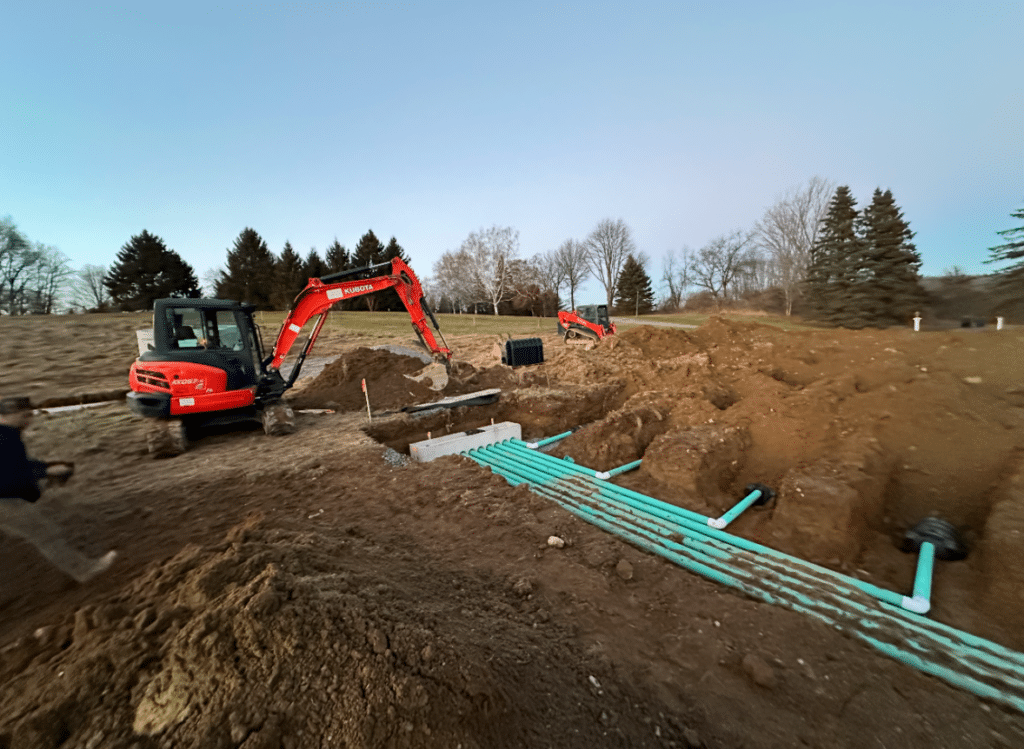
The moment your permits are stamped and approved, the physical transformation of your property begins. This is where an excavation-led specialist makes a massive difference in the execution of your project. Heavy equipment, including large track excavators, skid steers, and dump trucks, will arrive at your property.
Your installation team will start by clearing the designated construction zones. This involves removing trees, stubborn brush, large boulders, and the topsoil layer where both the tank and the final absorption area will sit. It is important to realize that this phase is fundamentally noisy and disruptive to your landscape. A professional crew will carefully mark underground utility lines, stake out the exact coordinates of the system components, and establish clear staging areas for raw materials like clean washed stone and specialized sand.
Proper site grading during this early phase is paramount. The surrounding ground must be sloped correctly to divert surface rainwater away from the newly excavated zones. If stormwater is allowed to pool in an open excavation site, it can compromise the structural integrity of the pit walls and oversaturate the native soil before the components are even set in place.
Phase 4: Tank Placement and Underground Piping Installation
With the pits cleanly excavated and leveled to precise engineering specifications, it is time to install the heart of the system: the septic tank. Most modern residential septic tanks are massive, heavy structures constructed from precast concrete, durable fiberglass, or high-density polyethylene. Because of their immense weight, they are carefully lowered into the ground using specialized truck-mounted cranes or heavy-duty excavators.
-
Establishing a Solid Base: The bottom of the tank excavation pit must be lined with a level layer of compacted sand or crushed gravel to prevent the tank from shifting or settling unevenly over time.
-
Connecting the Main Line: Heavy-duty PVC piping is run from your home’s main waste stack directly to the inlet side of the new tank, pitched at a precise slope to ensure seamless gravity-fed waste movement.
-
Installing Effluent Management Tools: Depending on your custom engineered plan, this is also the phase where specialized pumps are integrated. For systems where the absorption field sits uphill from the house, an expert effluent pump service installation is completed to pump clarified liquid safely to its destination. Similarly, properties requiring pressurized waste management may see the integration of advanced grinder pump repair and emergency services infrastructure to protect against system blockages.
Phase 5: Building the Drainfield or Mound System
With the tank safely secured and connected, the focus shifts to the final treatment area: the drainfield, also known as the leach field. If your property qualified for a conventional system, the crew will excavate a series of parallel trenches or a wide bed. This area is filled with clean, washed gravel and perforated distribution pipes, or modern gravelless plastic chambers designed to distribute effluent evenly across the soil.
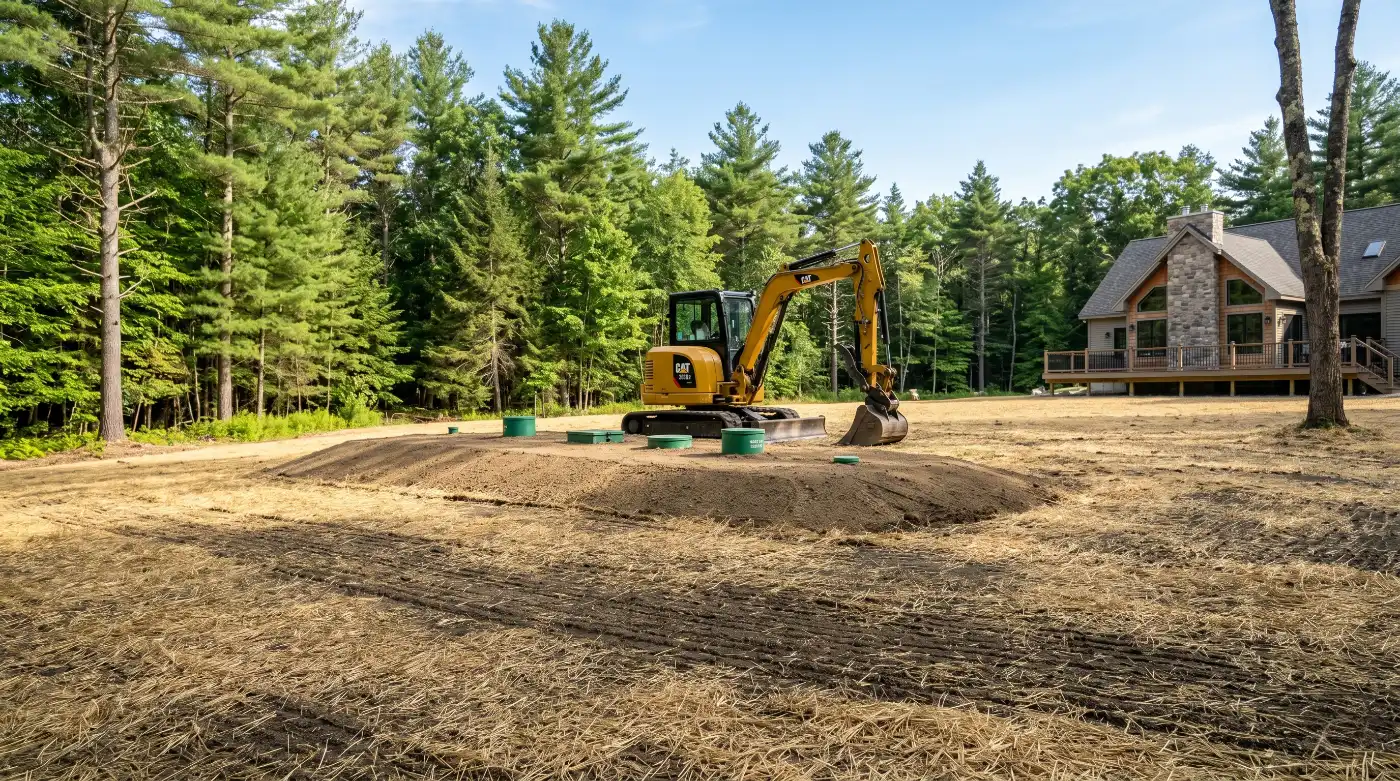
However, if your site characteristics require an alternative setup, this phase looks entirely different. For instance, if you are installing an engineered mound system, the leach field is constructed entirely above the natural grade of the land. The installation team meticulously builds a multi-layered hill using highly specific, clean system sand, topped with aggregate stone, distribution piping, and a protective synthetic fabric layer.
Regardless of the system type, precision is non-negotiable here. Distribution pipes must be perfectly level to prevent wastewater from rushing to one single corner of the yard, which would quickly oversaturate the ground and cause localized failure. Every pipe connection, aggregate depth, and sand layer must match the engineer’s calculations down to the exact inch.
Phase 6: System Inspection and Backfilling
Before any of your new underground infrastructure can be hidden from view, a final regulatory milestone must be passed. A local municipal health officer or code enforcement inspector must visit the site in person to conduct a thorough open-trench inspection.
The inspector will look closely at the pitch of the PVC pipes, verify the structural integrity and holding capacity of the tank, check the depth of the stone and sand layers, and confirm that every element perfectly matches the permitted engineering blueprints. This inspection acts as an essential consumer protection layer, guaranteeing that your system has been built safely and legally.
Once the inspector signs off and grants official approval, the crew can proceed with backfilling. Heavy machinery carefully pushes the stockpiled native soil back into the trenches and over the septic tank. The soil is gently compacted in stages to prevent future ground settling while ensuring that the fragile underground piping is not crushed or displaced during the process. The area is then finely graded, leaving a smooth surface ready for grass seed, straw, or sod.
What Affects Your Custom Installation Estimate?
Because a septic installation is completely bespoke, homeowners often wonder what variables cause costs to fluctuate between properties. Understanding these factors can help you contextualize your personal site plan.
-
System Type: Conventional gravity systems require less specialized material and labor, making them more affordable than alternative mound systems or advanced aerobic units that utilize electrical components and complex multi-layered sand structures.
-
Excavation Complexity: Properties with heavy tree coverage, massive boulders, steep changes in elevation, or shallow bedrock require significantly more machine time, specialized excavation attachments, and labor to clear and dig safely.
-
Property Accessibility: If your backyard is tightly enclosed by retaining walls, delicate landscaping, or narrow side yards, maneuvering heavy equipment becomes a slower, more precise operation, which can influence overall labor timelines.
To get an accurate, clear understanding of what your property requires, you should always request an on-site consultation from a certified expert. You can review our full operational scope on our services page or explore our targeted regional coverage via our service areas page to schedule an evaluation with our local team.
Long-Term Care: Protecting Your New Investment
The day your new septic system is fully buried and operational is the day your long-term maintenance journey officially begins. A newly installed system can easily thrive for thirty years or longer, but only if it is treated with consistent care and respect.
First and foremost, protect your physical drainfield area. Never drive heavy vehicles, park cars, or operate machinery over the tank or leach field, as this will compact the soil and crush underground lines. Avoid planting trees or deep-rooted shrubs near the system; aggressive roots can easily infiltrate pipe perforations and cause catastrophic blockages.
Additionally, pay close attention to what you flush down your drains. Your system relies on a delicate balance of live bacteria to break down solid waste inside the tank. Introducing harsh chemical cleaners, motor oils, paints, flushable wipes, feminine hygiene products, or excessive grease will kill those beneficial bacteria and clog your drainfield.
Routine maintenance is your best defense against premature failure. Plan to have your tank professionally inspected and pumped out every three to five years depending on your household size. For homeowners managing an active system failure or those dealing with an older system that has suddenly stopped functioning, staying ahead of problems with trusted emergency septic pumping services can save you thousands of dollars in premature replacement costs down the line. You can also explore our educational articles and maintenance guides directly on our resources page to learn how to keep your system running smoothly.
The Short Version: Septic System
-
Custom Plans Are Mandatory: Every property features unique soil, water tables, and topography; therefore, every installation requires a custom site design and a personalized quote from Triple J Services.
-
The Soil Rules the System: A successful installation always starts with comprehensive soil and perc testing to see how efficiently the ground filters water.
-
Permitting Takes Time: Engineering blueprints must be rigorously reviewed and approved by local township or DEP authorities before physical excavation can legally begin.
-
Excavation Is Intensive: The process requires heavy machinery to clear land, grade the property, dig precise pits, and set heavy concrete or fiberglass tanks.
-
Final Inspections Protect You: All underground components must pass an open-trench physical inspection by a municipal official before being backfilled with soil.
-
Proactive Care Extends Lifespan: Avoid driving over your system, keep deep-rooted plants away, and schedule professional pumping every three to five years to protect your investment.
Navigating a new septic installation or dealing with an unexpected system failure can feel overwhelming, but you do not have to tackle it alone. When you need a local team that pairs structural expertise with deep regulatory knowledge and honest, dependable craftsmanship, Triple J Services is ready to answer the call. We take pride in guiding our neighbors through every single phase of the infrastructure journey—from the very first soil test to the final grading. To learn more about our hands-on background and core company values, please visit our about page. If you are ready to request your custom on-site quote or need immediate operational support, connect directly with our specialists through our contact page today. Let’s build a durable, compliant infrastructure you can trust.