
The Hidden Connection Between Your Yard and the Poconos
Living in the Pocono Mountains comes with a unique appreciation for the natural landscape. Our region relies heavily on a clean, vibrant ecosystem. Tourists travel here from miles away to fish in our streams, kayak down our rivers, and hike along our forested trails. Yet, a silent, underground threat poses a daily risk to these pristine waterways.
Most homes throughout our mountain communities are not hooked up to a centralized municipal sewer grid. Instead, household waste relies completely on private, underground infrastructure. When working correctly, these setups process wastewater quietly, safely, and efficiently right beneath your lawn. They are a triumph of decentralized engineering.
However, underground systems do not last forever without active care. When a system breaks down, the consequences do not stay contained to your property lines. Rocky mountain soil, steep slopes, and high water tables create a direct pathway from a malfunctioning drain field straight into local tributaries. A single residential failure can cause a ripple effect across our entire regional watershed.
Protecting this fragile ecological balance requires a mix of environmental awareness and fast, professional maintenance. Based right here in Lackawaxen, Pennsylvania, Triple J Services understands the unique geological demands of our region. We specialize in keeping these vital underground setups running smoothly to safeguard your property and our shared local ecosystem.
How a Standard Mountain Septic System Processes Waste
To see how a failure impacts local streams, you must first understand how a standard residential system handles wastewater. Every time you flush a toilet, run a washing machine, or wash dishes, the drainage enters a large, buried containment vessel. This main tank is designed to separate solid waste from liquids through a natural, gravity-driven process.
Inside the tank, solid waste settles to the bottom, forming a thick layer of sludge. Lighter particles, like greases, oils, and soap scum, float to the top to create a layer of scum. The relatively clear liquid left in the middle is known as effluent. Anaerobic bacteria live inside the tank and actively work to break down the solid organic matter over time.
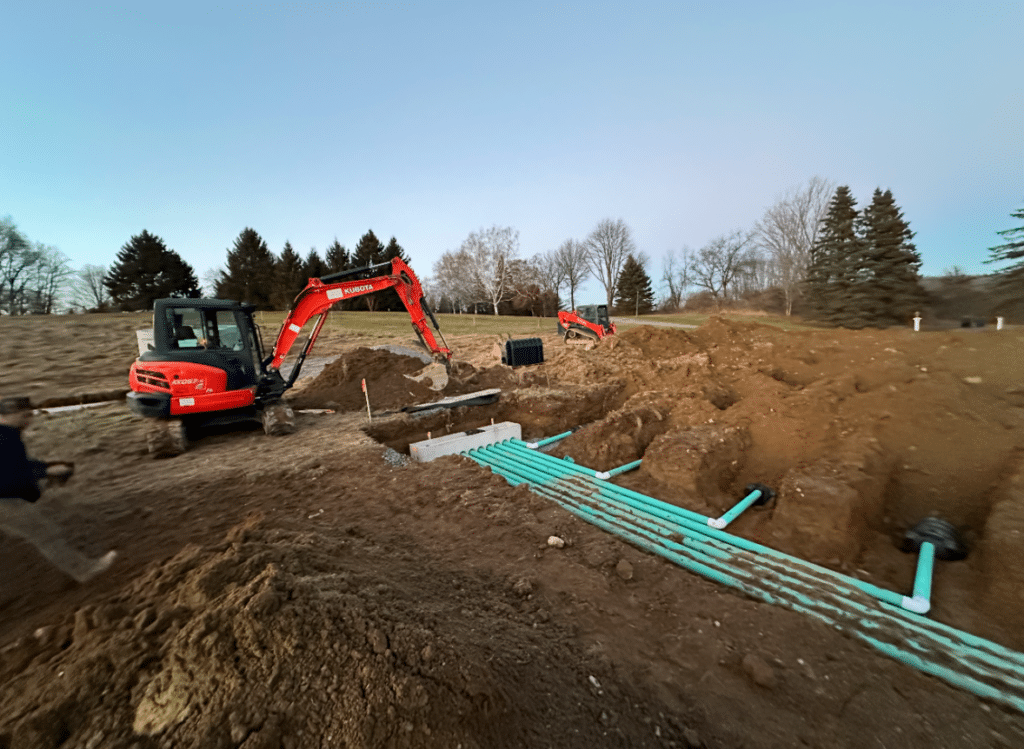
As new water enters the tank, an equal amount of liquid effluent gets pushed out through an exit pipe. This liquid flows toward a distribution box, which splits the stream evenly into a series of perforated underground pipes. This final zone is your drain field, sometimes called an absorption bed or leach field. Here, the liquid slowly filters down through layers of gravel and natural soil, where aerobic microbes neutralize remaining pathogens before the moisture rejoins the deep groundwater table.
Navigating the unique rocky terrain of Northeast Pennsylvania often requires highly customized layouts. If you want to know more about our background and how we approach these complex local engineering demands, check out the Triple J Services About Us Page.
The Anatomy of an Underground System Failure
Septic systems fail for a variety of reasons, but the most common cause is simple neglect. Over time, the sludge layer at the bottom of the main tank builds up. If you do not have the tank pumped out regularly, this solid mass grows too high and begins spilling out into the exit pipe.
When solid waste escapes the main tank, it travels straight into your absorption field. The solids quickly plug up the small holes in your distribution pipes and choke out the surrounding soil. This creates a thick, waterproof layer of sludge that stops the ground from absorbing any more liquid. The wastewater has nowhere to go, so it backs up into your home or pools on top of your lawn.
Extreme weather and shifting mountain soil can also cause physical structural failures. Shifting rocks can crack old concrete tanks, collapse distribution lines, or snap structural connections. When a pipe breaks or a tank cracks open, raw, un-treated sewage escapes directly into the surrounding subsoil long before it ever reaches the natural filtration field.
Addressing these issues requires rapid diagnostic work and heavy equipment capability. We handle everything from basic maintenance to full-scale earthmoving to fix compromised infrastructure. To see our full line of underground solutions, visit the Triple J Services Services Page.
The Pathway to Pocono Creeks and Rivers
Many homeowners assume that if their lawn looks dry, their waste is being filtered safely. In the Pocono Mountains, this assumption can be dangerous. Our regional geology consists of thin topsoil sitting over dense layers of fractured sandstone, shale, and loose glacial gravel. This structure acts less like a dense sponge and more like a high-speed sieve.
When a drain field gets overloaded, the un-filtered wastewater does not just sit still. Gravity pulls the contaminated liquid down through the cracks in the bedrock. Because our mountain slopes are incredibly steep, this groundwater moves quickly down the hillsides, traveling horizontally until it breaks out into the nearest low-lying area.
This rapid subsurface movement means that bacteria, chemicals, and nutrients can travel from a failing system into a nearby mountain stream in a matter of days. The natural filtration process fails completely because the water moves too fast through the rocky cracks to let soil microbes do their jobs. The waste hits open water in a raw, toxic state.
The local environmental impact of this hidden runoff is well-documented. Educational updates provided by organizations like the Pocono Heritage Land Trust regularly show how non-point source pollution from failing infrastructure threatens our exceptional value waterways. Additionally, watershed data collected by the Delaware Riverkeeper Network highlights how keeping private property systems healthy is critical for protecting the main stem of the Delaware River.
Nutrient Pollution and Algae Blooms in Local Waters
One of the most destructive results of a system failure is the introduction of massive amounts of nitrogen and phosphorus into local waters. Human waste, household cleaners, and laundry detergents are packed with these highly concentrated chemical nutrients.
In a healthy system, soil particles bind to phosphorus, and plants absorb nitrogen through their roots. However, when an overloaded or broken system bypasses this biological filter, these nutrients pour directly into our creeks and ponds. This sudden chemical spike acts like a high-powered fertilizer for aquatic plant life, triggering rapid outbreaks of green algae. The ecological chain reaction is direct and unyielding, traveling from a failing septic system to an influx of excess nitrogen and phosphorus, which immediately sparks a destructive algae bloom outbreak.
These sudden algae blooms cause a destructive chain reaction in the water. Thick mats of algae coat the surface of a pond or stream, blocking vital sunlight from reaching deep underwater plants. As the algae eventually dies off and rots, underwater bacteria consume massive amounts of dissolved oxygen to break down the dead vegetation.
This drop in oxygen levels suffocates local fish species, like our native brook trout, which need cold, oxygen-rich water to survive. A single failing system upstream can turn a clear, rocky fishing hole into a stagnant, oxygen-starved dead zone downstream.
Microbial Contamination and Public Health Risks
Beyond the chemical damage caused by nutrient overloading, failing systems introduce dangerous pathogens into our local water supplies. Raw household sewage carries millions of microscopic bacteria, viruses, and parasites, including E. coli, Giardia, and Cryptosporidium.
When these organisms wash into our local swimming holes, streams, and lakes, they create an immediate public health hazard. Kayakers, swimmers, and anglers who come into contact with contaminated water face severe risks of skin infections, respiratory issues, and intense gastrointestinal illness. The environmental transition moves from initial pathogen runoff to a dangerous mix of E. Coli bacteria, Giardia parasites, and Cryptosporidium viruses, presenting a severe public health hazard to our entire mountain community.
This microbial runoff also threatens our local drinking water. Many Pocono homes rely on private, shallow groundwater wells for their daily tap water. If a nearby system fails, the raw pathogens can leach into the shared aquifer, contaminating residential drinking supplies. This contamination turns a simple maintenance oversight into a serious health crisis for entire neighborhoods.
Mechanical Failures: Grinder Pumps and Effluent Pumps
Many modern mountain homes rely on mechanical pumps to move wastewater uphill toward a viable absorption field. If your home sits lower than your drain field, or if you use an elevated sand mound system, these pumps are the heart of your home’s plumbing.
Grinder pumps use sharp steel blades to slice up solid waste before pumping the slurry uphill through a narrow pipe. Effluent pumps move the separated liquid from the second compartment of a multi-stage tank up to an elevated treatment bed. Because these motors operate in a harsh, underwater environment, they face constant mechanical wear and tear.
The degradation of these systems runs along a predictable path, beginning with mechanical motor wear, moving into a sudden pump sensor failure, and ending in an immediate system back-up inside the residence. When a pump motor burns out or a float switch gets stuck, the entire system stops instantly. Without an active pump, wastewater backs up quickly into your lowest home drains or overflows out of the structural tank lids. Keeping these mechanical components running smoothly requires regular electrical testing, sensor cleanings, and proactive pump replacement before a total breakdown occurs.
Advanced Maintenance: High-Pressure Hydro-Jetting
When a drainage line gets choked with thick grease, black sludge, or intrusive tree roots, standard snaking tools often provide only a temporary fix. They punch a small hole through the blockage, but leave the structural debris behind to catch more waste days later.
High-pressure drain jetting, or hydro-jetting, uses specialized equipment to blast hot water through your pipes at incredible pressures. This intense blast scours the interior walls of your pipes clean, breaking up solid blockages, flushing out heavy grease build-ups, and shearing off stubborn tree roots without damaging your pipes.
An active hydro-jetting intervention works by completely scouring the interior pipe walls, which successfully flushes out thick layers of consolidated grease and intrusive root structures. Using hydro-jetting on your distribution lines can often restore a sluggish, failing absorption field to full operation. By blasting away the thick organic slime that plugs up the pipe holes, you can restore natural water flow and avoid the massive expense of a full yard excavation.
Recognizing the Early Warning Signs of Trouble
You do not have to wait for sewage to back up into your kitchen sink to know your system is struggling. Your property will give you several clear, early warning signs long before a catastrophic failure occurs. Learning to spot these subtle hints can save you thousands of dollars in emergency repairs.
Common early warning signs of a failing system include:
-
Slow Drains Throughout the House: If your sinks, showers, and toilets take a long time to empty, and commercial clearers do not help, the bottleneck is likely deep inside your main exit line or tank.
-
Gurgling Sounds in Your Pipes: Strange bubbling or gurgling noises coming from your drains when you run a washing machine or empty a bathtub signal that air is trapped inside your plumbing by a rising water line.
-
Unusually Lush, Bright Green Grass: If the lawn over your absorption field looks noticeably greener and grows faster than the rest of your yard, your soil is likely getting overloaded with un-filtered wastewater nutrients.
-
Soggy Soil or Standing Water: Finding wet, spongy spots or puddles over your pipes during dry weather means your ground has hit its maximum liquid capacity and is pushing waste up to the surface.
-
Persistent Outdoor Odors: Catching a sudden whiff of rotten eggs or raw sewage when walking through your yard means sewer gases are escaping from a cracked tank or a backed-up line.
If you notice any of these red flags on your property, you need to act quickly. Ignoring these warning signs gives the underground damage time to spread, destroying your lawn and sending contaminated water down toward our local mountain streams.
Proactive Solutions: Specialized Inspections and Engineering
The most effective way to prevent environmental damage and avoid expensive property repairs is to schedule regular, professional system checkups. A thorough digital camera and physical inspection evaluates every component of your infrastructure, catching minor issues before they turn into major failures.
During a professional evaluation, technicians use advanced digital diagnostic tools to check the physical integrity of your tank walls, measure the depth of the interior sludge layers, and verify that your internal baffles are intact. We can locate hidden distribution boxes and evaluate how quickly your absorption field processes liquid. Executing a comprehensive site audit involves coordinating a multi-tier assessment that maps a digital camera scan alongside a physical sludge level check, feeding into an exhaustive field flow analysis.
Regular audits provide a clear, accurate picture of your system’s overall health. This preventive care allows you to plan for simple adjustments, like high-pressure pipe cleaning or a basic valve replacement, avoiding the stressful emergency calls that happen when a system breaks down completely in the middle of the night.
The Short Version: Pocono Watershed
-
Fragile Landscape: Thin topsoil and steep mountain slopes allow septic runoff to travel rapidly into local trout streams and rivers.
-
Nutrient Overload: Escaping wastewater floods local waters with nitrogen and phosphorus, triggering toxic algae blooms that suffocate fish.
-
Public Health Risk: System failures introduce harmful E. coli, Giardia, and viruses into public swimming areas and private drinking wells.
-
Spot Key Signals: Slow drains, gurgling pipes, spongy lawns, and foul outdoor odors are clear warning signs of deep underground trouble.
-
Inspect Regularly: Proactive checkups catch minor mechanical and structural issues early, protecting your wallet and the local environment.
Protect Your Property and the Pocono Watershed Today
Your private septic system is a major financial investment and your property’s most critical line of environmental defense. Do not wait for an expensive backup or a noticeable lawn failure to think about what is happening beneath your grass. At Triple J Services, we use our deep knowledge of local mountain geology to provide reliable, certified inspections, responsive pumping, and precision system repairs. Let our family team keep your infrastructure working flawlessly so you can enjoy total peace of mind. Take a proactive step for your home and our beautiful local rivers. Reach out to us right now through our Triple J Services Contact Page to schedule your comprehensive system inspection today.