Many homeowners in Lackawaxen, Pennsylvania, rarely think about their septic systems until something goes wrong. It sits underground, quietly doing its job day after day. But your septic system is not a bottomless pit. It is a finely balanced wastewater treatment facility right on your property.
Every single drop of water that goes down your drains ends up in your septic tank. When you use too much water, you overload the system. This leads to messy backups, broken pipes, and incredibly expensive repair bills.
The easiest and most affordable way to keep your septic system running smoothly is simple: conserve water. By managing how much water flows into your system, you can add years to its life. Triple J Services helps homeowners maintain, install, and repair these essential systems. Let’s look at exactly how water usage impacts your septic setup and what you can do to protect it.
The Mechanics of Your Underground Septic System
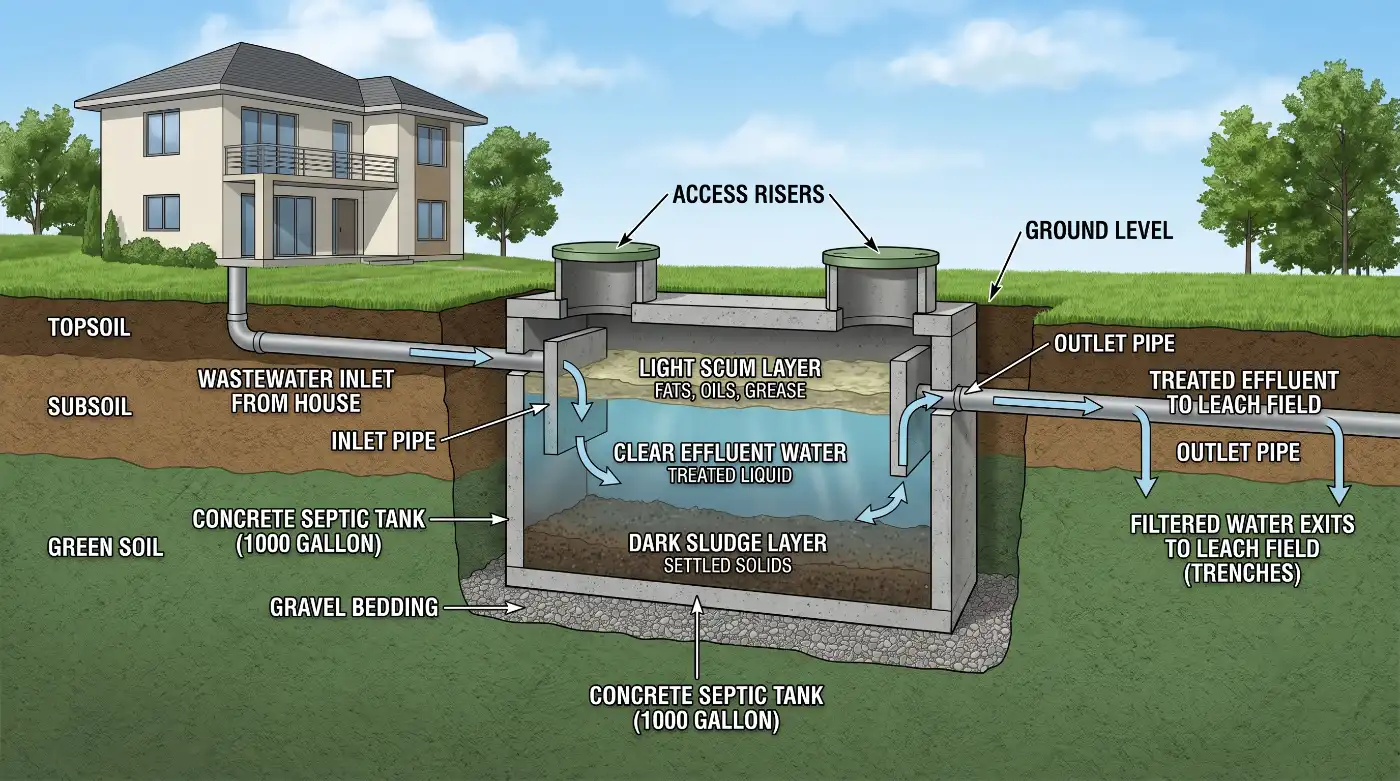
To understand why water conservation matters, you need to know how a septic system handles waste. When wastewater leaves your home from the toilet, shower, or sink, it flows directly into the septic tank.
Inside the tank, gravity separates the waste into three distinct layers. Heavy solids sink to the very bottom, creating a layer of sludge. Greases, oils, and floating scum rise to the top. The middle layer is relatively clear water, known as effluent.
Natural, healthy bacteria live inside the tank. These microscopic bugs break down the solid waste at the bottom, reducing its volume over time. The clear effluent in the middle eventually pushes out of the tank. It flows into your leach field, which is sometimes called a turkey mound or absorption field. The soil in the leach field filters out remaining impurities before the water safely rejoins the local groundwater.
What Happens When You Overload the Tank?
Your septic tank needs time to separate solids from liquids. This processing window is called hydraulic retention time. When your household dumps hundreds of gallons of water down the drain all at once, you destroy this separation process.
The massive rush of new water forces the tank to empty prematurely. It creates a turbulent current that stirs up the sludge at the bottom and the scum at the top. Instead of clean effluent leaving the tank, solid waste gets pushed out into your leach field.
Solid waste is the absolute enemy of a leach field. The solids clog the perforated pipes and choke the surrounding soil. Once the soil becomes clogged and compacted, it can no longer absorb water. The wastewater has nowhere to go but up to the surface of your yard or back up into your home’s toilets and drains.
High-Risk Components Vulnerable to Excess Water
Certain parts of your septic system are especially prone to damage from high water volume. Understanding these components helps highlight why careful water usage is so critical.
Grinder Pumps and Effluent Pumps
Many homes in our region require mechanical assistance to move wastewater. If your home sits lower than your main septic tank or leach field, you likely have a grinder pump or an effluent pump.
An effluent pump pushes treated liquid out to a raised leach field. A grinder pump chops up solid waste and pumps it under pressure to the tank.
When you use excessive amounts of water, these electrical pumps have to work overtime. Continuous running overheats the internal motors. This leads to premature mechanical failure, electrical shorts, and sudden system shut-offs. Fixing or replacing a burned-out grinder pump is a stressful, messy, and costly emergency.
The Leach Field and Turkey Mounds
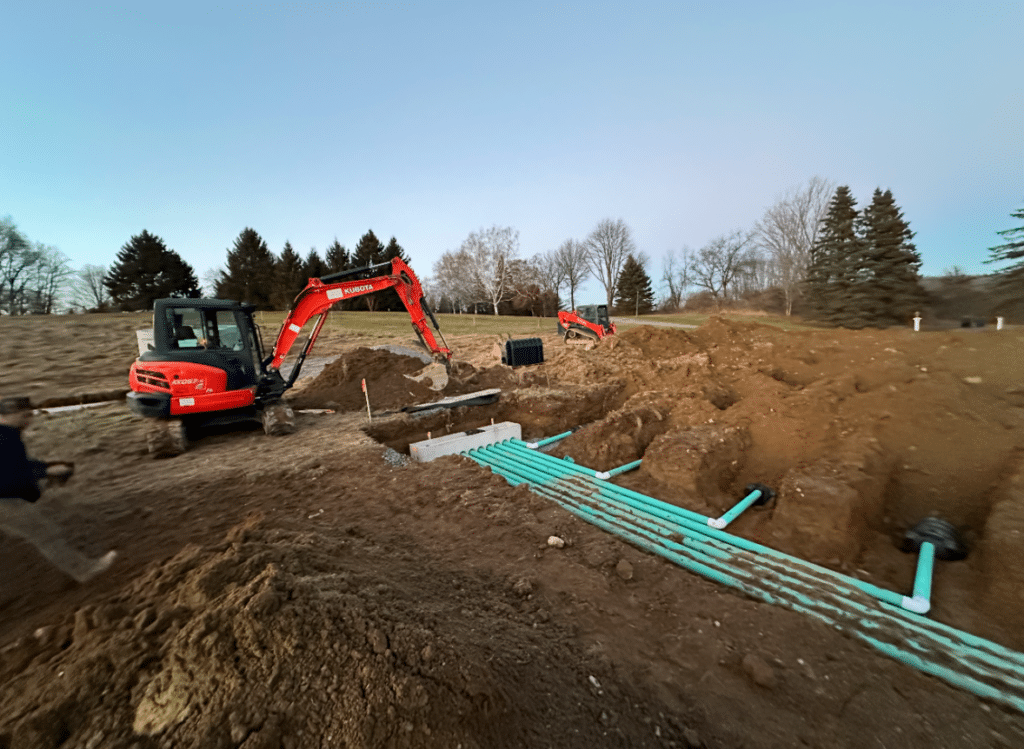
The leach field is the most expensive part of any septic system to replace. In areas with high water tables or rocky Pennsylvania soil, engineers often design elevated sand mounds, commonly called turkey mounds.
These mounds use specific layers of sand and soil to treat wastewater safely. If you saturate a turkey mound with too much water, the soil loses its ability to breathe.
Without oxygen, the beneficial soil microbes die off. A biological slime layer called a biomat then forms and seals the ground shut. Once a mound fails due to water saturation, you are usually looking at a massive excavation project to build a brand-new replacement system.
Practical Ways to Conserve Water Indoors
You do not need to stop showering or live like a pioneer to save water. Small, consistent changes in your daily household habits make an enormous difference to your septic health.
Smart Laundry Habits
Washing machine usage is one of the leading causes of sudden septic failure. Many homeowners save all their dirty clothes for Saturday and run four or five loads back-to-back. This is called hydraulic overloading.
Running consecutive loads floods your septic tank with over a hundred gallons of soapy, lint-filled water in just a few hours. The tank has no time to settle.
-
Spread your laundry loads out evenly across the entire week.
-
Run only one full load per day to give your tank ample time to process the volume.
-
Always select the appropriate load-size setting so you do not use more water than necessary.
-
Consider upgrading to an ENERGY STAR certified high-efficiency washing machine, which uses up to 50% less water per cycle according to the U.S. Environmental Protection Agency.
Upgrade Your Bathroom Fixtures
Old toilets and showerheads are notorious water hogs. Toilets manufactured before 1994 can use up to seven gallons of water with every single flush.
Replacing an old toilet with a modern low-flow or dual-flush model can cut that water usage down to less than 1.5 gallons per flush. That saves thousands of gallons of water every single year for the average family.
Similarly, installing a high-efficiency, low-flow showerhead restricts excess water flow without ruining your water pressure. It is a cheap, weekend DIY project that instantly reduces the daily strain on your leach field.
Fix Leaks Immediately
A tiny, dripping faucet or a running toilet might seem like a minor annoyance, but they are secret septic killers. A running toilet can silently leak hundreds of gallons of water into your septic tank every single day.
Because this water flows in a continuous, steady stream, it never allows the liquids and solids in your tank to separate. It constantly pushes water out to the leach field, keeping the ground permanently soggy.
Check your toilets for leaks regularly. You can do this by putting a few drops of food coloring into the toilet tank. If the color seeps into the toilet bowl within fifteen minutes without flushing, your flapper valve is leaking and needs to be replaced immediately.
Managing Outdoor Water and Drainage Challenges
Water conservation isn’t just about what passes through your indoor plumbing. You also need to control the exterior groundwater and rainwater surrounding your septic components.
Divert Stormwater Runoff
Your leach field or turkey mound is carefully engineered to handle a specific amount of liquid from your home. If heavy rain hits and your gutters dump roof runoff directly onto the leach field, the soil becomes totally overwhelmed.
Saturated soil cannot absorb the effluent coming out of your septic tank. Ensure your downspouts, driveway channels, and landscaping slopes steer all rainwater completely away from your septic tank and absorption area.
Utilize French Drains and Advanced Drainage Solutions
If your property has a natural slope that sends groundwater toward your septic system, standard landscaping might not be enough. In these situations, installing a French drain is an excellent solution.
A French drain uses a gravel-filled trench and a perforated pipe to intercept moving groundwater. It reroutes the water safely around your septic field, ensuring the soil around your system stays dry enough to do its job.
Recognizing the Early Signs of Septic Trouble
When a system gets overloaded with water, it will usually give you a few warnings before it fails completely. Knowing what to look and smell for can save you from a major disaster.
-
Slow Drains and Gurgling Pipes: If your sinks drain slowly or your pipes make a strange gurgling sound when you flush the toilet or run the washing machine, your system is struggling to push water forward.
-
Soggy Spots in the Yard: Walk out to your leach field or turkey mound. If you notice patches of bright green, spongy grass, or standing water when it hasn’t rained, your field is saturated.
-
Foul Odors: A healthy septic system keeps odors underground. If you start smelling rotten eggs or sewage near your tank, leach field, or inside your home, the system is backed up.
-
Backup in the Lowest Drains: If wastewater starts pushing up into your basement shower or lowest floor drains, your system is completely full and requires immediate intervention.
Professional Services to Restore System Balance
Sometimes, even the best water conservation efforts cannot reverse existing damage. If your system is already showing signs of neglect or heavy wear, professional maintenance is required to reset the clock.
High-Pressure Drain Jetting (Hydro-Jetting)
If lines are running slowly because of grease, scale, or minor solid accumulation, standard snaking only pokes a hole through the blockage. Hydro-jetting uses specialized equipment to blast high-pressure water through your pipes. This scrubs the interior walls of your lines clean, removing years of buildup and restoring full flow to your tank.
Septic System Inspections and Pumping
The state of Pennsylvania, through guidelines managed by the Pennsylvania Department of Environmental Protection, highly recommends having your septic system inspected and pumped every three to five years.
During an inspection, a professional evaluates the health of your sludge layers, checks your baffles, and ensures your pumps are drawing the correct electrical current. Regular pumping removes the built-up solids before they ever get a chance to wash out into your leach field.
The True Cost of Neglect vs. Maintenance
Many people avoid water conservation or regular pumping because they want to save money. This is a massive financial mistake.
Having a professional team inspect and pump your tank every few years costs a fraction of the price of a full system replacement. Designing, permitting, and installing a brand-new septic system or an engineered turkey mound can cost tens of thousands of dollars. It can also permanently tear up your lawn and landscaping.
Conserving water costs absolutely nothing. In fact, it actually lowers your energy bill if you use a well pump. It is the single most cost-effective insurance policy you can buy for your home’s infrastructure.
Article Recap
-
Every drop of water used in your home enters the septic tank; excess water destroys the natural separation of solids and liquids.
-
Hydraulic overloading forces raw solid waste out of the tank, permanently clogging the pipes and soil within your leach field or turkey mound.
-
Overworked effluent and grinder pumps face premature electrical and mechanical breakdown when forced to process excess water volume.
-
Simple household fixes—like spacing out laundry loads, installing low-flow bathroom fixtures, and repairing running toilets—drastically cut down water volume.
-
Managing exterior rainwater with correct grading and French drains keeps your septic absorption field from becoming drowning in groundwater.
-
Routine septic pumping and professional hydro-jetting clean out lines and eliminate solids before catastrophic failure occurs.
Keep Your Septic System Safe and Functional
Maintaining a healthy septic system takes a mix of good daily habits and professional support. By practicing smart water conservation, you actively protect your home from sudden backups and protect your bank account from avoidable replacement costs.
If you are experiencing slow drains, strange odors, or if it has been more than three years since your last tank service, do not wait for a total system failure. Triple J Services is proud to serve families throughout Lackawaxen, Pennsylvania, and the surrounding regions.
Our local team provides reliable septic expertise, from routine maintenance checks to emergency service. We handle everything from pump replacements and septic line cleaning to complete system installations and excavation work.
Get in touch with Triple J Services today to protect your property and keep your home running cleanly.
-
Visit our main website at Triple J Services to view our full service map.
-
Learn about our local history, family values, and commitment to PA homeowners on our About Us page.
-
See our complete menu of residential solutions on our Services page.