Dealing with wastewater management is rarely the most glamorous part of homeownership, but it is undoubtedly one of the most critical. If you live or own property in Pennsylvania, especially around the Poconos or Wayne and Pike Counties, understanding how septic systems function and what they cost is essential.
Whether you are building a new dream home or replacing an aging, failing system, the price tag can come with significant sticker shock. In Pennsylvania, the average cost to install a new septic system in 2026 typically spans from $7,000 to $25,000 for standard setups. However, complex sites requiring advanced engineering can easily push those figures beyond $30,000.
Because local geography varies from deep, rocky mountain ledges to dense clay valleys, there is no one-size-fits-all price tag. Every property features a distinct combination of soil drainage, slope, and regulatory requirements.
Disclaimer: Every single septic system is entirely different. The figures provided throughout this guide represent current regional averages. Each property requires a custom evaluation, and all septic systems must be quoted individually to account for specific site conditions and engineering requirements.
The Baseline Factors Driving Pennsylvania Septic Costs
When you receive an estimate for a septic installation, that number is not pulled out of thin air. It is the result of multiple local variables working together. Pennsylvania has stringent environmental laws managed under Act 537, which means every municipality has individual oversight over how sewage is treated.
Soil Percolation and Depth to Bedrock
Your soil is the actual treatment mechanism for a septic system. Before any equipment touches your yard, a Sewage Enforcement Officer (SEO) must witness a soil morphology test and a percolation (“perc”) test. If your soil absorbs water at an ideal rate, you can install a conventional system.
If the soil has a high clay content, drains too slowly, or if the bedrock or seasonal water table is too close to the surface, a standard system will not protect the groundwater. In these cases, the state requires alternative or engineered systems. These specialized setups require significantly more labor, specialized sand, and advanced components, which naturally drives up the final price.
Home Size and Bedroom Count
In Pennsylvania, septic systems are sized according to the number of bedrooms in a home, not the number of bathrooms. The state assumes a baseline water usage of roughly 150 gallons per day per bedroom. A two-bedroom mountain cabin requires a much smaller tank and less drain field square footage than a five-bedroom family home. As the bedroom count rises, the physical size of the tank and the footprint of the absorption area must expand to match.
Topography and Excavation Obstacles
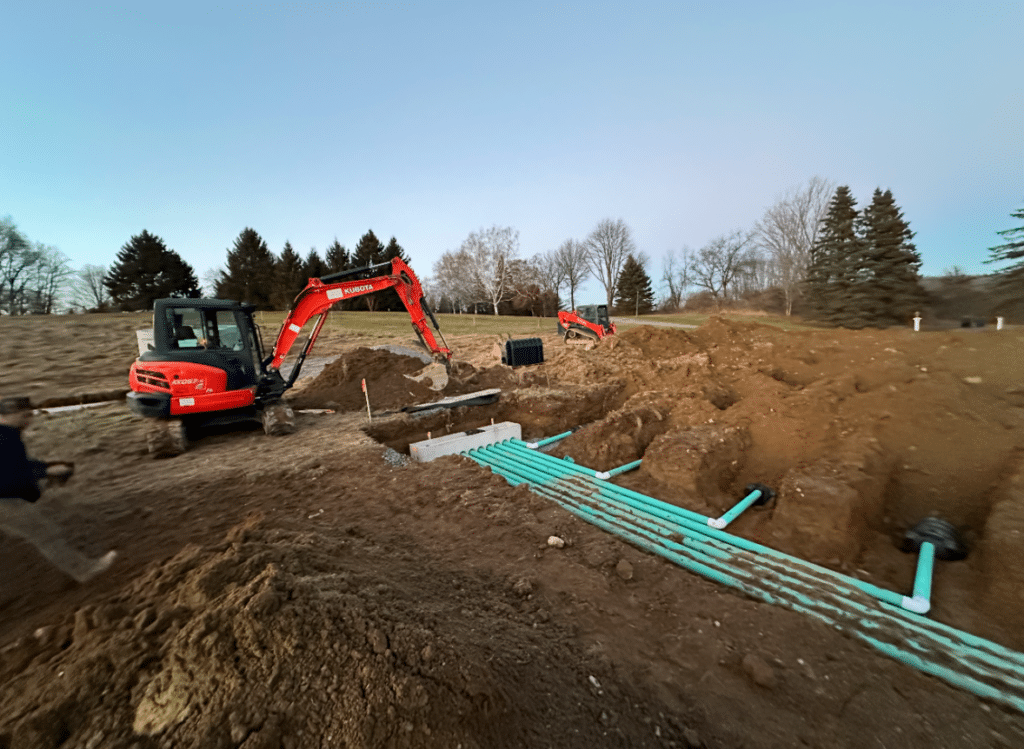
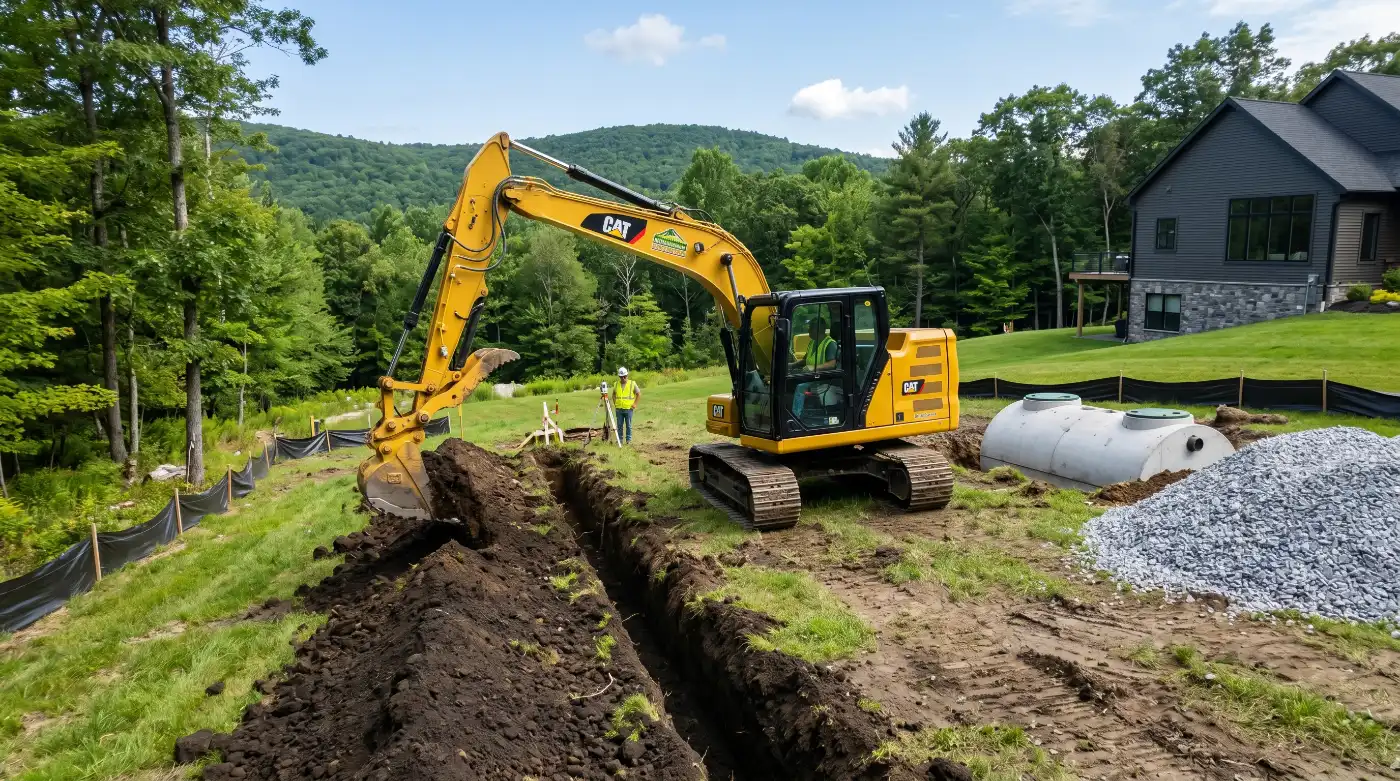
The physical layout of your land plays a massive role in labor costs. A flat lot with deep, rock-free soil is an excavator’s dream. If you are building on a steep slope in Lackawaxen or dealing with the signature glacial boulders of the Poconos, excavation becomes a slow, highly technical process. Clearing heavy trees, chipping through solid rock, and shifting massive amounts of earth will increase the total cost of installation.
Breaking Down the Costs by Septic System Type
The type of system mandated by your soil report is the single greatest factor in your overall budget. Let us look at what homeowners across Pennsylvania are experiencing in terms of real-world installation costs.
Conventional Gravity Systems
A conventional gravity system is the traditional approach to residential waste management. It consists of an underground concrete septic tank and a series of trench lines filled with gravel or stone, known as the leach field.Gravity naturally pulls the liquid waste down out of the tank and into the trenches.
-
Average Cost Range: $7,000 to $15,000
-
Ideal Conditions: Deep, well-draining soil with a low water table and minimal slope.
-
Why Costs Vary: Costs shift depending on the accessibility of the site and the size of the tank, which must hold a minimum of 900 gallons by Pennsylvania law.
Leach Field (“Turkey Mound”) Systems
If your property fails a standard perc test due to slow-draining clay or shallow bedrock, a conventional underground yard system will not pass inspection. Instead, you will likely need an elevated sand mound system, colloquially known across Pennsylvania as a “Turkey Mound.”
-
Average Cost Range: $15,000 to $30,000
-
Ideal Conditions: High water tables, heavy clay soil, or shallow depths to solid rock layers.
-
Why Costs Vary: Turkey mounds are built entirely above the natural grade. They require dump trucks to haul in tons of specially engineered, certified septic sand and topsoil. Additionally, because gravity cannot pull waste uphill into an elevated mound, these systems require a secondary pump tank equipped with an effluent pump to force the liquid upward into the mound.
Aerobic Treatment Units (ATUs)
An aerobic system acts like a miniature, hyper-local municipal sewage plant right in your backyard. Unlike traditional tanks that rely on anaerobic bacteria (which live without oxygen), ATUs inject oxygen directly into the waste tank. This stimulates aerobic bacteria, which break down solids much faster and leave behind incredibly clean wastewater.
-
Average Cost Range: $12,000 to $25,000
-
Ideal Conditions: Small properties with limited space or environmentally sensitive zones near lakes and streams.
-
Why Costs Vary: The upfront costs cover complex mechanical components, air compressors, and electrical control panels. Homeowners must also budget for small annual electrical costs and mandatory ongoing maintenance contracts to keep the system compliant with local regulations.
Component Replacement and Support Services
Sometimes you do not need an entirely new system built from scratch. If your main tank is structurally sound but certain vital mechanisms have failed, targeted repairs can get your waste management back on track.
Grinder Pumps and Effluent Pumps
If your home sits lower than your septic tank, or if you utilize an elevated Turkey Mound, your system depends on a mechanical pump. A grinder pump masticates solid waste from low points in the home and pushes it uphill to the main tank. An effluent pump moves clarified liquid waste from the tank to an elevated drain field.
-
Grinder Pump Replacement: $2,500 to $5,500
-
Effluent Pump Service & Replacement: $1,000 to $2,500
-
Key Considerations: Electrical work, plumbing modifications, and the specific horsepower required for the elevation rise will impact the total cost.
Trenching, Utility Lines, and Drainage
Connecting your home to a new tank requires precision excavation. Trenches must maintain a specific pitch so that solids flow smoothly without settling and causing blockages. Additionally, yard drainage issues can threaten your system; heavy rainwater runoff pooling over a leach field can saturate the ground, rendering the system unable to absorb wastewater. Resolving this often requires installing specialized French drains to redirect groundwater away from the septic zone.
-
Utility Trenching: $1,500 to $4,500
-
French Drains & Drainage Solutions: $2,000 to $7,000
The Hidden Costs: Permits, Testing, and Inspections
The physical work of digging holes and burying concrete is only one phase of the project. A significant chunk of your budget goes toward compliance, design, and validation before and after the heavy machinery arrives.
Soil Evaluations and Engineering Fees
Before any design can be sketched, an authorized site evaluation must occur. This involves bringing a backhoe to your land to dig deep test pits, allowing the SEO to evaluate the soil profile. This is accompanied by a perc test to track water absorption.
-
Testing and Design Fees: $1,500 to $3,500
-
The Details: This fee covers the labor of the excavator digging the test pits, the testing fees of the SEO, and the professional civil engineering fees required to draw up plans that your local township will accept.
Municipal Permits
Every municipality across Pennsylvania charges specific regulatory fees to process and issue a sewage permit. These fees vary wildly by township.
-
Permit Costs: $300 to $1,200
-
The Details: Some local governments include multiple site visits from the SEO within this baseline fee, while others charge a la carte for every single inspection milestone.
Real Estate and Point-of-Sale Inspections
If you are buying or selling a home in rural Pennsylvania, your mortgage lender or local municipality will likely require a comprehensive septic inspection.
-
Inspection Cost: $400 to $800
-
The Details: A proper inspection involves more than just looking at the grass. A technician will locate the tank lids, open them, and perform emergency septic pumping to empty the chambers. This allows them to verify the structural integrity of the concrete walls, check the integrity of the inlet and outlet baffles, and use specialized cameras or dye tests to evaluate the health of the leach field.
Choosing the Right Local Partner
Investing in a septic system is a long-term commitment to the safety and value of your property. Cutting corners or choosing a contractor solely based on the lowest bid can result in environmental contamination, backed-up plumbing, and incredibly costly remediation work down the road.
Look for a company that handles every stage of the process seamlessly. A truly comprehensive provider manages everything from the initial excavation and utility trenching to high-pressure drain jetting for clogged lines, pump replacements, and complete system overhauls. Working with a team that maintains strong working relationships with regional Sewage Enforcement Officers ensures your project moves through the permitting and approval phases smoothly, preventing frustrating delays.
Article Quick Recap
-
Average Cost Range: Expect to spend between $7,000 and $25,000 for a standard Pennsylvania residential installation, with complex systems rising higher.
-
Soil Dictates Design: Soil percolation and bedrock depth completely dictate the type of system you are legally allowed to build under PA Act 537.
-
Turkey Mounds cost more: Elevated sand mounds (Turkey Mounds) require hauled-in engineered sand and pump systems, pushing costs to the $15,000 to $30,000 range.
-
Bedroom-Based Sizing: Systems are scaled based on total home bedroom counts, which directly impact tank capacity and leach field dimensions.
-
Regulatory Overhead: Budget extra for mandatory perc testing, engineering layout designs, and municipal permit fees.
-
Individualized Quotes: Every property features a unique blend of slope, soil, and access, meaning every single system must be individually estimated.
Ready to Get Started?
Do you need a reliable estimate for a new septic system installation, a Turkey Mound repair, or emergency pump services? The expert team at Triple J Services is ready to assist. Located proudly in Lackawaxen, PA, we provide comprehensive septic installations, precision excavation, drainage solutions, and pump replacements across the region. Check out our About Us page to see our commitment to quality, explore our full range of professional offerings on our Services page, and contact us directly through our main site at Triple J Services to schedule your personalized site consultation today.
External Resources
-
Pennsylvania Department of Environmental Protection (DEP) – Act 537 Sewage Facilities Program: PA Act 537 Regulations provides immediate access to the legal framework governing their installation.
-
Penn State Extension – Septic System Management: Linking to the Penn State Extension Septic Guide