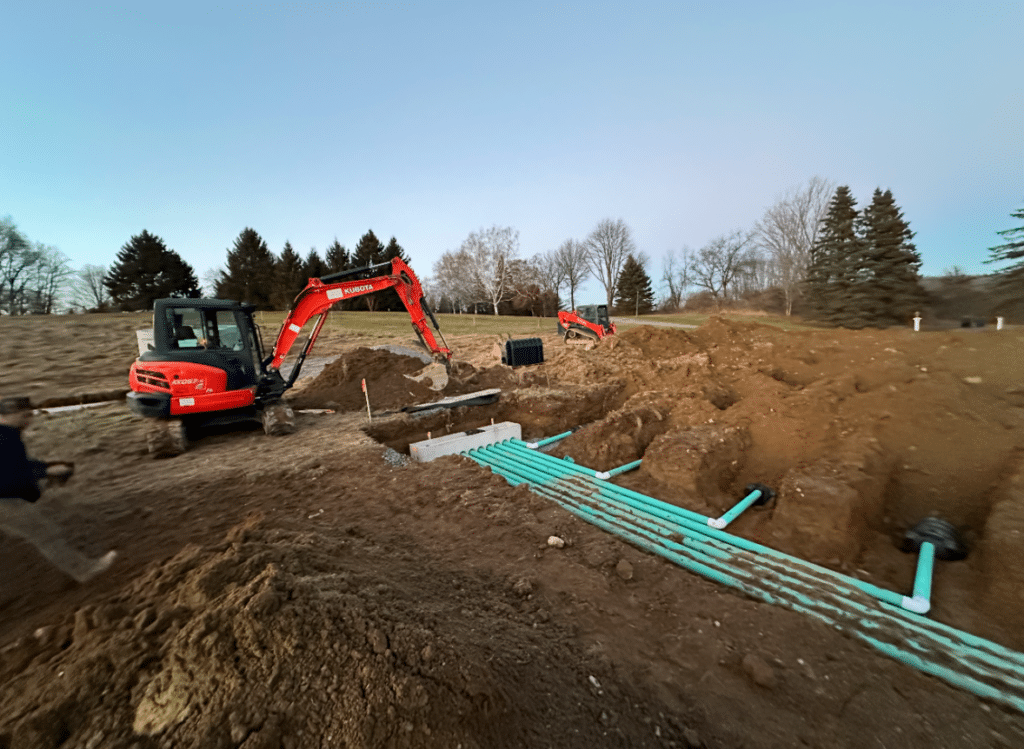
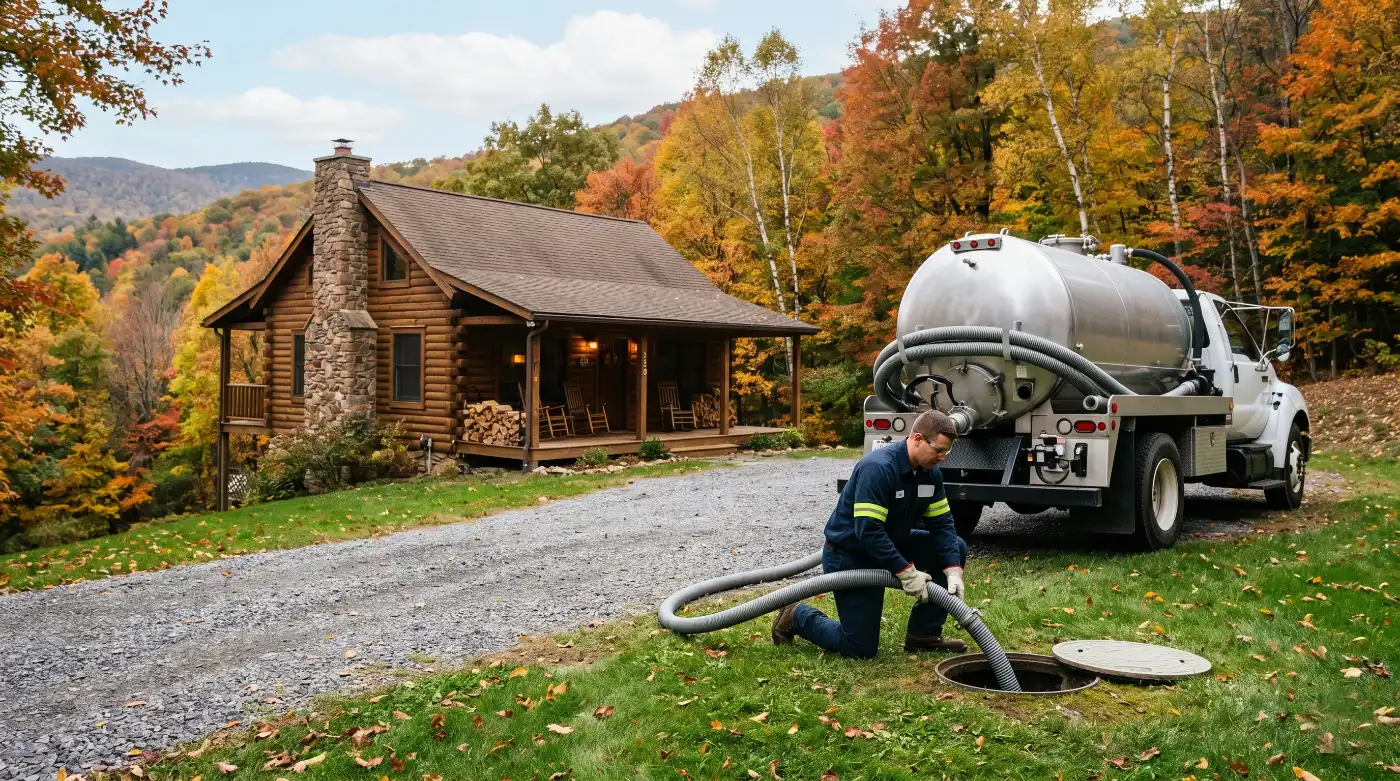
Living in a mountain community brings unmatched peace, beautiful views, and a closer connection to nature. Whether you are nestled in the woods near Lackawaxen, Pennsylvania, or living high up on a rocky ridge, mountain life is unique.
But mountain living also means you have to take care of your own home infrastructure. For most homeowners in these areas, that includes maintaining a private septic system.
Out here, you cannot just flush and forget. The rugged terrain, steep slopes, and cold winter temperatures change how your plumbing operates.
Managing your wastewater system properly protects your property, protects the local environment, and saves you from massive repair bills. One of the most common questions we get at Triple J Services is simple: How often should you pump your septic tank in a mountain community?
The short answer is that it depends on how you use your home. There is no single timeline that fits every property. A full-time family of five needs a completely different maintenance schedule than a weekend hunting cabin.
Let us break down exactly how mountain conditions affect your tank and how often you need to schedule a pumping service.
Why Mountain Environments Change the Rules
Standard septic guidelines are usually written for suburban homes built on flat, sandy soil. Mountain properties face an entirely different set of environmental factors. These factors directly impact how fast your tank fills up and how well your drainfield handles wastewater.
Heavy and Hard Soils
Mountain soils are rarely perfect. They are often filled with fractured rock, dense clay, or shale.
Clay and rocky soils do not absorb water as quickly or efficiently as loose, sandy soils. This means your drainfield has to work harder to process the liquid effluent leaving your tank. If you let too much solid waste build up in your tank, it can easily escape into a slow-draining mountain drainfield and clog it completely.
Steeper Slopes and Gravity
Many mountain homes are built on hillsides. Gravity plays a massive role in how wastewater flows from your house to the tank, and then down to the treatment area.
Steep slopes can cause water to move too quickly through the system, giving solids less time to settle to the bottom of the tank. It also means heavy rainfall can run down the hillside and oversaturate your drainfield from the outside, backing up your system.
Colder Ground Temperatures
Deep in the mountains, winters are long and severe. The ground freezes deeper and stays cold well into the spring.
Septic tanks rely on living, healthy bacteria to break down organic solid waste. When the ground temperature drops, these bacteria slow down significantly. They do not break down solids as fast during the winter, meaning the sludge layer at the bottom of your tank builds up much quicker during cold months.
Full-Time Mountain Residents: Year-Round Maintenance
If your mountain house is your primary residence, your septic system experiences constant, daily use. Every shower, load of laundry, and toilet flush adds up.
For year-round residents, your pumping schedule is primarily dictated by the size of your household and the physical size of your septic tank.
Small Families (1 to 2 People)
If you live alone or as a couple, your system handles a relatively low volume of wastewater. A standard 1,000-gallon septic tank will easily handle daily life without getting overwhelmed.
For full-time households of one or two people, you should have your septic tank pumped every 4 to 5 years.
Even though you are not generating massive amounts of waste, you still need regular pumping to remove the inert solids that the bacteria cannot break down, such as lint, plastics, and dirt.
Medium Families (3 to 4 People)
A household with three or four people introduces a lot more water into the system. Think about the daily routine: multiple showers, frequent dishwasher cycles, and several loads of laundry each week.
For a mid-sized family using a standard tank full-time, you need to step up your maintenance. Plan to pump your tank every 3 years.
Regular service at this stage prevents the solid sludge layer from rising too close to the outlet pipe, keeping your mountain drainfield safe from sudden clogs.
Large Families (5 or More People)
Large families place an immense amount of stress on a mountain septic system. When five or more people live under one roof, water usage skyrockets. The continuous inflow of water can disturb the settling process inside the tank, pushing solids toward the drainfield before they have a chance to drop to the bottom.
If you have a large family living in the mountains full-time, you should pump your septic tank every 1 to 2 years.
Waiting longer than two years with a large crew is a massive gamble. The cost of a routine pump out is a fraction of what you would pay to replace a ruined hillside drainfield.
Seasonal Cabins and Vacation Homes
Not everyone lives in the mountains all year long. Many properties in our region are seasonal cabins, weekend getaways, or short-term vacation rentals. These homes experience a completely different pattern of septic usage.
The Weekend Getaway
If your cabin sits empty for weeks at a time and is only used on occasional weekends, your septic system gets plenty of time to rest. The bacteria inside the tank have long windows of time to break down the organic solids left behind from your last visit.
For a strictly seasonal cabin used by a few people on weekends, you can typically stretch your pumping interval to every 5 to 7 years.
However, you should still have the system inspected every few years. Mountain wildlife, shifting soils, and tree roots can cause hidden structural damage to your pipes or tank walls while you are away.
Peak Season Rental Properties
If you rent out your mountain cabin on platforms like Airbnb or VRBO, your septic system faces an unpredictable and often brutal workload. Vacation renters do not treat a home the same way an owner does. They tend to take longer showers, run half-empty dishwashers, and flush things they shouldn’t, like wet wipes or paper towels.
Furthermore, rentals often experience “surge loading.” The cabin might be empty from Monday through Thursday, and then suddenly hit maximum capacity with 8 to 10 guests over the weekend. This sudden rush of water floods the tank, flushing solids straight out into the soil before they can settle.
If you operate a busy seasonal rental, you should pump your tank every 1 to 2 years, ideally right before your busiest season begins.
A septic backup during a guest’s vacation will result in terrible reviews, refunds, and lost income.
Clear Warning Signs That Your Tank is Full
You do not always have to guess based on the calendar. Your plumbing will often tell you when it is running out of space. Keep an eye and an ear out for these common warning signs around your mountain property:
-
Slow Drains: If your sinks, showers, and tubs take a long time to empty, and commercial drain cleaners do not help, your septic tank is likely full.
-
Gurgling Pipes: A distinct gurgling sound coming from your toilet or drains when you run water is a classic sign of a trapped air pocket caused by a backed-up tank.
-
Bad Odors: If you start smelling rotten eggs or sewage near your toilets, around your outdoor tank lids, or down in your yard, the system is venting gases because it is overloaded.
-
Spongy, Lush Grass: Walk out to your drainfield area. If the grass over the pipes is bright green, tall, and soggy compared to the rest of your yard, wastewater is rising to the surface because the soil cannot absorb it anymore.
How to Protect Your Mountain Septic System Between Pumping
Pumping removes the solid waste, but your daily habits determine how well the system functions between visits. You can extend the life of your system and keep it running smoothly by following a few basic rules.
Use Water Efficiently
Do not overwhelm your system with too much water at once. Space out your household chores. Instead of doing five loads of laundry back-to-back on Saturday morning, do one load a day throughout the week. Fix leaky faucets and running toilets immediately.
For more tips on household water conservation and system safety, check out the Environmental Protection Agency SepticSmart Guide, which offers excellent resources for private system owners.
Watch What You Flush
Your septic tank is a delicate biological ecosystem, not a trash can. The only things that should ever go down your drains are human waste and basic toilet paper.
Never flush “flushable” wipes, paper towels, feminine hygiene products, cigarette butts, or diapers. These items do not decompose and will fill your tank up in a matter of months.
Keep the Kitchen Sink Clean
If your mountain home has a garbage disposal, use it as little as possible, or disconnect it entirely. Grinding up food scraps and sending them into your tank introduces massive amounts of solid waste that bacteria cannot easily process.
Additionally, never pour cooking grease, oils, or fats down the drain. Grease cools inside your plumbing, floats to the top of your septic tank, and forms a thick, hard scum layer that can block your incoming pipes.
Protect Your Drainfield
The area containing your underground pipes must be kept clear and undisturbed. Never drive cars, trucks, or heavy equipment over your drainfield, as this will crush the pipes and compact the mountain soil.
Avoid planting trees or large shrubs near the system. Mountain trees have aggressive, wide-reaching root systems that will actively seek out the moisture in your pipes, breaking through plastic and concrete to clog the lines. Instead, keep the area planted with simple, shallow-rooted native grasses.
Let the Pros Handle the Dirty Work
Trying to guess the status of your underground tank can leave you with unwanted surprises. The smartest way to maintain your home is to partner with a trusted local professional who understands the unique demands of our regional landscape.
At Triple J Services, we have spent years serving the Lackawaxen, PA community. We know the local soil structures, we understand the challenges of hillside properties, and we know exactly how to keep your system operating flawlessly through our freezing winters.
We don’t just pump out the waste; we perform a thorough inspection of your tank’s baffles, check the structural integrity of your lids, and give you an honest assessment of your system’s overall health. If you want to learn more about our roots and commitment to the area, take a look at our Triple J Services About Us Page.
Take the guesswork out of your home maintenance. Give your property the care it deserves so you can focus on enjoying everything beautiful about mountain life.
Key Takeaways
-
Mountain Challenges: Rocky soils, steep slopes, and cold winter ground temperatures slow down natural waste decomposition and place extra stress on drainfields.
-
Full-Time Families: Small households should pump every 4 to 5 years, mid-sized families every 3 years, and large families every 1 to 2 years.
-
Cabins & Rentals: Quiet, seasonal cabins can go 5 to 7 years between pumps, while busy short-term rental properties need a pump every 1 to 2 years due to heavy surge use.
-
Warning Signs: Sluggish drains, gurgling pipes, foul odors, and pooling water or bright green grass over your drainfield mean your tank needs immediate attention.
-
Daily Care: Avoid garbage disposals, never flush wet wipes or grease, space out laundry loads, and keep heavy vehicles off your drainfield area.
Ready to Schedule Your Mountain Septic Service?
Don’t wait for a costly backup to find out your tank is completely full. Whether you are a year-round resident or preparing your vacation cabin for a busy rental season, the team at Triple J Services is here to help. We provide reliable, professional septic pumping and inspections across Lackawaxen, PA, and the surrounding mountain communities.
Keep your home safe and your plumbing running smoothly. Explore our full range of property care options on the Triple J Services Page, or reach out to us today to book your regular maintenance appointment!