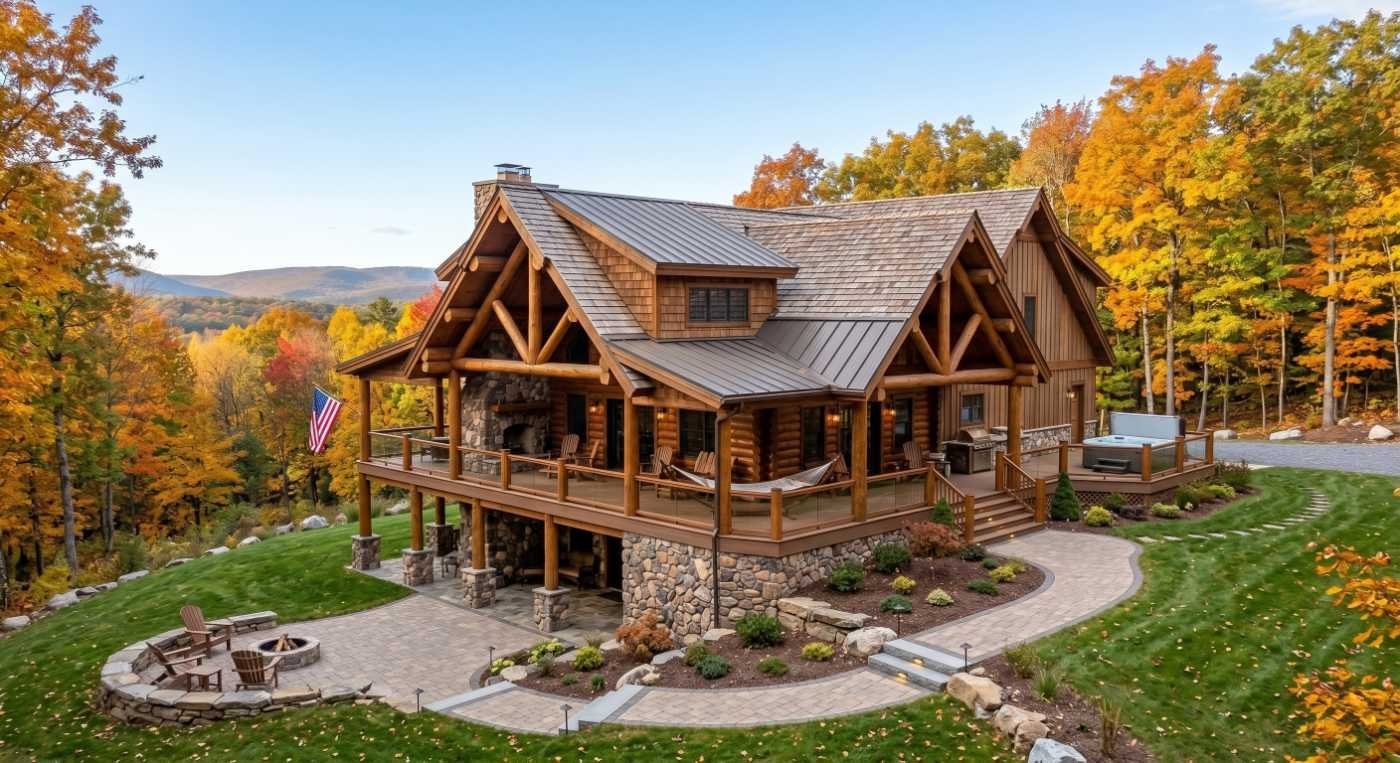
Buying or building a home in the Poconos is a dream for many. The rugged beauty of the landscape defines the region. However, that same beauty presents unique challenges for the bones of your house. In Lackawaxen, PA, and the surrounding areas, the ground is famous for being unforgiving.
The geological makeup of the Poconos consists largely of sandstone, shale, and conglomerate rock. This is often covered by a thin layer of topsoil and dense glacial till. While rock provides a very stable base for a building, it is not without its complications.
At Triple J Services, we spend our days working with this earth. We understand that what happens below the surface determines the longevity of what you build above it. Understanding how this rocky terrain affects your foundation is the first step in protecting your investment.
The Reality of Excavating in Solid Rock
Most people think of soil as something soft that you can simply dig through. In Lackawaxen, that is rarely the case. Excavation is often the most unpredictable part of any construction project here. When you begin digging for a foundation, you might hit a massive “erratic.” This is a large boulder left behind by retreating glaciers thousands of years ago.
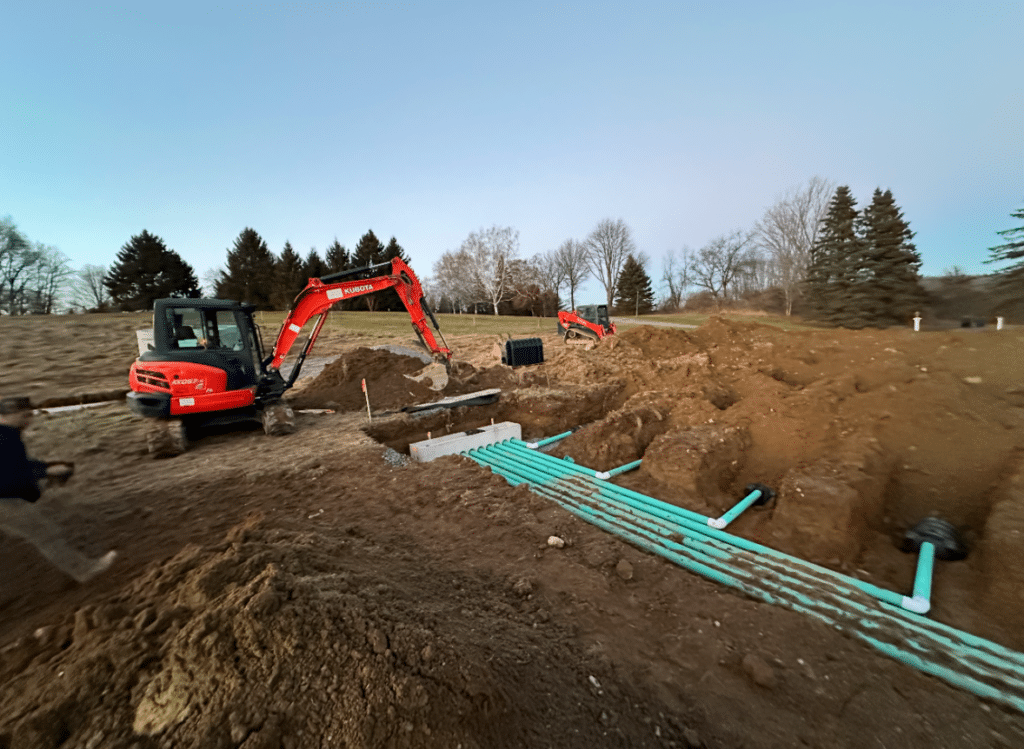
Hitting rock changes the timeline and the budget of a foundation project. Standard excavators may struggle with solid ledge rock. In these cases, specialized equipment like hydraulic hammers or “hoerams” are required to break the rock apart. If the rock is too dense, blasting might even be necessary.
This rocky reality means foundations in the Poconos are rarely “cookie-cutter.” Builders must adapt to the specific ledge height of the lot. Sometimes, this results in stepped foundations or custom heights to accommodate the natural stone beneath the house.
Drainage Challenges in Non-Porous Ground
Soil usually acts like a sponge, soaking up rainwater and letting it filter down slowly. Rock does the opposite. In the Poconos, solid rock layers prevent water from draining vertically. Instead, water travels horizontally across the surface of the rock.
This creates a “waterslide” effect toward your foundation. If your home is built on a slope, water can hit the uphill side of the foundation wall with immense pressure. This is known as hydrostatic pressure. Over time, this pressure can cause foundation walls to bow, crack, or leak.
Because the ground doesn’t absorb water well, your perimeter drainage system must be perfect. This includes high-quality footer drains and a solid layer of crushed stone. Without these, the rocky terrain will funnel every rainstorm directly into your basement or crawlspace.
The Power of Frost Heave in Rocky Soil
Pennsylvania winters are cold. The Poconos, with their higher elevation, stay frozen longer. This leads to a phenomenon called frost heave. When water gets trapped in the soil or between rock layers, it freezes and expands.
In sandy or loamy soil, this expansion is somewhat distributed. In rocky terrain, the force is concentrated. Large rocks can be pushed upward by freezing water, exerting thousands of pounds of pressure against your foundation footings.
If your footings are not set deep enough—typically 36 to 42 inches in our region—the frost can literally lift the corners of your house. This leads to cracked drywall, doors that won’t shut, and structural instability. The interaction between ice and rock is a powerful force that requires expert site preparation to mitigate.
Why Soil Compaction is Different Here
In many regions, builders worry about soil settling over time. In the Poconos, we worry about “differential settlement.” This happens when one part of your house sits on solid rock while another part sits on loose fill or softer soil.
If the foundation isn’t uniform, the house will settle unevenly. This creates stress fractures throughout the masonry. Achieving a level, compacted surface in a rocky environment requires heavy machinery and a deep understanding of local geology.
At Triple J Services, we use specific techniques to ensure the “sub-base” is ready for concrete. This involves removing large loose stones and replacing them with engineered fill that won’t shift. A foundation is only as good as the dirt (or rock) it sits on.
The Impact of Blasting on Existing Structures
Sometimes, to create a level basement, contractors must use explosives. While modern blasting is highly controlled and safe, the vibrations can be a concern for neighboring properties. The Poconos’ solid bedrock is an excellent conductor of vibration.
If you are building in a developed area of Lackawaxen, the seismic waves from nearby excavation can travel through the rock. This is why pre-blast surveys are common. It is also why we prefer mechanical breaking whenever possible. Mechanical breaking is slower but creates less “shock” to the surrounding environment and nearby foundations.
Radon Gas and the Poconos Bedrock
The Poconos are known for high levels of Radon gas. This is a natural byproduct of the decay of uranium found in our local granite and shale. Because homes are built directly on or into this rock, the gas can easily seep through foundation cracks.
The rocky terrain acts as a chimney, venting the gas upward. When you trap that vent with a house, the gas collects in the basement. When building or maintaining a foundation here, a radon mitigation system is almost always a necessity. This usually involves perforated pipes installed under the foundation slab to vent the gas safely above the roofline.
Protecting Your Foundation: Maintenance Tips
Living in a rocky environment means you cannot take a “set it and forget it” approach to your home’s exterior. You must be proactive to prevent the terrain from winning the war of attrition.
Keep Gutters Clear
Because drainage is so difficult in rocky soil, you must keep water away from the foundation. Ensure your downspouts extend at least 6 to 10 feet away from the house. In the Poconos, it is often better to pipe this water into a “dry well” located far from the structure.
Monitor the Grade
Check the soil around your foundation every spring. The freeze-thaw cycle can shift rocks and soil, creating “bowls” that catch water. The ground should always slope away from the house at a rate of at least one inch per foot for the first six feet.
Inspect for Cracks
Small “hairline” cracks are common in all foundations as they settle. However, horizontal cracks or cracks wider than a quarter-inch are a sign of hydrostatic pressure from the rocky terrain. If you see these, it is time to call in a professional to look at your drainage.
The Role of Professional Excavation
A lot of foundation issues in the Poconos start during the first week of construction. If the excavator doesn’t understand how to handle local stone, the house is doomed from the start. Proper site prep involves more than just digging a hole. It involves:
-
Proper Grading: Creating a landscape that naturally diverts water.
-
Boulder Management: Deciding whether to remove, break, or build around large stones.
-
Utility Trenching: Ensuring water and sewer lines are buried deep enough in the rock to prevent freezing.
Triple J Services specializes in this “groundwork.” We have the heavy equipment necessary to tackle the Wayne and Pike County terrain. Whether it’s clearing a lot or repairing a failing drainage system, we know the rock because we live here.
The Longevity of Rock Foundations
It isn’t all bad news. While the Poconos terrain is difficult to work with, it offers incredible stability once handled correctly. A house built on solid rock is unlikely to suffer from the massive “sinkhole” issues found in limestone-heavy regions or the “swelling clays” of the Midwest.
When you respect the rock and plan for the water, a Poconos foundation can last for centuries. The key is working with the land rather than fighting against it. This requires a contractor who knows the difference between a stone that can stay and a stone that must go.
External Resources for PA Homeowners
-
Check the Pennsylvania Geological Survey to see the specific rock types under your property.
-
Review the PA DEP’s guide on Radon to understand the risks associated with building on local bedrock.
Triple J Services: Your Local Experts
Based in Lackawaxen, PA, Triple J Services provides expert excavation and site preparation. We understand the unique challenges of the Poconos. From land clearing to utility installation, we ensure your project starts on a solid—and properly drained—foundation.
Explore our About Us page to learn more about our commitment to the community. You can also view our full range of capabilities on our Services Page. We are ready to help you navigate the rocky terrain of your next project.
Article Recap
-
Excavation Difficulty: Poconos rock often requires specialized heavy machinery or hydraulic hammers.
-
Drainage Issues: Rock prevents vertical drainage, leading to high water pressure against foundation walls.
-
Frost Heave: Freezing water can move large rocks, potentially lifting and cracking your home’s foundation.
-
Differential Settlement: Uneven support (half rock, half soil) causes structural stress.
-
Radon Risk: Local bedrock naturally produces radon gas, requiring mitigation systems in most homes.
-
Proper Grading: Keeping water away from the house is the most important maintenance task for local homeowners.
Start Your Project Today
Don’t let the Poconos terrain intimidate you. With the right team, you can build a foundation that stands the test of time. Triple J Services is here to handle the toughest digging, grading, and site prep in Lackawaxen. Contact Triple J Services today to discuss your excavation needs or visit our Services Page to see what we can do for you.