
Most homeowners in Lackawaxen, PA, don’t spend much time thinking about their septic system. It sits underground, silently doing its job day after day. However, a septic tank is not a bottomless pit. It is a biological treatment chamber with a finite capacity.
Waiting until sewage backs up into your bathtub is a dangerous and expensive strategy. By the time you see a mess in your home, the damage to your system is already severe. Fortunately, your plumbing and your yard provide clear clues when the tank is reaching its limit.
At Triple J Services, we believe that education is the best way to prevent property damage. As a local business in Lackawaxen, we know the specific challenges of our local terrain. You can learn more about our commitment to quality on our about us page. From septic services to complete system overhauls, we help you keep your home safe and functional.
The Indoor Warning Signs of a Full Septic Tank
Your home’s internal plumbing is the first place you will notice issues. These signs usually start small and get progressively worse as the sludge level in the tank rises.
Sluggish Drains and Toilets
If your sinks, showers, or toilets are draining slower than usual, it isn’t always a simple clog in the pipe. When a septic tank is full, there is no room for new water to enter. This creates back-pressure in your lines. If you find yourself reaching for the plunger multiple times a week, the problem is likely in the tank, not the toilet.
Strange Gurgling Noises
Listen to your pipes after you flush or when the washing machine is draining. Do you hear a rhythmic gurgling or “glugging” sound? This is often the sound of air bubbles being pushed back through the system because the tank is at capacity. It is one of the most common early warning signs that a pump-out is overdue.
Foul Odors Near Drains
A healthy septic system should not smell. If you start noticing a “rotten egg” or sulfur scent coming from your kitchen sink or floor drains, it means sewer gases are escaping. When the tank is full, these gases are pushed back toward the house instead of venting out through the roof stacks.
Outdoor Clues Hidden in Your Yard
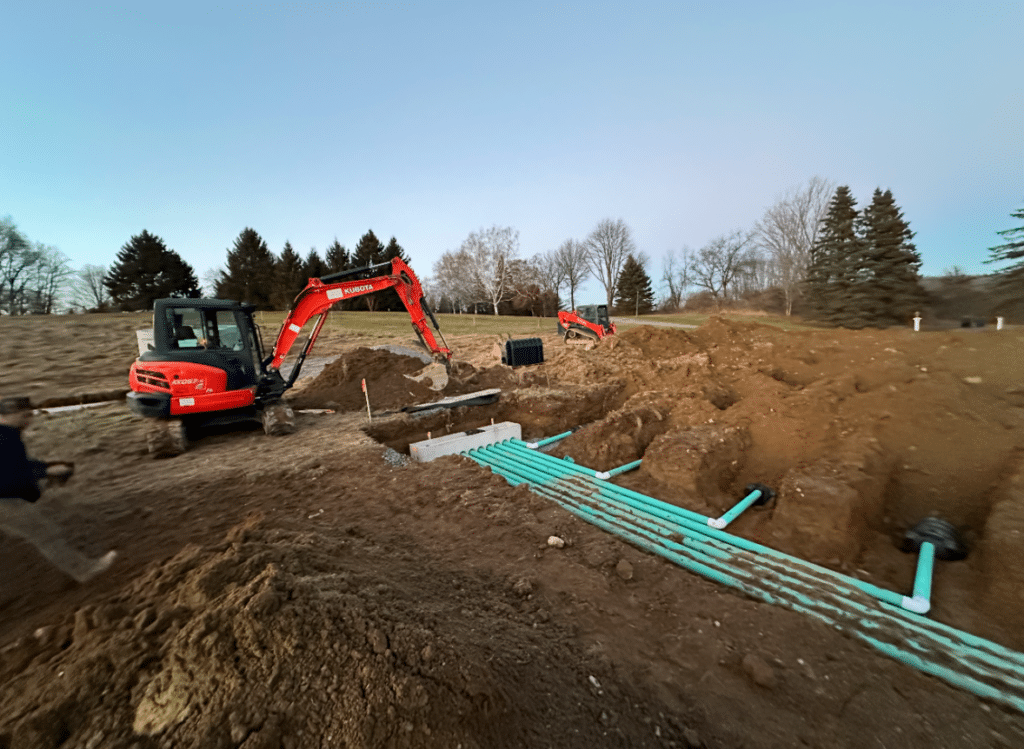
Sometimes the best indicators are located right above the tank or near the leach field. In our region, these areas are often engineered as “Turkey Mounds.”
Unusually Lush, Green Grass
We all want a green lawn, but if one specific patch of grass looks significantly greener and grows faster than the rest of the yard, be wary. This often happens because the tank is overflowing. The nutrient-rich waste acts as a fertilizer for the grass. While it looks nice, it means raw effluent is sitting too close to the surface.
Standing Water or Spongy Soil
Walk over the area where your septic tank and leach field are located. If the ground feels “mushy” or spongy under your feet, even if it hasn’t rained recently, you have an issue. Pooling water near the tank lid or the distribution box is a clear sign that the tank can no longer hold or process liquid correctly.
Disturbed Soil or Sinkholes
If the soil around your tank lid starts to dip or create small sinkholes, it could mean the tank is overfull and liquid is eroding the surrounding dirt. This is a safety hazard and needs immediate professional attention.
Understanding the Mechanical Failures
Many Lackawaxen homes use more than just a simple gravity-fed tank. If your system has mechanical components, their behavior can tell you if the tank is full.
The Septic Alarm is Sounding
If your system has a pump, it likely has an alarm box. If you see a red light or hear a buzzing sound from that box, it means the water level in the tank has reached a critical high point. This is a “stop use” situation. Every time you flush or run water while that alarm is on, you risk a backup.
Grinder Pump Struggles
For homes with grinder pumps, a full tank means the pump has to work much harder to push waste into the overfilled chamber. If you hear your grinder pump running constantly or making a high-pitched whining sound, the tank might be so full that the pump is submerged in thick sludge.
Effluent Pump Burnout
If the liquid level stays high because the tank isn’t being pumped, your effluent pump will cycle on and off much more frequently. This heat buildup can burn out the motor. Replacing a pump is much more expensive than a routine pumping.
Why “Full” Doesn’t Always Mean “Overflowing”
It is important to understand that a septic tank is designed to always be full of liquid. However, it shouldn’t be full of solids.
When a pumper says your tank is “full,” they mean the sludge layer at the bottom and the scum layer at the top have taken up too much space. This reduces the “retention time” for new waste. Without enough time for solids to settle, they flow out into your leach field.
This is how a full tank destroys a “Turkey Mound.” The solids clog the soil pores, leading to a total system failure. This is why Leach Field Repair & Installation is such a common consequence of neglecting to pump.
What to Do if You Suspect Your Tank is Full
If you are noticing these signs, don’t panic, but do take action quickly.
-
Reduce Water Usage: Stop doing laundry, limit showers, and avoid using the dishwasher until the system is checked.
-
Avoid Chemicals: Do not pour “septic additives” or drain cleaners down the sink. They will not solve a full tank and can actually damage your leach field.
-
Do Not Open the Lid: Septic tanks produce toxic gases like methane and hydrogen sulfide. Opening the lid without professional equipment can be fatal.
-
Check Your Records: If you can’t remember the last time you had a pump-out, and it has been more than three years, it is almost certainly time.
Why You Need a Professional Inspection
A simple pump-out is great, but a Septic System Inspection provides much more value. At Triple J Services, we look for the root cause of the fullness.
If your tank is full of liquid but not many solids, you might have a drainage problem. We look at French Drains & Drainage Solutions to see if rainwater is flooding your system. If your pipes are blocked by grease or roots, we use High-Pressure Drain Jetting to scour them clean.
The Danger of Ignoring the Signs
Ignoring a full septic tank doesn’t make the problem go away. It only makes the eventual repair more expensive.
-
Property Damage: A sewage backup can destroy flooring, drywall, and furniture in your basement.
-
Environmental Risk: An overfull tank can leak pathogens into the local groundwater or nearby streams.
-
Health Hazards: Raw sewage contains bacteria and viruses that are dangerous to your family and pets.
For more information on the environmental impact of septic failure, you can visit the EPA’s SepticSmart resources. Additionally, the Pennsylvania Department of Environmental Protection offers guidelines on maintaining on-lot sewage systems in our state.
Trusting Triple J Services for Your Lackawaxen Home
We are your neighbors in Lackawaxen. We know the rocky soil, the steep hills, and the challenges of Pennsylvania winters. We don’t just “pump and run.” We take the time to ensure your system is healthy and that you understand how to keep it that way.
Our team is equipped for Emergency Septic Pumping if you’ve waited too long, but we prefer to help you stay ahead of the curve. We can help with Excavation & Utility Trenching if your lines need to be moved or replaced, and we are experts at installing new systems from scratch.
Establishing a Routine Maintenance Schedule
The best way to “know” if your tank is full is to have a schedule. Most homes in our area need a pump-out every three to five years. If you have a large family or a high-water-use household, you might need it every two years.
By staying on a defensive schedule, you never have to worry about the gurgling pipes or the soggy lawn. You can enjoy your home knowing that your waste is being handled safely and effectively.
Article Recap
-
Slow drains, gurgling pipes, and foul odors are key indoor signs of a full tank.
-
Excessively green grass or spongy soil over the leach field indicates an overflow.
-
Septic alarms and struggling grinder pumps are mechanical warnings of high water levels.
-
A “full” tank often means the sludge layer is too high, which threatens the leach field.
-
Never open a septic lid yourself; toxic gases and structural issues are major risks.
-
Reducing water usage is the first step to take if you suspect a system backup.
-
Triple J Services provides comprehensive inspections, hydro-jetting, and emergency pumping.
Your septic system is the most important utility in your home. Don’t wait for a disaster to give it the attention it deserves. Identifying the signs early can save you thousands of dollars and preserve the value of your property.
Is your system showing signs of trouble? Contact Triple J Services today to schedule a professional pump-out or inspection. Our Lackawaxen experts are ready to provide the fast, reliable service you need to protect your home.