Homeowners in Lackawaxen, PA, live in a beautiful, rugged landscape. Because many of our homes are tucked away in wooded or rural areas, we don’t always have access to city sewer lines. This means we are responsible for our own wastewater management.
If you are buying an older property or looking to upgrade your current system, you might hear the terms “septic tank” and “cesspool” used interchangeably. They are not the same thing. One is a modern, two-stage treatment process designed to protect the environment. The other is an outdated, high-risk method of waste disposal.
At Triple J Services, we want you to understand exactly what is happening under your lawn. We are a local company based right here in Lackawaxen. You can learn more about our team and our values on our about us page. Whether you need a brand new septic system installation or an emergency repair, knowing the difference between these two systems can save you a fortune in property damage.
What is a Cesspool?
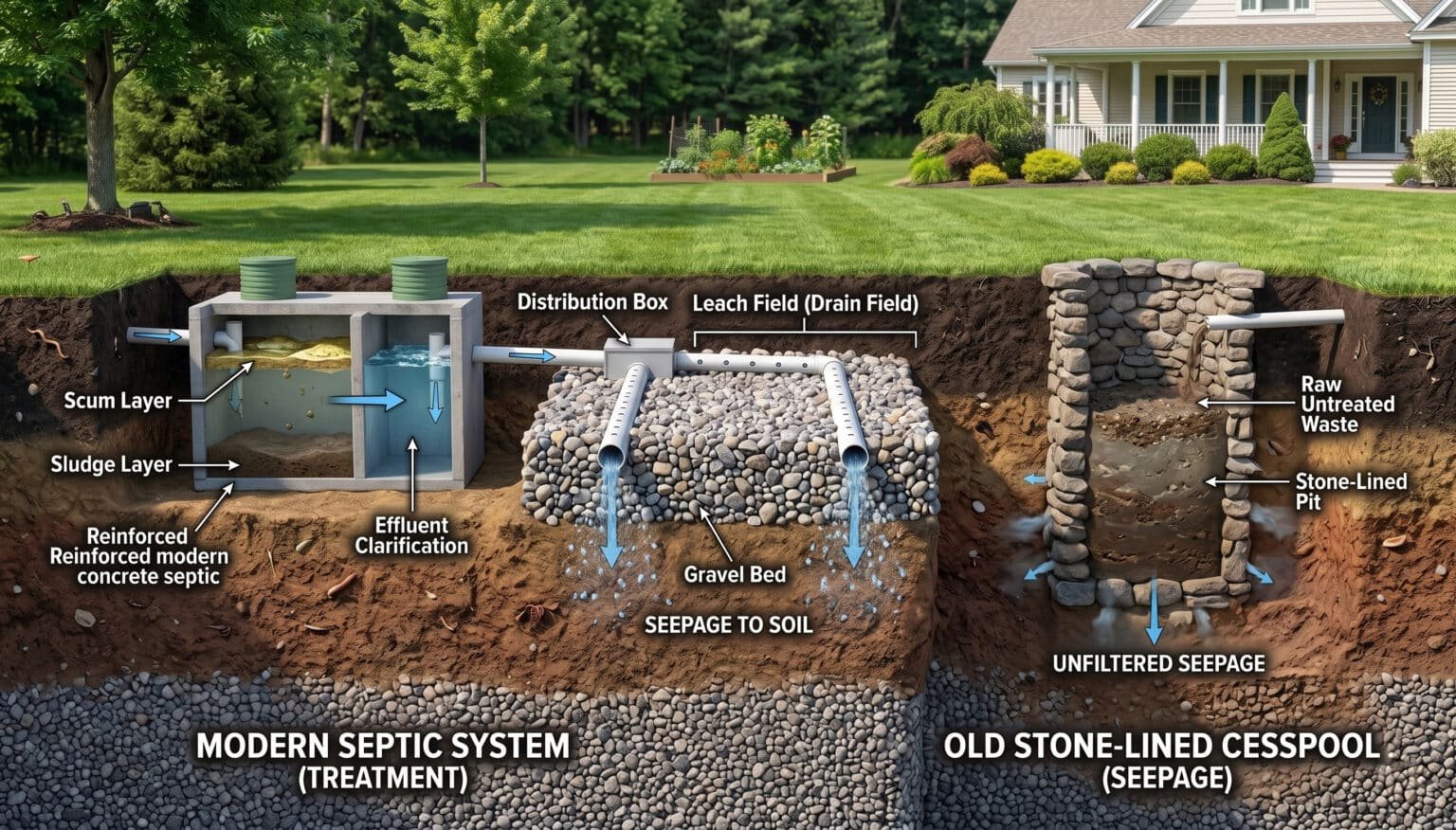
A cesspool is essentially a deep, lined hole in the ground. It is a primitive way to handle waste. The walls are usually made of stone, brick, or concrete with open joints or perforations.
The goal of a cesspool is to allow liquid waste to seep out through the walls and into the surrounding soil. Meanwhile, the solid waste stays at the bottom and decomposes over time.
Why Cesspools Are Outdated
Cesspools provide almost zero treatment of the wastewater. The liquid that seeps into the ground is still full of bacteria, viruses, and chemicals. Because there is no secondary treatment, the soil around a cesspool can quickly become contaminated.
The Risk of Failure
Over time, the grease and solids from the waste plug the pores in the soil surrounding the cesspool. Once the soil can no longer absorb the liquid, the cesspool overflows. This usually results in raw sewage surfacing in your yard or backing up into your home. In many areas, including parts of Pennsylvania, installing a new cesspool is no longer legal due to these environmental and health risks.
What is a Septic Tank System?
A septic system is a much more advanced and environmentally friendly solution. It uses a two-part process to clean your water before it ever reaches the deep soil or groundwater.
Stage One: The Septic Tank
The first stage is the tank itself. It is a watertight container usually made of concrete, plastic, or fiberglass. When waste enters the tank, it settles into layers. Heavy solids sink to the bottom to form sludge. Greases and oils float to the top to form a scum layer. Bacteria in the tank work to break down the solids. Only the relatively clear liquid in the middle, called effluent, leaves the tank.
Stage Two: The Leach Field
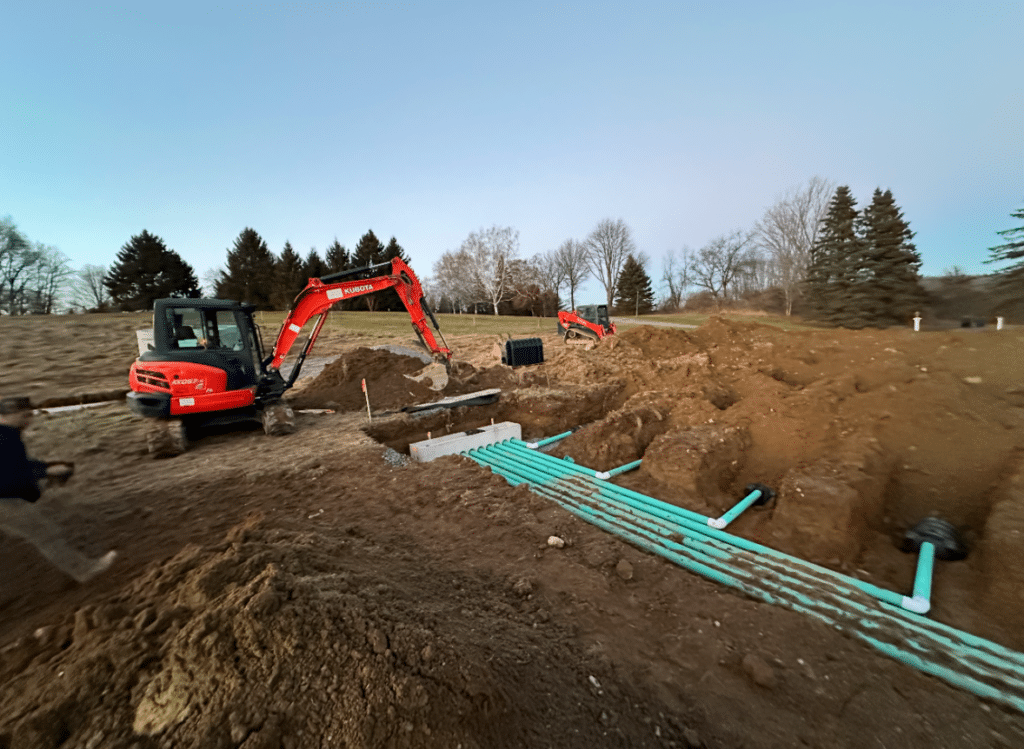
The effluent flows out of the tank and into a leach field, which is often called a “Turkey Mound” in our mountainous region. This area consists of a series of perforated pipes buried in gravel-filled trenches or specialized soil. As the liquid trickles through the soil, natural microbes filter out the remaining contaminants.
By the time the water reaches the groundwater, it has been thoroughly treated. Triple J Services specializes in leach field repair and installation, ensuring this filtration process works perfectly for years.
Key Differences in Maintenance
The way you maintain these systems is vastly different. Because a cesspool is just a hole, it requires very frequent pumping. If you don’t pump a cesspool often, the solids will quickly clog the soil walls, leading to a permanent failure.
A septic system is more robust, but it still requires professional attention. You must have septic system inspectionsevery few years to check the sludge levels. If you let the sludge get too high, it will spill out into your leach field and destroy the soil’s ability to filter water.
Signs Your System is Failing
Regardless of whether you have an old cesspool or a modern septic tank, the signs of trouble are often the same. You should call for help immediately if you notice:
-
Slow Drains: Sinks, tubs, or toilets taking a long time to clear.
-
Gurgling Sounds: Strange noises coming from your plumbing after you flush.
-
Bad Odors: The smell of rotten eggs or sewage in your yard or around your drains.
-
Soggy Grass: Patches of overly green or spongy grass, even during dry weather.
-
Backups: Raw sewage appearing in your basement or lowest floor drains.
If you experience these issues, Triple J Services offers emergency septic pumping to get your system back under control before the damage spreads.
Mechanical Components: Pumps and Grinders
In Lackawaxen, our hilly terrain often means gravity isn’t enough to move waste. This is a major difference between simple cesspools and modern septic setups.
Grinder Pump Services
If your home is located below the level of the septic tank or main line, you likely have a grinder pump. This device shreds solids into a fine slurry so they can be pumped uphill. We provide grinder pump repair and installation to ensure your waste moves exactly where it needs to go.
Effluent Pump Care
Some systems use an effluent pump to push treated liquid to a “Turkey Mound” leach field located on a higher part of the property. If this pump fails, your system will back up quickly. Our effluent pump service and replacement team can diagnose electrical or mechanical issues to keep your system flowing.
Solving Clogs with High-Pressure Jetting
One advantage of a modern septic system is the ability to maintain the lines. If your pipes are narrowed by grease or scale, a standard plumbing snake might not be enough.
We use high-pressure drain jetting (hydro-jetting) to scour the inside of your pipes. This high-velocity water clears out years of buildup and can even blast through small root intrusions. This is a vital maintenance step for both septic tanks and older cesspool lines.
Drainage and Excavation Needs
Water management is critical for septic health. If rainwater pools over your tank or leach field, the system cannot do its job. The soil becomes saturated and the waste has nowhere to go.
Triple J Services provides French drains and drainage solutions to divert surface water away from your waste system. We also handle excavation and utility trenching for new water lines or septic repairs. Proper grading and trenching ensure that your property stays dry and your system stays functional.
Environmental and Legal Considerations
Choosing between maintaining a cesspool and upgrading to a septic system often comes down to local regulations. The Environmental Protection Agency (EPA) provides extensive guidelines on why modern septic systems are necessary for protecting public health.
In Pennsylvania, the Department of Environmental Protection (DEP) oversees the standards for on-lot sewage systems. If you are selling a home with an old cesspool, you may be required to upgrade to a modern septic system before the sale can be finalized. Triple J Services can help you navigate these requirements and provide the septic system replacement needed to bring your property up to code.
Why Triple J Services is the Choice for Lackawaxen
Our community is unique. We deal with rocky soil, steep slopes, and cold winters. A “one-size-fits-all” approach doesn’t work here.
We live and work in Lackawaxen. We know the local landscape and the specific challenges of mountain living. When you call us, you are getting a team that understands how to install a “Turkey Mound” on a rocky hillside and how to keep a grinder pump running through a freeze.
The Dangers of DIY
Septic and cesspool work is dangerous. These systems produce toxic gases like methane and hydrogen sulfide. They also contain pathogens that can cause serious illness. Never attempt to open or enter a tank yourself. Always trust a professional with the right safety equipment and training.
Upgrading for a Greener Future
If your property still relies on an old cesspool, it is a ticking time bomb for both your wallet and the environment. Upgrading to a modern septic tank and leach field is an investment in your home’s value. It protects the local water table and gives you peace of mind during heavy rains or high-use periods like holidays and family gatherings.
Article Recap
-
A cesspool is a simple hole that allows untreated waste to seep into the soil.
-
A septic system uses a watertight tank and a leach field to treat waste in two stages.
-
Cesspools are often illegal to install today due to environmental contamination risks.
-
Septic systems require periodic inspections and pumping to protect the leach field.
-
Lackawaxen properties often require grinder or effluent pumps to manage waste on hilly terrain.
-
Hydro-jetting and French drains are essential maintenance tools for keeping lines clear and soil dry.
-
Triple J Services provides local expertise for installations, repairs, and emergency pumping in PA.
Your waste system is the most important utility in your home. Don’t leave it to chance. Whether you are dealing with an aging cesspool or need a check-up on your modern septic tank, our team is ready to help.
Take the first step toward a healthier home. Contact Triple J Services today to schedule an inspection or to discuss your system upgrade. Let our Lackawaxen experts ensure your property remains safe and functional for years to come.
Frequently Asked Questions
Is a cesspool better than a septic tank?
No, septic tanks are significantly better than cesspools. Septic tanks treat wastewater through natural bacterial processes and separate solids, while cesspools simply collect raw sewage without treatment. Septic systems protect groundwater and are required by modern health codes. In Pike County, PA, cesspools are no longer permitted for new construction due to environmental and health concerns.
How do I know if I have a cesspool or a septic tank?
Look for your access covers in the yard. Septic tanks typically have rectangular concrete or plastic covers, often two of them for different chambers. Cesspools usually have round, stone-lined openings. Check your property records or contact Pike County health department for system details. Professional inspection can definitively identify your waste system type and condition.
Can you flush toilet paper in a cesspool?
Yes, you can flush toilet paper in a cesspool, but use septic-safe brands and minimal amounts. Cesspools don’t break down waste like septic tanks do, so they fill up faster with any solid materials. Excessive toilet paper accelerates pump-out needs and can cause backups. For Pike County lake houses with cesspools, conservative use is especially important during peak season.
How do I know if I have a septic tank or a cesspool?
Check your yard for access covers. Septic tanks have rectangular concrete or plastic lids, usually two chambers with separate covers. Cesspools typically have circular stone or concrete rings. Your property deed, Pike County health department records, or a professional inspection can confirm your system type. Homes built after the 1970s almost certainly have septic tanks.
What year did they stop using cesspools?
Most areas phased out cesspools between the 1960s and 1980s as environmental regulations tightened. In Pennsylvania, new cesspool installation was largely prohibited by the late 1970s, though existing systems were often grandfathered. Pike County follows state regulations requiring septic systems for new construction. Many older lake houses in the Pocono region still operate legal, pre-existing cesspools.
Is a cesspool considered septic?
No, a cesspool is not considered a septic system. While both handle wastewater, cesspools are simple holding tanks that collect raw sewage without treatment. Septic systems actively treat wastewater through bacterial breakdown and soil filtration. In Pike County, PA, only true septic systems meet current health department standards for new installations, though existing cesspools remain legally permitted.